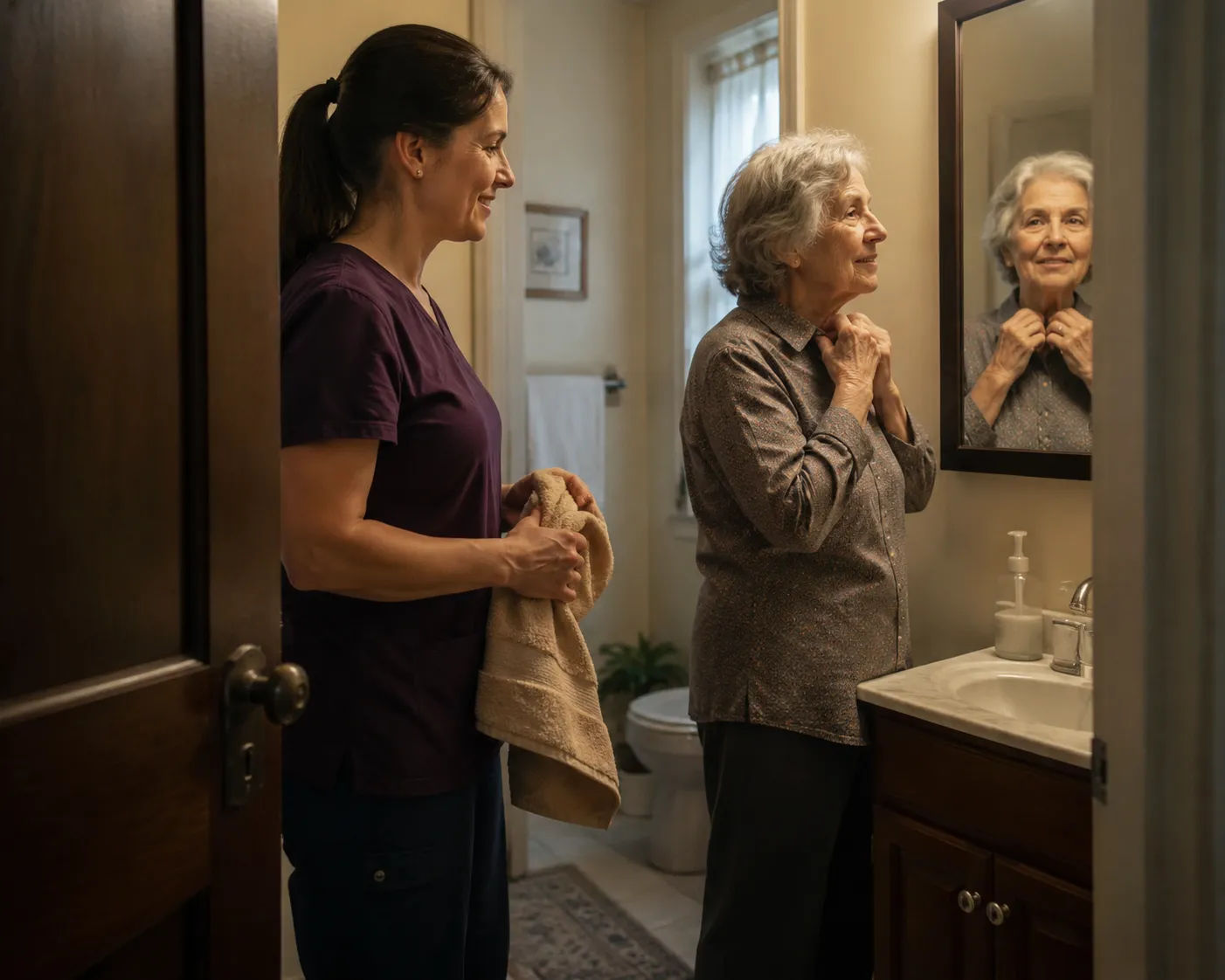
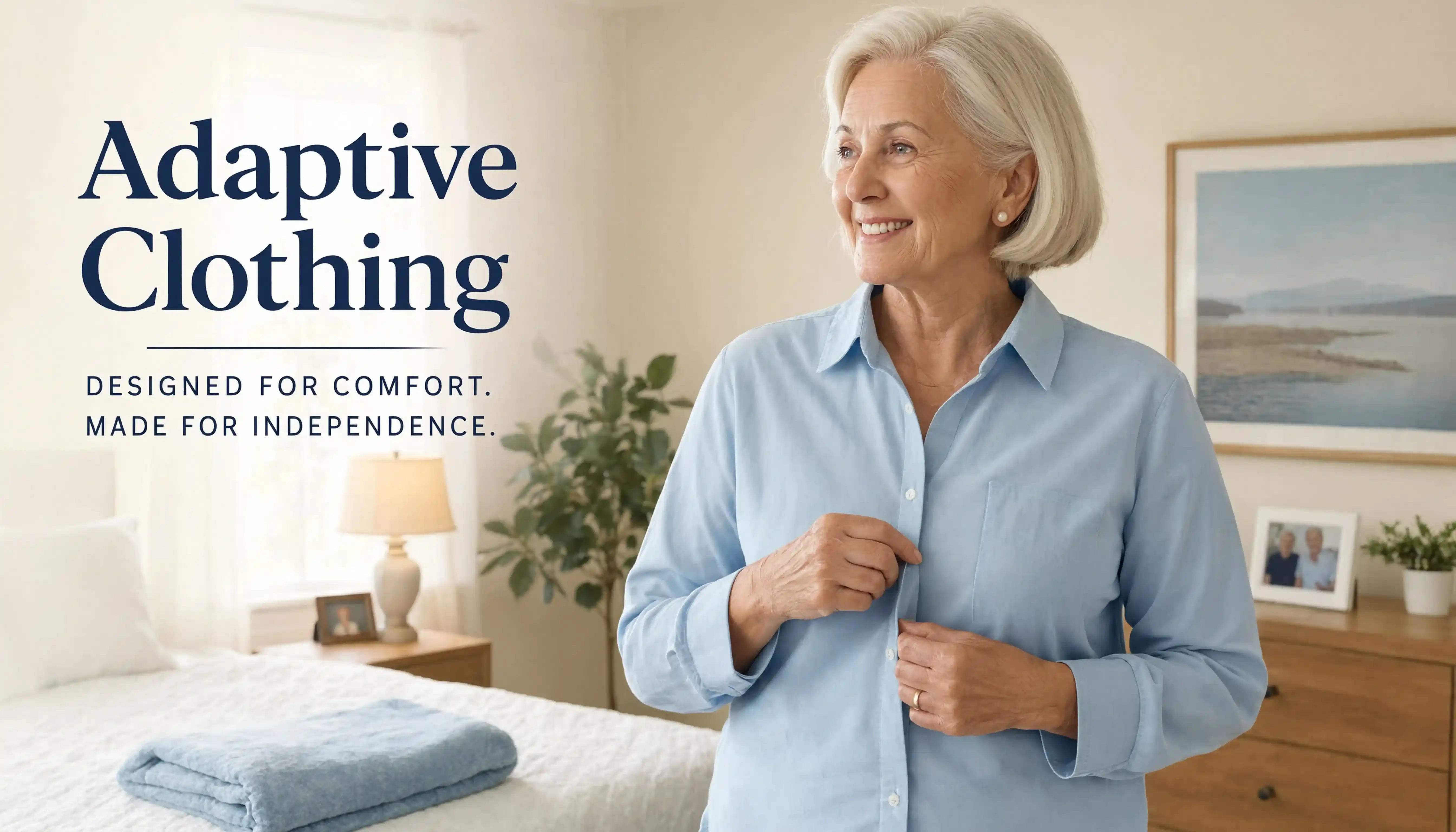
Adaptive clothing for seniors addresses a problem families often underestimate: dressing becomes genuinely difficult and sometimes painful as arthritis, limited mobility, or reduced dexterity set in, and standard clothing with small buttons and tight zippers can turn a routine morning task into a source of real frustration or even injury risk.
Nearly 12% of the U.S. population deals with arthritis, and for many older adults, this directly affects the ability to manage buttons, zippers, and tight-fitting clothes independently. In a recent survey, nearly 85% of seniors who used adaptive clothing said it made them feel more empowered — a reminder that this isn't just about convenience, but genuine dignity and independence.
Key Takeaways
- Adaptive clothing isn't just for facility residents — it's a practical solution for anyone struggling with buttons, zippers, or tight-fitting clothes at home.
- Magnetic closures and adjustable waistbands are the most common and effective features, replacing small buttons and rigid zippers.
- Most modern adaptive clothing looks like regular clothing — the adaptations are often invisible from the outside.
- Independence in dressing is linked to higher life satisfaction — this is a genuine wellbeing issue, not just a practical inconvenience.
- A few well-chosen pieces can make a real difference — a full wardrobe overhaul isn't usually necessary to see meaningful benefit.
Why Dressing Becomes Difficult
Arthritis restricts joint movement and strength, making the fine motor skills required for small buttons, hooks, and zippers genuinely painful or physically impossible for some seniors. Reduced grip strength, tremors, limited range of motion in the shoulders, and balance issues that make standing to dress difficult all compound the challenge, sometimes turning what used to be a five-minute task into a lengthy, frustrating ordeal.
Dee, Morning Star's founder: "Dressing seems like such a small, private task that families don't always realize how much it's become a daily struggle until they see it happen firsthand. Adaptive clothing often solves a problem that's been quietly causing real frustration for months or years."
What Adaptive Clothing Actually Looks Like
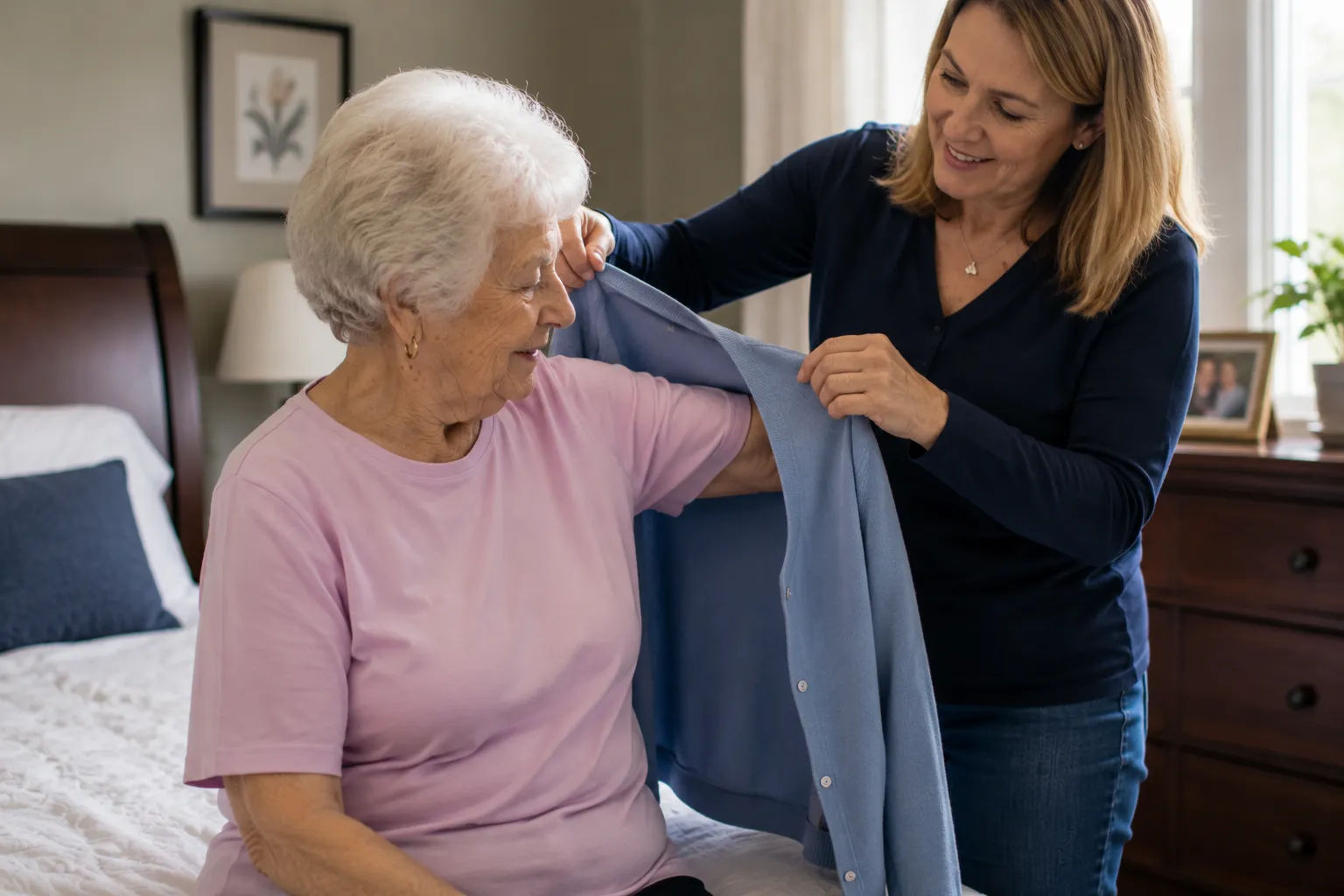
Modern adaptive clothing has moved well past the clinical-looking garments of the past — many pieces are visually indistinguishable from standard clothing, with the functional adaptations built in discreetly. This matters enormously for adoption, since seniors are often far more willing to wear something that looks like their normal clothing rather than something that signals disability or dependence.
| Feature | Solves This Problem |
|---|---|
| Magnetic closures (replacing buttons) | Eliminates the need for fine motor control to fasten small buttons |
| Side or back openings | Allows dressing while seated, without needing to raise arms overhead |
| Adjustable, elastic waistbands | Removes the need to manage a button, zipper, or belt |
| Velcro closures on shoes | Replaces laces, which require bending and fine motor control |
| Wrap-style or open-back designs | Simplifies dressing for wheelchair users or those with very limited mobility |
| Seamless, tagless fabric | Reduces skin irritation, especially valuable for sensitive or fragile skin |
Where Adaptive Clothing Helps Most
Shirts and Tops
Side-fastening or wrap-style tops eliminate the need to raise arms overhead, which can be painful or impossible with limited shoulder mobility. Magnetic button replacements let shirts look completely standard while removing the fine motor demand of actual buttons.
Pants and Bottoms
Adjustable, fully elastic waistbands remove the need to manage buttons, zippers, or belts entirely, while still providing a secure, comfortable fit. Some designs also feature side openings for easier dressing for wheelchair users or those who dress while seated.
Shoes
Velcro closures replace laces, which require bending and fine motor control that can be difficult or risky for someone with balance concerns. Wide, easy-entry designs also accommodate swelling or orthotic inserts more comfortably than standard shoe designs.
Outerwear
Magnetic or adaptive zipper pulls on jackets and coats make outerwear manageable even with limited hand strength, which matters especially in Connecticut winters when a properly closed coat is a genuine safety issue, not just comfort.
Where to Find Adaptive Clothing
Adaptive clothing is increasingly available through both specialty retailers and mainstream stores. Specialty brands focus entirely on adaptive design, offering the widest range of specifically engineered features, while some larger mainstream retailers have begun offering adaptive clothing lines, making these options more accessible and often less expensive than specialty-only retailers.
- Specialty adaptive clothing brands: the widest selection of specifically designed features, often available online.
- Mainstream retailers with adaptive lines: increasingly available, often at more competitive prices.
- Local alterations: a tailor can sometimes modify existing, beloved clothing with magnetic closures or elastic waistbands rather than replacing an entire wardrobe.
Starting Small: What to Buy First
A full wardrobe replacement isn't necessary to see real benefit, and it can also be an unnecessary expense. Identifying the single most frustrating daily dressing task — often shirt buttons or shoe laces — and addressing that specific pain point first tends to produce the most immediate, noticeable improvement, with additional pieces added over time as needed.
"We started with just replacing my mom's button-down shirts with magnetic-closure versions, since that was clearly her biggest daily frustration. It made such an immediate difference that we gradually replaced other pieces over the following months, rather than trying to overhaul everything at once."
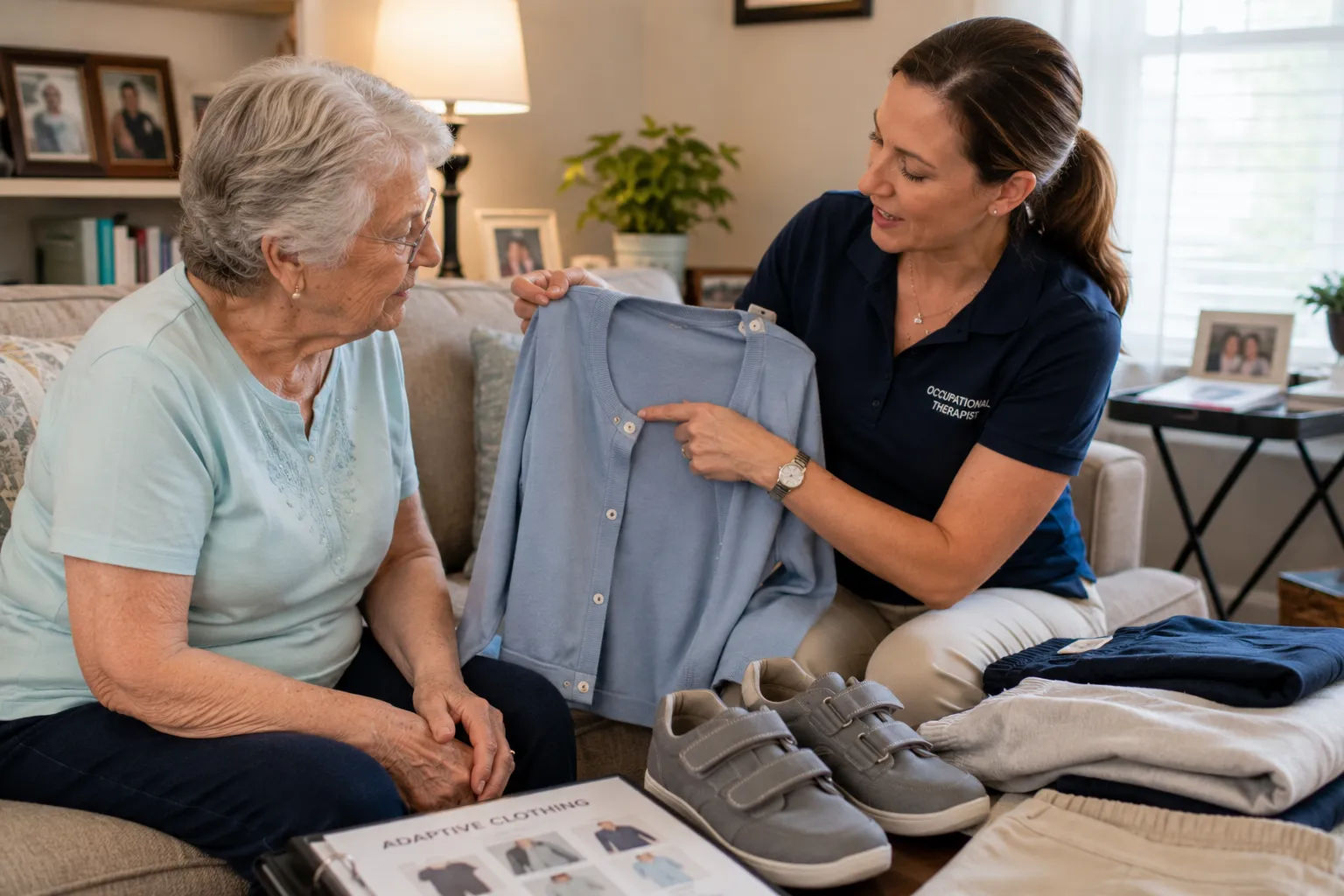
Introducing Adaptive Clothing Without Feeling Like a Loss of Independence
Some seniors resist adaptive clothing initially, associating it with decline or a loss of independence — which is somewhat ironic, since the actual purpose is to preserve independence in dressing rather than requiring help from someone else. Framing the conversation around ease and comfort, rather than limitation, and choosing pieces that look genuinely stylish and normal, tends to overcome this resistance more effectively than a direct appeal to their physical difficulties.
Call the doctor now if: your parent has started avoiding certain clothing entirely, wearing the same easy items repeatedly, or shows signs of pain or frustration while dressing — this is worth addressing directly rather than letting it continue as an unspoken daily struggle.
The Emotional and Practical Value of Independent Dressing
Research consistently links maintaining control over personal care tasks like dressing to higher life satisfaction and emotional wellbeing in older adults. Being able to dress independently, even with adapted clothing, preserves a sense of autonomy that matters enormously — losing this ability, and needing help from a caregiver or family member for a task this personal, can feel like a significant loss even when the physical need is well accommodated by other kinds of support.
How This Connects to Broader In-Home Care
For parents who need some assistance with dressing regardless of adaptive clothing, a professional caregiver trained in personal care can provide dignified, respectful support with the parts of dressing that remain difficult, while adaptive clothing maximizes what a parent can still manage independently. The combination often works better than relying on either alone — adaptive clothing reduces the amount of hands-on help needed, while professional support fills in the remaining gaps.
Adaptive Clothing for Specific Health Conditions
Beyond arthritis, adaptive clothing serves a range of specific needs. For seniors recovering from a stroke with limited use of one arm, side-opening or one-handed-friendly designs allow independent dressing without requiring both hands to function normally. For seniors managing significant swelling in the legs or feet, wider-cut pants and shoes with expandable closures accommodate size fluctuations throughout the day without requiring multiple sizes of clothing.
For seniors with sensitive skin — common with certain medications or conditions like eczema — seamless, tagless designs reduce irritation that standard clothing seams and tags can cause, particularly for those spending extended time in one outfit.
Adaptive Clothing and Incontinence Management
For seniors managing incontinence, specifically designed adaptive clothing with easier access, moisture-wicking fabric, and discreet designs can simplify a sensitive daily challenge considerably. These garments look like standard clothing while incorporating features that make managing incontinence care more dignified and less physically demanding than standard clothing combined with separate absorbent products.
It's also worth keeping receipts and packaging until a piece has been worn and fully tested, since fit issues sometimes only become apparent after a full day of actual wear rather than a quick try-on.
Shopping Tips for Adaptive Clothing
- Measure carefully rather than guessing sizes — adaptive clothing sizing sometimes differs from standard brand sizing.
- Order a single piece first to confirm fit and feature functionality before committing to a larger order.
- Involve your parent in choosing colors and styles they'll actually feel good wearing, not just what's functionally easiest.
- Check return policies before ordering, since fit and feature preferences can be hard to judge from photos alone.
- Read reviews from other caregivers or seniors with similar specific needs, since functional details matter more than general marketing descriptions.
The Cost Question: Is Adaptive Clothing More Expensive?
Adaptive clothing often carries a modest price premium over standard clothing of similar quality, typically 10-20% more per item, reflecting the specialized construction (magnetic closures, reinforced seams, extra fabric for wheelchair seating) and the smaller production runs compared to mass-market clothing lines. Families budgeting for a parent's wardrobe transition don't need to replace everything at once; a gradual approach of one or two adaptive pieces per shopping trip, replacing the most problematic items first (typically the ones with buttons or complex closures) spreads the cost out naturally.
Some of the cost gap closes when families factor in what adaptive clothing saves elsewhere: less wear and tear on garments handled roughly during difficult dressing attempts, fewer damaged buttons and zippers, and reduced need for a caregiver's paid time spent on dressing assistance if a parent can dress with less help. For families using Medicaid or long-term care insurance, it's worth asking a case manager whether any durable medical equipment allowances extend to adaptive clothing, since coverage varies by state and plan.
A Real Family Scenario
Karen's father Walt developed significant arthritis in his hands over several years, and getting dressed each morning had become a slow, sometimes painful process he never mentioned directly — Karen only noticed when she saw him struggling with a shirt button during a visit. After switching his shirts to magnetic-closure versions and his shoes to Velcro, Walt's morning routine went from a frustrating twenty-minute ordeal to something he manages easily and independently again.
Adaptive Sleepwear and Loungewear
Beyond daytime clothing, adaptive sleepwear and loungewear address the same dressing challenges during evening and overnight routines, when fatigue can make even simple dressing tasks feel more difficult than during the day. Front-opening nightgowns, easy-access pajama bottoms, and soft, seamless robes with magnetic or Velcro closures can simplify the bedtime and morning routine considerably, especially for seniors who dress and undress independently multiple times a day.
Adaptive Clothing for Seniors Using Mobility Aids
Seniors using wheelchairs, walkers, or other mobility aids face additional dressing considerations beyond dexterity alone — clothing that bunches uncomfortably while seated, pants that are difficult to pull up while using a walker for balance, or shirts that ride up uncomfortably during transfers. Adaptive clothing designed specifically with wheelchair users in mind often features back or side openings, higher back rises, and fabric that resists bunching, addressing these seating-specific challenges directly.
Dee, Morning Star's founder: "Clients who use a wheelchair often have very different clothing needs than someone managing arthritis alone — it's worth being specific about the actual daily activities and positions a parent spends time in, not just their general mobility level, when choosing adaptive pieces."
Seasonal Adaptive Clothing Considerations
Connecticut's seasonal weather changes add another layer to adaptive clothing planning. Winter coats and layers need adaptive closures just as much as everyday clothing, and cold weather can worsen arthritis symptoms, making adaptive features even more valuable during winter months. Summer clothing, meanwhile, benefits from breathable, lightweight adaptive fabrics that reduce overheating risk for seniors who may have reduced ability to regulate body temperature.
Talking to a Parent's Occupational Therapist
An occupational therapist, if your parent is already working with one for another reason, can provide personalized recommendations for adaptive clothing based on a specific assessment of dexterity, range of motion, and daily routine — often more tailored guidance than general product recommendations alone. If your parent isn't currently seeing an occupational therapist but dressing has become a significant daily struggle, it's worth asking their physician for a referral.
Adaptive Clothing for Men vs. Women: What Differs
Most major adaptive clothing lines carry both men's and women's collections, and the core adaptations (magnetic closures, side openings, seated-fit cuts) apply equally to both, but a few differences are worth knowing when shopping for a father versus a mother. Adaptive men's dress shirts often replace the traditional button placket with a hidden magnetic strip while keeping the visible button look, which matters for men who still attend church, family events, or medical appointments where a collared shirt is expected. Adaptive women's tops more frequently incorporate wrap-style or side-snap designs that also account for medical access needs, such as ports, feeding tubes, or ostomy bags, alongside the closure and reach adaptations.
Adaptive pants for men commonly focus on elastic waists paired with a fly-front look achieved through hook-and-loop closures rather than a zipper, while adaptive pants for women more often include higher-rise, no-slip waistbands designed to stay in place through a wheelchair transfer. In both cases, the underlying goal is the same: clothing that looks conventional from the outside while removing the fine-motor barriers underneath.
What Occupational Therapists Recommend
Occupational therapists who specialize in geriatric care frequently recommend adaptive clothing as part of a broader plan to preserve a parent's functional independence, since dressing is one of the standard measured "activities of daily living" (ADLs) used to assess how much support an older adult needs day to day. A therapist evaluating a parent's dressing ability typically looks at grip strength, range of motion in the shoulders and hips, balance while standing on one leg, and cognitive sequencing (remembering the correct order of steps), and can recommend specific adaptive features tailored to whichever of those areas is most limited.
Families who haven't yet had a parent evaluated by an occupational therapist can often request one through a primary care referral, and Medicare typically covers OT evaluations when a physician documents a functional decline. The evaluation itself, beyond recommending clothing, often surfaces other small home adjustments — a bench in the shower, a raised chair, better lighting in the closet — that make the whole dressing routine easier alongside the clothing itself.
Caring for Adaptive Clothing: Washing and Longevity
Most adaptive clothing is designed to hold up under regular machine washing, but the specialized components benefit from a bit of extra care. Magnetic closures should be checked periodically for weakening magnets, especially after dozens of wash cycles, since the strength that makes them easy to use also makes them wear down faster than a sewn button. Velcro-style closures collect lint and thread over time, which weakens their grip; a quick brush-through or trim before washing keeps them functioning properly for longer.
Side-opening garments and those with extra fabric panels for wheelchair seating sometimes need a slightly longer dry cycle or air-drying for the reinforced seams to fully dry through, since the doubled fabric holds more moisture. Reading the care label on adaptive pieces the first time a family buys from a new brand avoids surprises, since some specialty fabrics used for moisture-wicking or antimicrobial properties have different care requirements than standard cotton blends.
How Caregivers Can Support Dressing Independence
For families using professional in-home care, discussing dressing challenges directly with the caregiver can lead to practical, combined solutions — adaptive clothing paired with light hands-on assistance for the parts of dressing that remain difficult, rather than a caregiver simply taking over the entire task. This preserves as much independence as possible while ensuring safety and dignity throughout the process.
A good caregiver will also notice dressing struggles a family might miss during occasional visits, since they're present for the daily routine and can flag emerging difficulties early, before they become a bigger safety concern.
Building a Wardrobe Transition Plan
Rather than treating adaptive clothing as a single big purchase, most families find it easier to build a simple transition plan: start with the one or two garments causing the most daily frustration, test them for a few weeks, then expand from there once a parent has had a chance to get comfortable with the new closures and fabrics. Keeping a short list of what's working and what isn't — a specific brand's sizing ran small, a certain fabric felt scratchy, a particular closure was still hard to manage with arthritic fingers — makes each following purchase more accurate and reduces returns.
For families balancing this transition alongside professional in-home care, sharing that list with the caregiver means everyone is reinforcing the same wardrobe choices and can flag early when a garment stops working as a parent's needs change over time.
A Final Thought
Adaptive clothing for seniors addresses a genuinely underrated daily challenge — one that affects dignity and independence as much as convenience. A few well-chosen pieces, introduced thoughtfully, can meaningfully restore a parent's ability to dress themselves comfortably and confidently.
References
- Discovery Village — 10 Benefits of Adaptive Clothing for Seniors With Arthritis
- Senior Services of America — Adaptive Clothes for Seniors: Types, Benefits, and Where to Buy
This article is for general information and isn't a substitute for medical, legal, or financial advice. If you're concerned about a specific issue, talk to your parent's doctor or an elder law attorney.
Written by
Morning Star Care Team
Morning Star Home Care — Caregiver-Founded and Locally Owned in Bristol, CT.