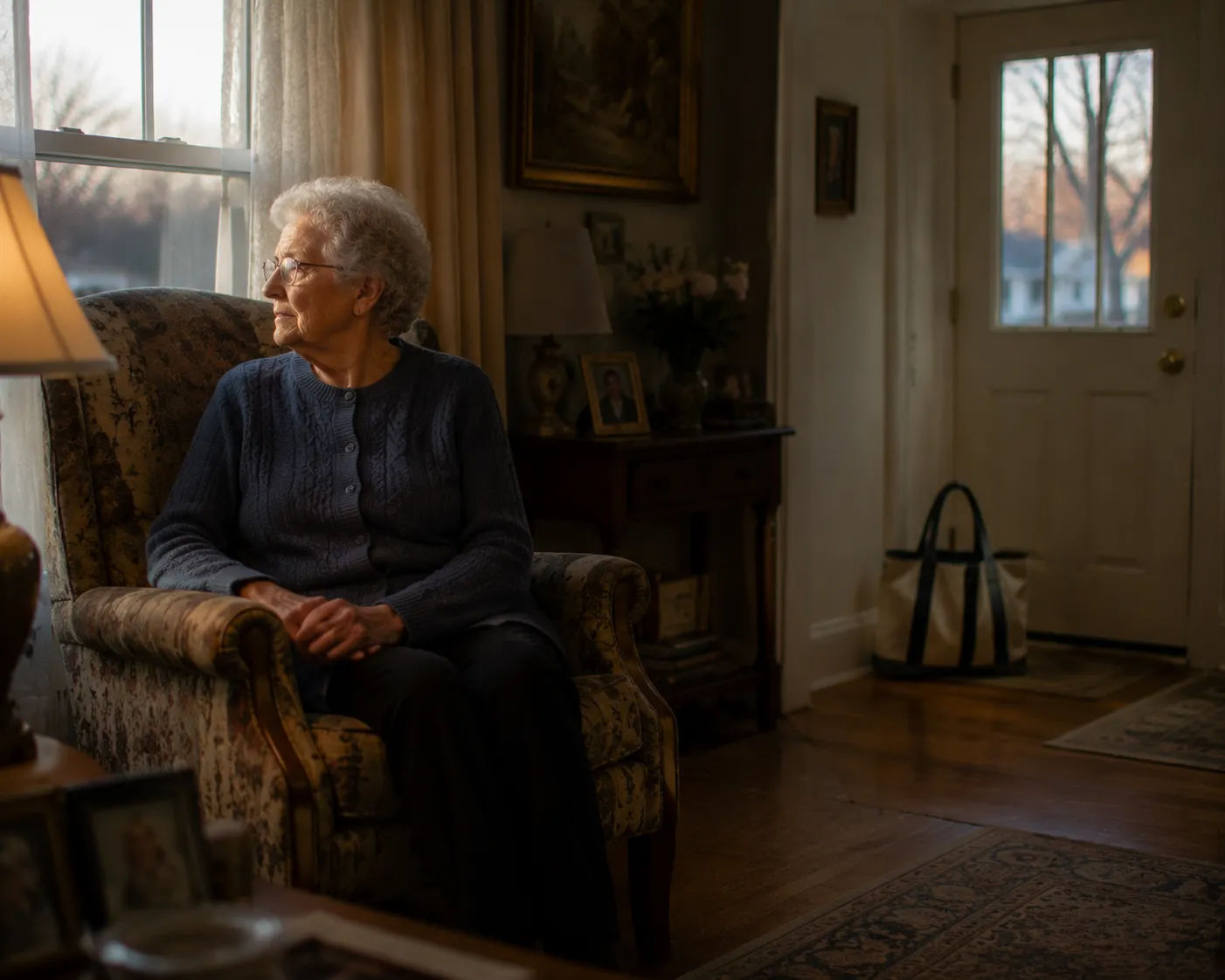

Aging in place home care is built around a simple idea: your parent stays in the home they know, and support comes to them, rather than the other way around. For most families, this isn't a fringe preference — it's the overwhelming default choice, and understanding how it actually works in practice can make the difference between a stressful scramble and a plan that genuinely holds up.
According to 2025 research, 84% of older Americans consider aging in place a priority, and 92% prefer to live out their later years in their current home. But only 37% who want to age in place with a caregiver feel confident it will actually happen — a gap this guide is meant to help close.
Key Takeaways
- The preference for aging in place is nearly universal — the challenge is usually logistics and planning, not desire.
- In-home care can scale from a few hours a week to around-the-clock support — it isn't all-or-nothing.
- Home modifications and in-home care work together, not as separate solutions — most successful aging-in-place plans use both.
- Starting support early, before a crisis, tends to produce a smoother, more sustainable outcome than waiting until a fall or hospitalization forces the issue.
- Cost is a real factor, but often compares favorably to assisted living or nursing home costs, especially for lower care-hour needs.
Why Aging in Place Is the Overwhelming Preference
The preference to stay at home isn't just sentimental — it reflects real advantages: familiar surroundings, established routines, proximity to community and friends, and a sense of control that a facility move often disrupts. For many older adults, their home also represents decades of memories and independence that a move, however well-intentioned, can feel like giving up.
The gap between wanting to age in place and feeling confident it will happen points to a real planning challenge — not because the preference is unrealistic, but because most families haven't mapped out what support would actually look like until a crisis forces the question.
Dee, Morning Star's founder: "Almost every family I talk to says the same thing: 'Mom wants to stay in her house.' The question isn't whether that's possible — it almost always is, with the right support. The question is whether the family plans for it early or scrambles for it during a crisis."
Understanding this scalability upfront also helps families have a more productive first conversation with a home care agency, since it reframes the question from "can we afford full-time care" to "what specific level of support actually makes sense right now."

How In-Home Care Actually Supports Aging in Place
| Level of Need | Typical Support | Hours |
|---|---|---|
| Light support, mostly independent | Companionship, light housekeeping, transportation to appointments | A few hours per week |
| Moderate support needed | Personal care assistance, meal prep, medication reminders | Daily visits, several hours per day |
| Significant daily needs | Personal care, mobility assistance, closer supervision | Extended daily hours |
| Round-the-clock needs | Live-in or overnight care | 24-hour coverage |
One of the most important things for families to understand is that in-home care isn't a fixed, one-size package — it scales up or down as needs change, which is exactly what makes aging in place sustainable over years rather than a short-term fix that fails as soon as needs increase.
Families who address all three pillars together, rather than tackling them one at a time in isolation, tend to build the most durable long-term arrangements — each piece reinforces the others.
The Three Pillars of a Successful Aging-in-Place Plan
1. Home Safety
A home safety assessment identifies and addresses fall risks and accessibility barriers — grab bars, adequate lighting, clear walkways — before they cause an injury. Given that only about 10% of U.S. homes are currently equipped to accommodate older adults' needs, this is often the first and most urgent piece of the plan.
2. Professional In-Home Care
Whether it's a few hours a week of companionship or around-the-clock personal care, professional support fills the gaps that family alone often can't sustain long-term — bathing, medication management, meal preparation, and supervision, delivered by trained caregivers rather than falling entirely on family members.
3. Ongoing Health Monitoring
Regular check-ins with a physician, coordination between caregivers and family, and attention to changes in condition help catch problems early, before they escalate into a crisis that forces a sudden, unplanned decision about care.
Getting a clear, itemized estimate from a home care agency early in the process — rather than a vague ballpark figure — makes it much easier to compare realistically against other options and to plan a family budget with confidence.

What Aging in Place Actually Costs
Cost is frequently the biggest source of hesitation, and it's worth comparing honestly. In-home care is typically billed by the hour, which means costs scale directly with how much support is actually needed — a few hours a week costs meaningfully less than full-time care, unlike a facility's flat monthly rate regardless of how much hands-on support a resident actually uses.
For families managing moderate care needs, in-home care often compares favorably to assisted living once the full facility cost — including add-on fees for higher levels of care — is accounted for. For families needing extensive round-the-clock support, costs can approach or exceed facility care, which is worth planning for honestly rather than assuming aging in place is always the cheaper option.
Call the doctor now if: your parent's care needs have grown significantly in a short period — a rapid increase often signals it's time for a fuller conversation with a physician and a home care agency about what level of support is actually needed now, not what was needed six months ago.
It also helps to revisit the cost conversation periodically rather than treating it as settled once at the start — funding sources, family financial circumstances, and care needs all shift over time, and a plan that worked financially at one point may need adjustment later.
Addressing the Financial Barrier Directly
Rising living costs have made aging in place harder for many families — 67% of seniors reported in 2024 that cost increases made staying home more difficult. Long-term care insurance, veterans' benefits for eligible veterans and spouses, and in some cases Medicaid waiver programs can offset in-home care costs, though eligibility and coverage vary significantly.
It's worth having a candid conversation with a home care agency about what's realistic within a family's specific budget — many agencies, including Morning Star, can help structure a care plan that starts small and scales as both needs and resources allow, rather than assuming full-time care is the only option.
When Aging in Place Becomes Unrealistic
Honesty matters here: aging in place isn't always the right long-term answer, and recognizing that isn't a failure. A home with irreversible accessibility barriers, care needs that exceed what in-home support can safely provide, or a parent who lives entirely alone with advancing dementia and significant wandering risk are all situations where a different living arrangement may ultimately serve a parent better.
The goal isn't aging in place at all costs — it's making sure the decision, whichever way it goes, is made thoughtfully and with full information, rather than by default or crisis.
Comparing Aging in Place to Facility-Based Care
| Factor | Aging in Place With Home Care | Assisted Living / Facility |
|---|---|---|
| Familiar environment | Stays in own home | New environment, adjustment period |
| Cost structure | Scales with actual hours needed | Flat monthly rate regardless of usage |
| Social connection | Depends on family and caregiver visits | Built-in community, but not always a good personal fit |
| Flexibility | Easy to increase or decrease hours | Level-of-care changes often mean moving units or facilities |
| Control over daily routine | Parent retains full control | Facility schedules and rules apply |
Neither option is universally better — the right choice depends on your parent's specific needs, your family's resources, and what actually feels sustainable long-term. Many families find that aging in place with home care works well for years, with a facility move considered later only if care needs eventually exceed what can be safely managed at home.
How Family Involvement Fits Into the Plan
In-home care doesn't mean family steps back entirely — it means family involvement becomes sustainable rather than overwhelming. Professional caregivers typically handle the physically and logistically demanding daily tasks, while family members remain involved in the relationship, decision-making, and the parts of caregiving that matter most to maintaining a close bond, rather than burning out trying to do everything alone.
"Before we brought in home care, I was doing everything for my dad and barely had energy left to just enjoy being his daughter. Once the aide started handling the daily personal care tasks, our visits went back to being about actually spending time together, not just managing his needs."
A well-integrated combination of technology and professional care extends coverage well beyond the hours a caregiver is physically present, closing gaps that either approach alone would leave open.
Technology's Role in Supporting Aging in Place
Medical alert systems, smart home safety devices, and remote health monitoring all extend what's possible for a parent aging in place, particularly during the hours a caregiver isn't present. These tools work best as a complement to human care, not a replacement — a fall-detection pendant can summon help quickly, but it doesn't provide the companionship, meal preparation, or personal care support that makes daily life at home sustainable.
A brief written care plan, updated at each reassessment, gives the whole family a shared, current understanding of what support looks like right now — reducing confusion and disagreement when questions come up between formal check-ins.
Planning for Changing Needs Over Time
One of the most common mistakes families make is treating an aging-in-place plan as a single, fixed decision rather than an evolving one. Needs at 75 look different from needs at 85, and a good plan builds in regular reassessment — every six months, or after any significant health change — rather than assuming today's arrangement will remain adequate indefinitely.
Agencies that offer ongoing care coordination, rather than a one-time assessment, tend to catch these shifts earlier, adjusting hours and services proactively rather than waiting for a crisis to force the conversation.
A Real Family Scenario
When Karen's father Walt was diagnosed with early-stage Parkinson's, Karen assumed a move to assisted living was inevitable. Instead, a home care agency helped the family build a phased plan: a home safety assessment and modifications first, then a few hours of daily companion and personal care support, with the plan to increase hours as needed. Three years later, Walt is still in his own home in Farmington, with care hours that have gradually increased but a living situation that's remained stable and familiar.
What a Home Care Agency Actually Does in the First Visit
Families unfamiliar with in-home care sometimes imagine the first visit as a sales pitch, when in practice it's typically a needs assessment — a trained professional spending time with your parent and family, asking about daily routines, current challenges, medical history, and preferences, then recommending a specific, tailored level of support rather than a generic package.
This first conversation is also a good opportunity to ask direct questions: how caregivers are trained and vetted, how the agency handles a caregiver calling out sick, how billing works, and what happens if care needs change. A reputable agency will answer these questions clearly and without pressure to commit immediately.
Sharing specific details with the agency ahead of time — a parent's preferred routines, favorite topics of conversation, or particular sensitivities — can meaningfully speed up this trust-building process.
Building Trust Between Your Parent and a New Caregiver
For many older adults, welcoming an unfamiliar person into their home is a significant adjustment, even when they've agreed to the arrangement in principle. Trust typically builds gradually — starting with shorter visits, consistent caregiver assignments rather than a rotating cast of different people, and family involvement in the early visits to ease the transition.
Dee, Morning Star's founder: "The families who have the smoothest start are the ones who are patient during those first few weeks. A new caregiver relationship takes time to feel natural, just like any new relationship would — it's not usually instant, and that's normal."
Getting Started: A Realistic First Step
Families often feel they need to have the entire long-term plan figured out before taking any action, which can lead to paralysis. In practice, most successful aging-in-place plans start with a single step: a home safety assessment, a conversation with a physician about current needs, or a trial period of a few hours of home care support each week to see how it fits.
Involving Siblings and Extended Family in the Decision
Aging-in-place plans work best when the whole family understands and supports the arrangement, not just the primary caregiver or the parent involved. Siblings living out of state can still play a meaningful role — helping evaluate agencies, contributing financially, or taking on specific logistical tasks remotely — even if they can't be hands-on locally.
Disagreements among siblings about whether aging in place is the right choice, or which agency to use, are common and worth addressing directly rather than letting one family member make all the decisions alone and absorb any resulting resentment.
Connecticut Resources for Aging in Place
- North Central Area Agency on Aging: aging in place resources. (ncaaact.org)
- 211 Connecticut: statewide resource and referral line. (211ct.org)
- CT Statewide Respite Care Program: caregiver relief services.
Signs a Plan Needs to Be Revisited
- A recent fall or hospitalization — even a minor one, since it often signals underlying needs that have changed.
- A caregiver reporting concerns about changes they've noticed in mood, appetite, or cognitive function.
- Family members noticing increased confusion or forgetfulness during visits or calls.
- A primary family caregiver showing signs of burnout, even if the parent's needs haven't dramatically increased.
- A parent expressing new fears or anxieties about being alone, even if they haven't previously voiced these concerns.
A Final Thought
The overwhelming majority of older adults want to stay in their own homes, and for most families, that's genuinely achievable with the right combination of home safety planning and professional in-home care. The families who succeed at this aren't the ones with the most resources — they're the ones who start planning before a crisis forces the decision.
References
- Point Blog — 84% of Seniors Want to Age in Place (2025)
- Pew Research Center — Most Older Adults Who Live at Home Want to Age in Place
- Forbes Health — Aging in Place Statistics
This article is for general information and isn't a substitute for medical, legal, or financial advice. If you're concerned about a specific issue, talk to your parent's doctor or an elder law attorney.
Written by
Morning Star Care Team
Morning Star Home Care — Caregiver-Founded and Locally Owned in Bristol, CT.