
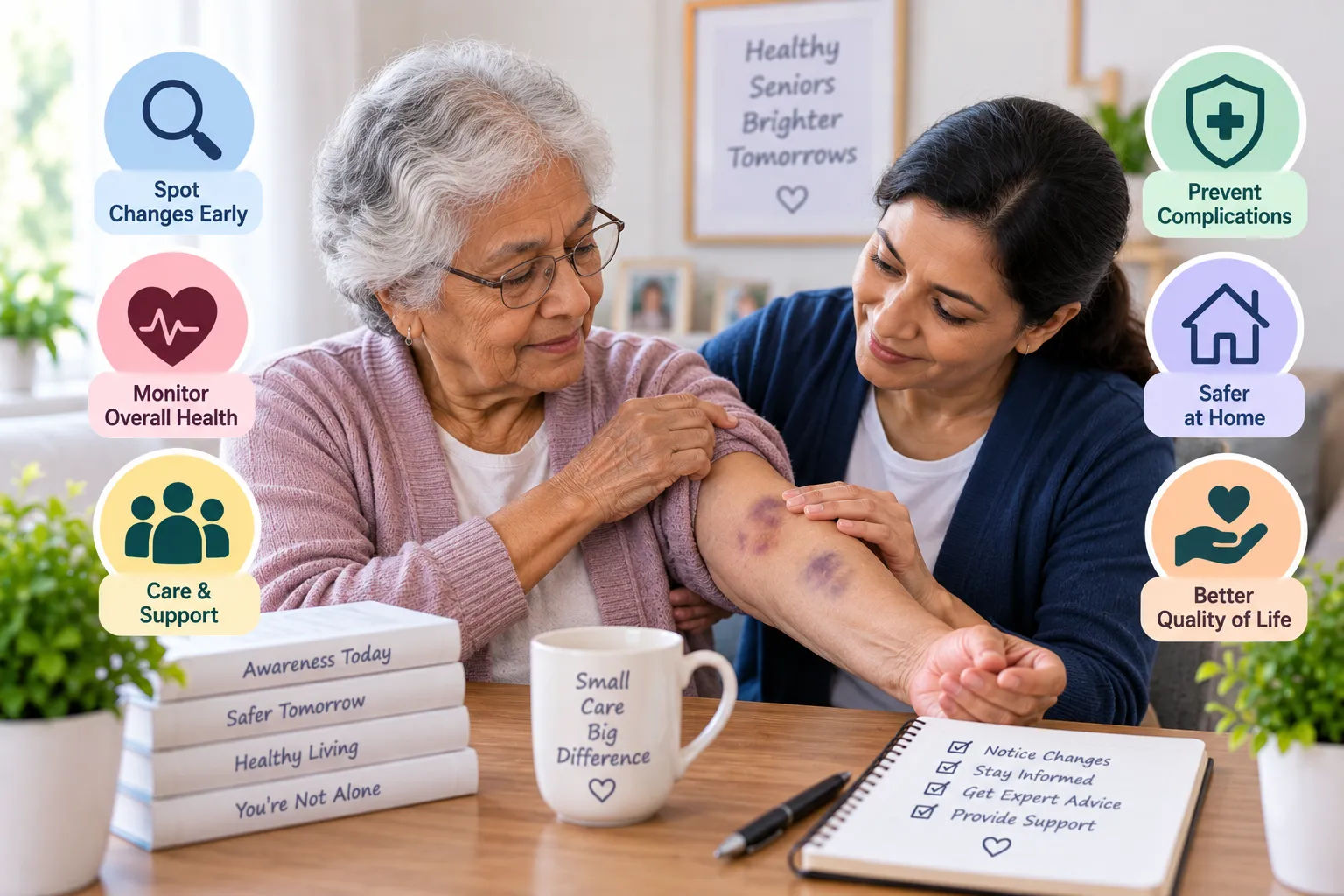
Bruising in elderly parents is one of those changes that can look alarming but is usually a normal, if unwelcome, part of aging. Thinning skin and fragile blood vessels mean even minor bumps that wouldn't have left a mark decades earlier can now cause a noticeable purple or yellow patch. Roughly 12% of adults develop this age-related bruising pattern after age 50, with prevalence climbing to up to 30% after 75.
Still, not all bruising is equally benign, and knowing which patterns warrant medical attention, versus which are simply cosmetic, helps families respond appropriately without either overreacting or missing something important.
Key Takeaways
- Bruising in elderly parents is often caused by senile purpura, a benign, age-related thinning of skin and blood vessels affecting up to 30% of adults over 75.
- Blood thinners, aspirin, and vitamin deficiencies significantly increase how easily and frequently bruising occurs.
- Most bruises need no treatment and fade within one to two weeks without intervention.
- Bruises that don't fade, appear without explanation, or follow a fall deserve a medical evaluation.
- Unusually placed or patterned bruises can, in some cases, signal elder abuse and deserve a careful, compassionate look.
Understanding these distinctions helps families respond to bruising with the right level of concern, neither dismissing it nor treating every mark as an emergency.
Why Bruising in Elderly Parents Happens So Easily
Several age-related changes combine to make bruising more common and more visible in older adults.
- Thinning skin loses much of its protective cushioning as the fat layer beneath it decreases with age, leaving blood vessels more exposed to injury.
- Blood vessel walls become more fragile, making them prone to breaking even with minor bumps that wouldn't have caused a mark years earlier.
- Years of sun exposure accelerate skin thinning, which is why senile purpura most often appears on the forearms and hands, areas with the most cumulative sun exposure.
- Slower healing means bruises take longer to fade, so a bruise may remain visible for a week or two rather than a few days.
These combined factors explain why a bump that once went unnoticed can now leave a visible, sometimes startling, mark on an aging parent's skin.
Medications and Health Conditions That Increase Bruising
- Blood thinners like warfarin, aspirin, or clopidogrel are among the most common causes of increased bruising, since they reduce the blood's ability to clot quickly.
- Vitamin C, vitamin K, or vitamin B12 deficiencies can impair the body's ability to maintain healthy blood vessels and clotting function.
- Chronic conditions like diabetes and hypertension can weaken blood vessel walls over time, contributing to easier bruising.
- Corticosteroid use, whether oral or topical thins the skin further and increases bruising susceptibility.
Call the doctor now if: If a parent takes blood thinners and develops a large, painful, or rapidly spreading bruise, especially after a fall or head injury, seek medical attention promptly.
Reviewing a parent's medication list with their doctor can clarify whether a specific prescription is contributing to increased bruising, and whether any adjustment is appropriate.
Bruising vs. Other Skin Changes to Watch For
Distinguishing ordinary bruising from other skin changes helps families know what deserves attention and what is simply part of normal aging.
- Senile purpura appears as flat, purplish patches typically on the forearms and hands, without pain or swelling.
- A hematoma is a raised, often painful lump that forms when blood pools more significantly beneath the skin, sometimes after a harder impact.
- Petechiae are tiny, pinpoint red or purple dots that can indicate a clotting problem and are worth mentioning to a doctor if they appear.
- Skin tears, common alongside thinning skin, are a related but distinct injury that also becomes more common with age and warrants its own careful wound care.
Knowing these distinctions helps a family describe what they are seeing accurately when discussing changes with a parent's doctor, which can speed up an accurate assessment.
When Bruising Signals a Fall Risk
Because falls are a leading cause of bruising in elderly adults, frequent or unexplained bruising can be an important clue about underlying balance or mobility issues.
- Bruises on the shins, hips, or arms often result from bumping into furniture, which can indicate declining spatial awareness or balance.
- Bruising accompanied by soreness that doesn't improve may indicate a more significant injury, such as a fracture, that warrants evaluation.
- A pattern of frequent bruising in the same areas can suggest a specific hazard at home, like a low table or narrow hallway, worth addressing directly.
Dee, Morning Star's founder: "When I started noticing bruises on my father's shins every week or two, it wasn't really about the bruises themselves, it was what they were telling me about how he was moving through his own house."
Treating recurring bruising as a signal worth investigating, rather than dismissing it, can catch a fall risk before it results in a more serious injury.
Recognizing Warning Signs That Warrant Medical Attention
While most bruising in elderly parents is harmless, certain patterns deserve a conversation with a doctor.
- Bruises that appear without any known cause, particularly if they're large or frequent, should be discussed with a physician.
- Bruising accompanied by unusual bleeding, such as from the gums or nose, can indicate a clotting or blood disorder.
- Bruises that don't fade after two weeks or continue to grow warrant medical evaluation.
- Bruising alongside fatigue, weight loss, or other new symptoms should prompt a broader medical workup rather than being attributed to bruising alone.
These warning signs don't necessarily indicate something serious, but they're worth raising with a doctor to rule out underlying causes that benefit from early attention.
A Sensitive Topic: Bruising and Elder Abuse
This is a difficult subject, but an important one: patterned or unusually placed bruises can, in some cases, be a sign of physical mistreatment, whether from a caregiver, in a care facility, or elsewhere.
- Bruises on the face, neck, or torso are less typical of accidental bruising and deserve closer attention.
- Bruises in patterns resembling fingers, hands, or objects are a recognized warning sign that should not be ignored.
- A parent who seems reluctant to explain a bruise, or whose explanation doesn't quite match the injury, deserves a gentle, private follow-up conversation.
Raising this possibility isn't about assuming the worst, it's about staying attentive enough to notice if something doesn't add up, and knowing that resources exist to help if a concern arises.
How to Reduce Bruising in Elderly Parents
While bruising can't be eliminated entirely, several practical steps can reduce its frequency and severity.
- Improving home lighting and clearing walkways reduces the bumps and falls that most commonly cause bruising.
- Wearing long sleeves or protective sleeves can shield thin, fragile skin from minor scrapes and bumps.
- Reviewing medications with a doctor can identify whether a dosage adjustment might reduce excessive bruising without compromising necessary treatment.
- Ensuring adequate nutrition, including vitamin C and K intake supports healthy blood vessels and skin.
These small, practical adjustments can meaningfully reduce how often a parent bruises, even though some degree of age-related bruising will likely remain.
Talking to a Parent Who Minimizes Their Bruising
Some older adults brush off bruising as unimportant, sometimes out of a genuine belief it's nothing, and sometimes to avoid worrying family members. Approaching the topic with curiosity rather than alarm tends to open up a more honest conversation.
- Asking open-ended questions about how a bruise happened rather than immediately expressing concern can lead to more complete, honest answers.
- Framing medication or safety conversations around independence tends to land better than framing them around decline or fragility.
- Involving a doctor in the conversation can help a parent take a pattern of bruising more seriously than they might from family alone.
These conversations, handled with patience rather than urgency, tend to be far more productive and are more likely to lead a parent to accept help when it's genuinely needed.
A Real Family Scenario
Susan first noticed the bruises on her mother's forearms during a routine visit, small purple patches that seemed to appear from nowhere. Concerned, she brought it up gently, and her mother explained she'd simply bumped into the kitchen counter a few times that week. Rather than dismissing it, Susan looked more closely at the kitchen layout and realized a cabinet door had been left open at an awkward angle for weeks. A simple fix, along with a conversation with her mother's doctor about her blood thinner dosage, noticeably reduced the bruising over the following months.
How an In-Home Caregiver Helps Monitor and Reduce Bruising
An in-home caregiver can play a valuable role both in reducing the everyday bumps that cause bruising and in noticing patterns worth discussing with a doctor.
- Helping maintain a safer home environment, reducing clutter and hazards that commonly cause bumps and falls.
- Noticing and documenting bruising patterns over time, which can be genuinely useful information for a doctor.
- Supporting medication management, helping ensure blood thinners and other medications are taken as prescribed.
- Providing an attentive, consistent presence that can catch both fall risks and any concerning patterns early.
"Having someone around regularly means bruises get noticed right away, not weeks later, and that timing can really matter."
This kind of steady attention helps families stay informed about a parent's bruising without needing to interpret every mark on their own.
A Final Thought
Bruising in elderly parents is, in most cases, simply a visible reminder of skin that has thinned and blood vessels that have become more fragile with age, nothing more concerning than that. Still, staying attentive to patterns, causes, and any accompanying symptoms helps families respond appropriately, whether that means a simple home safety fix, a conversation with a doctor about medication, or, in rarer cases, a closer look at a parent's safety and care.
A Note for Connecticut Families
Morning Star Home Care supports families across Bristol and the greater Connecticut area with in-home caregiving that includes attentive monitoring of a parent's health and safety, including noticing and communicating changes like unexplained bruising to family members and medical providers.
References
Written by
Morning Star Care Team
Morning Star Home Care — Caregiver-Founded and Locally Owned in Bristol, CT.