
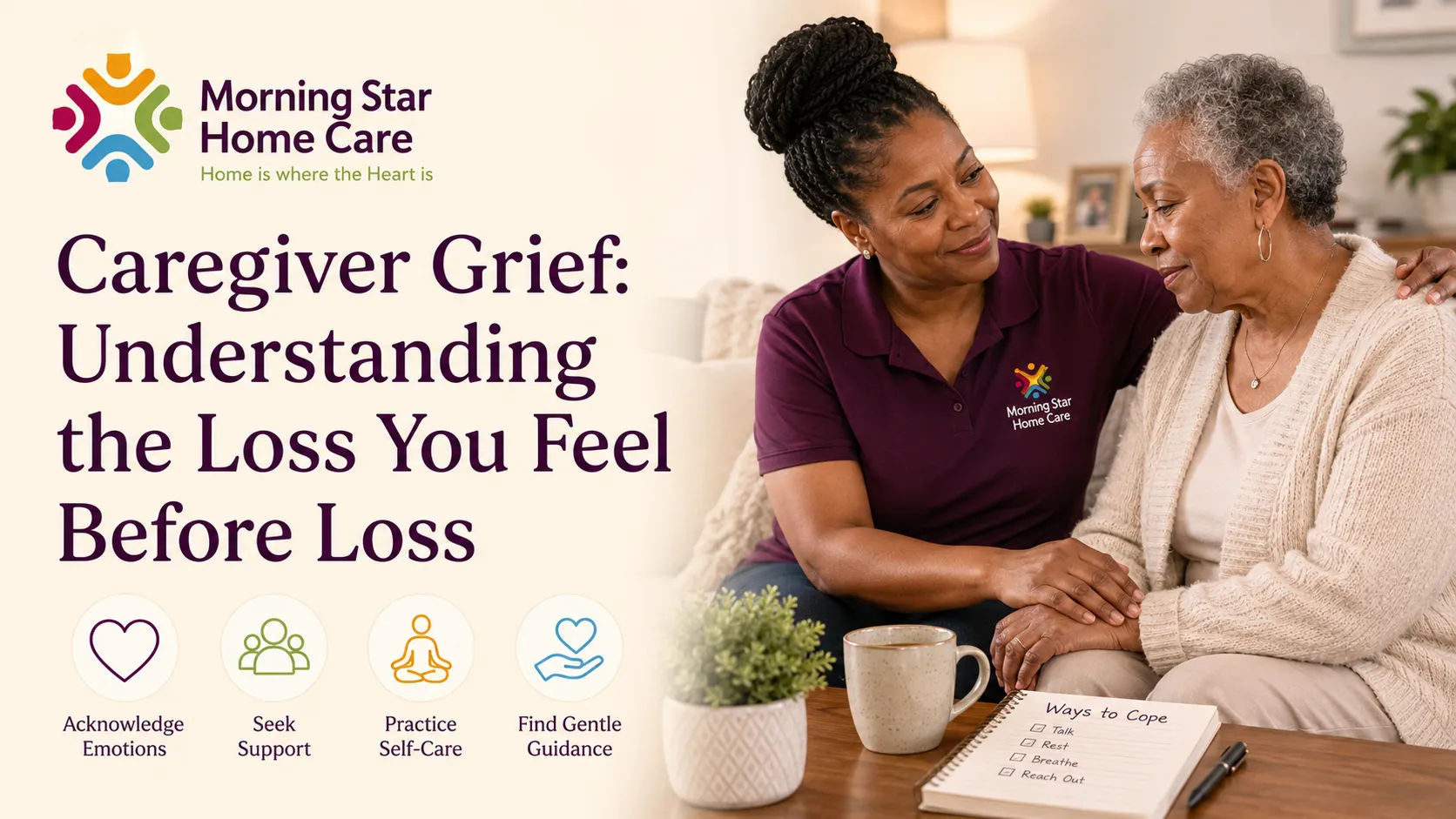
Caregiver grief rarely waits for a funeral. Long before a parent or spouse actually passes, many caregivers find themselves grieving, mourning the person their loved one used to be, the relationship that's changed, and a future that now looks entirely different. This is called anticipatory grief, and it's far more common and significant than most caregivers expect. Research on caregivers of dementia and cancer patients finds that more than half experience meaningful anticipatory grief, with caregiver burden strongly predicting its intensity.
This guide covers what caregiver grief actually is, why it happens before loss, and how to genuinely cope with it while still in the middle of caregiving.
Key Takeaways
- Anticipatory grief, grief that begins before death, is real and common, affecting more than half of family caregivers in some research.
- Caregiver grief includes multiple losses/?span> — the person as they were, your own time and freedom, and the future you'd imagined.
- Higher caregiver burden is strongly linked to more intense grief, making burden reduction itself a form of grief support.
- Anticipatory grief doesn't reduce grief after death, it's a separate, additional process, not a substitute for later mourning.
- Naming and validating this grief — rather than dismissing it because "they're still here" — is an important first step.
Understanding that this grief is a legitimate, well-documented experience, not an overreaction, changes how caregivers can approach coping with it.
What Is Anticipatory Grief, Exactly
Anticipatory grief is the process of experiencing normal grief reactions before an actual death occurs, and it's especially common in long, progressive conditions like dementia or advanced cancer.
- It involves the same core emotions as grief after death — sadness, anger, guilt, and a sense of loss — but occurs while the person is still alive.
- It often centers on losing the relationship as it was, even though the person is physically present, particularly common with dementia.
- Research shows caregivers of dementia patients report notably high anticipatory grief scores, often higher than caregivers in other conditions.
- It's a recognized, studied phenomenon, not a sign of giving up on or failing to appreciate the person who's still here.
Dee, Morning Star's founder: "Families sometimes feel guilty admitting they're grieving someone who's still alive, especially with dementia, when the person in front of them isn't quite who they remember. That guilt itself is one of the hardest parts, and it's completely normal to feel it."
Recognizing anticipatory grief as a distinct, legitimate experience, not a character flaw or premature reaction, is often the first relief a caregiver finds.
The Many Layers of Caregiver Grief
Caregiver grief isn't a single feeling, it's usually a combination of several distinct losses happening simultaneously, which is part of why it can feel so overwhelming.
- Grief for the person as they were, especially with cognitive decline, mourning personality traits, memories, and the relationship dynamic that's changed.
- Grief for your own lost time, freedom, and identity outside of caregiving, which can feel harder to admit than grief for the care recipient.
- Grief for the future you'd imagined, whether retirement plans, family milestones, or simply an easier chapter of life.
- Grief mixed with relief, particularly toward the end of a long illness, which often generates significant guilt despite being a completely normal, documented response.
- Grief for your relationship with siblings or other family, if caregiving responsibilities and decisions have created tension or distance.
Recognizing which of these layers is present, often several at once, helps caregivers make sense of feelings that can otherwise seem contradictory or confusing.
Why Caregiver Burden Makes Grief Worse
Research consistently finds that higher caregiver burden, the physical, emotional, and logistical weight of caregiving, is strongly associated with more intense anticipatory grief.
- Exhaustion leaves less emotional capacity to process grief in real time, so it often gets pushed aside until it accumulates.
- Loss of personal identity outside the caregiving role compounds grief, since caregivers often lose touch with their own interests and social life.
- Financial strain and reduced work hours add a layer of practical stress on top of emotional grief, making both harder to manage.
- Reducing caregiver burden itself, through respite care, shared responsibilities, or professional support, is therefore a legitimate way to support grief, not just a separate practical fix.
This connection between burden and grief is exactly why bringing in outside support isn't a failure to cope, it's a proven way to make coping more possible.
Common Signs of Caregiver Grief
Caregiver grief doesn't always look like typical sadness, it often shows up in less obvious ways that can be mistaken for something else entirely.
- Persistent irritability or a short temper, especially uncharacteristic for the caregiver, can be an expression of unprocessed grief.
- Difficulty sleeping or intrusive worried thoughts about the future or the person's decline.
- Withdrawing from friends or activities, sometimes from exhaustion, sometimes from a sense that others can't understand.
- Guilt over moments of frustration, relief, or resentment toward the person being cared for, even briefly.
- A sense of numbness or going through the motions, sometimes a protective response to grief that feels too overwhelming to fully feel.
Recognizing these signs as grief, rather than simply stress or a personal failing, opens the door to more appropriate and effective support.
Faith communities, when relevant to a caregiver's life, can also offer a distinct and valuable form of grief support, combining spiritual perspective with practical community, including meal trains, visits, and prayer or reflection groups specifically oriented around illness and loss.
Coping Strategies That Actually Help
While there's no way to eliminate caregiver grief entirely, several approaches genuinely help caregivers process it while still actively providing care.
- Naming the grief out loud, to a friend, therapist, or support group, rather than carrying it silently, tends to reduce its weight meaningfully.
- Caregiver support groups, whether condition-specific (like dementia caregiver groups) or general, provide validation from people who genuinely understand.
- Grief counseling or therapy isn't only for after a death, many therapists specialize in anticipatory grief and ongoing caregiver support.
- Allowing space for both grief and joy — good moments with a loved one and grief over their decline can coexist without one canceling out the other.
- Respite care, even a few hours a week, gives caregivers space to process emotions that get crowded out during constant hands-on care.
"I felt guilty even calling it grief while Mom was still here. A counselor helped me see that mourning who she used to be didn't mean I loved who she is now any less."
These strategies work best in combination, no single approach fully addresses grief this layered and ongoing.
It can also help to keep a short list of people, whether friends, clergy, or fellow caregivers, who have explicitly said "call me anytime," so that reaching out in a genuinely hard moment does not require deciding who to burden with the request.
When Relief Comes With Guilt
One of the most difficult and least discussed parts of caregiver grief is the relief many caregivers feel, sometimes during the illness, often after a death, and the guilt that frequently follows.
- Relief is a documented, normal response to the end of prolonged physical and emotional strain, not a sign of not having loved the person.
- Relief and grief regularly coexist, they aren't mutually exclusive feelings, even though they can feel contradictory in the moment.
- Talking about this specific guilt with a therapist or support group often brings significant relief itself, since caregivers frequently discover the feeling is far more common than they assumed.
Understanding that relief doesn't diminish love or devotion is often one of the most freeing realizations a caregiver can reach.
It also helps to know that anticipatory grief does not run on a predictable timeline. It can ebb and return in waves tied to specific moments, a difficult diagnosis update, a missed holiday tradition, a stranger mistaking your loved one for someone they no longer resemble, rather than steadily fading over the course of caregiving.
Grief After Death: What Changes
Anticipatory grief during caregiving doesn't replace or reduce grief after an eventual death, research consistently shows they're separate, additive processes rather than one substituting for the other.
- Post-loss grief can still feel sudden and overwhelming, even after years of anticipatory grief during caregiving.
- The loss of the caregiving role itself often brings an unexpected identity shift and grief of its own, alongside grief for the person.
- Support that felt available during caregiving sometimes fades afterward, just as grief intensifies, making it important to proactively seek continued support.
- Grief counseling and bereavement support groups remain valuable well after a death, not just in the immediate aftermath.
Caregivers who assume they've "already done their grieving" during caregiving are sometimes surprised by the intensity of grief that follows, and that surprise itself is a normal, common experience.
Talking to Children and Other Family Members About Caregiver Grief
Caregiver grief rarely stays contained to just the primary caregiver, it ripples through the whole family, and how it's discussed, or not discussed, matters.
- Children and grandchildren often sense grief even when adults try to shield them from it, and age-appropriate honesty tends to work better than pretending everything is fine.
- Siblings sharing caregiving duties may experience and express grief differently, which can create friction if one sibling assumes the others aren't "grieving enough."
- Family meetings focused specifically on emotional experience, not just logistics and task assignments, create space for grief to be acknowledged rather than only managed silently.
- A family therapist can help navigate these conversations when grief is creating tension or misunderstanding between family members.
Grief handled openly as a shared family experience, rather than something each person carries alone, tends to strengthen rather than strain family relationships over time.
A Real Family Scenario
Dee cared for her husband through six years of Parkinson's disease, and by the time he passed, she assumed she'd already grieved most of what there was to grieve. Instead, the months afterward brought a different kind of grief entirely, mourning not just him, but the caregiving routine and sense of purpose that had structured her days for years. A grief support group specifically for former caregivers helped her recognize this as its own distinct, valid stage, not a sign that her earlier grieving had somehow failed.
Dee's experience reflects what the research consistently shows: anticipatory grief and post-loss grief are related but distinct, and both deserve genuine attention and support.
Milestones that once felt purely celebratory, birthdays, anniversaries, holidays, can also become quiet grief triggers once a loved one's condition has changed how those occasions are experienced, and preparing for that shift in advance can soften its impact somewhat.
How In-Home Care Support Can Ease Caregiver Grief
Bringing in professional in-home care doesn't replace a family caregiver's role or love, it reduces the physical and logistical burden that research directly links to more intense grief. Freeing up even a few hours a week creates real space to rest, process emotions, and maintain outside relationships, all of which support healthier long-term coping.
Dee, Morning Star's founder: "Some of the most meaningful conversations we have with family caregivers happen once we've taken a few tasks off their plate. They finally have the space to actually feel what they've been holding off, and that's a genuinely important part of the process."
Reducing caregiver burden through outside support isn't a substitute for grieving well, it's often what makes grieving well possible in the first place.
Self-Compassion During an Ongoing Grief Process
Caregivers are often quick to extend patience and compassion to the person they're caring for, and far slower to extend the same grace to themselves during a grief process that has no clear end date.
- There is no "right" amount of grief to feel while still actively caregiving, and comparing your own emotional experience to another caregiver's rarely helps.
- Setting aside even small moments for yourself, a short walk, a phone call with a friend, a few pages of a book, is not selfish, it is a documented part of sustaining the emotional capacity caregiving requires.
- Journaling can help externalize grief that otherwise circles internally without resolution, even just a few sentences a day.
- Physical self-care, sleep, movement, and nutrition, directly affects emotional resilience, making it a genuine part of grief coping rather than a separate, lower-priority concern.
Treating your own well-being as a legitimate priority, not an indulgence, tends to make sustained caregiving and healthy grieving more possible together, not in competition with each other.
A Final Thought
Caregiver grief, whether it begins years before a loss or arrives afterward, deserves the same recognition and support as any other significant grief. Naming it honestly, seeking support without guilt, and reducing caregiving burden where possible all make this genuinely difficult experience more bearable.
There's no correct timeline or order for these feelings to arrive, and comparing your own grief process to someone else's rarely helps.
Whatever stage of grief a caregiver is in, before loss, during it, or long after, that grief is valid on its own terms and does not need to fit a familiar timeline or pattern to deserve real support.
A Note for Connecticut Families
Caregiver support groups, including dementia-specific and general grief counseling resources, are available throughout the Bristol and Greater Hartford area, often through hospital systems, hospice organizations, and the local Area Agency on Aging.
Reaching out for support, whether a friend, a support group, or a professional, remains one of the most protective things a grieving caregiver can do, both for their own well-being and for the quality of care they're able to continue providing.
References
- PMC — The Relationship Between Family Caregivers' Anticipatory Grief and Severity of Dementia
- Wiley Psycho-Oncology — Development and Validation of a Predictive Model for Anticipatory Grief in Family Caregivers of Cancer Patients
- ScienceDirect — A Comparative Study of Anticipatory Grief in Caregivers of Patients With Alzheimer's Disease and Hematological Malignancy
Written by
Morning Star Care Team
Morning Star Home Care — Caregiver-Founded and Locally Owned in Bristol, CT.