
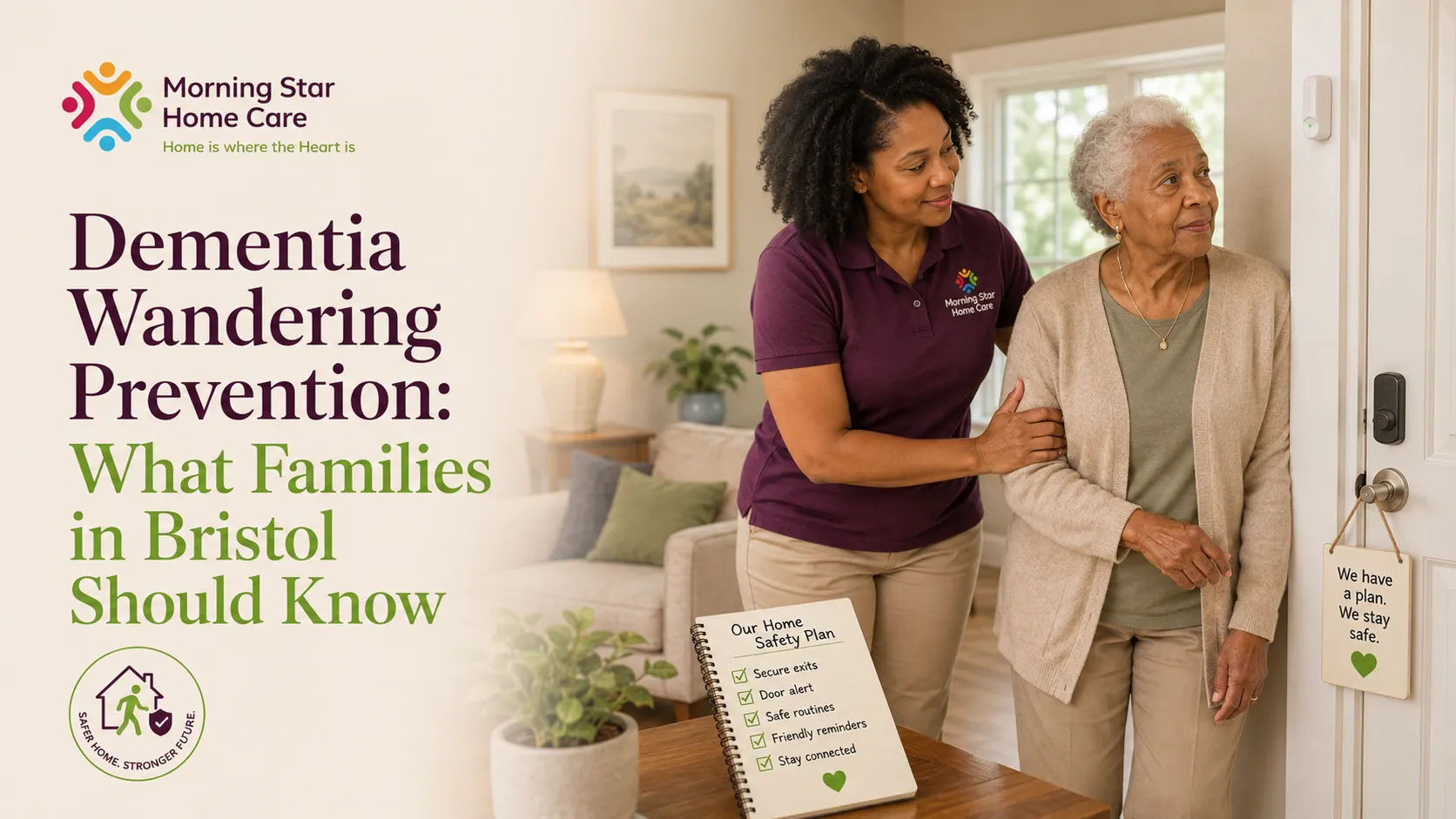
Dementia wandering prevention is one of the most urgent safety topics families face once a loved one's memory begins to decline — and the statistics explain why. According to the Alzheimer's Association, roughly 6 in 10 people with dementia will wander at some point, and many will do so more than once. Separate research puts the figure even higher: as many as 74% of people with Alzheimer's or another dementia will wander from home at least once, whether on foot, by car, or using public transportation.
The stakes are serious. Around 30% of missing dementia-related cases result in serious harm or death — injuries, falls, traffic accidents, exposure to weather, or drowning — and survival rates can drop as low as 10% if someone isn't found within 24 hours. Understanding why wandering happens, and building layered prevention around it, meaningfully changes those odds.
Key Takeaways
- Roughly 6 in 10 people with dementia will wander, often starting well before families expect it.
- Wandering usually has a reason behind it — confusion, searching for something familiar, restlessness — even if it looks aimless.
- Layered prevention works best: environmental changes, daily routine, identification, and technology together, not any single fix.
- Time matters enormously if someone does go missing — acting within the first 15 minutes significantly improves outcomes.
- An ID bracelet or GPS device should be considered standard, not optional, once wandering risk is identified.
Why Dementia Wandering Happens
Wandering rarely looks random from the inside, even when it appears aimless to family members. Common triggers include searching for something or someone from the past (a childhood home, a former job, a spouse who has passed), restlessness or excess energy with nowhere to direct it, confusion about time or place that makes a familiar environment feel foreign, or simply following an old routine — like heading out the door at the time they used to leave for work.
Dee, Morning Star's founder: "Wandering almost always has logic behind it, even if it's logic from thirty years ago. Understanding what someone might be searching for helps families respond with reassurance instead of just redirection."
Understanding these triggers matters because effective dementia wandering prevention responds to the underlying need — a sense of purpose, familiarity, or activity — rather than simply trying to physically block the behavior, which often increases frustration and agitation without addressing why the urge to leave developed in the first place.
Recognizing Wandering Risk Before It Happens
Certain signs tend to precede a wandering incident, and catching them early gives families time to add prevention layers before an actual event.
- Returning from a regular walk or drive later than usual, or getting lost on a familiar route.
- Trying to fulfill former obligations, such as going to a job they retired from years ago.
- Talking about wanting to "go home" even while already at home.
- Increased restlessness or pacing, especially in the late afternoon or evening.
- Difficulty locating familiar rooms within their own house.
It is worth noting that none of these signs alone confirms wandering risk with certainty, but taken together, a cluster of them justifies adding prevention layers sooner rather than waiting for an actual incident to prompt action.
Environmental Prevention Strategies
Simple changes to the home environment can meaningfully reduce exit-seeking behavior without making the home feel like a locked facility.
- Door alarms or chimes that alert a caregiver when an exterior door opens, even at night.
- Childproof doorknob covers or additional latches placed higher or lower than eye level, which can reduce the impulse to open a door without being obviously restrictive.
- Camouflaging doors with a curtain, a mural, or a floor mat with a pattern that visually discourages crossing — research suggests these visual cues reduce exit-seeking behavior.
- Removing visual triggers near the door — coats, shoes, keys, and a purse or wallet by the entrance can prompt an urge to "head out."
A layered environment — combining a couple of these strategies rather than relying on just one — tends to hold up better than any single change, since a determined or highly confused person may work around a single barrier over time.
Behavioral and Routine-Based Prevention
Environmental changes work best alongside routine and behavioral strategies that address wandering at its source.
- A consistent daily schedule reduces the anxiety and disorientation that often triggers wandering.
- Regular physical activity during the day helps address restlessness that might otherwise build toward an evening wandering episode — a pattern sometimes called "sundowning."
- Never leaving someone alone in an unfamiliar environment — stores, parks, restaurants, or a relative's house — where wandering risk is higher than at home.
- Redirecting rather than arguing when someone expresses a wish to "go home" or "go to work" — validating the underlying feeling tends to work better than correcting the facts.
Identification: The Non-Negotiable Layer
Regardless of how strong environmental and behavioral prevention is, identification should be considered a baseline safety measure once any wandering risk has been identified, since it dramatically shortens the time to a safe return if prevention fails.
- A medical ID bracelet ●with the person's name, a contact number, and a note about memory impairment.
- Enrollment in a formal registry such as the Alzheimer's Association's MedicAlert + Safe Return program, which coordinates with law enforcement.
- A recent photo kept accessible ●on a phone, since a current photo is one of the first things responders ask for.
Some families hesitate to use identification, worrying it feels like giving up or admitting their loved one can no longer be trusted alone. It is worth reframing this: identification does not cause wandering, it simply protects against the consequences if it happens despite every other precaution, the same way a seatbelt does not cause car accidents.
GPS and Technology-Based Prevention
GPS trackers, worn as a watch, clipped to clothing, or embedded in a shoe insert, add a real-time layer of protection beyond identification alone — allowing a family to locate someone quickly if they do leave unnoticed, rather than relying entirely on prevention holding. This is different from, and complementary to, broader home monitoring systems, since it specifically addresses location tracking away from home rather than in-home safety monitoring.
"The GPS watch felt like overkill until the one time Dad actually walked out while I was on a phone call in another room. Finding him in four minutes instead of searching blindly changed how that whole afternoon went."
It is worth checking whether a homeowner's or renter's insurance policy, or a separate service, offers any coverage or subsidy toward a GPS device, since some programs specifically support dementia-related safety technology at reduced cost for qualifying families.
What to Do If Someone Goes Missing
Acting quickly and systematically matters enormously if wandering does happen, since survival outcomes drop sharply the longer someone is missing.
Call the doctor now if: If a loved one with dementia goes missing, search the immediate area for 15 minutes at most, then call 911 immediately — don't wait longer out of embarrassment or a hope they'll turn up on their own. Tell responders it's a dementia-related disappearance, since this changes how quickly and how the search is prioritized.
- Check likely destinations first — a former home, workplace, or place of worship — while also calling 911.
- Have a recent photo and description ready to share with responders immediately.
- Search nearby hazards — water, roads, wooded areas — since these carry the highest risk of serious harm.
The Emotional Toll of Wandering on Families
Discovering that a loved one has wandered, or even just recognizing the risk for the first time, tends to bring up real fear, guilt, and grief for family members, even when nothing bad actually happens. It is common to feel a sense of failure after a wandering incident, replaying what could have been done differently, even when the incident was genuinely unpredictable. Recognizing that wandering is a documented, common feature of dementia progression, not a sign of inadequate caregiving, helps families process this without adding unnecessary guilt to an already difficult situation.
Wandering by Vehicle: A Different Kind of Risk
Wandering isn't limited to walking away on foot. A person in early-to-moderate dementia may still hold a valid driver's license and get into a car with the intention of running a familiar errand, only to become disoriented mid-drive — a scenario that carries higher physical risk than wandering on foot, both to the driver and to others on the road. If driving safety has already become a concern, addressing car keys directly (removing them, disabling the vehicle, or using a keyed lockbox) becomes part of a complete wandering prevention plan, not a separate issue.
Families sometimes focus heavily on the front door while overlooking the garage or driveway as an equally significant wandering risk once vehicle access is involved.
Wandering in Unfamiliar or Public Settings
Wandering risk isn't limited to the home environment — it often shows up more suddenly in unfamiliar or crowded public settings, where visual and auditory overstimulation can increase confusion and the urge to seek an exit. A shopping trip, a family gathering at someone else's house, or a medical appointment waiting room are all higher-risk settings than a familiar home, and warrant closer, more direct supervision than a caregiver might use at home.
- Stay within arm's reach in public settings rather than assuming a few feet of distance is safe, since public spaces have more exits and more distraction.
- Choose less crowded times for errands and appointments when possible, since overstimulation itself can trigger exit-seeking behavior.
- Inform staff at frequently visited locations — a regular pharmacy, doctor's office, or senior center — so they can help if separation happens.
It is worth having this vehicle-safety conversation early, ideally before a wandering-related driving incident forces the issue, since it tends to go more smoothly as a proactive safety measure than as a reaction to a frightening event.
Sundowning and Evening Wandering Risk
Wandering risk often rises in the late afternoon and evening due to a phenomenon called sundowning — increased confusion, agitation, and restlessness that tends to worsen as daylight fades. Understanding this pattern helps families anticipate higher-risk windows rather than being caught off guard by behavior that seems to appear from nowhere in the evening.
Keeping evening routines calm and predictable, ensuring adequate lighting well before dusk (since increasing shadows and reduced visibility can worsen confusion), and scheduling more demanding activities like appointments or errands earlier in the day can all reduce the intensity of sundowning-related restlessness.
A Real Family Scenario
Karen didn't think her father Walt was a wandering risk — he'd never tried to leave the house before. Then one evening, restless and confused about the time, he let himself out the back door while she was upstairs, convinced he needed to pick up his own father from a train station that had closed decades earlier. A neighbor spotted him two streets over and called Karen directly, since Walt was wearing the ID bracelet she'd reluctantly bought a month earlier "just in case." That was the last time she second-guessed the bracelet.
Wandering Risk Changes Over the Course of Dementia
Wandering risk is not static — it tends to peak during the middle stages of dementia, when someone retains enough physical mobility to leave independently but has lost enough judgment and memory to navigate safely, and often declines again in later stages as mobility itself becomes more limited. This means a family that assessed wandering risk as low a year ago may need to reassess as the disease progresses, rather than assuming an earlier evaluation still applies.
Talking to Neighbors and Building a Local Safety Network
Neighbors are often an overlooked but genuinely valuable layer of dementia wandering prevention, particularly in a close-knit community. Letting a few trusted neighbors know about a loved one's dementia diagnosis, sharing a photo, and asking them to call if they see the person outside alone builds an informal but real safety net that extends well beyond what a family can monitor alone. Many families feel hesitant to share a diagnosis this openly, but the safety benefit tends to outweigh the privacy concern once wandering risk becomes a real possibility.
Local police departments, including here in the Bristol area, often maintain voluntary registries of residents with dementia or other conditions that increase wandering risk, so that responding officers have relevant background information immediately if a call comes in. It's worth asking directly whether this kind of registry exists locally.
Local police familiarity with a household also means a faster, more informed response if a call does need to be made, since responding officers already have background context rather than starting from zero.
How a Professional Caregiver Reduces Wandering Risk
A consistent, trained in-home caregiver adds meaningful protection against wandering that's difficult for family members managing full-time jobs and their own households to replicate — someone present during the specific hours when wandering risk tends to be highest, familiar enough with a client's patterns to notice early warning signs, and trained in the kind of calm redirection that helps de-escalate the restlessness that often precedes an actual wandering episode.
Dee, Morning Star's founder: "Our caregivers get to know a client's patterns well enough to notice the early signs before a family member visiting occasionally would catch them — the pacing, the talk about 'needing to get going,' the restlessness that builds before someone actually tries to leave."
Written by
Morning Star Care Team
Morning Star Home Care — Caregiver-Founded and Locally Owned in Bristol, CT.