
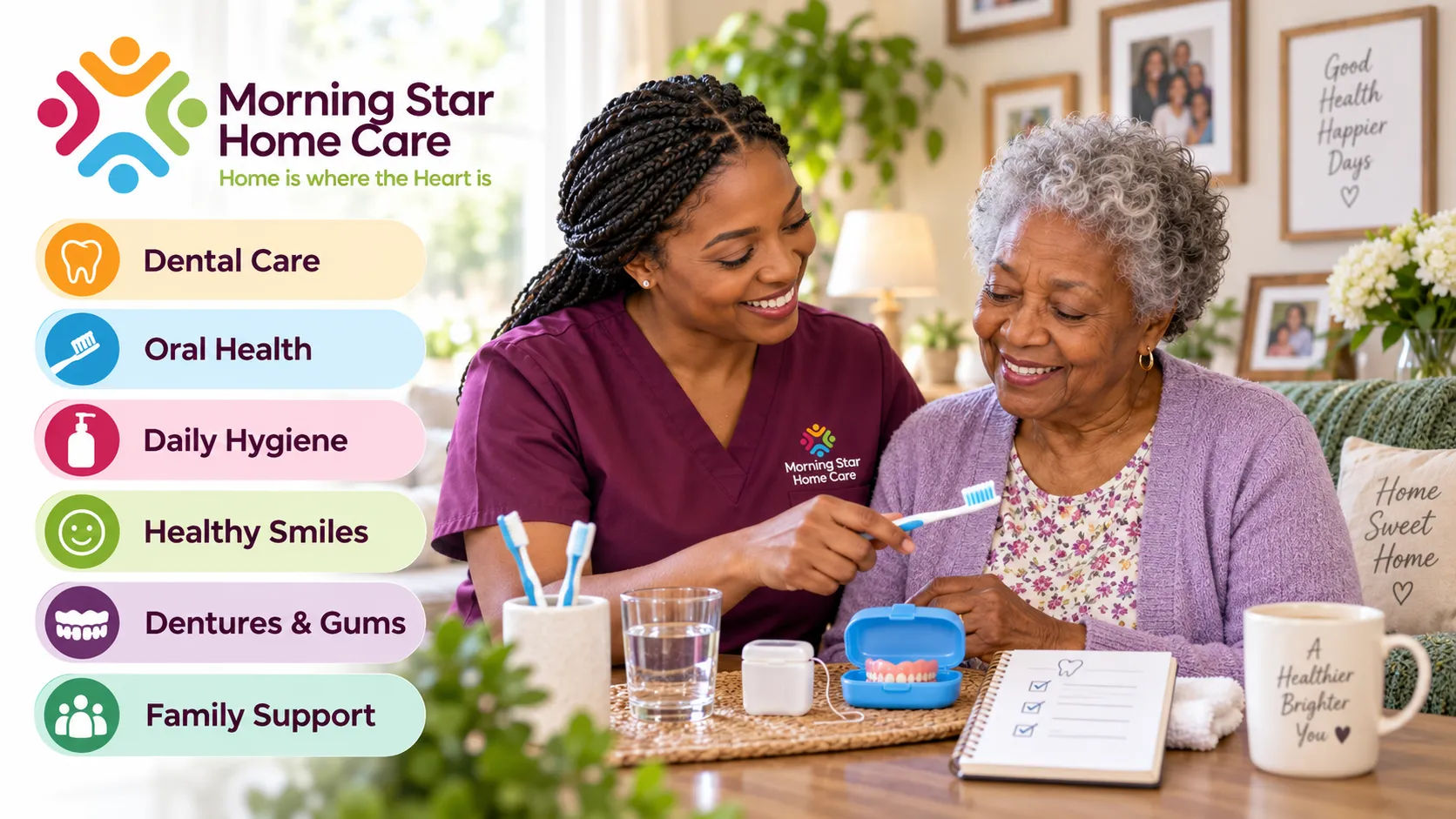
Dental care for seniors often gets deprioritized, both by families managing multiple health concerns and by seniors themselves, who may associate dental visits with cost and discomfort rather than genuine necessity. The numbers make a strong case for closer attention: nearly 1 in 5 adults 65 and older have lost all their teeth, complete tooth loss is twice as common among adults 75 and older, and gum disease affects roughly 70% of seniors overall. Oral health in elderly parents isn't a cosmetic afterthought, it connects directly to nutrition, speech, comfort, and broader physical health.
This guide covers why dental care matters more with age, the specific challenges seniors face, and practical steps to protect oral health in later life.
Key Takeaways
- Nearly 1 in 5 adults 65 and older have lost all their teeth, with complete tooth loss twice as common among those 75 and older.
- Gum disease affects roughly 70% of seniors, making it one of the most common, and often overlooked, chronic conditions in later life.
- Oral health connects to broader physical health, including links to cardiovascular disease and, per emerging research, cognitive decline.
- Reduced dexterity and dry mouth from medications create genuine, age-specific barriers to effective daily oral care.
- Regular dental visits remain important even with dentures or no natural teeth, contrary to a common misconception that dental care becomes unnecessary.
Understanding the specific, age-related challenges to oral health is the first step toward addressing them effectively rather than accepting decline as inevitable.
None of these changes make good oral health unattainable, they simply mean the approach that worked at thirty may need genuine adjustment at seventy or eighty, a normal, expected shift rather than a sign of failure.
Why Oral Health Changes With Age
Several age-related factors combine to make dental care for seniors both more challenging and more important than at earlier life stages.
- Dry mouth (xerostomia), a common side effect of many medications seniors take regularly, reduces saliva's natural protective effect against decay and gum disease.
- Receding gums expose tooth roots, which are more vulnerable to decay than the enamel-covered crown of the tooth.
- Reduced dexterity or arthritis can make brushing and flossing physically more difficult, sometimes leading to inconsistent or ineffective daily care.
- Cognitive decline can affect a person's ability to remember or properly perform daily oral hygiene routines.
- Years of cumulative wear, past dental work, and existing conditions mean seniors often manage a more complex dental history than younger adults.
Recognizing these specific age-related factors helps explain why a one-size-fits-all approach to oral hygiene often falls short for older adults.
Speech and social confidence are also worth mentioning, since tooth loss or ill-fitting dentures can affect clarity of speech and willingness to smile or speak in social settings, a quieter but genuinely meaningful quality-of-life impact beyond the physical symptoms.
The Connection Between Oral Health and Overall Health
Oral health in elderly parents isn't isolated from the rest of the body, research increasingly points to meaningful connections with broader physical health.
- Gum disease is linked to increased cardiovascular risk, with inflammation from periodontal disease potentially contributing to heart disease.
- Emerging research suggests a connection between oral health and cognitive decline, including subjective cognitive decline, an active and evolving area of study.
- Poor oral health directly affects nutrition, since pain or difficulty chewing often leads to avoiding nutrient-dense foods that require more chewing effort.
- Untreated dental infections can affect overall health more broadly, particularly for those managing diabetes or other chronic conditions where infection control matters significantly.
These connections are exactly why oral health deserves a place in routine health conversations, not treatment as a separate, lower-priority concern.
Bad breath, while sometimes dismissed as a minor cosmetic issue, can also be an early signal of gum disease, dry mouth, or other oral health problems, making it worth mentioning to a dentist rather than simply masking with mints or mouthwash.
Common Oral Health Problems in Seniors
Beyond tooth loss and gum disease, several other oral health issues become more common with age and deserve attention.
- Root decay, affecting exposed tooth roots from receding gums, is a distinct risk not present in younger adults with fuller gum coverage.
- Oral cancer risk increases with age, making regular screening during dental visits a genuinely valuable early detection opportunity.
- Denture-related issues, including poor fit, sores, and difficulty eating, are common and often under-reported since patients assume some discomfort is simply expected.
- Dry mouth beyond medication side effects can also stem from certain medical conditions, adding another dimension to manage alongside medication review.
Because several of these issues develop gradually and painlessly at first, regular professional checkups catch problems earlier than waiting for noticeable pain.
For someone managing multiple health conditions, coordinating dental care with a broader medical team, mentioning relevant medications or diagnoses to the dentist, and vice versa, helps ensure treatment decisions account for the full health picture rather than the mouth in isolation.
Daily Oral Care: Adapting to Changing Needs
Effective daily oral care often needs to be adapted as dexterity, vision, or cognitive ability change, rather than assuming the same routine remains equally effective indefinitely.
- Electric toothbrushes require less fine motor control than manual brushing and are often easier and more effective for someone with reduced dexterity.
- Built-up or adapted toothbrush handles can make gripping easier for someone with arthritis or reduced hand strength.
- Floss picks or water flossers offer easier alternatives to traditional string floss, which can be difficult to maneuver with reduced dexterity.
- A consistent, simple routine posted as a visual reminder can help someone with early cognitive changes maintain daily oral care independently for longer.
Dee, Morning Star's founder: "We often start by simplifying, not adding steps. An electric toothbrush and a water flosser can replace a more complicated routine that was becoming genuinely difficult to manage."
Adjusting tools and routines to match current ability, rather than insisting on a familiar but increasingly difficult method, keeps daily care both effective and sustainable.
Denture adhesive deserves a brief, practical note: while helpful for stability, relying on increasing amounts of adhesive to compensate for a poor fit is usually a sign that a professional adjustment, not more adhesive, is the actual solution needed.
Denture Care and Common Misconceptions
Having dentures doesn't eliminate the need for oral health care, a common misconception that leads many seniors to skip dental visits entirely once they lose their natural teeth.
- Dentures still require daily cleaning to prevent bacterial buildup, staining, and odor, using a denture-specific cleaner rather than regular toothpaste.
- Gums, tongue, and any remaining teeth still need daily attention, since oral tissue health matters regardless of whether natural teeth remain.
- Poorly fitting dentures can cause pain, sores, and difficulty eating, and typically need periodic adjustment as the jaw and gums change shape over time.
- Regular dental visits remain important with dentures, including oral cancer screening and fit checks, even without any natural teeth remaining.
Reframing denture care as an ongoing responsibility, not a one-time solution, helps prevent the discomfort and health issues that come from neglecting it.
A helpful practice for families is scheduling dental checkups on a similar cadence to other routine medical appointments, twice a year in most cases, rather than letting dental visits slip simply because no obvious problem has surfaced.
When to See a Dentist
Certain signs warrant a prompt dental visit rather than waiting for a routine checkup.
Call the doctor now if: See a dentist promptly for tooth pain, bleeding or swollen gums, loose teeth, mouth sores that don't heal within two weeks, or difficulty wearing dentures comfortably — these can signal issues that worsen without treatment.
- Persistent tooth or gum pain, which shouldn't be dismissed as an unavoidable part of aging.
- Bleeding gums during brushing, an early sign of gum disease that's more effectively treated when caught early.
- Mouth sores that don't heal within two weeks, which warrant evaluation to rule out more serious causes.
- Difficulty chewing or new denture discomfort, which often has a fixable cause rather than needing to simply be endured.
Bringing a specific description of when symptoms started helps a dentist prioritize the right initial evaluation.
Planning ahead for these costs, whether through a dedicated savings approach, exploring supplemental dental insurance, or researching lower-cost clinics before a need arises, tends to work far better than facing the decision under pressure during a dental emergency.
Cost and Access Barriers to Senior Dental Care
Cost is one of the most significant, honest barriers to consistent dental care for seniors, and understanding the specific gaps helps families plan around them realistically.
- Original Medicare does not cover routine dental care, a significant and often surprising gap for many seniors who assumed coverage would carry over from employer insurance.
- Medicare Advantage plans sometimes include limited dental benefits, making it worth reviewing plan details carefully during enrollment periods.
- Dental schools often provide lower-cost care performed by supervised students, a genuinely viable option worth researching in many areas.
- Sliding-scale community dental clinics exist in many regions specifically to serve lower-income seniors, though availability and waitlists vary by location.
Proactively researching these options before a dental need becomes urgent tends to produce far better outcomes than scrambling for solutions during a painful emergency.
Some employers also offer retiree dental benefits distinct from Medicare, worth checking for anyone who recently transitioned out of an employer-sponsored plan and may not realize a related benefit persists.
Nutrition and Chewing: A Two-Way Relationship
Dental health and nutrition affect each other in both directions, poor oral health limits food choices, while poor nutrition can also worsen oral health, creating a cycle worth addressing from both sides.
- Difficulty chewing often leads to avoiding nutrient-dense foods like fresh vegetables, fruits, and meat, in favor of softer, less nutritious alternatives.
- This shift can contribute to broader nutritional gaps, including reduced protein and fiber intake, compounding other age-related health concerns.
- Modifying food texture, through cooking methods or food processing, allows nutrient-dense foods to remain part of the diet even with chewing limitations.
- Addressing the underlying dental issue whenever possible, rather than only adapting the diet around it, offers the more complete long-term solution.
Recognizing this connection helps families understand why a seemingly unrelated dental problem might show up first as a change in eating habits or nutrition.
A Real Family Scenario
Walt had quietly stopped eating some of his favorite foods, telling his daughter Karen he'd simply lost his taste for them. It took a caregiver noticing he was avoiding anything requiring much chewing to prompt a dental visit, which revealed several cavities and a poorly fitting partial denture he'd been managing around rather than mentioning. New dental work and an adjusted denture had him back to enjoying his usual meals within a few weeks.
Walt's situation reflects a common pattern: dental discomfort often gets worked around quietly rather than reported directly, making attentive observation genuinely valuable.
Establishing this observation as a normal, non-alarming part of daily care, rather than something only raised when a problem is already severe, helps catch issues while they remain easy and inexpensive to treat.
How an In-Home Caregiver Supports Oral Health
A consistent in-home caregiver can provide reminders and hands-on assistance with daily oral care, particularly valuable for someone managing reduced dexterity or early cognitive changes. Caregivers also often notice early warning signs, changes in eating habits, visible discomfort while chewing, denture issues, that a parent might not think to mention directly.
Dee, Morning Star's founder: "We watch how someone eats as much as what they say about their mouth. A change in chewing pattern or avoiding certain foods often tells us more than a direct question would."
This kind of consistent, attentive support helps maintain oral health as a genuine daily habit, rather than something that quietly slips as other needs take priority.
Supporting Oral Care for Someone With Dementia
Dementia adds a distinct layer of complexity to dental care, both because daily hygiene routines become harder to maintain independently and because communicating discomfort or pain becomes more difficult as the condition progresses.
- Simplifying the routine to its essential steps, brushing rather than a full multi-step regimen, keeps care manageable as cognitive ability changes.
- Consistent timing and a familiar caregiver performing or assisting with oral care tends to reduce resistance compared to a changing routine or unfamiliar helper.
- Watching for non-verbal signs of dental pain, like grimacing while eating, refusing certain foods, or touching the face, becomes especially important once verbal communication about discomfort becomes less reliable.
- Dentists experienced in dementia care can offer strategies and, when needed, accommodations for a more comfortable dental visit experience.
Proactive, gentle, and consistent oral care support becomes increasingly important, not less, as dementia progresses and self-care becomes harder to manage independently.
A Final Thought
Dental care for seniors deserves the same ongoing attention as any other aspect of health, not a lower priority simply because it's easy to postpone. Adapting daily care tools to changing needs, staying current on dental visits, and taking discomfort seriously all genuinely protect both oral health and broader wellbeing in later life.
A healthy, comfortable mouth supports nutrition, confidence, and quality of life in ways that are easy to underestimate until they're compromised.
As with so many aspects of aging well, consistency matters more than intensity here. A simple, sustainable daily routine, paired with regular professional checkups, protects oral health far more reliably than sporadic, more elaborate efforts.
A Note for Connecticut Families
Geriatric-focused dental practices and mobile dental services are available throughout the Bristol and Greater Hartford area, with some offering in-home visits for seniors with significant mobility limitations.
Families who haven't discussed dental care specifically with a parent in a while may find it a surprisingly overlooked gap, worth raising directly rather than assuming it's already being handled well.
References
Written by
Morning Star Home Care
Morning Star Home Care — Caregiver-Founded and Locally Owned in Bristol, CT.