
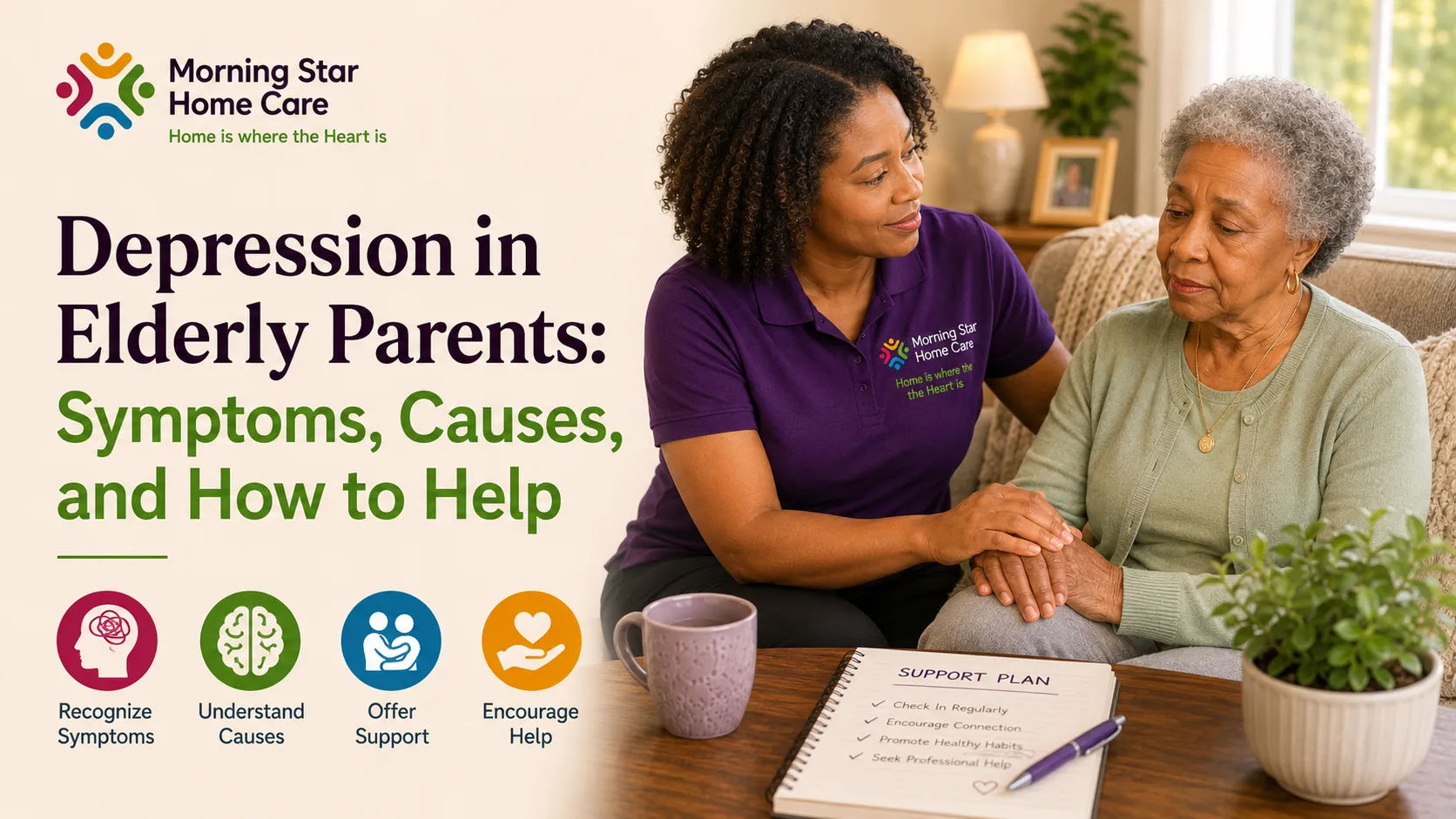
Depression in elderly parents is both common and consistently underdiagnosed. Late-life depression affects roughly 6 million Americans 65 and older, yet only about 10% receive treatment for it, a gap driven by stigma, symptoms that don't look like classic sadness, and a persistent, mistaken belief that feeling down is just part of getting older. It isn't. Depression at any age is a treatable medical condition, not an inevitable consequence of aging, and recognizing it early makes a real difference in outcomes.
This guide covers how depression in elderly parents actually presents, what causes it, and concrete, compassionate ways to help a parent get support.
Key Takeaways
- About 6 million Americans 65 and older experience depression, but only about 10% receive treatment for it.
- Depression in elderly parents often looks different than in younger people — physical complaints, low energy, and withdrawal are more common than overt sadness.
- Depression is not a normal part of aging — it's a treatable medical condition, and treating it can meaningfully improve quality of life.
- Loneliness, grief, and medication side effects are among the most common contributing factors specific to older adults.
- Only 57% of older adults currently have access to mental health care, making it worth being proactive about finding and securing support.
Why Depression in Elderly Parents Often Goes Unrecognized
Depression in older adults frequently doesn't look like the sadness most people associate with the condition. Many depressed seniors deny feeling sad at all, and instead describe physical symptoms, fatigue, unexplained aches, low motivation, that get attributed to normal aging or an unrelated health issue rather than recognized as depression.
Dee, Morning Star's founder: "Families often tell me their parent 'just seems tired all the time' or 'doesn't complain about being sad, just doesn't do much anymore.' That's frequently exactly what depression looks like in an older adult. It rarely announces itself the way people expect."
Symptoms of Depression in Elderly Parents
Recognizing the specific, sometimes atypical, symptoms of late-life depression is the first step toward getting a parent connected to help.
- Persistent sadness or a sense of hopelessness, though this is sometimes minimized or denied outright.
- Unexplained or worsening physical aches and pains without a clear medical cause.
- Loss of interest in previously enjoyed activities or socializing, including hobbies, friends, or family gatherings.
- Changes in appetite or weight, either loss of interest in eating or notable weight change.
- Low energy and lack of motivation, sometimes mistaken for laziness or normal slowing with age.
- Sleep disturbances, either sleeping significantly more or less than usual.
- Difficulty concentrating or increased forgetfulness, which can be mistaken for early dementia.
Some of these signs overlap with other conditions, which is exactly why a proper medical evaluation, not a family guess, is the right next step whenever several of them appear together.
What Causes Depression in Elderly Parents
Depression in older adults typically arises from a combination of biological, situational, and medical factors, and understanding the specific contributors for a given parent helps target the right kind of support.
- Loneliness and social isolation — one of the most significant and modifiable risk factors, particularly for someone who has lost a spouse or lives alone.
- Grief from the death of a spouse, close friend, or even a pet, which can trigger or deepen depression, especially without adequate support processing it.
- Chronic illness or chronic pain, which both directly affects mood and limits the activities that once provided a sense of purpose and connection.
- Medication side effects — a significant and often overlooked contributor, since several common medications for blood pressure, heart conditions, and other chronic issues can cause or worsen depressive symptoms.
- Loss of independence, including giving up driving or needing help with daily tasks, which can trigger a real sense of loss even when the change is medically necessary.
How Depression Differs From Normal Grief or Sadness
Distinguishing depression from a normal, expected grief response matters for knowing when to seek professional help. Grief typically comes in waves, alongside positive memories and moments of relief, and gradually eases over time even while remaining present. Depression tends to be more constant, pervasive, and doesn't meaningfully improve on its own, often accompanied by a persistent sense of worthlessness or hopelessness that goes beyond sadness about a specific loss.
"I kept telling myself Dad was just grieving Mom, and grief is normal. But six months in, he still wasn't eating well, wasn't seeing anyone, wasn't doing anything he used to enjoy. That's when I realized this had become something more than grief."
Reviewing current medications with a doctor or pharmacist, particularly after a new depressive symptom appears, is a simple, often-overlooked step worth taking before assuming the cause is purely emotional or situational.
How to Talk to a Parent About Depression
Bringing up depression with a parent can feel delicate, particularly given generational stigma around mental health that's common among older adults. A few approaches tend to open the conversation more successfully than others.
- Lead with specific observations, not labels. "I've noticed you haven't been eating much and seem really tired lately" tends to land better than "I think you're depressed."
- Normalize it as a medical issue, not a character flaw. Framing depression like any other treatable health condition, similar to high blood pressure, can reduce stigma-driven resistance.
- Avoid minimizing or offering quick fixes. Phrases like "just try to think positive" tend to shut down the conversation rather than open it.
- Offer to help take the first step together. Offering to schedule the appointment or come along can lower the barrier significantly.
Distinguishing the two clearly, rather than assuming the worse or more permanent condition, matters directly for getting the right treatment started.
Treatment Options That Actually Work
Depression in elderly parents is genuinely treatable, and understanding the range of options helps families and their parent choose an approach that fits.
- Psychotherapy — talk therapy, particularly cognitive behavioral therapy, is effective for older adults and increasingly available via telehealth, which can remove transportation as a barrier.
- Antidepressant medication, prescribed and monitored by a doctor, which can be effective though it may take several weeks to show full benefit and sometimes requires dosage adjustment.
- Combination treatment — therapy plus medication together, often more effective than either alone for moderate to severe depression.
- Social and activity-based interventions — increasing social contact, physical activity, and meaningful engagement, which directly address some of the most common underlying contributors.
A primary care physician is a reasonable first stop for evaluation and can refer to a geriatric psychiatrist or therapist as needed, and many primary care doctors are increasingly comfortable managing straightforward depression treatment directly.
These conversations rarely feel comfortable, but avoiding them tends to delay treatment far longer than the initial discomfort of raising the topic ever would.
When Depression Signals a More Urgent Concern
Depression in older adults carries a real risk that families should take seriously and respond to directly.
Call the doctor now if: If a parent expresses thoughts of not wanting to be alive, gives away possessions, or talks about being a burden to others, take it seriously and seek immediate help — contact their doctor right away, or call or text 988 (the Suicide and Crisis Lifeline) for immediate support.
- Older adults, particularly older men, have among the highest suicide rates of any age group, a statistic that's not widely known but underscores why depression in this population deserves urgent, serious attention.
- Any direct or indirect statement about not wanting to live should be addressed immediately and directly, not dismissed as venting.
- Removing access to firearms or excess medication is a reasonable precaution if there's any active concern about safety.
Understanding this loneliness-depression connection reframes some practical prevention as genuinely protective, not just a nice-to-have.
Depression vs. Dementia: Telling Them Apart
Depression and early dementia can look surprisingly similar, both can cause withdrawal, forgetfulness, and reduced interest in activities, which sometimes leads families and even clinicians to misattribute one for the other. A few distinctions can help, though a proper medical evaluation is always the most reliable way to sort them out.
- Onset speed: Depression often develops over weeks to a few months, while dementia typically progresses more gradually over a year or more.
- Awareness of the problem: Someone with depression is often aware their memory or concentration feels "off," while someone with dementia is frequently less aware of or concerned about their own cognitive changes.
- Response to effort: A depressed person often knows the correct answer but struggles to engage or respond due to low motivation, while a person with dementia frequently doesn't retain the information at all, regardless of effort.
- Overlap is common. Depression and dementia can also coexist, and treating depression sometimes meaningfully improves cognitive symptoms, which is another reason a proper evaluation matters rather than assuming one diagnosis explains everything.
The Role of Loneliness and How to Address It
Because loneliness is one of the most significant and directly addressable contributors to late-life depression, actively building social connection back into a parent's life is one of the most concrete things a family can do alongside professional treatment.
- Regular, scheduled visits or calls, ideally from multiple family members rather than relying on one person, spread more consistent connection across the week.
- Senior center programs or classes provide structured social contact and a reason to leave the house regularly.
- Faith communities or volunteer opportunities, if previously meaningful to the person, can restore a sense of purpose alongside social connection.
- Companion care or an in-home caregiver provides consistent, reliable social contact for someone whose mobility or health limits how often they can get out.
These risk factors are not a reason for despair, they're a map of exactly where meaningful, practical intervention can make the most difference.
Barriers to Getting Help and How to Work Around Them
Understanding why so few older adults with depression get treatment, only about 10%, helps families anticipate and address the specific obstacles in the way.
- Generational stigma around mental health makes many older adults reluctant to see a diagnosis of depression as legitimate or to seek therapy, sometimes viewing it as a personal weakness rather than a medical condition.
- Limited access to geriatric mental health specialists is a real, structural barrier in many areas, with only 57% of older adults currently having access to adequate mental health care.
- Transportation and mobility challenges can make in-person therapy appointments difficult, though telehealth options have significantly expanded access in recent years.
- Cost concerns, even with Medicare coverage, can discourage seeking care — it's worth confirming exactly what a specific Medicare plan covers for mental health services before assuming cost will be prohibitive.
- A primary care doctor as a lower-barrier starting point can help — many older adults are more comfortable raising mental health concerns with a familiar doctor than seeking out a new specialist directly.
A Real Family Scenario
Karen assumed her father Walt's withdrawal after her mother's death was simply grief that would ease with time. Months passed with little improvement, he'd stopped his weekly card game, was barely eating, and seemed to have no energy for anything. A conversation with his doctor, framed around the specific changes she'd observed rather than a diagnosis she'd assigned, led to a referral for both therapy and a trial of medication. Within two months, Walt was eating regularly again and had returned to his card game. Karen later said she wished she'd brought it up sooner instead of waiting for it to resolve on its own.
This kind of ongoing, relationship-based observation is difficult for even the most attentive family to replicate with occasional visits, which is part of why consistent caregiving support matters for mental health, not just physical safety.
How a Professional Caregiver Supports a Parent's Mental Health
A consistent in-home caregiver provides regular social contact and companionship that directly addresses one of the most significant risk factors for late-life depression, isolation, while also being positioned to notice changes in mood, appetite, or engagement that a family checking in periodically might miss.
Dee, Morning Star's founder: "Our caregivers spend real time with clients, not just task-focused visits. That consistent companionship matters enormously for mood and mental health, and we're often the first to notice when someone seems different, more withdrawn, less interested in things they used to enjoy."
Treatment for depression in elderly parents works, and families who stay engaged through the process, not just at the point of diagnosis, tend to see the best outcomes.
Supporting a Parent Through Treatment
Once treatment begins, ongoing family support meaningfully affects whether it succeeds. Antidepressant medication often takes 4-6 weeks to show its full effect, and some families or patients mistakenly conclude a medication "isn't working" and stop it prematurely before it's had a real chance. Encouraging a parent to stick with a treatment plan through this initial period, attending follow-up appointments together when possible, and checking in regularly about how they're feeling all support a better outcome. It's also worth knowing that finding the right medication or therapist sometimes takes more than one attempt, and this is a normal part of the process, not a sign that treatment has failed.
A Final Thought
Depression in elderly parents is real, common, and treatable, but it's also frequently missed because it doesn't always look like sadness. Paying attention to the quieter signs, low energy, withdrawal, unexplained physical complaints, and responding with a doctor's visit rather than an assumption that it's just aging, gives a parent a genuine path back to a fuller quality of life.
A Note for Connecticut Families
Connecticut's Department of Aging and Disability Services offers referrals to geriatric mental health resources, and many primary care practices throughout the Bristol and Greater Hartford area now offer integrated behavioral health services or telehealth therapy options, which can reduce the transportation barrier for a parent with limited mobility.
References
Written by
Morning Star Care Team
Morning Star Home Care — Caregiver-Founded and Locally Owned in Bristol, CT.