
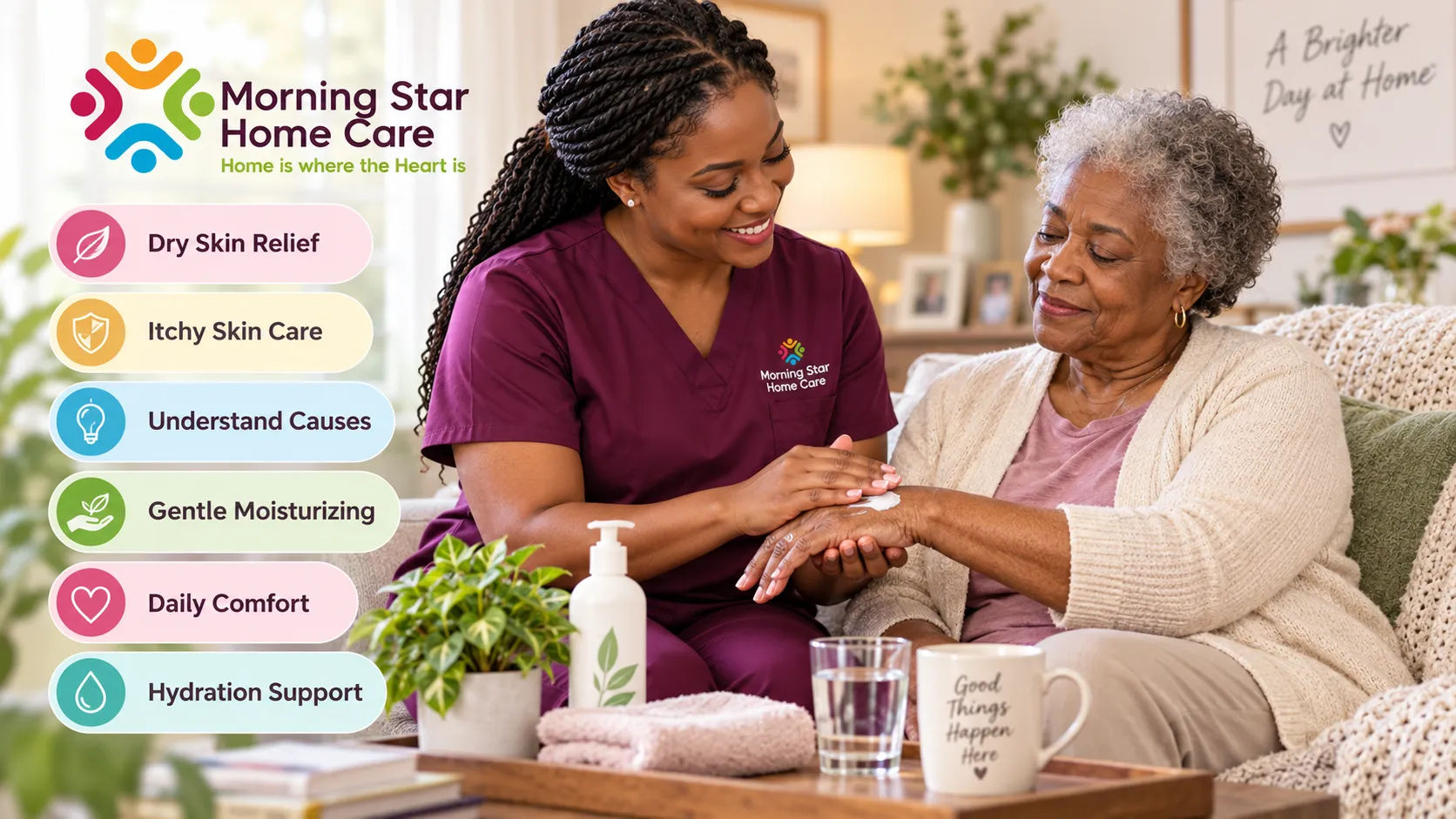
Dry skin in elderly parents is remarkably common, affecting an estimated 55 to 60% of adults over 65, with some studies of long-term care residents finding rates as high as 96%. What might seem like a minor cosmetic issue can actually cause real discomfort, and itchy skin in elderly parents often follows close behind, sometimes significant enough to disrupt sleep or daily comfort.
Understanding what causes this age-related dryness, and what genuinely helps, gives families practical tools to improve a parent's comfort meaningfully.
Key Takeaways
- Dry skin in elderly parents, called xerosis, affects roughly 55-60% of adults over 65, making it one of the most common skin conditions of aging.
- Reduced oil production and thinner skin are the primary age-related causes behind both dryness and itching.
- Frequent hot baths and harsh soaps can worsen dryness by stripping the skin's natural protective barrier.
- Gentler bathing habits and regular moisturizing are the most effective, evidence-based treatments for most cases.
- Persistent itching without visible dryness can occasionally indicate an underlying medical condition and deserves a doctor's evaluation.
Keeping these basics in mind helps families address the vast majority of dry, itchy skin cases effectively at home, while knowing when to seek additional medical guidance.
Why Dry Skin in Elderly Parents Is So Common
Several physiological changes that come with age make dry skin in elderly patients nearly universal rather than an occasional nuisance.
- Oil gland activity naturally decreases with age, reducing the skin's ability to retain moisture and maintain a healthy barrier.
- The skin's outer layer thins over time, making it less effective at holding onto hydration.
- Reduced blood flow to the skin can also contribute to a drier, less resilient skin surface.
- Lower humidity environments, especially in winter, pull moisture from already-vulnerable skin more easily.
These combined factors explain why dry skin becomes such a near-universal experience with age, rather than something only some older adults encounter.
What Causes Itchy Skin in Elderly Parents
Itchy skin in elderly parents most often accompanies dryness, but understanding the specific mechanisms helps target relief more effectively.
- A compromised skin barrier allows irritants to penetrate more easily, triggering the nerve endings responsible for the itch sensation.
- Cracking and fissures from severe dryness can themselves become sources of significant itching and discomfort.
- Certain medications, including some blood pressure and cholesterol drugs, can cause itching as a side effect.
- Underlying conditions like kidney disease, liver disease, or thyroid disorders can occasionally cause itching independent of visible dry skin.
Dee, Morning Star's founder: "The itching bothered my mother more than the dryness itself ever did, it was constant enough that it affected her sleep some nights."
Identifying whether itching stems from ordinary dryness or something else helps determine whether home remedies will be sufficient or a doctor's input is needed.
Managing the Urge to Scratch
Persistent itching can create a difficult cycle, since scratching provides brief relief but often worsens the underlying irritation and can lead to skin damage.
- Cool compresses applied to itchy areas can provide relief without the skin damage scratching causes.
- Keeping nails trimmed short reduces the risk of skin breaks if scratching does occur, lowering infection risk.
- Distraction techniques or gentle activities can help redirect attention away from persistent itching during difficult moments.
- Over-the-counter anti-itch creams may offer short-term relief, though a doctor should confirm they're appropriate given other medications a parent takes.
Breaking this scratch-itch cycle is often just as important as addressing the underlying dryness, since ongoing scratching can perpetuate irritation even after the root cause improves.
How Bathing Habits Affect Dry, Itchy Skin
Common bathing habits, often unchanged for decades, can unintentionally worsen dry and itchy skin in elderly adults.
- Hot water strips natural oils from the skin more aggressively than warm water, worsening dryness over time.
- Harsh, highly alkaline soaps damage the skin's protective barrier, a major contributor to xerosis.
- Long showers or baths can dehydrate the skin more than brief ones, even at moderate temperatures.
- Vigorous towel-drying can further irritate already-sensitive, dry skin.
Call the doctor now if: Switching to lukewarm water, gentle fragrance-free cleansers, and pat-drying rather than rubbing can noticeably improve dry, itchy skin within a few weeks.
These small adjustments to a lifelong bathing routine often produce meaningfully better results than any lotion or cream applied afterward.
Environmental Factors Worth Adjusting
Beyond bathing habits, several environmental factors around the home can meaningfully affect how dry and itchy a parent's skin becomes.
- Indoor heating in winter significantly lowers humidity, often making dry skin noticeably worse during colder months.
- A humidifier in frequently used rooms can help restore moisture to the air and ease skin dryness.
- Rough fabrics like wool can irritate already-sensitive skin, while soft cotton tends to be better tolerated.
- Laundry detergents with fragrances or dyes can leave residue that irritates sensitive skin, making fragrance-free options worth considering.
These environmental adjustments work alongside better bathing and moisturizing habits to provide more complete, lasting relief.
Effective Moisturizing Strategies
Choosing the right moisturizing approach makes a genuine difference in managing dry, itchy skin in elderly parents.
- Applying moisturizer within a few minutes of bathing while skin is still slightly damp helps lock in more moisture.
- Thicker ointments and creams generally outperform thin lotions for genuinely dry skin, though they can feel greasier.
- Fragrance-free products reduce the risk of further irritating already-sensitive skin.
- Consistent daily application, not just when skin feels dry, produces better long-term results than occasional use.
Building moisturizing into a daily routine, rather than treating it as an occasional remedy, tends to produce the most noticeable and lasting improvement.
When Dry, Itchy Skin Needs Medical Attention
While most cases of dry and itchy skin in elderly parents respond well to home care, certain signs warrant a doctor's evaluation.
- Skin that cracks, bleeds, or shows signs of infection should be evaluated promptly, as it can be an entry point for bacteria.
- Itching that persists despite consistent moisturizing and gentler bathing habits may point to an underlying cause.
- Widespread itching without visible rash or dryness can sometimes indicate a systemic condition worth investigating.
- Itching severe enough to disrupt sleep deserves attention, since chronic sleep disruption carries its own health consequences.
These signs don't necessarily indicate something serious, but they're a reasonable prompt to involve a doctor rather than continuing to manage symptoms alone.
Nutrition and Hydration's Role in Skin Health
What a parent eats and drinks also plays a genuine, if sometimes overlooked, role in overall skin health and resilience.
- Adequate daily fluid intake supports skin hydration from the inside, complementing topical moisturizing efforts.
- Foods rich in omega-3 fatty acids, like fish and walnuts, support the skin's natural barrier function.
- Vitamin-rich fruits and vegetables provide antioxidants that support overall skin resilience.
While nutrition alone won't resolve significant dryness, it provides a meaningful supporting role alongside the more direct interventions of bathing and moisturizing habits.
A Real Family Scenario
Linda noticed her father scratching his arms and legs frequently during visits, something she'd assumed was just a minor habit until she saw the visibly cracked, flaky skin beneath his sleeves. A conversation with his doctor confirmed straightforward xerosis, nothing more serious, and a simple change in his bathing routine, along with a daily moisturizing habit Linda helped him build, brought real relief within a few weeks. What had seemed like a minor annoyance turned out to be something genuinely uncomfortable that a few consistent changes fully resolved.
How an In-Home Caregiver Supports Skin Care
An in-home caregiver can play a meaningful role in both preventing and managing dry, itchy skin in an elderly parent.
- Helping establish and maintain a gentle bathing routine that protects rather than strips the skin's natural moisture.
- Applying or reminding a parent to apply moisturizer consistently, which is often the step that gets skipped without support.
- Watching for skin changes like cracking, redness, or signs of infection that warrant medical attention.
- Ensuring adequate hydration, since fluid intake also plays a supporting role in overall skin health.
"Once we built moisturizing into Dad's evening routine, it became automatic, and the difference in his comfort was honestly noticeable within just a couple of weeks."
This kind of consistent, practical support often makes the difference between managing dry, itchy skin effectively and letting it become a persistent source of discomfort.
Products to Approach with Caution
Not every product marketed for dry skin is genuinely well-suited to sensitive, aging skin, and a few common ingredients are worth approaching with caution.
- Products containing alcohol can be drying despite being marketed as skin treatments, and are generally best avoided.
- Heavily fragranced lotions are a common source of irritation for already-sensitive skin, even when marketed as gentle.
- Exfoliating scrubs can be too abrasive for thin, fragile aging skin and may cause micro-tears.
- Products with unfamiliar or lengthy ingredient lists are harder to evaluate for potential irritants and are worth discussing with a pharmacist or dermatologist.
Choosing simpler, fragrance-free products with fewer ingredients generally serves aging skin better than products marketed with elaborate claims.
A Final Thought
Dry skin in elderly parents and the itching that often accompanies it are genuinely common, affecting well over half of older adults, but they're also highly manageable with consistent, gentle care. Small, sustainable changes to bathing and moisturizing routines tend to bring meaningful relief, restoring comfort that families and their aging parents may not have realized was possible.
A Note for Connecticut Families
Morning Star Home Care supports families across Bristol and the greater Connecticut area with in-home caregiving that includes attentive daily skin care support, helping older adults stay comfortable through Connecticut's dry winters and seasonal humidity changes.
References
- US Pharmacist — Xerosis: Treating Clinically Dry Skin
- PMC — Risk and Factors Related to the Development of Lesions Due to Xerosis in Hospitalized Elderly People
Written by
Morning Star Care Team
Morning Star Home Care — Caregiver-Founded and Locally Owned in Bristol, CT.