
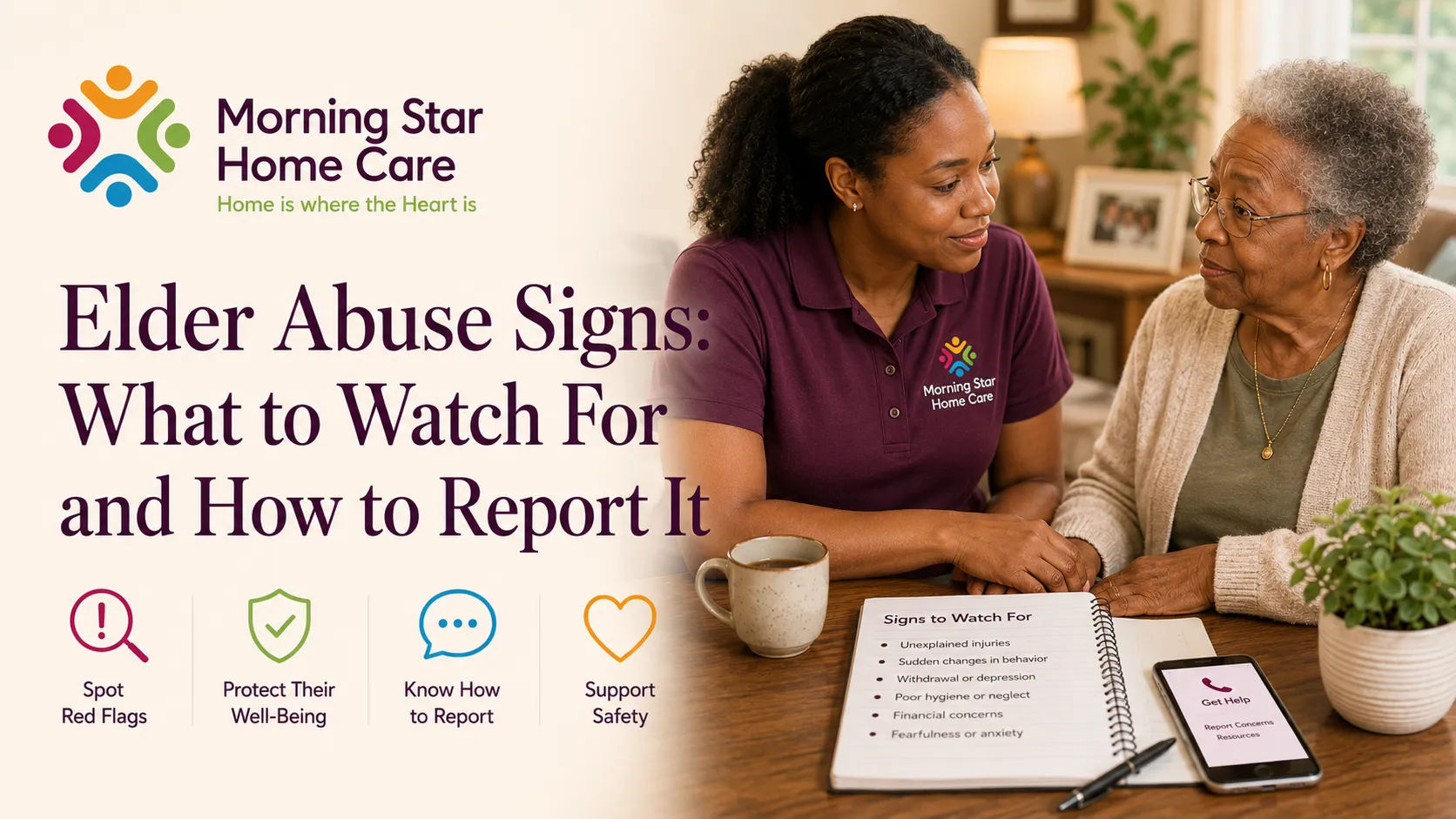
Recognizing elder abuse signs early can be the difference between catching a harmful situation before it escalates and missing it until serious harm has already occurred. Nationally, an estimated 1 in every 10 older adults suffers from some type of abuse each year, and among seniors with dementia, that figure rises dramatically, between 27.5% and 55% are estimated to experience some form of elder neglect or abuse, according to research cited by the National Center on Elder Abuse. Because most victims never report what's happening themselves, whether from shame, fear, cultural beliefs, or love for the person responsible, families and friends are often the ones positioned to notice.
This guide walks through the specific, concrete elder abuse signs to watch for across each major category, and exactly what to do, and who to contact, if something looks wrong.
Key Takeaways
- 1 in 10 older adults experiences some form of abuse each year, and the rate is significantly higher among seniors with dementia.
- Elder abuse signs vary meaningfully by type — physical, emotional, financial, sexual, and neglect each have distinct indicators.
- Most victims never report abuse themselves, which is why recognizing signs from the outside matters so much.
- A cluster of signs is more meaningful than any single one — isolated incidents can have innocent explanations, but patterns warrant investigation.
- Reporting can be made anonymously to Adult Protective Services in most states, and good-faith reports are generally legally protected.
Physical Abuse Warning Signs
Physical abuse involves the intentional use of force that causes pain, injury, or impairment, and its signs are often, though not always, the most visible category.
- Bruising on the face, neck, or trunk, particularly in patterns inconsistent with a fall, such as finger-shaped marks or symmetrical bruising on both arms.
- Broken bones, sprains, or dislocations without a clear, consistent explanation for how they occurred.
- Signs of restraint, such as rope or strap marks on wrists or ankles.
- Frequent, unexplained trips to the emergency room or a pattern of injuries reported to different providers to avoid a single doctor noticing a pattern.
- Broken eyeglasses, or a caregiver refusing to let the older adult be seen alone by a doctor, which can indicate an attempt to control what's disclosed.
Emotional and Psychological Abuse Warning Signs
Emotional abuse is the most commonly reported category of elder mistreatment, and its signs tend to be behavioral rather than physical, which makes them easier to dismiss as personality changes or normal aging.
- Sudden withdrawal or depression, particularly a noticeable change from a previously social, engaged personality.
- Unusual fearfulness or flinching around a specific caregiver or family member.
- Rocking, mumbling, or other behaviors resembling dementia symptoms that weren't present before, sometimes described in research as a trauma response.
- A caregiver who speaks for the older adult constantly, dismisses their statements, or belittles them in front of others.
Dee, Morning Star's founder: "Emotional abuse doesn't leave a bruise, so it gets missed constantly. If someone who used to light up around family suddenly goes quiet and watchful whenever a specific person is in the room, that's worth paying real attention to."
Financial Abuse Warning Signs
Financial exploitation often proceeds gradually and can be harder to spot than physical signs, since it hides within what can look like normal financial activity until a pattern becomes clear.
- Unexplained or unusual bank withdrawals, transfers, or new authorized users added to accounts.
- Sudden changes to a will, power of attorney, or beneficiary designations, especially ones that heavily favor one caregiver or family member.
- Missing personal belongings, jewelry, or valuables without explanation.
- Unpaid bills or utility shutoffs despite adequate income, suggesting money is being diverted elsewhere.
- A caregiver who is unusually secretive or controlling about the older adult's finances, or who insists on managing money without transparency.
Neglect Warning Signs
Neglect, whether intentional or the result of an overwhelmed caregiver, involves the failure to provide necessary care, and it accounts for a substantial share of elder mistreatment cases.
- Poor hygiene — unwashed hair, dirty clothing, or noticeable body odor that wasn't previously present.
- Unexplained weight loss or signs of dehydration, suggesting inadequate food or fluid intake.
- Unsanitary or unsafe living conditions — soiled bedding, pest infestations, or a home in significant disrepair.
- Missed medical appointments or unfilled prescriptions that the older adult can't manage independently.
- Untreated bedsores or skin conditions, which can develop quickly when someone with limited mobility isn't repositioned or cared for adequately.
Sexual Abuse Warning Signs
Sexual abuse is the least commonly reported category, but it does occur, particularly among older adults with cognitive impairment who may be unable to consent or communicate what happened.
- Unexplained bruising around the breasts or genital area.
- Torn, stained, or bloody underclothing.
- Unexplained sexually transmitted infections or genital infections.
- Sudden changes in behavior around a specific person, including fear, agitation, or withdrawal.
Abandonment: A Less-Discussed Category
Abandonment, the desertion of an older adult by a caregiver who has assumed responsibility for their care, is a distinct category worth naming specifically, since it's easy to overlook among the more commonly discussed forms of abuse. This can range from a caregiver leaving an older adult at a hospital, shopping center, or other public location and not returning, to a live-in caregiver who simply stops showing up without any transition plan in place. Signs include an older adult found alone in a public place, unable to explain how they got there or where their caregiver is, or a sudden, unexplained absence of a caregiver who was previously present daily.
Signs Specific to Older Adults With Dementia
Because seniors with dementia experience elder abuse and neglect at a rate between 27.5% and 55%, families supporting a loved one with cognitive decline should apply extra scrutiny, since the usual warning signs can look different, and the person may be unable to communicate what's happening at all.
- Increased agitation or fear specifically around one caregiver, distinguishable from general dementia-related confusion by its consistency and specificity to one person or situation.
- Regression in previously stable behavior, such as a sudden increase in incontinence, withdrawal, or refusal to eat, that coincides with a change in caregiver or living situation.
- Overmedication or undermedication, sometimes used to make a person with dementia easier to manage, which can present as unusual sedation or, conversely, unmanaged agitation from withheld medication.
- Physical signs that can't be explained by the person themselves, requiring extra attention to caregiver explanations and cross-checking them against what's plausible.
Why Elder Abuse Signs Often Go Unreported
Understanding why victims themselves rarely report abuse helps explain why outside observation matters so much. Many older adults hold onto cultural beliefs that family matters shouldn't involve outsiders, feel deep shame about their situation, or genuinely love the person responsible and don't want to see them face consequences. Cognitive impairment can also make it difficult for a victim to recognize, remember, or clearly communicate what happened, which is part of why the elevated abuse rate among people with dementia is especially concerning — the population most at risk is often the least able to self-report.
"My father would never have told me directly if something was wrong. He'd have felt like he was betraying someone or causing trouble. I had to learn to watch for signs instead of waiting for him to say something."
How to Report Suspected Elder Abuse: A Step-by-Step Guide
Knowing exactly what to do when elder abuse signs appear removes a significant barrier, since uncertainty about the process itself often delays families from acting.
Call the doctor now if: If an older adult is in immediate physical danger, call 911 first. For non-emergency situations, contact Adult Protective Services in your state, or call the Eldercare Locator at 1-800-677-1116 to be connected with the right local resource.
- Step 1 — Assess immediate safety. If there's any risk of imminent harm, call 911 before anything else.
- Step 2 — Document what you've observed. Write down specific dates, descriptions of injuries or behaviors, and any direct statements, without needing to prove anything definitively before reporting.
- Step 3 — Contact Adult Protective Services. Every state has an APS agency that investigates reports of abuse, neglect, and exploitation of older adults; reports can typically be made by phone and often anonymously.
- Step 4 — Contact the National Elder Fraud Hotline for financial exploitation specifically. 1-833-FRAUD-11 handles financial abuse cases distinctly from general APS reports.
- Step 5 — Follow up. APS will typically conduct an assessment; staying involved and available for follow-up questions helps ensure the investigation has the information it needs.
Distinguishing Warning Signs From Normal Aging
One of the more genuinely difficult parts of recognizing elder abuse signs is that some indicators overlap with ordinary aging or the natural progression of a chronic illness, which can lead a family to second-guess a legitimate concern or, conversely, misattribute a normal change to abuse. A single bruise from a fall, occasional forgetfulness, or gradual weight change over years due to a known medical condition are typically not cause for alarm on their own. What distinguishes a genuine warning sign is usually a combination of factors: injuries with inconsistent or changing explanations, a sudden rather than gradual shift in behavior or condition, a pattern tied to one specific caregiver or period of time, or a person expressing fear or reluctance connected to a specific individual.
When in doubt, reporting a concern doesn't require certainty. Adult Protective Services is equipped to assess ambiguous situations, and a report that turns out to have an innocent explanation causes far less harm than staying silent about a genuine problem.
What to Expect After Reporting
Adult Protective Services generally conducts an assessment that may include interviewing the older adult, the person suspected of causing harm, and other relevant parties, along with reviewing the living situation. The goal is typically to find the safest, least disruptive intervention, connecting a family with resources or additional oversight, rather than automatically removing someone from their home. Reports made in good faith are generally protected from legal liability in most states, even if an investigation doesn't substantiate the concern.
Documentation Tips That Actually Help an Investigation
Good documentation strengthens a report meaningfully, even when a family isn't certain anything is wrong. A few simple habits make a real difference if a report is later needed.
- Note dates and specific descriptions, rather than vague impressions — 'bruise on left forearm, approximately 2 inches, noticed March 3rd' is more useful than 'some bruising.'
- Take photos when appropriate and possible, with the older adult's knowledge and consent when they're able to give it, since visual documentation supports a verbal account.
- Record direct quotes when the older adult says something concerning, as close to verbatim as possible, including the date and context.
- Keep a simple log over time, even a few lines after each visit, so patterns become visible that might not be obvious from memory alone.
A Real Family Scenario
Karen almost didn't say anything when she noticed a bruise on her father Walt's upper arm during a visit, since he brushed it off as bumping into a doorframe. It was the second time she'd heard a similar explanation for a similar-looking bruise that she started paying closer attention, and eventually noticed he'd also grown quieter and more anxious around his part-time caregiver specifically. She called her state's Adult Protective Services line, not certain anything was actually wrong, and described exactly what she'd observed. The investigation ultimately led to a caregiver change, and Walt, relieved, later admitted the caregiver had been rough with him during transfers and told him not to mention it.
Talking to a Suspected Victim Sensitively
If a family member does raise a concern directly with the older adult, how the conversation is approached matters enormously. Leading with concern rather than accusation, avoiding questions that could feel like an interrogation, and reassuring the person that they won't be blamed or in trouble tends to produce more honest disclosure than a confrontational approach. It's also worth accepting that a first conversation may not yield a direct answer, especially if fear, shame, or loyalty to the person responsible is involved, and that gentle, repeated openness over time sometimes works better than pressing hard in a single conversation.
How In-Home Caregivers Are Trained to Recognize These Signs
A well-trained, agency-supervised caregiver is often positioned to notice elder abuse signs from other sources, another family member, a different caregiver, or self-neglect in someone living increasingly alone, since they spend regular, direct time in the home and can compare current conditions to what's typical for that client.
Dee, Morning Star's founder: "Part of our training includes recognizing warning signs of abuse and neglect, not just providing care ourselves. Our caregivers are taught what to document and how to escalate a concern appropriately if they notice something during a visit."
Recognizing these signs is the first step; acting on them, even imperfectly, is what actually protects someone.
Signs Involving Multiple Caregivers
When more than one person is involved in an older adult's care, a family member, a paid caregiver, occasional respite help, elder abuse signs can sometimes be harder to attribute to a specific source, but a few observations help narrow it down. Tracking which caregiver was present when a concerning sign was first noticed, whether behavior changes are consistent regardless of who's present or specific to one person's shifts, and whether the older adult reacts differently to different caregivers all provide useful information for both a family's own understanding and for an APS investigation, if one becomes necessary.
A Final Thought
Elder abuse signs are rarely as obvious as a single dramatic incident — they tend to show up as a pattern, a bruise here, a change in mood there, a financial irregularity that seems small on its own. Paying attention to that pattern, rather than waiting for certainty or a direct disclosure, is often what allows a family to intervene while a situation is still recoverable rather than after it's caused lasting harm.
A Note on Financial Institutions and Reporting
Banks and financial institutions increasingly play a role in catching elder abuse signs, particularly financial exploitation, since many now train staff to recognize suspicious transaction patterns and are legally permitted, sometimes required, to report suspected exploitation to authorities. Families can support this system by making sure a bank has updated emergency contact information and, where available, opting into a trusted contact designation, which gives the institution someone to call if they notice a concerning pattern.
References
Written by
Morning Star Care Team
Morning Star Home Care — Caregiver-Founded and Locally Owned in Bristol, CT.