Senior isolation and loneliness aren't just uncomfortable feelings — the U.S. Surgeon General's 2023 advisory identified health risks from chronic loneliness comparable to smoking 15 cigarettes a day. For families with an aging parent living alone, this makes fighting isolation as important as any physical health measure, not a secondary concern to address if there's time.
The advisory found loneliness and isolation increase the risk of heart disease by 29%, stroke by 32%, and dementia by 50% in older adults. Social isolation among seniors also drives an estimated $6.7 billion in excess Medicare spending annually — a sign of how directly loneliness translates into real physical health decline.
The sections below cover what causes isolation to build, how to recognize it, and specific, practical steps for Connecticut families to help an aging parent reconnect.
Key Takeaways
- Loneliness carries measurable physical health risks — comparable to smoking, according to the Surgeon General's own comparison.
- Quality of connection matters more than quantity — a few meaningful relationships outweigh many superficial contacts.
- Isolation often builds gradually and goes unnoticed — families should watch for subtle signs, not wait for a parent to say they're lonely.
- Connecticut has specific local resources — senior centers, Area Agency on Aging programs, and community groups that directly address isolation.
- Professional caregivers can meaningfully reduce isolation — companionship is a documented, direct benefit of in-home care, not just a side effect.
Reframing isolation as a medical risk factor, alongside blood pressure or cholesterol, tends to help families approach it with the same proactive urgency they'd apply to any other significant health concern.
Why This Deserves Serious Attention
It's tempting to treat loneliness as simply an unfortunate but low-stakes part of aging. The research says otherwise: the physical health consequences of chronic loneliness rival some of the most well-known risk factors in medicine, and older adults living alone are particularly vulnerable, especially after retirement, the loss of a spouse, or reduced mobility limits their ability to get out and see people.
Dee, Morning Star's founder: "Families sometimes focus entirely on physical safety — falls, medication, meals — and don't think of loneliness as a health issue requiring the same attention. The research is clear that it deserves exactly that level of seriousness."
Recognizing these compounding factors early — before they've fully accumulated — gives families the best chance of intervening while rebuilding connection is still relatively straightforward, rather than after years of gradual withdrawal have set in.
How Isolation Builds Gradually
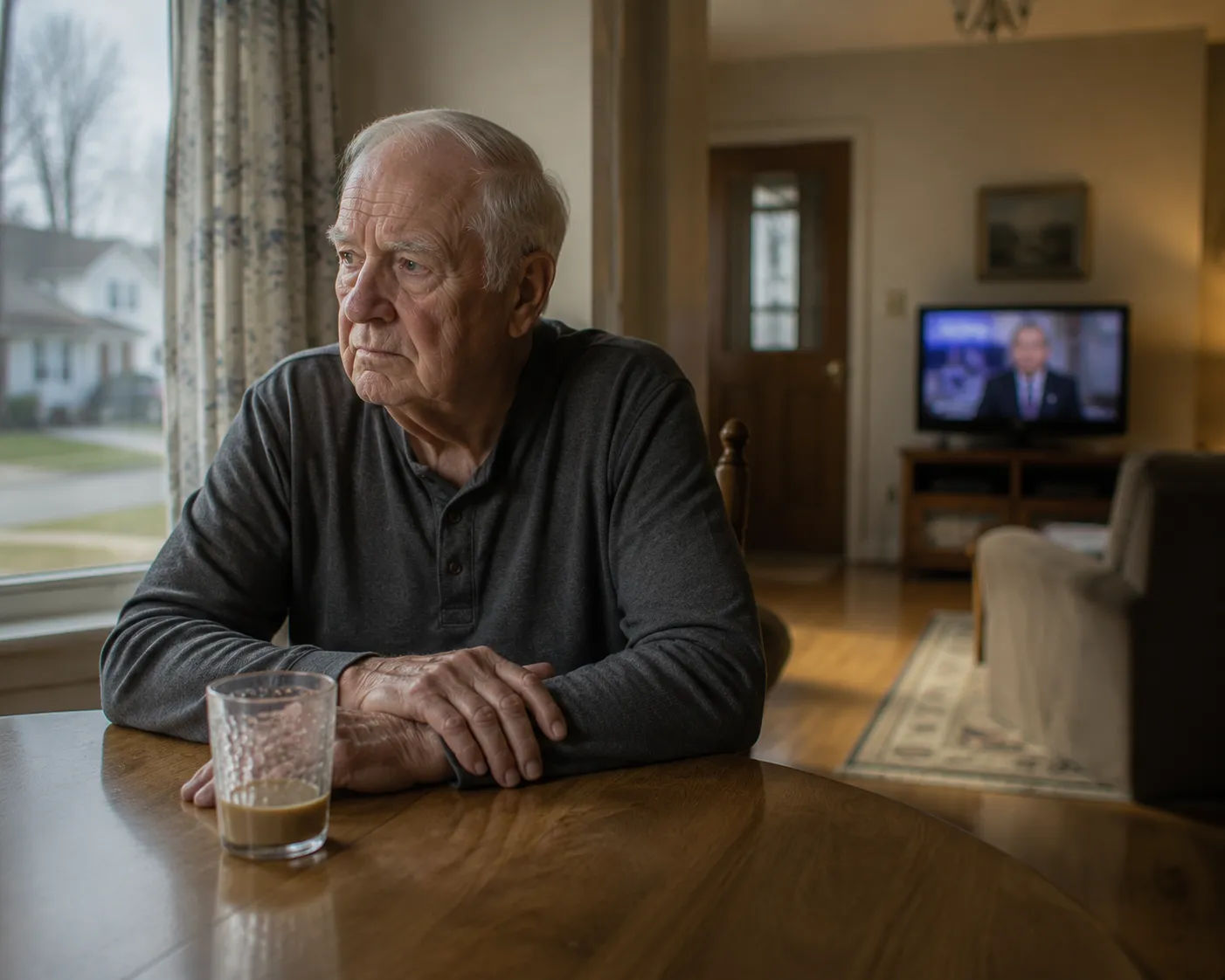
Unlike an acute health event, isolation often creeps in slowly enough that neither the senior nor their family notices the full extent until it's fairly advanced. Retirement removes daily workplace interaction. Friends move away, become ill, or pass away. Driving becomes harder or stops entirely. Mobility limits which social activities remain physically accessible. Each change alone might seem manageable, but they compound over years into significant isolation.
- Reduced social contact after retirement, without a deliberate effort to build new connections.
- Loss of a spouse or close friends, which often removes both companionship and a shared social network.
- Giving up driving, which can dramatically shrink the radius of accessible social activity.
- Hearing or vision decline, which can make social situations feel exhausting or embarrassing rather than enjoyable.
- Depression itself, which can create a cycle where low mood leads to withdrawal, which deepens isolation, which worsens mood further.
A single visit rarely reveals the full picture — patterns across several visits or calls over time give a more reliable read on whether isolation is genuinely a growing concern.

Signs a Parent May Be More Isolated Than They Let On
| Sign | What It May Indicate |
|---|---|
| Fewer mentions of friends or social plans over time | Shrinking social network, possibly unaddressed |
| Declining invitations to family gatherings | Possible depression, transportation barriers, or discomfort in groups |
| Increased phone or TV use as the main daily activity | Isolation filling time that used to include social contact |
| Vague or evasive answers about how they spend their days | Possible reluctance to admit how isolated they've become |
| Noticeable change in mood or energy during visits | Isolation-related low mood, worth discussing further |
Call the doctor now if: your parent describes persistent hopelessness, expresses that no one would notice if something happened to them, or shows other signs of depression alongside isolation — this combination warrants prompt attention from their physician.
None of these approaches works in isolation from the others — most families see the best results combining two or three, matched to a parent's specific personality, mobility, and existing relationships.
Practical Ways to Fight Isolation
Senior Centers and Community Programs
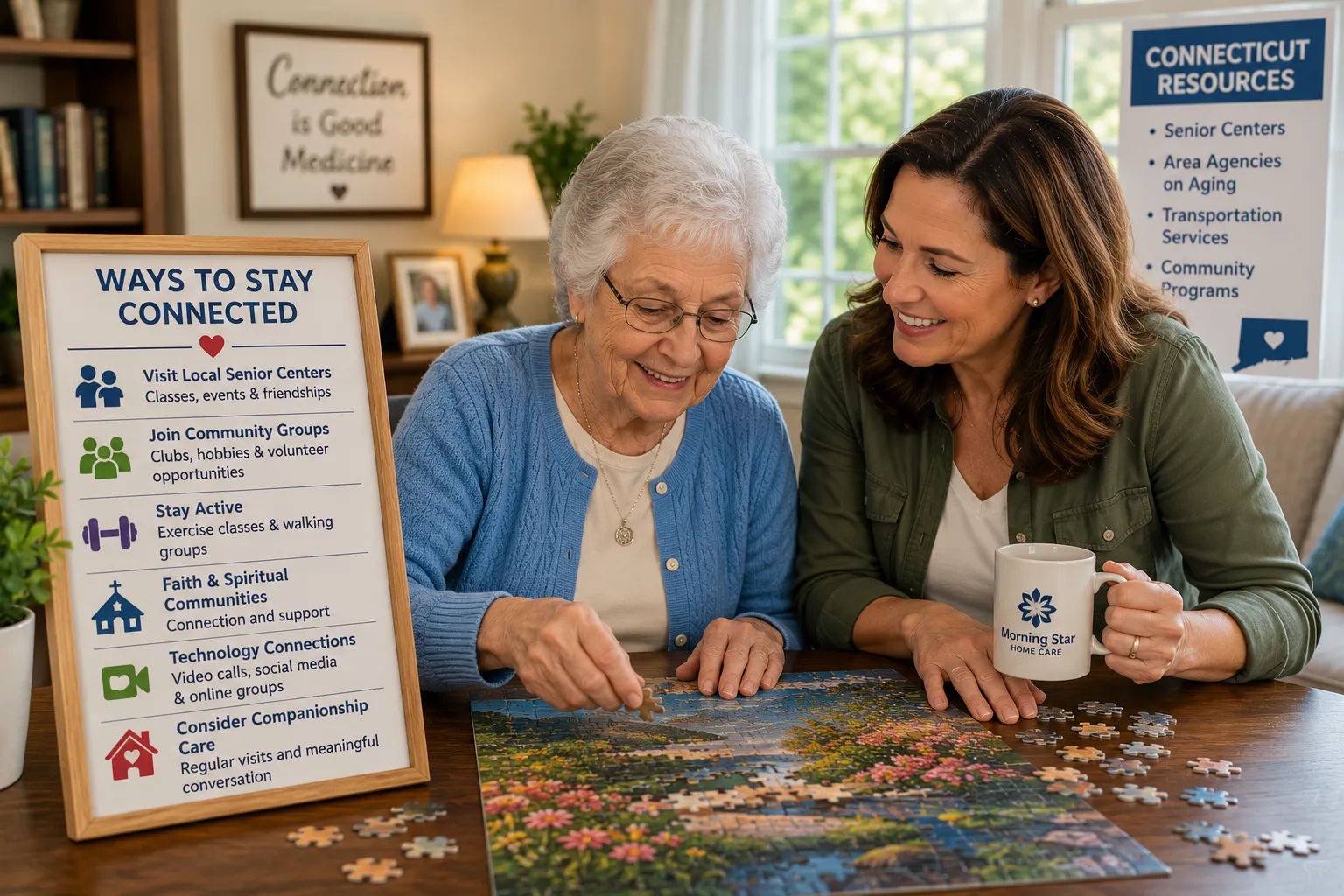
Connecticut towns generally have active senior centers offering group activities, classes, meals, and simply a regular reason to leave the house and see familiar faces. These programs are specifically designed to address exactly this problem, and many offer transportation assistance for seniors who no longer drive.
Faith Communities
For seniors with an existing faith background, church, synagogue, or other religious community involvement often provides both social connection and a sense of continuity and purpose, particularly valuable if other social structures have fallen away.
Volunteering
Volunteering combines social contact with a sense of purpose, addressing two risk factors — isolation and loss of meaning — simultaneously. Local organizations often have flexible opportunities suited to varying physical abilities and time commitments.
Technology-Enabled Connection
Video calls, photo-sharing apps, and simple social media use can meaningfully supplement in-person contact, especially for family living at a distance, though technology works best as a supplement to in-person connection rather than a full replacement.
Regular Family Contact
Consistent, scheduled contact — not just occasional spontaneous calls — helps ensure connection doesn't quietly lapse during busy periods. A standing weekly call or visit, treated as a genuine commitment rather than an afterthought, provides reliable social contact a parent can count on.
The Role of Professional Companionship
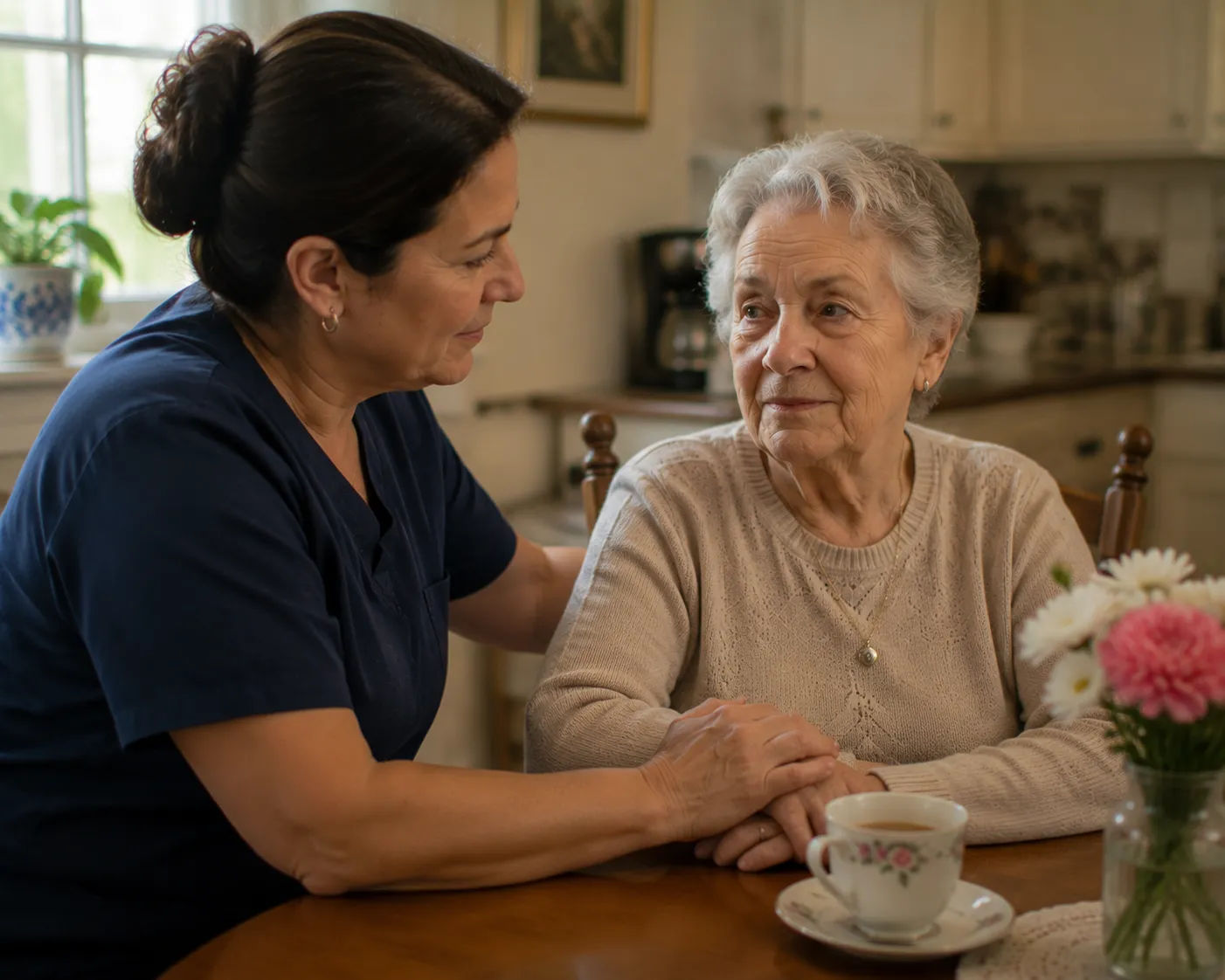
For seniors whose isolation stems from limited mobility, living alone, or family living at a distance, professional companion care directly addresses the problem — a caregiver who visits regularly provides consistent, reliable human connection, conversation, and engagement, not just practical task support. This is one of the most direct, well-documented benefits of in-home companion care.
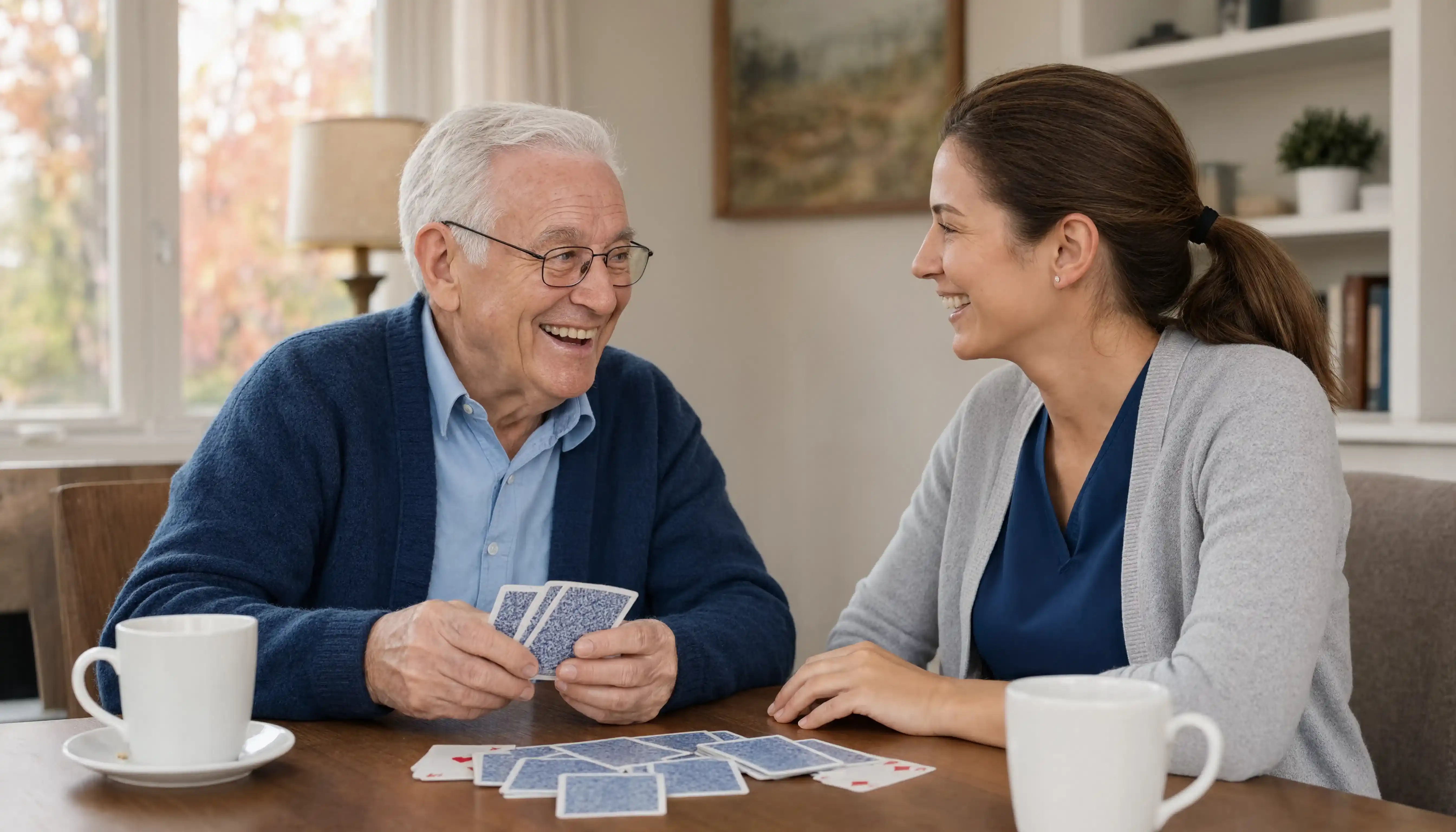
"My father's home care aide has become someone he genuinely looks forward to seeing — they talk about the news, play cards, and he's told me more than once it's the best part of his week. I didn't expect a caregiving relationship to become a real friendship, but that's exactly what happened."
Tracking what actually gets used, rather than what sounded appealing on paper, over the first month or two helps a family adjust the plan based on real engagement rather than assumptions about what should work.
Building a Realistic Social Plan
A scattershot approach to fighting isolation — trying one activity, then abandoning it, then trying another — rarely builds the sustained connection research points to as protective. A more deliberate plan, even a simple one, tends to work better: choosing one or two regular activities matched to genuine interest, committing to them for a reasonable trial period, and building from there rather than expecting immediate transformation. Most families instinctively focus on visible social activity — whether a parent seems to be "getting out" — without considering whether the deeper, emotional need for close connection is actually being met.
Understanding Different Types of Loneliness
Researchers distinguish between several types of loneliness, and understanding which type affects a parent can point toward more effective solutions. Social loneliness reflects a lack of a broader social network — acquaintances, group activities, community involvement. Emotional loneliness reflects the absence of one or more close, intimate relationships, such as a spouse or best friend. A parent can have plenty of casual social contact and still experience deep emotional loneliness if they've lost their closest confidant, or conversely, have one close relationship but lack broader community engagement. This distinction matters practically: a senior center program might address social loneliness effectively but do little for emotional loneliness, which often needs a different kind of solution — rebuilding a close friendship, or in some cases, professional support to process the loss of a primary relationship.
The Particular Risk for Widowed and Divorced Seniors
Losing a spouse doesn't just mean losing a life partner — it often means losing the primary architect of a couple's social life, since many social plans and friendships were maintained through the spouse who handled that role. Surviving spouses sometimes find their entire social network was built and maintained by their partner, leaving them without the skills or established relationships to rebuild it alone. Families can help by actively introducing a widowed parent to new social opportunities, rather than assuming they'll naturally find their way back to old ones — the old network they relied on may no longer be fully accessible to them alone.
Rural and Suburban Isolation in Connecticut
Isolation risk varies by living situation — a senior in a dense, walkable town center has fundamentally different social access than one in a more rural or spread-out part of Connecticut, where driving is often necessary just to see anyone. For families in less densely populated areas, transportation support becomes an even more central piece of any plan to address isolation, since community programs and social opportunities may simply be farther away. It's worth researching what transportation programs are available specifically in your parent's town, since options and quality vary considerably even within the same county.
How Technology Barriers Compound Isolation
Ironically, some of the tools designed to fight isolation — video calling, social media, online community groups — can themselves become a barrier if a senior lacks the confidence or skill to use them, adding a layer of frustration on top of existing loneliness. Investing time in patient, low-pressure technology support can open up connection options that would otherwise remain inaccessible.
Dee, Morning Star's founder: "I've seen technology become either a real bridge to connection or a source of added frustration and isolation, depending entirely on how much patient support someone gets getting comfortable with it. It's rarely about the technology itself — it's about the support around learning it."
Why Early Action Matters More Than a Perfect Plan
Waiting to find the ideal social activity before taking any action often means months or years pass with a parent remaining isolated in the meantime. Starting with an imperfect but reasonable option — a senior center visit, a single volunteer shift, a first video call with a grandchild — and adjusting from there tends to produce far better outcomes than delaying while searching for a perfect solution.
A Real Family Scenario
After Karen's father Walt gave up driving following a vision change, his social world in Farmington shrank dramatically within a few months — he'd been the one who always drove to see friends, and without that ability, invitations quietly stopped. Karen arranged transportation support through the local senior center's van service and encouraged Walt to try their weekly card game group. It took a few awkward first visits, but within a couple months, the group had become a fixture of his week again — and Karen noticed his mood and energy noticeably improved.
How Isolation Affects Cognitive Health Specifically
The 50% increased dementia risk associated with chronic loneliness reflects a genuine biological pathway, not just a correlation with other risk factors. Social interaction engages cognitive processes — following conversation, reading social cues, remembering shared history — that provide a kind of mental exercise isolated individuals miss out on. Combined with the reduced physical activity that often accompanies isolation, the combined effect on cognitive health can be substantial. This gives families another concrete reason to prioritize social connection specifically, beyond general quality-of-life concerns — it's a genuine, evidence-based dementia prevention strategy, standing alongside diet, exercise, and cognitive engagement as a protective factor.
Group Activities That Work Well for Reluctant Participants
Some seniors resist structured social activities, particularly if they've never been the type to enjoy group settings or feel self-conscious about physical or cognitive changes. Lower-pressure options — a regular coffee meetup with one or two people rather than a large group activity, a shared interest group like a book club, or volunteer work with a specific task rather than open-ended socializing — can meet reluctant participants where they are. It's also worth recognizing that introversion is a legitimate personality trait, not a problem to solve — some seniors genuinely thrive with fewer, deeper relationships rather than broad social engagement, and forcing extensive group participation on a naturally introverted parent may not serve their actual wellbeing. Many centers also welcome a family member to attend an introductory session together, which can ease first-visit anxiety considerably for a hesitant parent.
What Makes Connecticut's Senior Center Model Effective
Connecticut's network of municipal senior centers, often underused by families who don't realize the range of programming available, typically offer everything from fitness classes and educational programs to simple social lunches and games. Many also coordinate directly with local Area Agencies on Aging to provide transportation, making them accessible even for seniors who no longer drive. It's worth visiting a local senior center in person, ideally with your parent, rather than relying solely on a website or phone call — seeing the actual space and programming in action often does more to overcome initial reluctance than a description alone.
Connecticut Resources
- North Central Area Agency on Aging: senior programs and social connection resources. (ncaaact.org)
- 211 Connecticut: statewide resource and referral line. (211ct.org)
When Isolation Is a Symptom of Something Else
Sometimes isolation isn't the root problem — it's a symptom of untreated depression, hearing loss making conversation exhausting, or early cognitive decline making social situations confusing and stressful. Addressing the underlying cause, alongside efforts to rebuild social connection, tends to produce better results than treating isolation as a purely behavioral or motivational issue.
A comprehensive conversation with a physician — covering mood, hearing, and cognitive function alongside the isolation itself — can help identify whether there's an underlying, treatable cause contributing to a parent's withdrawal from social life.
A Final Thought
Senior isolation and loneliness deserve the same seriousness families give to physical safety concerns — the research is unambiguous about the health stakes involved. Building consistent, genuine connection, whether through family, community programs, or professional companion care, is one of the most protective things a family can do for an aging parent's overall health.
References
- U.S. Surgeon General's Advisory — Our Epidemic of Loneliness and Isolation
- NPR — America Has a Loneliness Epidemic: 6 Steps to Address It
This article is for general information and isn't a substitute for medical, legal, or financial advice. If you're concerned about a specific issue, talk to your parent's doctor or an elder law attorney.
Written by
Morning Star Care Team
Morning Star Home Care — Caregiver-Founded and Locally Owned in Bristol, CT.