
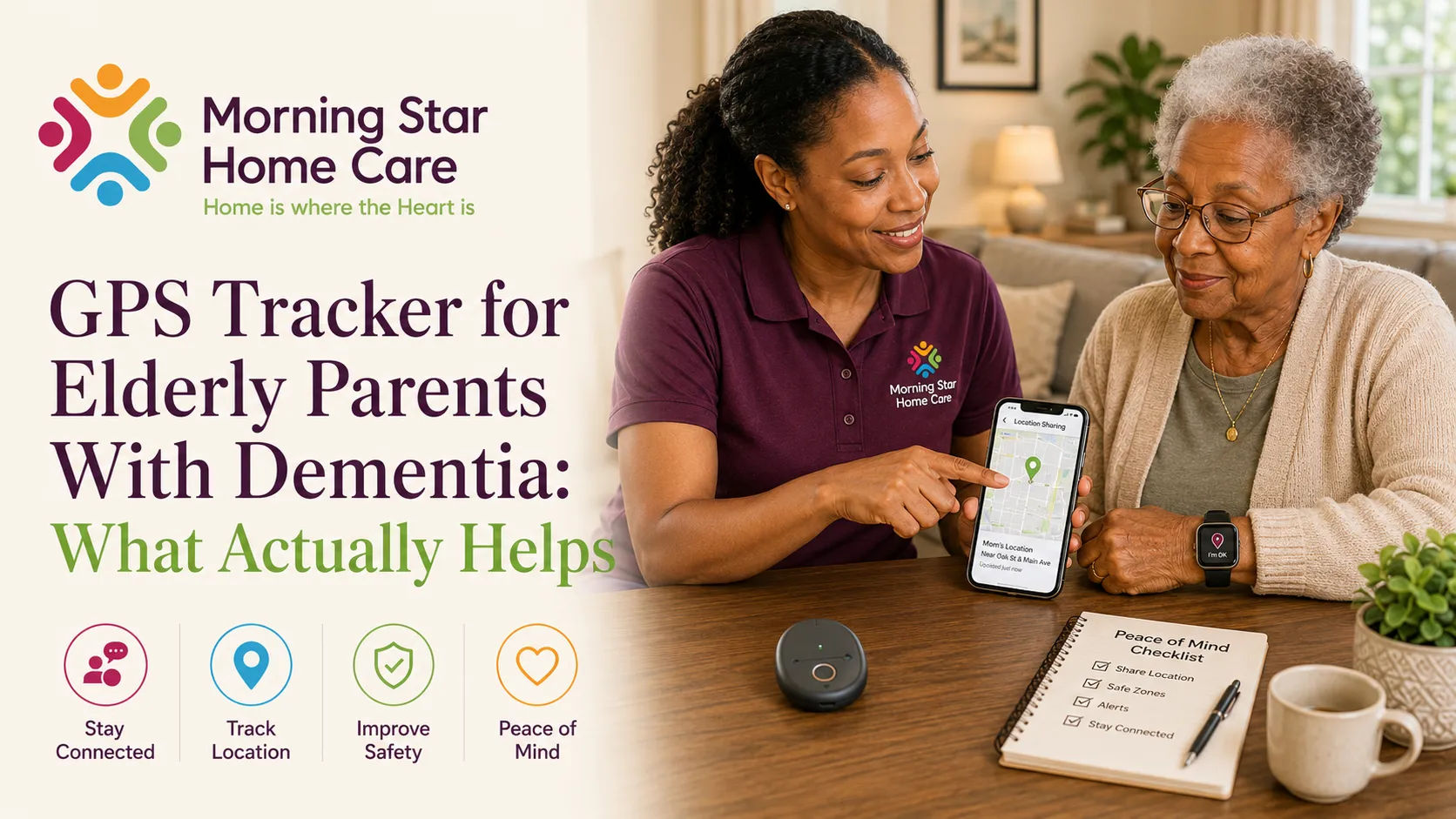
A GPS tracker for elderly parents with dementia can turn a terrifying situation, a loved one missing and unreachable, into one that resolves in minutes instead of hours. With roughly 6 in 10 people with dementia wandering at some point, and survival odds dropping sharply the longer someone is missing, real-time location tracking has become one of the more concrete, actionable safety tools available to families. But the market is crowded, devices vary enormously in how well they actually work for someone with cognitive decline, and the best choice depends heavily on the individual person, not just the device with the most features.
This guide walks through the real device categories, what actually matters when choosing one, and how a GPS tracker fits into a broader wandering safety plan rather than replacing one.
Key Takeaways
- A GPS tracker for elderly parents with dementia works best as one layer of a broader safety plan, not a standalone fix.
- Wearability matters more than features — the best tracker is the one a person will actually keep on, not the one with the longest spec sheet.
- Tamper-resistant designs exist specifically for people who remove or lose devices, and are worth considering once that becomes a pattern.
- Geofencing and real-time alerts let a caregiver know the moment someone leaves a safe area, rather than discovering it later.
- Enrollment in MedicAlert + Safe Return through the Alzheimer's Association complements, rather than replaces, a GPS device.
Why a GPS Tracker Matters for Dementia Safety Specifically
The CDC estimates roughly 6.7 million older adults in the U.S. currently live with Alzheimer's disease, a number expected to nearly double by 2060, and the Alzheimer's Association reports that about 60% of people with dementia will wander at some point during the disease's progression. Unlike a typical missing-person situation, someone with dementia who wanders often can't reliably state their name, address, or the fact that they're lost, which is part of why time-to-location matters so much more here than in most other safety scenarios.
Dee, Morning Star's founder: "A GPS tracker doesn't prevent wandering by itself, but it changes what a wandering incident looks like. Instead of a frantic, blind search, it becomes a five-minute drive to a known location."
The Main Types of GPS Trackers for Elderly Parents
Devices generally fall into a few categories, each with real tradeoffs depending on the person's habits, cognitive stage, and willingness to wear something new.
- Pendant trackers — worn around the neck, often including an emergency call button. Works well for someone comfortable with jewelry or a lanyard, and gives quick access to a help button without needing a phone.
- Smartwatch-style trackers — worn on the wrist like a regular watch, often adding fall detection and two-way calling. A natural fit for someone who already wears a watch and tolerates wrist-worn devices.
- Clip-on or pocket trackers — small enough to slip into a jacket pocket, bag, or attach to a belt. Often the most practical option for someone who resists wearing anything new, since it can be added to existing clothing without much behavior change required.
- Tamper-resistant/locking designs — built specifically for the wandering use case, often requiring a magnetic key or tool to remove, which addresses the common problem of a device being taken off and left behind.
What Actually Matters When Choosing a Device
Feature lists can be overwhelming, but a small number of factors determine whether a GPS tracker for elderly parents with dementia actually gets used consistently, which matters more than any single spec.
- Will they actually wear or carry it? The most feature-rich device is useless if it ends up in a drawer within a week. Start with what the person will tolerate, then look at features within that category.
- Battery life and charging routine — a device that needs daily charging by someone who forgets to charge things creates a new point of failure. Longer battery life, or a charging routine built into an existing habit (charging overnight next to a bed), reduces this risk.
- Geofencing with real-time alerts — the ability to set a safe zone and get an immediate notification the moment it's crossed, rather than only being able to check location on demand.
- Cellular coverage and update frequency — how often the device reports location, and whether it works reliably in the specific area the person lives, matters more in rural areas than dense suburban ones.
- Monthly service cost — most GPS trackers require an ongoing cellular data plan, typically $10 to $45 per month, in addition to the upfront device cost.
Devices Built Specifically for Dementia and Wandering
A handful of products are purpose-built for the dementia wandering use case rather than adapted from general fitness or child-safety trackers. AngelSense, for example, is designed to be tamper-resistant by default, using a locking belt clip that requires a magnetic key to remove, along with a two-way auto-answer speakerphone and alerts for entering unfamiliar locations. Devices built this way tend to perform better for families dealing with a loved one who has previously removed or lost a standard tracker.
"We went through two regular trackers before switching to a locking one. Dad wasn't trying to be difficult, he just didn't remember why he was wearing something new, so he'd take it off. The locking clip solved that completely."
Reading Reviews and Comparing Products Wisely
Online reviews for GPS trackers for elderly parents are often written by caregivers of children or pet owners using the same general-purpose devices, which can make it hard to judge how well a product actually performs for dementia-specific wandering. When researching options, prioritizing reviews that specifically mention a dementia or Alzheimer's use case, tamper resistance, and real-world battery life under daily use gives a more accurate picture than star ratings alone.
GPS Trackers vs. Phone-Based Location Sharing
Some families start with a smartphone's built-in location sharing rather than a dedicated device, and for someone in very early-stage dementia who reliably carries and charges their phone, this can work as a low-cost first step. The tradeoff is reliability: a phone can be left behind, run out of battery, or eventually become too complex for the person to keep charged and carried consistently as the disease progresses. A dedicated, purpose-built GPS tracker generally holds up better over time specifically because it removes the dependency on the person managing a device correctly.
Setting Up Geofencing the Right Way
Most GPS trackers for elderly parents allow a caregiver to draw a virtual boundary, a geofence, around the home or a safe area, and receive an alert the instant it's crossed. Setting this up thoughtfully makes a real difference in usefulness.
- Set the boundary a bit larger than just the house to include the yard, driveway, and immediate neighborhood, reducing false alerts from normal outdoor activity.
- Test the alert system before relying on it — walk the boundary once to confirm the alert actually triggers where expected.
- Add a second geofence around frequently visited locations, such as a family member's home or a regular activity, if the device supports multiple zones.
Enrollment Programs That Complement a GPS Device
A GPS tracker works best alongside, not instead of, broader wandering-response infrastructure. The Alzheimer's Association's MedicAlert + Safe Return program provides an ID bracelet and a 24/7 emergency response line that coordinates with local law enforcement if someone goes missing, which matters especially in situations where a device has a dead battery, was left behind, or malfunctions. Some local police departments also maintain voluntary registries for residents with dementia, giving responding officers immediate background context.
Cost Considerations
Pricing for a GPS tracker for elderly parents typically runs $30 to $150 for the device itself, plus a recurring monthly service fee, usually $10 to $45, for the cellular connection that makes real-time tracking possible. Some Medicare Advantage plans and long-term care insurance policies partially cover dementia-related safety technology, so it's worth checking coverage before assuming the full cost falls on the family. A handful of nonprofit and Alzheimer's Association local chapters occasionally offer subsidized devices for qualifying families, particularly in cases of financial hardship.
Comparing Trackers Across the Person's Dementia Stage
The right GPS tracker often changes as dementia progresses, since cognitive stage affects both wandering risk and how much a person can tolerate or understand a new device.
- Early stage: wandering risk is often lower, but this is the easiest time to introduce a device, since the person can still participate in the decision and adjust to wearing something new. Smartwatch-style trackers work well here, since they don't stand out as a 'safety device.'
- Middle stage: wandering risk typically peaks during this stage, when physical mobility remains but judgment and memory have declined significantly. This is often when families need to move toward more tamper-resistant or clip-on designs, since resistance to new devices tends to increase.
- Late stage: mobility itself often becomes limited enough that wandering risk decreases again, though a tracker can remain useful for tracking movement within a facility or home for fall-related reasons rather than wandering specifically.
Reassessing which device category fits every few months, rather than assuming an early choice will work indefinitely, tends to produce better long-term results than picking one device and expecting it to serve every stage.
Common Objections Families Run Into
A few concerns come up repeatedly when families first consider a GPS tracker, and addressing them directly tends to help.
- "It feels like spying." Reframing it as a safety tool rather than surveillance, similar to a car's seatbelt, tends to reduce the discomfort. The goal is response speed if something goes wrong, not monitoring day-to-day movement.
- "They'll refuse to wear it." Starting with the least intrusive option, a clip-on device added to an existing jacket, for instance, often succeeds where a new wristband or necklace is rejected.
- "It's just one more thing to manage." A device with long battery life and a simple, consistent charging routine (charging overnight next to a bed, as part of an existing nightly habit) reduces this burden meaningfully.
What to Do If the Device Fails or the Person Removes It
No GPS tracker is foolproof, and having a fallback plan matters as much as choosing the right device.
Call the doctor now if: If a loved one with dementia goes missing and the GPS tracker isn't responding or was left behind, search the immediate area for no more than 15 minutes, then call 911 immediately and tell responders it's a dementia-related disappearance.
- Keep a recent photo readily accessible on a phone, since responders will ask for one immediately regardless of whether a tracker is working.
- Maintain MedicAlert + Safe Return enrollment as a backup layer that doesn't depend on battery life or the device staying on.
- Check tracker battery and connectivity regularly, ideally on a set schedule rather than only when needed, since a dead device provides zero protection exactly when it matters most.
Privacy and Legal Considerations
Using a GPS tracker on someone who may not fully understand or remember consenting to it raises reasonable ethical questions, and families sometimes worry about the legality of tracking an adult without ongoing, explicit permission. In general, a person with legal authority, such as someone holding power of attorney or acting as a guardian for a person who has lost the capacity to make informed safety decisions, can reasonably make this call in the person's best interest, particularly when documented wandering risk exists. It's still worth discussing the decision with the person directly for as long as they can meaningfully participate, and revisiting consent conversations periodically rather than treating an early agreement as permanent.
A Real Family Scenario
Karen resisted a GPS tracker for months, worried it would upset her father Walt or feel like an invasion of his privacy. After the evening he wandered two streets over, she chose a simple clip-on device that attached to his jacket without requiring him to wear anything new or unfamiliar. The first time the geofence alert went off, three weeks later, she found him at the end of the driveway checking the mailbox, not lost at all, but it confirmed the system worked, and gave her a level of peace of mind that changed how she slept at night.
Combining a GPS Tracker With Other Monitoring Tools
A GPS tracker addresses location specifically, but it's often just one piece of a broader in-home safety and monitoring setup. Door and window alarms catch an exit attempt before someone is even out of the house, motion sensors can alert a caregiver to unusual overnight activity, and video doorbells provide a visual check on who's coming and going. None of these tools replace a GPS device for tracking someone once they've left, but layering them together closes gaps that any single tool leaves open on its own.
Families building out a full monitoring approach often find it worth researching dedicated senior monitoring systems, which bundle several of these tools together, rather than purchasing and managing each piece separately.
How a Professional Caregiver Fits Into a GPS Tracking Plan
An in-home caregiver adds a layer of protection that complements rather than replaces GPS tracking, providing direct supervision during the specific hours when wandering risk tends to be highest, and often serving as the person who notices a device needs charging, was left behind, or isn't working properly before it becomes a problem.
Dee, Morning Star's founder: "We build device checks into a client's routine the same way we build in medication reminders. Is it charged, is it on, is it where it's supposed to be. Small daily checks like that catch problems before they turn into a missing-person situation."
Getting Started: A Simple First Step
For a family feeling overwhelmed by the number of options, the simplest starting point is a low-commitment, clip-on device added to clothing the person already wears daily, paired with enrollment in MedicAlert + Safe Return as a backup layer that doesn't depend on the device at all. This combination covers the two most important bases, real-time location if wandering happens and a coordinated response network if the device isn't working, without requiring a family to evaluate every product on the market before feeling protected.
A Final Thought
A GPS tracker for elderly parents with dementia is one of the most concrete, high-impact tools a family can add to a wandering safety plan, but it works best chosen around the person, not around a spec sheet, and paired with the identification and response planning that cover the moments a device can't.
References
Written by
Morning Star Care Team
Morning Star Home Care — Caregiver-Founded and Locally Owned in Bristol, CT.