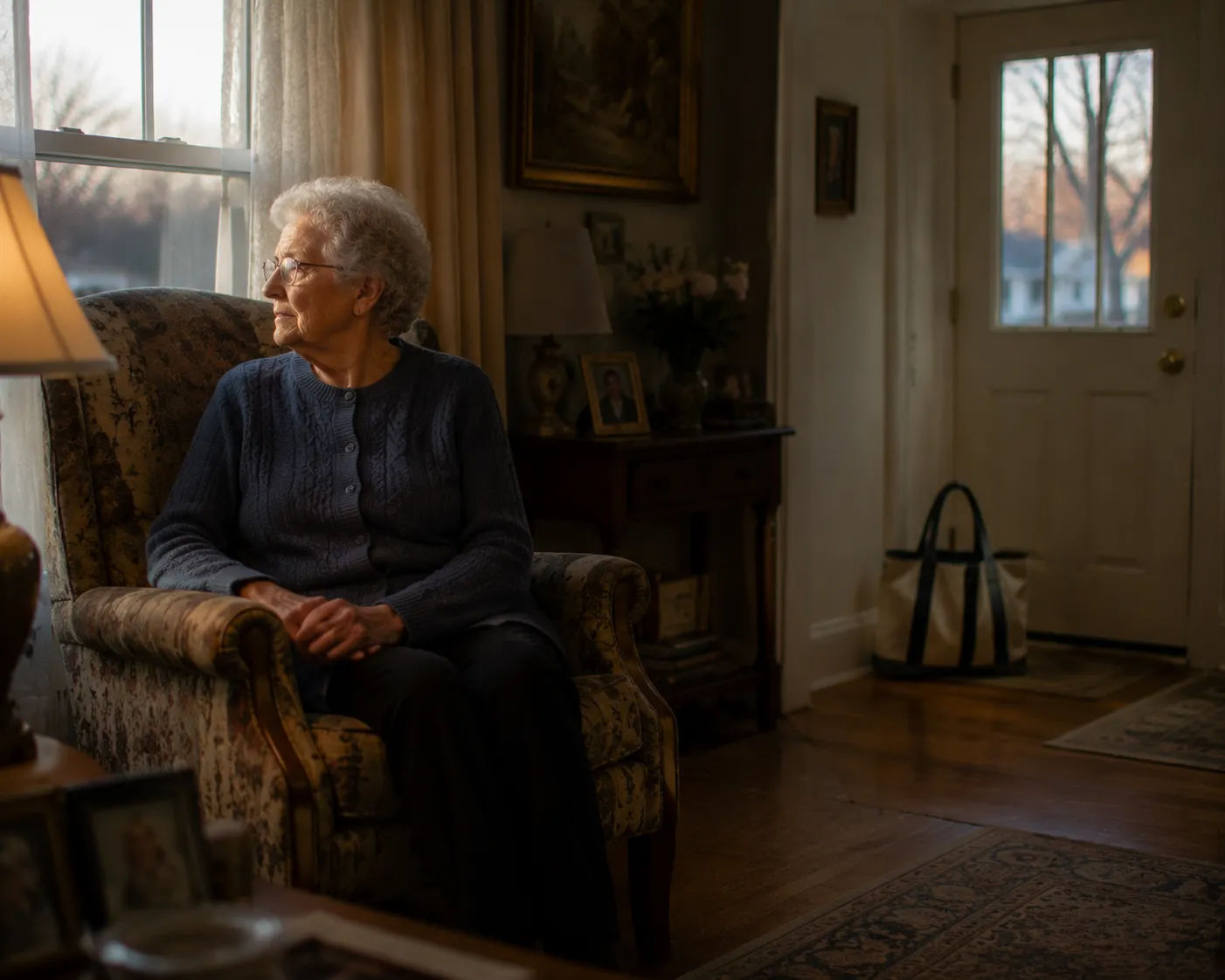
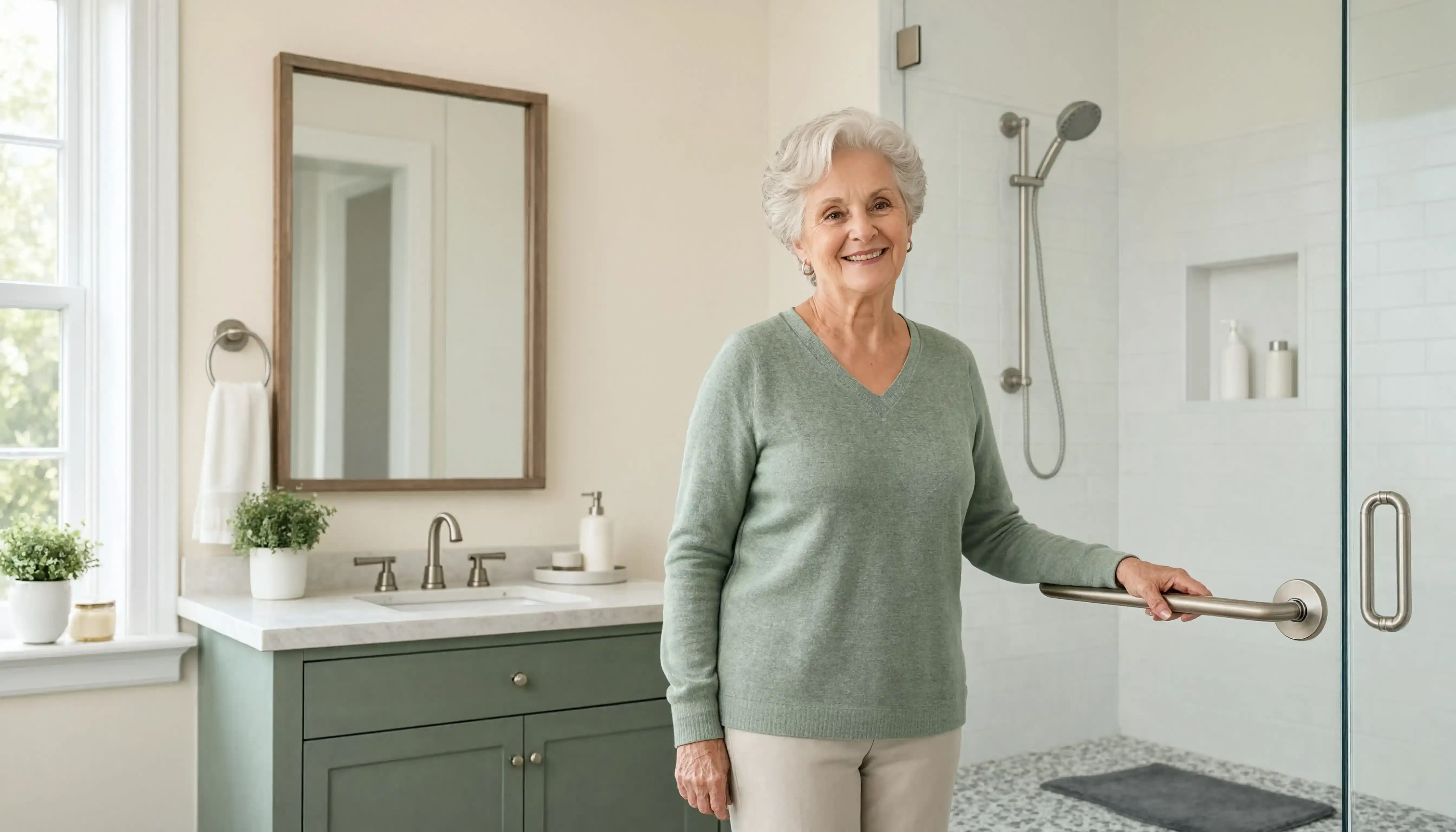
Home safety for seniors isn't usually about one big renovation — it's a handful of small, specific fixes that address the ways falls and accidents actually happen. Most of them cost little and take an afternoon. The hard part is knowing which ones matter most, and actually walking through the house room by room before something happens, rather than after.
More than 1 in 4 older adults reports falling each year, and fall deaths among adults 65 and older have risen 51% over the past decade, according to the CDC. Most of these falls happen at home, in rooms families walk through every day without noticing the hazards.
Key Takeaways
- The bathroom is the highest-risk room in the house — grab bars, non-slip surfaces, and a handheld showerhead address the most common serious fall hazards.
- Lighting fixes are the cheapest, highest-impact changes — most falls happen in poorly lit hallways, stairs, and bathrooms at night.
- Loose rugs and cords cause a disproportionate share of falls — and they're free to remove.
- A professional home safety assessment catches risks families stop noticing simply because they're used to the house.
- Safety and independence aren't opposites — the right modifications let a parent stay in their own home longer, not less.
Why Home Safety Matters More Than Most Families Realize
Falls are the leading cause of injury-related death among older adults, and the numbers have been getting worse, not better, over the past decade — a 51% increase in fall-related deaths and a 38% increase in emergency department visits over ten years, according to CDC data. Most of these falls don't happen during dramatic events; they happen during ordinary moments — getting out of the shower, walking to the bathroom at night, stepping over a rug.
The good news is that most of the risk factors are fixable, and fixing them doesn't require a major renovation. A methodical room-by-room walkthrough, done honestly rather than optimistically, is usually enough to find the highest-priority issues.
Quick Priority Guide
| Room | Top Priority Fix | Cost |
|---|---|---|
| Bathroom | Grab bars at toilet and shower, non-slip mat | Low |
| Stairs | Secure railings on both sides, bright lighting top and bottom | Low-Medium |
| Bedroom | Nightlight, clear path to bathroom, phone within reach | Low |
| Kitchen | Remove clutter from floor, reachable storage without a step stool | Low |
| Entryway | Handrail, non-slip mat, adequate outdoor lighting | Low-Medium |
| Whole home | Remove loose rugs, secure or tape down cords | Free |
Bathroom: The Highest-Risk Room in the House
More serious falls happen in the bathroom than anywhere else in the home, largely because it combines hard surfaces, water, and the physically demanding movements of getting in and out of a tub or shower.
- Grab bars professionally installed at the toilet and inside the shower or tub — not towel bars, which aren't rated to bear weight.
- Non-slip mats or strips inside the tub or shower, and a non-slip bath mat on the floor outside it.
- A raised toilet seat if getting up and down has become difficult.
- A handheld showerhead and shower chair if standing for a full shower is tiring or unsteady.
- Nightlights so a 2 a.m. bathroom trip doesn't happen in the dark.
Dee, Morning Star's founder: "The bathroom is where I look first during a home assessment. It's the room where the most serious falls happen, and it's also the room families are most reluctant to change because it feels like admitting decline. A grab bar is not a big deal — a hip fracture is."
It's worth noting that grab bars come in a wide range of styles now, from clinical-looking stainless steel to finishes that match bathroom fixtures and blend in visually — a detail that matters more than it might seem, since some parents resist grab bars specifically because they associate them with hospitals or nursing homes rather than an ordinary home. A professional installer can also confirm the bars are anchored into wall studs, not just drywall, since an improperly installed grab bar can fail under weight at exactly the moment it's needed most.
Stairs and Hallways
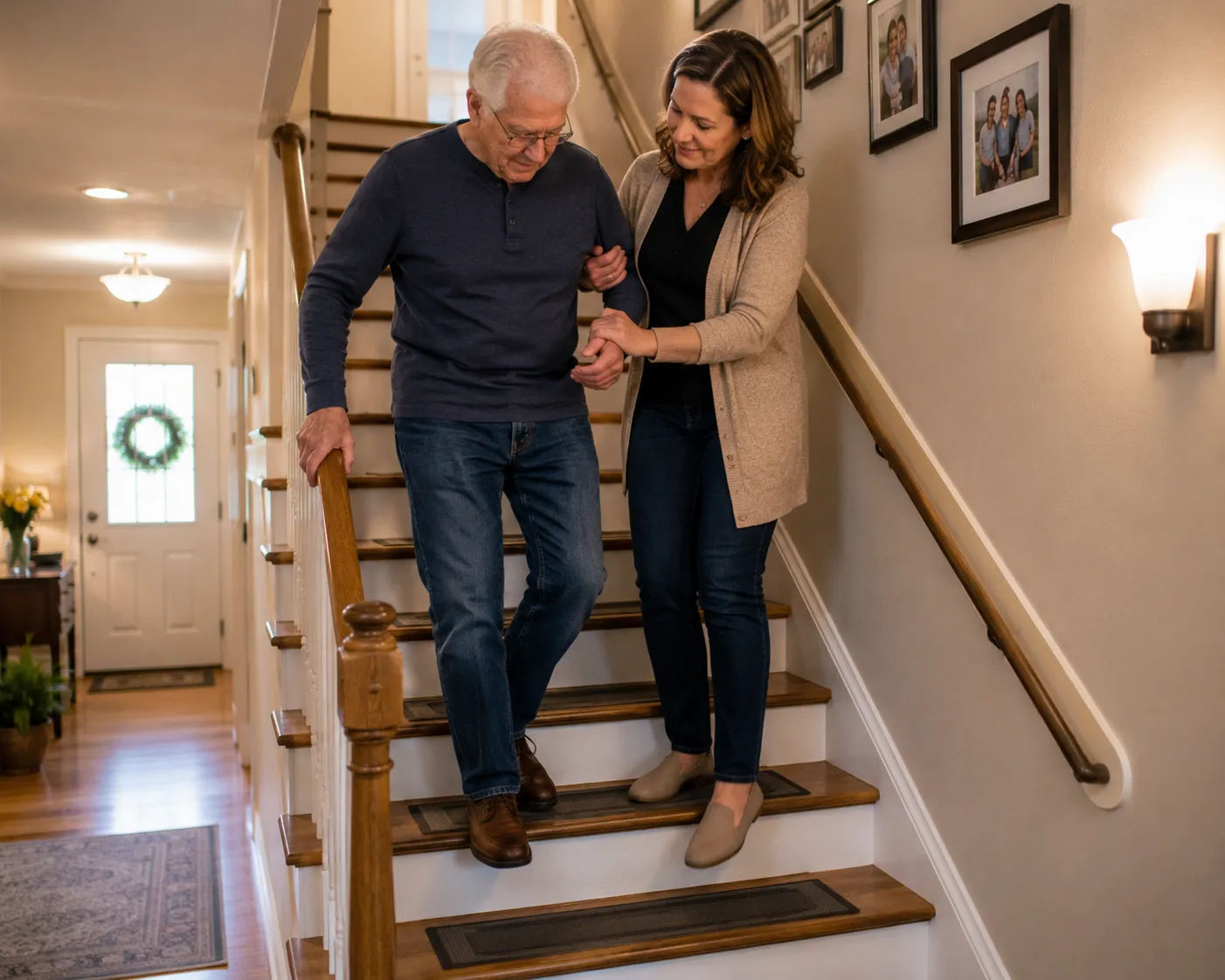
- Secure handrails on both sides of any staircase, not just one.
- Bright lighting at the top and bottom of every staircase, with light switches at both ends.
- Non-slip treads or securely tacked-down carpet on each step.
- Clear hallways free of furniture, cords, or clutter that narrow the walking path.
Call the doctor now if: your parent has already had a fall on stairs, or you notice them gripping walls or furniture to steady themselves while walking — a physical therapy evaluation may help identify balance issues before the next fall.
Stairs deserve particular attention because they combine several risk factors at once: a change in surface level, a need for balance, and often reduced visibility if lighting isn't adequate. It's worth testing the lighting yourself at night, standing at both the top and bottom of the staircase, rather than assuming daytime lighting checks tell the full story. If your parent has started avoiding the stairs altogether, taking longer than they used to, or holding onto walls rather than railings, these are signs worth raising with their physician rather than dismissing as simply getting older.
Bedroom
- A nightlight or motion-activated light along the path from bed to bathroom.
- A phone within reach of the bed, ideally a landline or charged cell phone, not just a phone left in another room.
- A bed at the right height — not too low to get up from easily, not too high to climb into safely.
- Clear floor space free of loose rugs, shoes, or cords between the bed and the door.
The bedroom is where the largest share of nighttime falls happens, often during the groggy transition between sleep and waking when balance and judgment are both at their weakest. This is precisely why the path from bed to bathroom deserves outsized attention — a nightlight that's motion activated, so a parent doesn't need to fumble for a switch, is often more effective than a light left on all night, which some parents turn off anyway to save on the electric bill or because it disrupts sleep.
Kitchen
- Frequently used items stored at waist to shoulder height, avoiding the need to climb on a step stool or bend to low cabinets.
- A sturdy, wide-based step stool if reaching high shelves is unavoidable — never a chair.
- Non-slip mats near the sink and stove, where spills are common.
- A working fire extinguisher within easy reach, and working smoke detectors nearby.
Living Areas and Entryways
- A sturdy handrail at any entry steps and adequate outdoor lighting after dark.
- Furniture arranged with wide, clear walking paths rather than tight corners to navigate.
- Cords secured against walls or under furniture rather than crossing walkways.
- Loose area rugs removed or secured with non-slip backing — one of the single most common, and most preventable, fall hazards.
Kitchens present a specific tension: they're often the room a parent takes the most pride in managing independently, which can make suggestions feel like criticism. Framing changes around convenience rather than decline — "let's make the things you use most often easier to reach" rather than "you shouldn't be climbing on stools anymore" — tends to be received far better.
Fire and Emergency Safety
- Working smoke detectors on every level and inside or near every bedroom, tested monthly.
- A carbon monoxide detector near sleeping areas, especially in homes with gas appliances.
- A clear, unobstructed exit path from every room in case of fire.
- A medical alert device or system for a parent living alone, so a fall or medical emergency can be reported even if they can't reach a phone.
Emergency preparedness for older adults living independently also means thinking beyond the house itself — does your parent have a plan for what to do during a power outage, particularly if they rely on any medical equipment that requires electricity? A battery backup for essential devices and a clear plan for where to go if heat or cooling fails for an extended period are worth discussing, especially in a state like Connecticut where winter storms can knock out power for days.
Technology That Adds a Layer of Safety
Beyond physical modifications, a growing range of low-cost technology can add real safety without feeling intrusive: medical alert pendants, smart plugs that automatically turn on lights at dusk, video doorbells that let a parent see who's at the door without opening it, and smart speakers that can call for help with a voice command.
"We got my dad a medical alert pendant after his second near-fall in the bathroom. He resisted it at first — said it made him feel old — but after he actually used it once, he told me he wished he'd had it years earlier."
Beyond dedicated medical alert pendants, many families are surprised how much can be accomplished with devices they may already own. A smart speaker set up in commonly used rooms can call a designated family member with a voice command, no dialing required. A video doorbell lets a parent verify a visitor's identity from a phone or tablet without walking to the door — useful both for safety and for screening against scams targeting older adults. None of this replaces human connection or professional care, but it adds a meaningful layer of protection during the many hours a day when no one else is present.
A Home Safety Checklist for Elderly Parents in Connecticut
- Grab bars installed at toilet and shower
- Non-slip mats in bathroom
- Nightlights in bedroom, hallway, and bathroom
- Handrails secure on both sides of stairs
- Loose rugs removed or secured
- Cords secured away from walkways
- Smoke and carbon monoxide detectors tested
- Frequently used kitchen items within easy reach
- Medical alert device in place if living alone
- Outdoor entry lighting working and adequate
The Real Cost of a Fall
It's worth being concrete about what's at stake, because "home safety" can sound abstract until it's connected to what actually happens after a serious fall. A hip fracture in an older adult often means a hospital stay, followed by weeks in a rehabilitation facility, followed by a long recovery that may never fully restore prior mobility. Beyond the physical toll, a serious fall is one of the most common events that triggers a permanent move out of a person's own home — not because the fall itself made staying home impossible, but because the loss of confidence and mobility that follows often does.
Framed this way, a $30 grab bar and an hour of installation time is a strikingly small investment against what's actually being protected: months of recovery, a parent's independence, and in some cases, whether they return home at all.
Seasonal Safety Considerations in Connecticut
Connecticut winters add a layer of risk that doesn't exist in warmer climates — icy walkways, steps, and driveways are a significant seasonal fall hazard for older adults living independently. A cleared, salted path to the door, non-slip outdoor mats, and adequate exterior lighting during shorter winter days all matter more here than in many other parts of the country.
Families sometimes underestimate how much a parent's willingness to go outside changes with the seasons — an older adult who avoids salting their own steps because of the physical effort involved may simply stop leaving the house in winter months, which carries its own risks around isolation and reduced activity.
Home Safety Considerations for Dementia or Memory Loss
If a parent is living with dementia or significant memory loss, home safety takes on additional dimensions beyond fall prevention. Stove safety devices that shut off burners automatically, door alarms that alert a caregiver if a parent wanders outside, and removing or securing medications and cleaning products all become higher priorities. Labeling cabinets and rooms with simple signage can also reduce confusion and the frustration that sometimes accompanies it.
A home safety assessment for a parent with cognitive decline is a different conversation than a general fall-prevention checklist, and it's worth asking specifically for a dementia-informed evaluation if this applies to your family.
Medication Safety as Part of the Home Safety Picture
Certain medications — sedatives, some blood pressure medications, and drugs that cause dizziness — meaningfully increase fall risk, and the CDC specifically identifies medication review as one of the most effective fall-prevention interventions available. A conversation with your parent's physician or pharmacist about whether any current medications are contributing to unsteadiness is often overlooked in favor of physical home modifications, even though it can be just as impactful.
A simple, organized system for managing medications — a weekly pill organizer, or an automated dispenser for parents managing multiple prescriptions — also reduces the risk of dangerous double-dosing or missed doses, which is a safety issue in its own right, separate from falls.
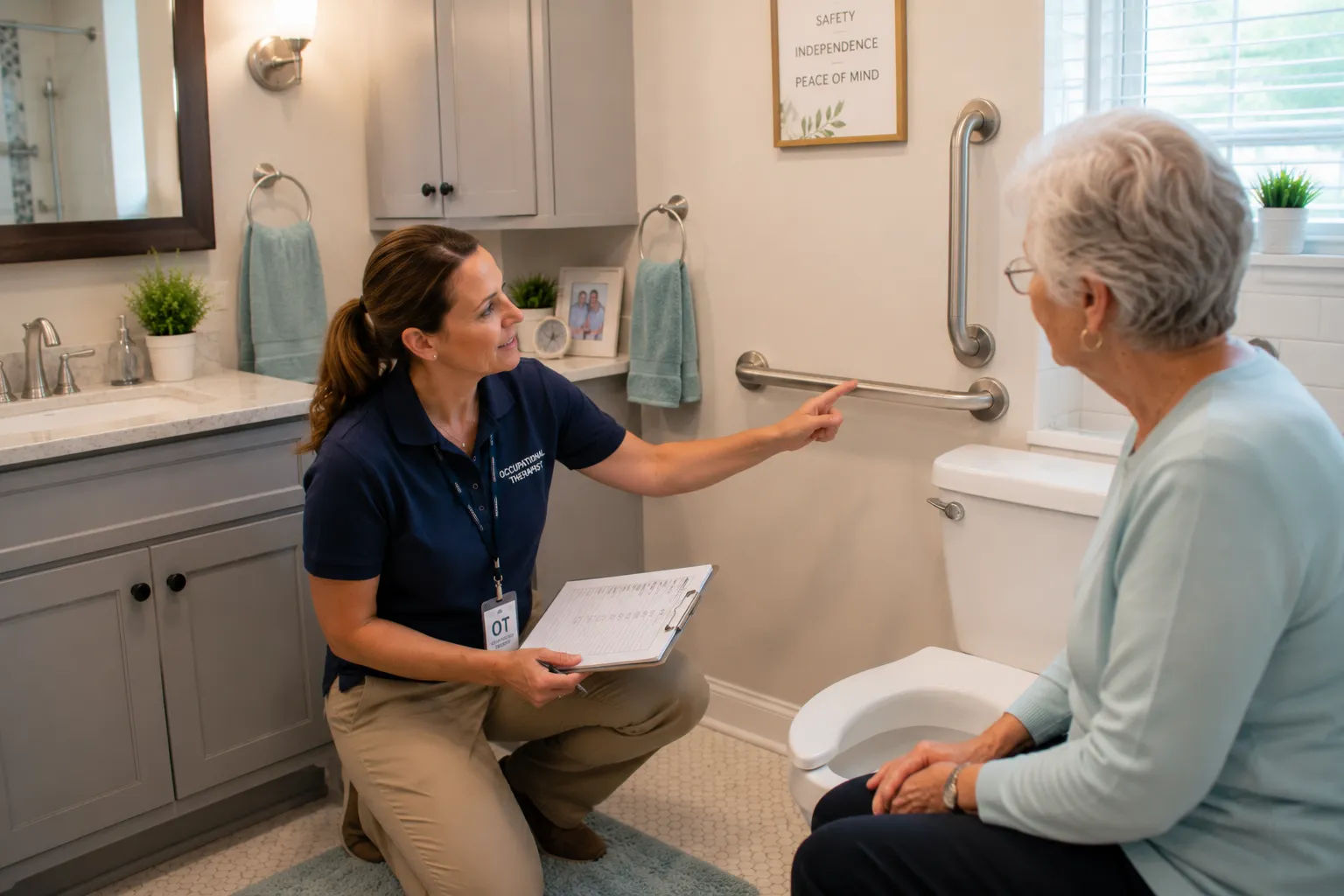
Getting a Professional Home Safety Assessment
Families often stop noticing hazards in a home they've lived in or visited for years — a slightly loose railing, a rug that's always been there, lighting that's always felt "fine." A professional home safety assessment, offered by many in-home care agencies, brings a trained, outside perspective that catches what familiarity hides.
These assessments typically take less than an hour and result in a specific, prioritized list of fixes — not a vague recommendation to "make the home safer," but concrete next steps.
Paying for Home Safety Modifications
Cost is often the reason families delay these changes, even when they know they matter. The good news is that most of the highest-impact fixes — removing rugs, adding nightlights, securing cords — cost nothing at all. Grab bars and handrails, professionally installed, typically run in the low hundreds of dollars, which is modest compared to the cost of even a single emergency room visit.
For larger modifications — a walk-in shower conversion, a stairlift, or a ramp — some families explore financing through home equity, veterans' benefits if applicable, or state-specific home modification assistance programs. It's worth asking a home care agency or an Area Agency on Aging directly what local assistance may be available, since these programs aren't always well advertised.
Involving Your Parent in the Process
Home safety changes go over much better when a parent feels like a participant in the decision rather than someone changes are being done to. Walking through the house together, asking what's felt unsteady or difficult lately, and letting your parent weigh in on style choices for things like grab bars can turn a potentially uncomfortable conversation into a collaborative one.
It also helps to introduce changes gradually rather than all at once. A home that suddenly looks completely different can feel disorienting and even a little alarming to an older adult, especially one already sensitive to signs of their own decline. Spacing out changes over a few weekends, starting with the least visible ones, tends to be better received.
A Real Family Scenario
Karen didn't think much about her father Walt's house in Farmington until a home safety assessment flagged three issues she'd walked past for years: a loose stair railing, a bathroom with no grab bars, and a hallway rug that had slipped more than once. All three were fixed within a week, for less than the cost of a single emergency room visit — and Walt has had no falls since.
Common Mistakes Families Make
- Doing a one-time check and never revisiting it: mobility and balance change gradually, and a home that was safe two years ago may not be safe today.
- Focusing only on the bathroom and stairs while overlooking cords, rugs, and lighting elsewhere in the house.
- Waiting for a fall before making changes rather than acting proactively — by definition, the changes are meant to happen before an incident, not after.
- Assuming a parent will mention when something feels unsteady: many older adults underreport balance concerns out of pride or fear of losing independence.
Connecticut Resources for Home Safety
- North Central Area Agency on Aging: home safety and caregiver resources. (ncaaact.org)
- 211 Connecticut: statewide resource and referral line. (211ct.org)
- CDC: Older Adult Fall Prevention guides and data.
Building a Habit of Ongoing Vigilance
Home safety for seniors isn't a one-time project — it's an ongoing habit of noticing small changes before they become big problems. Something as simple as a family member walking through the house every few months with fresh eyes, or asking specifically about balance and confidence during everyday conversations rather than waiting for a formal check-in, catches issues early.
Some families build this into existing routines — a home safety walkthrough during a holiday visit, or a quick check whenever a home care aide is already present for another reason. The goal isn't constant worry, just consistent attention, treated the same way you'd treat any other form of preventive maintenance.
How In-Home Care Complements Home Modifications
Physical modifications reduce risk, but they don't replace a set of eyes checking in regularly. A professional caregiver visiting even a few times a week can notice a loose railing before it fails, catch early signs of declining balance, and make sure safety equipment like grab bars and nightlights are actually being used rather than just installed. This combination — a safer physical environment plus regular in-person contact — tends to outperform either approach alone.
When to Bring in Outside Help for the Assessment Itself
If walking through this checklist feels overwhelming, or if your parent lives far enough away that regular visits aren't practical, a professional home safety assessment can take the guesswork out of the process entirely. An assessor trained to spot risk factors will typically catch things a family member, however observant, tends to miss simply from over-familiarity with the space.
A Final Thought
None of these changes require a parent to give up independence — if anything, they protect it, by preventing the kind of serious fall that leads to a hospital stay, a rehab facility, or a permanent loss of mobility. A single afternoon spent walking through the house room by room is one of the highest-value things a family can do.
Outdoor and Garage Safety
Families often focus entirely on the interior of the home and overlook outdoor spaces where a parent may spend meaningful time — gardening, checking the mailbox, or parking a car. Uneven walkways, steps without handrails, and poor lighting around the exterior of the home carry the same risks as any hazard indoors.
- A level, well-maintained walkway from the driveway or street to the front door.
- Handrails on any exterior steps, not just interior ones.
- Adequate lighting covering the full path from car to door, especially important during Connecticut's shorter winter days.
- A garage free of clutter in the path between a parked car and the house entrance.
References
- CDC — Facts About Falls
- National Council on Aging — Get the Facts on Falls Prevention
- National Institute on Aging — Home Safety Tips for Older Adults
This article is for general information and isn't a substitute for medical, legal, or financial advice. If you're concerned about a specific issue, talk to your parent's doctor or an elder law attorney.
Written by
Morning Star Care Team
Morning Star Home Care — Caregiver-Founded and Locally Owned in Bristol, CT.