
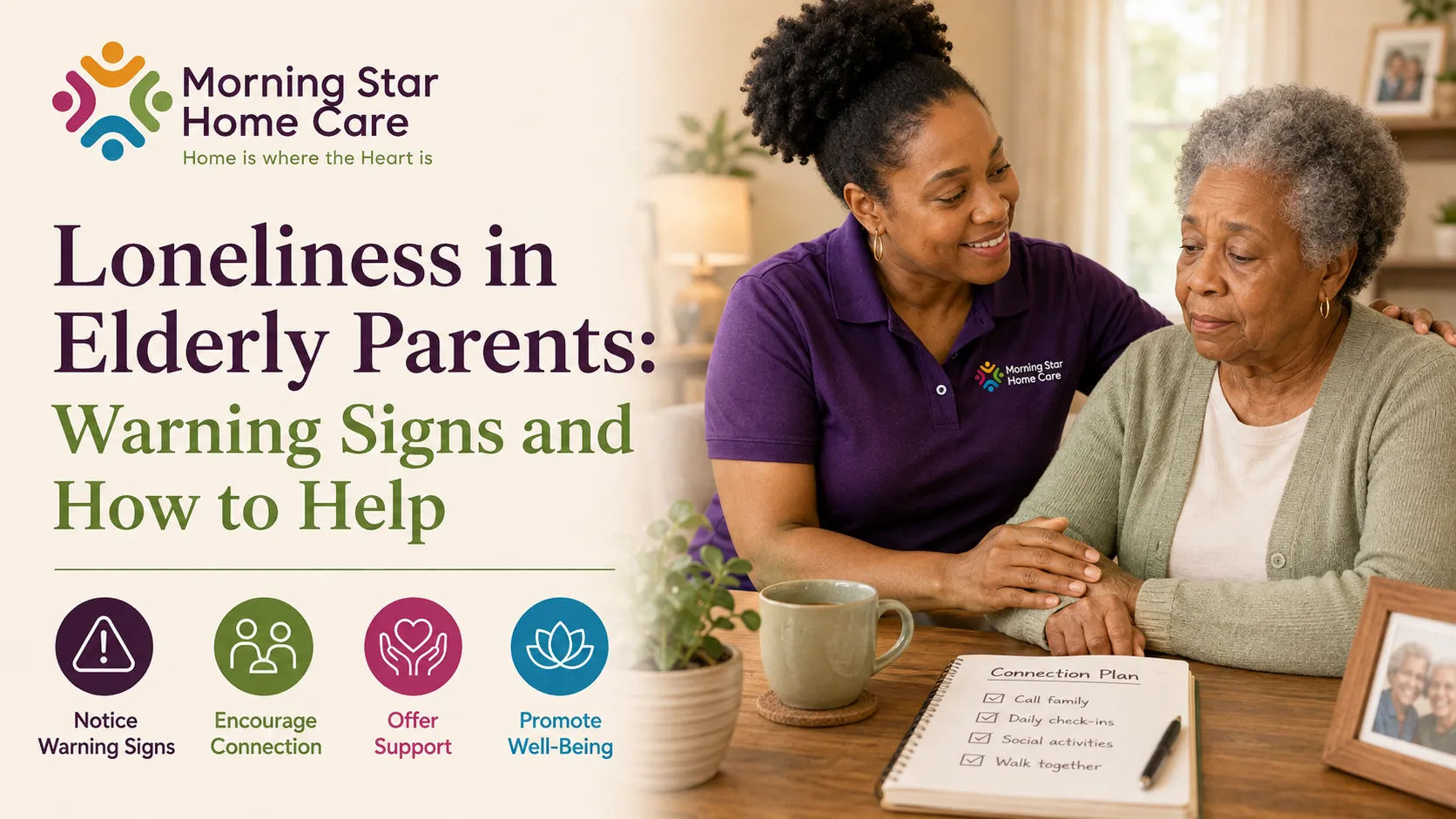
Loneliness in elderly parents often hides in plain sight. A parent can be surrounded by family during holidays and still spend most days without a single meaningful conversation. National data backs up how common this is: about 1 in 3 older adults report feeling isolated, and a recent global meta-analysis found loneliness affects roughly 27.6% of older adults, with North America showing the highest regional prevalence at 30.5%. This isn't just an emotional concern, chronic loneliness carries measurable physical health risks comparable to other well-known risk factors.
This guide covers how to recognize loneliness in an elderly parent, why it matters medically, and what genuinely helps beyond occasional visits.
Key Takeaways
- About 1 in 3 older adults report feeling isolated, and loneliness affects an estimated 27.6% of older adults globally.
- Chronic loneliness raises health risks comparable to smoking, including heart disease, cognitive decline, and earlier mortality.
- Loneliness and social isolation aren't identical — someone can live alone without feeling lonely, or feel lonely while surrounded by people.
- Predictable, regular contact matters more than occasional big visits for actually reducing loneliness over time.
- Underlying causes like hearing loss and mobility limits often drive isolation and are frequently treatable.
Understanding the real difference between being alone and feeling lonely is the starting point for addressing either one effectively.
Loneliness vs. Social Isolation: An Important Distinction
These two terms get used interchangeably, but they describe different things, and the distinction actually matters for how families respond.
- Social isolation is an objective, measurable state — a lack of contacts, relationships, and social interactions.
- Loneliness is a subjective, emotional experience — the distressing feeling of being alone or disconnected, regardless of actual contact frequency.
- Someone can be socially isolated but not lonely, content with solitude, while someone else can be surrounded by people and still feel profoundly lonely.
- Both carry health risks independently, which is why addressing only one, adding visitors without addressing emotional connection, sometimes falls short.
Recognizing which one, or both, is actually present shapes what kind of help will genuinely make a difference.
Warning Signs of Loneliness in an Elderly Parent
Loneliness often shows up indirectly, through behavior and mood changes, rather than a parent stating it outright.
- Reduced interest in activities they used to enjoy, including hobbies, phone calls, or community events.
- Increased phone calls or a noticeable pattern of calling just to talk, sometimes about minor or repetitive topics.
- Changes in sleep or appetite, which loneliness can affect similarly to depression.
- Expressions of feeling forgotten or unneeded, even in passing conversation.
- Increased television or screen time as a substitute for interaction, used more as background company than genuine entertainment.
Dee, Morning Star's founder: "Sometimes it's not what someone says, it's how long the visit lingers. When a caregiver visit that should take an hour keeps stretching because someone doesn't want us to leave, that tells us something important."
Noticing these patterns early, rather than after a parent explicitly says they feel lonely, gives families more time to respond before isolation deepens.
Why Loneliness Is a Genuine Health Risk, Not Just an Emotional One
Loneliness isn't simply an unpleasant feeling to be managed, it's linked to measurable physical health consequences that make it a real medical concern.
- Increased risk of heart disease and stroke, with some research comparing the health impact of chronic loneliness to smoking roughly 15 cigarettes a day.
- Faster cognitive decline and increased dementia risk, since social engagement appears to help preserve cognitive function.
- Weakened immune function, making illness more likely and recovery slower.
- Increased healthcare utilization — research shows social isolation is associated with higher rates of hospitalization and emergency care use.
- Earlier mortality — recent research links social isolation to shortened lifespan, particularly among older men and those with less education.
These aren't minor or secondary effects, they're significant enough that public health bodies now treat loneliness as a genuine social determinant of health.
Who's Most at Risk
While loneliness can affect any older adult, certain circumstances and life changes meaningfully increase the risk.
- Recent loss of a spouse or close friend, which removes both a primary companion and often a shared social circle.
- Living alone, especially after previously living with a spouse or family member.
- Hearing or vision loss, which makes social interaction more effortful and can lead to gradual self-withdrawal from group settings.
- Reduced mobility or no longer driving, which limits independent access to social activities and community events.
- Chronic illness or disability, which can reduce energy for socializing and sometimes carries its own social stigma.
- LGBT+ older adults, who face documented higher rates of loneliness and reduced access to family-based support systems.
Identifying which of these risk factors apply to a specific parent helps target the response toward the actual underlying cause rather than a generic solution.
Pets deserve mention here too. For parents who are able to care for one, companion animals have been shown to meaningfully reduce feelings of loneliness and provide a sense of purpose and routine, though this should factor in a parent's physical ability to handle the responsibility.
What Actually Helps: Beyond Occasional Visits
Well-meaning but infrequent visits often aren't enough to meaningfully reduce loneliness, research and clinical experience point toward more specific approaches.
- Regular, predictable contact — a scheduled weekly call or visit reduces anticipatory loneliness in a way sporadic, unpredictable contact doesn't.
- Addressing underlying barriers first, like getting hearing aids fitted or resolving a mobility issue, which can unlock social engagement that was previously too effortful.
- Community and group activities, like senior center programs or faith communities, which offer a broader social network less dependent on any single relationship.
- Technology bridges, used thoughtfully — video calls and simplified devices can meaningfully supplement, though rarely fully replace, in-person contact.
- Intergenerational connection, such as volunteering, mentoring, or spending time with grandchildren, which research suggests provides distinct benefits beyond peer-only socializing.
"We set up a standing Sunday call, same time every week, no matter what. Mom started looking forward to it specifically because she knew exactly when it was coming, not just hoping we'd call."
The consistency of contact often matters more than its length or frequency, a fact that's easy to underestimate when planning around a busy schedule.
Starting the Conversation Without Making It Awkward
Bringing up loneliness directly can feel uncomfortable, but avoiding the topic usually leaves a parent feeling more isolated, not less.
- Ask open, low-pressure questions like "how are your days feeling lately?" rather than a direct "are you lonely?" which can feel confrontational.
- Normalize the topic by mentioning it's common, not a personal failing, since many older adults feel embarrassed to admit loneliness.
- Listen without immediately problem-solving, since sometimes being heard matters more in the moment than an immediate action plan.
- Follow up specifically on any activities or people mentioned, showing genuine ongoing interest rather than a one-time check-in.
Opening this conversation, even imperfectly, tends to matter more than waiting for the perfect moment or the perfect words.
It is also worth asking a parent directly what kind of connection they would actually value most, since assumptions about what would help, more family visits, a pet, a new hobby group, do not always match what the person themselves is genuinely missing.
Community Resources Worth Knowing About
Several community-based resources exist specifically to address senior loneliness, and many families simply aren't aware they're available.
- Senior centers typically offer regular group activities, meals, and classes designed specifically for social engagement, often at low or no cost.
- Friendly visitor and phone reassurance programs, often run through Area Agencies on Aging, pair volunteers with isolated seniors for regular contact.
- Faith communities often provide both social connection and practical support, including transportation to services.
- Local libraries frequently host senior-focused programs and are an underused, welcoming, low-pressure social resource.
These resources exist precisely because senior loneliness is a widespread, recognized issue, and using them reflects good planning, not a lack of family involvement.
The Role of Hearing and Vision Loss
Sensory decline deserves particular attention as a driver of loneliness because it is common, frequently underdiagnosed, and highly treatable, yet it often gets dismissed as simply part of getting older.
- Untreated hearing loss makes group conversations exhausting and confusing, leading many older adults to quietly stop attending gatherings rather than admit they can't follow along.
- Vision loss can end driving independence and make reading, texting, or even recognizing faces across a room more difficult, each of which chips away at social participation.
- A hearing or vision screening is a simple, low-cost first step that can meaningfully reopen social opportunities a family may not realize have quietly closed off.
- Modern hearing aids and assistive devices have improved significantly and are far less conspicuous than older models, which can reduce a common barrier to actually using them.
Because sensory loss is so often the hidden root cause behind gradual social withdrawal, ruling it out early is one of the highest-value steps a family can take.
Technology as a Bridge, Not a Replacement
Video calls, social apps, and simplified devices have genuinely expanded what's possible for staying connected, particularly for families who live at a distance, though they work best as a supplement rather than a full substitute for in-person contact.
- Simplified tablets and devices designed specifically for older adults reduce the technical friction that often discourages regular use.
- Scheduled video calls, set at a consistent day and time, tend to get used far more reliably than open-ended "call anytime" arrangements.
- Social media, used selectively, can help a parent stay passively connected to extended family and grandchildren's milestones between visits.
- Technology adoption often benefits from hands-on teaching, not just a device left with instructions, since frustration with unfamiliar technology can itself become a barrier.
Used thoughtfully, technology extends the reach of a family's attention without pretending to replace the value of an actual visit.
A Real Family Scenario
After Frank's wife passed, his daughter Karen assumed the weekly family dinners were enough to keep him connected. It wasn't until a caregiver mentioned that Frank had stopped attending his longtime bowling league, quietly, without telling anyone, that the fuller picture emerged. He'd found it too hard to go without his wife, who had always driven, and hadn't wanted to ask for a ride. Once Karen arranged reliable weekly transportation, Frank returned to bowling and, notably, seemed lighter and more talkative at the family dinners too. Frank's situation illustrates a common pattern: the underlying barrier, in his case transportation, was practical and fixable, but it took someone noticing the absence to uncover it.
How an In-Home Caregiver Helps Address Loneliness
A consistent in-home caregiver provides genuine, regular social contact that supplements family visits, particularly valuable for parents who live alone or whose family lives at a distance. Beyond companionship itself, a caregiver's regular presence creates opportunities to notice early signs of withdrawal and to help connect a parent to activities and transportation they might not otherwise access.
Dee, Morning Star's founder: "Companionship is honestly one of the most requested and appreciated parts of what we do, more than people expect going in. A regular, familiar face who remembers what you talked about last time makes a real difference."
This kind of dependable, ongoing presence often fills the gap between occasional family visits and the daily human connection that meaningfully reduces loneliness.
When Loneliness Overlaps With Depression
Loneliness and depression frequently occur together in older adults, and distinguishing between them, or recognizing when both are present, matters for getting the right kind of help.
- Loneliness tends to improve with genuine social connection, while depression often persists even when social opportunities are available, since it affects motivation and mood more broadly.
- Persistent sadness, loss of interest in nearly everything, or changes in sleep and appetite lasting more than two weeks warrant a conversation with a doctor about depression specifically.
- Loneliness can trigger or worsen depression, and depression can deepen loneliness by reducing motivation to reach out or accept invitations, creating a cycle that's hard to break from either direction alone.
- A primary care doctor can screen for depression during a routine visit, and treatment, whether therapy, medication, or both, often needs to happen alongside efforts to rebuild social connection.
Because these two issues reinforce each other, addressing only the social piece sometimes isn't enough if underlying depression is also present and untreated.
A Final Thought
Loneliness in elderly parents is common, serious, and often invisible until someone looks closely. Recognizing the warning signs, understanding the real health stakes, and building consistent, predictable connection, rather than relying on occasional visits, gives a parent a genuine path toward feeling less alone.
Small, consistent gestures of connection tend to add up to more meaningful impact over time than any single grand effort ever could.
Families should also give themselves grace here. There is no perfect schedule of calls or visits that guarantees a parent never feels lonely, and the goal is steady, sincere effort rather than an unattainable standard of constant connection.
A Note for Connecticut Families
Senior centers, Area Agency on Aging friendly visitor programs, and faith-based community groups are active throughout the Bristol and Greater Hartford area, offering accessible ways to help a parent build regular social connection close to home.
Whatever combination of resources a family chooses, checking in on how it's actually landing, rather than assuming a solution is working simply because it's in place, keeps the effort genuinely responsive to a parent's changing needs.
A Note for Connecticut Families
- Nature — Humanities and Social Sciences Communications: The Global Prevalence and Associated Factors of Loneliness in Older Adults
- Boston University School of Public Health — Social Isolation May Shorten Lives Among Older People, Men, and Less Educated
- PMC — Associations of Social Isolation and Loneliness With Healthcare Utilization Among Older Adults
Written by
Morning Star Care Team
Morning Star Home Care — Caregiver-Founded and Locally Owned in Bristol, CT.