
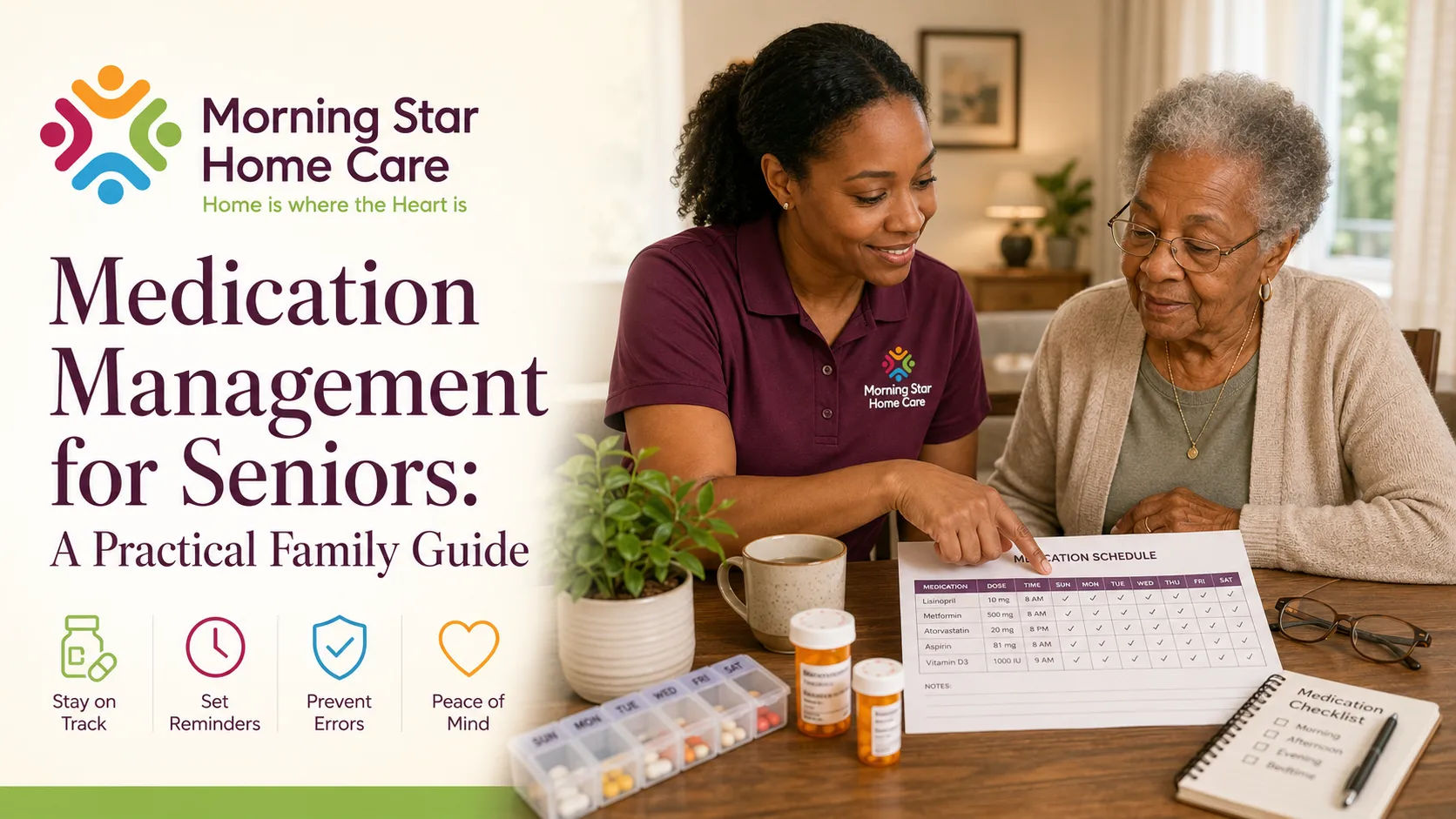
Medication management for seniors has become a genuinely complex task, and the numbers explain why. Nearly 87% of adults 65 and older took at least one prescription medication in the past year, and roughly 1 in 3 adults in their 60s and 70s take five or more prescription drugs regularly, a pattern known as polypharmacy. Taking five to nine medications raises the risk of a drug interaction to 50%, and adverse drug events are now the fourth leading cause of death in the United States, costing up to $130 billion annually in related care.
None of this means medication is the enemy, most older adults genuinely need what's been prescribed. It means medication management for seniors requires an actual system, not good intentions alone, since the complexity of juggling multiple prescriptions, dosing schedules, and refills grows well beyond what memory can reliably handle on its own.
Key Takeaways
- About 1 in 3 older adults take five or more medications regularly, a pattern called polypharmacy that sharply raises interaction and error risk.
- 30% of hospital admissions among older adults are linked to polypharmacy — a significant, preventable driver of medical crises.
- A pill organizer alone often isn't enough once someone is managing five or more medications with varying schedules.
- An annual medication review with a pharmacist or doctor is one of the single most effective, underused tools for catching problems.
- Warning signs of a medication problem are often subtle — confusion, new falls, appetite changes — rather than an obvious dosing mistake.
Why Medication Management for Seniors Is Harder Than It Looks
Medication management for seniors is complicated by more than sheer pill count. Aging changes how the body processes medication, reduced kidney and liver function slow drug clearance, meaning a dose that was appropriate at 55 can become too strong at 80 without any prescription change at all. Multiple specialists, each managing one condition, frequently prescribe without full visibility into what other doctors have already added, creating overlapping or interacting prescriptions that no single provider catches. And cognitive changes, even mild, normal age-related ones, make it easier to miss a dose, double a dose, or lose track of timing.
Dee, Morning Star's founder: "The families I talk to often assume a medication mistake means someone wasn't paying attention. In reality, most medication errors happen because the system itself, five prescriptions from three different doctors, filled at two different pharmacies, was never designed to be managed by memory alone."
Understanding Polypharmacy and Why It Matters
Polypharmacy, generally defined as taking five or more medications regularly, isn't inherently dangerous on its own, many older adults genuinely need that many prescriptions to manage multiple chronic conditions. The risk comes from interactions, duplications, and medications that may no longer be necessary but were never formally discontinued. Elderly patients take an average of two to nine medications per day, and the interaction risk climbs sharply as that number grows.
- 5–9 medications: roughly 50% risk of a significant drug interaction.
- Adults taking 5+ medications are at least 88% more likely to need outpatient care for an adverse drug event than those taking one or two.
- 30% of hospital admissions among older adults are linked to polypharmacy-related complications.
Warning Signs of a Medication Problem
Medication-related problems rarely announce themselves clearly. They tend to show up as changes that look like normal aging or an unrelated health issue, which is part of why they're so often missed until something more serious happens.
- New or worsening confusion, which can be mistaken for cognitive decline when it's actually a medication side effect or interaction.
- Increased falls or unsteadiness, often tied to sedatives, blood pressure medications, or interactions that affect balance.
- Changes in appetite or unexplained weight change, which some medications cause directly.
- Unusual drowsiness or difficulty waking up during the day.
- Skipped or doubled doses discovered in pill organizers — a compartment left full or emptied twice is a concrete, visible sign worth investigating.
Building a Practical Medication Management System
The right system depends on how many medications are involved and how much support the person needs, but a few tools consistently make the biggest difference for medication management for seniors.
- Weekly pill organizers remain a solid starting point for someone managing a handful of daily medications, but weekly refilling itself becomes another task that needs a reliable routine.
- Blister packs from the pharmacy — pre-sorted by the pharmacy itself, by date and time rather than just day of the week, reduce error risk further and remove the refilling step from the family or the person entirely.
- Medication synchronization programs, offered by many pharmacies, align refill dates so all of someone's prescriptions are picked up on the same day each month, instead of on staggered dates that are easy to lose track of.
- Medication management apps with dose reminders and refill alerts work well for someone comfortable with a smartphone, and many allow a family member to monitor adherence remotely.
- A single master medication list, updated after every doctor visit and kept somewhere accessible (a folder, a phone note, a card in a wallet), prevents the common problem of no one, including the person's own doctors, having a complete and current picture.
Common Medication Management Mistakes
A handful of avoidable mistakes show up repeatedly when families first take a close look at how an aging parent's medications are actually being managed.
- Assuming an old prescription is still needed. Medications prescribed years ago for a since-resolved issue sometimes stay on a person's routine indefinitely simply because no one ever revisited whether it was still necessary.
- Mixing over-the-counter drugs and supplements into the blind spot. Many families track prescriptions carefully while completely overlooking over-the-counter pain relievers, sleep aids, or herbal supplements, some of which interact meaningfully with prescribed medications.
- Storing medications incorrectly. Heat, humidity, and light, common in a bathroom medicine cabinet, can degrade some medications faster than their labeled expiration date suggests, reducing effectiveness without any visible sign.
- Not disposing of discontinued medications. Old prescriptions left in a cabinet increase the risk of an accidental double-dose or a mix-up between similar-looking pill bottles.
- Splitting or crushing pills not designed for it. Some extended-release medications lose their intended effect, or become dangerous, when split or crushed without a doctor's specific guidance to do so.
Medication Storage and Disposal Basics
Proper storage and disposal are an underappreciated part of medication management for seniors, particularly in a household where grandchildren or other vulnerable people might visit. Most medications should be stored in a cool, dry place, not the bathroom medicine cabinet despite the name, since heat and humidity from showers can degrade them faster than expected. A locked box or cabinet is worth considering for controlled substances like opioid pain medication, both to prevent accidental access and to guard against theft or misuse.
- Use a pharmacy or DEA take-back program to dispose of expired or discontinued medications rather than throwing them in household trash or flushing them.
- Keep medications in their original, labeled containers when possible, since this preserves dosage information and reduces the risk of confusing two similar-looking pills.
- Do a periodic cabinet check, every few months, to clear out anything expired or no longer prescribed.
The Case for an Annual Medication Review
One of the most effective and most underused tools in medication management for seniors is a formal annual medication review, sometimes called a brown bag review, where every medication and supplement is brought to a pharmacist or doctor for a complete evaluation. These reviews regularly identify medications that are duplicative, no longer necessary, or interacting in ways no single prescribing doctor had visibility into, since a review looks at the complete picture rather than one condition at a time.
"We did a full medication review with Dad's pharmacist last year and found out he was still taking a blood pressure medication two different doctors had each separately prescribed, under different brand names, without realizing it. Neither doctor knew. The pharmacist caught it in ten minutes."
Many pharmacies offer these reviews free of charge, and Medicare Part D plans are required to offer an annual Medication Therapy Management review to eligible members at no additional cost, a benefit many families don't realize exists.
Vaccinations and Preventive Medications
Medication management for seniors extends beyond prescriptions for existing conditions to include preventive care like annual vaccinations, which are sometimes overlooked amid the more visible task of managing daily pills. Flu, pneumonia, shingles, and COVID-19 vaccines are all recommended at higher rates or specific formulations for older adults, and keeping these on the same master medication and health calendar as prescription refills helps ensure they don't fall through the cracks.
Coordinating Across Multiple Doctors
A significant share of medication problems stem from poor coordination between specialists rather than any single prescribing error. Bringing a complete, current medication list to every appointment, including over-the-counter medications and supplements, gives each doctor the full picture rather than relying on the person to accurately remember or explain what else they're taking. Using a single pharmacy for all prescriptions when possible also helps, since pharmacy software automatically flags many interactions at the point of fill, a safeguard that's lost when prescriptions are split across multiple pharmacies.
Talking to a Parent About Medication Management Without It Feeling Controlling
Bringing up medication management with an independent parent can feel delicate, especially if it implies they're no longer capable of managing their own health. Framing the conversation around simplifying a genuinely complicated system, rather than questioning their ability, tends to land better.
Starting with a collaborative offer, 'Can we go through this together and make a master list, just so we have it if we ever need it,' tends to be received far better than an approach that implies a mistake has already been noticed or suspected.
When Medication Management Needs More Support
Some situations call for more structured support than a family managing the process informally, and recognizing this early prevents the kind of crisis that often forces the issue later.
Call the doctor now if: Contact the doctor or pharmacist promptly if you notice new confusion, unexplained falls, or a pill organizer that isn't being followed correctly — these can signal a medication problem that needs review, not just closer monitoring
- Multiple missed or doubled doses discovered repeatedly signal that the current system isn't working, regardless of how simple it once seemed.
- A recent diagnosis of cognitive decline often means medication management needs to shift from self-managed to caregiver-managed, sometimes gradually rather than all at once.
- A recent hospitalization almost always means a medication list has changed and needs a fresh, careful review before resuming any prior routine.
What a Master Medication List Should Include
A genuinely useful master medication list goes beyond just drug names, and taking a few extra minutes to build it out thoroughly makes it far more valuable during an emergency or a new doctor visit.
- Drug name (both brand and generic), dosage, and frequency for every prescription, over-the-counter medication, and supplement.
- The prescribing doctor for each medication and the condition it's treating, since this helps a reviewer quickly spot duplicates or medications no longer relevant.
- Known allergies and past adverse reactions to any medication, clearly flagged at the top of the list.
- The date the list was last updated, since an outdated list can be more dangerous than no list at all if it's mistaken for current.
The Cost Side of Medication Management
Cost pressure is a frequently overlooked driver of medication mismanagement — some older adults quietly skip doses, split pills not designed to be split, or delay refills to stretch a fixed income further, without ever mentioning it to family or their doctor. Asking directly and non-judgmentally about cost, and looping in a pharmacist about generic alternatives, manufacturer assistance programs, or Medicare Extra Help, can surface and solve a problem that would otherwise stay hidden until it caused a health crisis.
Technology Tools Worth Considering
Beyond basic pill organizers, a growing set of technology options can add real structure to medication management for seniors, particularly for someone comfortable with a smartphone or willing to try a simple dedicated device.
- Automatic pill dispensers lock medication compartments until the scheduled time, then unlock and alert the person, reducing both missed and duplicate doses for someone who has trouble with timing.
- Smartphone reminder apps send push notifications at dose times and can log adherence, which is useful both for the person and for a family member checking in remotely.
- Smart pharmacy packaging some pharmacies now offer connected pill packs that alert a caregiver's phone if a dose isn't removed on schedule.
None of these tools need to be adopted all at once, and starting with whichever addresses the most pressing current gap tends to work better than overhauling an entire system at once.
A Real Family Scenario
Karen didn't realize her father Walt had been taking his blood pressure medication twice a day instead of once, an honest mix-up after a dosage change he hadn't fully absorbed, until a fall sent them to the emergency room. The ER doctor recognized it immediately from his symptoms and blood pressure reading. Afterward, Karen and Walt set up a pharmacy blister-pack system together, pre-sorted by date and time, and scheduled a standing quarterly check-in with his pharmacist. It wasn't Walt losing independence, Karen framed it as removing a task that had become unnecessarily hard to track alone.
How a Professional Caregiver Supports Medication Management
A consistent in-home caregiver adds meaningful protection against medication errors, providing reminders at the right times, observing whether doses are actually taken rather than just organized, and often noticing early warning signs, confusion, new unsteadiness, changes in appetite, that a family checking in periodically might miss.
Dee, Morning Star's founder: "Our caregivers aren't prescribing or adjusting medication, that's always the doctor's role, but we can make sure the right pill gets taken at the right time, and we're often the first to notice when something seems off, before it becomes an ER visit."
Medication Management After a Diagnosis Changes Things
A new diagnosis, particularly one affecting cognition like early-stage dementia, often means medication management needs to shift more deliberately from self-managed toward family- or caregiver-managed, but this transition works best handled gradually and collaboratively rather than as an abrupt takeover. Starting with shared oversight, a family member reviewing the pill organizer weekly alongside the person rather than for them, preserves independence for as long as it's safely possible while building in a real safety check.
A Final Thought
Medication management for seniors rarely fails because of carelessness — it fails because the system managing it, multiple prescriptions, multiple doctors, changing dosages, was never actually built to be tracked by memory. A structured system, regular reviews, and open family conversation close most of that gap, and they're worth setting up before a crisis forces the issue.
References
Written by
Morning Star Care Team
Morning Star Home Care — Caregiver-Founded and Locally Owned in Bristol, CT.