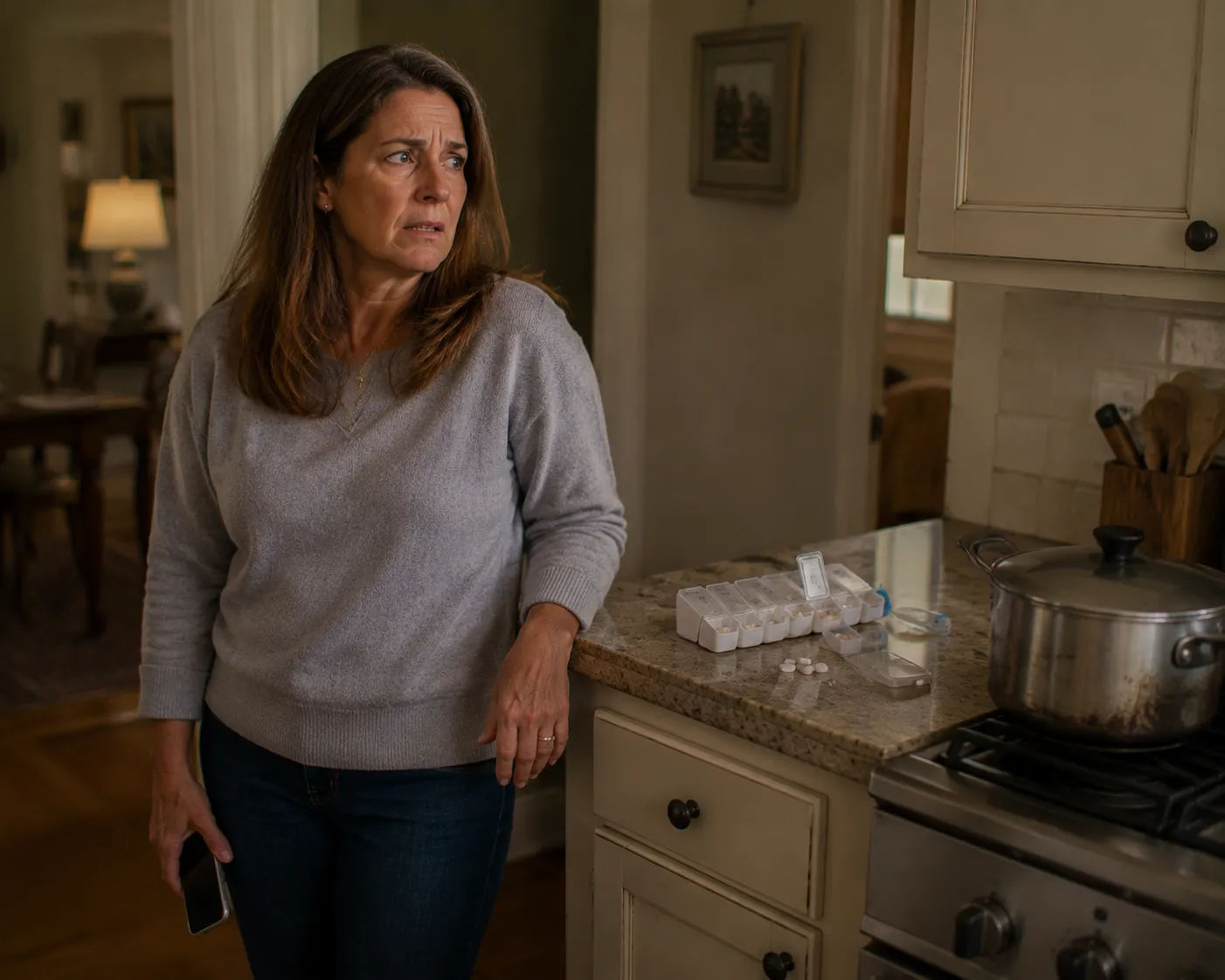

Choosing Mother's Day gifts for dementia care requires a different lens than a typical Mother's Day gift guide, since the right choice depends heavily on where your mother currently is in the progression of the disease, not on what she used to enjoy years ago. A gift that delights a mom in early-stage dementia may confuse or overwhelm one in a later stage, and getting this match right matters more than the specific item itself.
This is also an emotionally complex day for many caregivers. It's normal to grieve who a mother once was while still cherishing who she is now, and that mix of feelings deserves acknowledgment, not just a gift list. This guide covers ideas organized by stage, along with guidance on making the day itself feel calm and connected rather than forced.
Key Takeaways
- Match the gift to her current stage of dementia, not to interests or abilities from years past.
- Sensory and connection-focused gifts — familiar music, photos, scents — tend to work well across most stages.
- A calm, low-pressure celebration often matters more than any specific gift.
- It's normal to feel grief alongside love on this day — both are valid, and neither cancels out the other.
- Involving her care team in gift and activity planning often produces the most genuinely meaningful ideas.
How to Assess Where Mom Currently Stands
Families don't need a formal diagnosis update to get a general sense of current stage before shopping for a gift — simple observation over recent weeks tells most of what's needed. Can she still hold a conversation and follow simple instructions? Does she still recognize family members reliably? Is she mobile and able to manipulate objects with her hands, or has fine motor control declined? Answering these questions honestly, even informally, points toward the right category of gift far more reliably than guessing based on how she seemed a year ago.
If uncertain, it's worth asking her primary physician or, if she's receiving professional care, her caregiver or care coordinator for a general sense of her current functional level. This isn't about a precise clinical stage so much as a practical read on what kinds of gifts and activities are realistic right now.
Why Stage Matters More Than Anything Else
The single most important factor in choosing Mother's Day gifts for a mom with dementia is understanding where she currently is in the disease's progression, since needs and abilities shift substantially between early, middle, and late stages. The Alzheimer's Foundation of America recommends taking a strengths-based, person-centered approach — focusing on what she can do and enjoys now, rather than dwelling on what she used to be able to do.
Dee, Morning Star's founder: "Families sometimes plan the Mother's Day they wish they could still have, rather than the one that fits where Mom actually is today. Both come from love, but the second one almost always goes better."
Gifts for Early-Stage Dementia
In early-stage dementia, many mothers retain much of their independence and can still enjoy familiar activities with some adaptation.
- A talking photo album that plays a short recorded message alongside each photo of children and grandchildren.
- A digital photo frame preloaded with family photos, updated remotely as new ones come in.
- A memory picture phone with photos of loved ones in place of a numeric keypad for easy calling.
- Simplified puzzle books or large-print activity books for continued light mental engagement.
Gifts for Middle-Stage Dementia
As dementia progresses into the middle stage, gifts that support comfort and gentle sensory engagement tend to work better than anything requiring sustained focus or new learning.
- An activity apron or fidget blanket with buttons, textures, and zippers to keep hands occupied and calm.
- A soft, weighted lap blanket for a grounding, calming sensory input.
- Adaptive clothing with magnetic or hook-and-loop closures that's easier to manage with less assistance.
- A simple music player loaded with favorite songs from her younger years.
Gifts for Late-Stage Dementia
In late-stage dementia, gifts shift almost entirely toward sensory comfort. The goal becomes providing moments of calm and recognition through touch, sound, and scent rather than cognitive engagement.
- A soft, textured comfort item — a plush blanket or a stuffed animal with varied fabric textures.
- Familiar, calming music played through a simple, one-button speaker.
- A favorite perfume or lotion scent tied to a happy memory, applied gently during a visit.
- A recording of family voices — even a brief message played back can provide comfort and recognition.
The Power of Music and Reminiscence
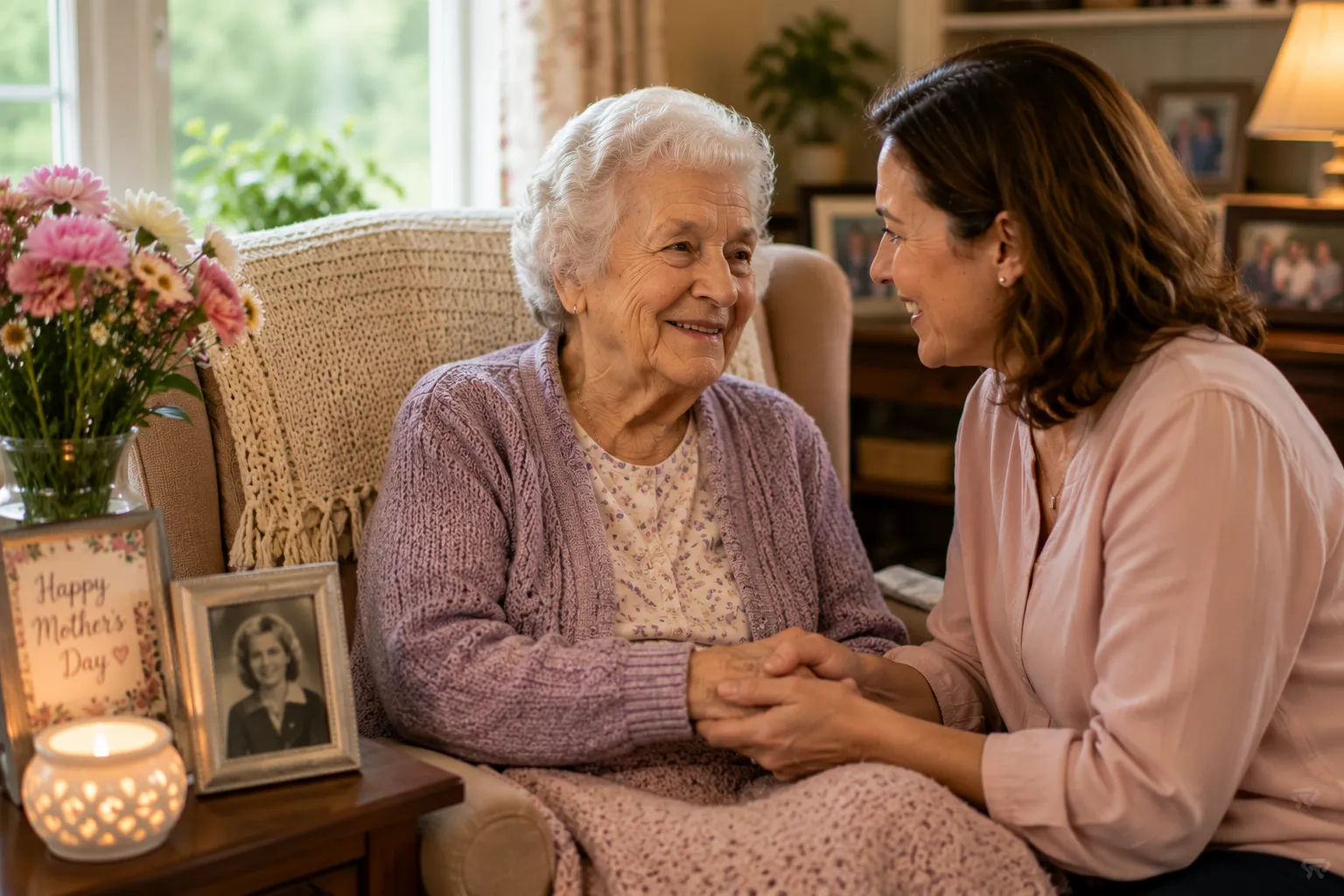
Research consistently shows that music benefits people with Alzheimer's and other dementias, reducing stress, anxiety, and agitation, and often helping caregivers connect with a loved one even when verbal conversation has become difficult. Looking through old photos together and reminiscing, even if she doesn't recall every detail, can bring genuine joy and comfort in the moment, which matters more than factual accuracy about the memories themselves.
"The Mother's Day that went best with my mom wasn't the one with a gift at all — it was the one where we just put on her old records and looked through photo albums together. She hummed along to songs I didn't think she'd remember."
Gifts That Support Connection at Any Stage
Regardless of stage, gifts that facilitate connection with family tend to hold value throughout dementia's progression, even as the way that connection is experienced changes over time. A recorded video message from grandchildren, a simple photo book with large captions, or a scheduled regular visit built into the week's routine all provide meaningful connection without requiring complex understanding.
Reminiscence-Based Gifts
Reminiscence therapy — using familiar objects, music, or photos from a person's past to spark recognition and positive emotion — has become a well-established, evidence-supported approach in dementia care, and many of the best Mother's Day gifts for dementia draw directly on this idea. A gift built around a mother's career, a beloved hobby, or a significant life era (her wedding, a favorite vacation spot, the songs she danced to as a young woman) can spark genuine engagement even when more recent memories have faded, since long-term memories often remain more accessible than short-term ones as dementia progresses.
Gifts to Approach Carefully
- Complex new technology that requires learning, even if it seems helpful in theory.
- Gifts implying an ongoing task or responsibility, like a plant needing regular care, which can create guilt or anxiety if forgotten.
- Anything fragile or easily misplaced, particularly for a mom who may set items down unpredictably.
- Activities requiring precise memory of recent events, such as trivia focused on things that happened recently rather than long ago.
Preparing a Simple Day-Of Plan
Writing out a brief, simple plan for the day itself — what time the visit starts, how long it will last, what activities are planned, and a backup plan if she seems overwhelmed or agitated — helps reduce the improvisation that can add stress for both her and the family. Sharing this plan with anyone attending, including instructions on tone and pacing, keeps everyone aligned and reduces the chance of well-meaning but overwhelming enthusiasm from a relative who hasn't seen her recently.
Planning a Calm, Low-Pressure Mother's Day
Seniors with dementia often feel most comfortable when their schedule stays predictable, so it's worth picking an activity that fits her current abilities and daily routine rather than an ambitious plan built around how Mother's Day used to look. If she loved a particular restaurant but can no longer manage eating out, ordering food from that same restaurant to enjoy at home can recreate some of the sentiment without the overstimulation of a new environment.
| Consideration | What Tends to Work Better |
|---|---|
| Setting | A familiar, quiet space rather than a new or crowded venue |
| Group size | A small gathering of close, familiar faces |
| Timing | Scheduled during her best time of day, often mid-morning for many patients |
| Activities | Familiar routines and reminiscence rather than new or complex plans |
Call the doctor now if: If your mom becomes significantly agitated, distressed, or shows sudden behavior changes during the day, it's worth having a calm plan to step back, reduce stimulation, and consult her care team if the pattern continues.
It's worth remembering that connection can look different than it once did — a mother who no longer holds a full conversation may still respond to a familiar touch, a warm tone of voice, or simply being sat next to someone she trusts. Redefining what connection means at each stage, rather than measuring it against earlier capabilities, helps families recognize and value the smaller moments that still matter.
Coordinating With Her Home Care Team
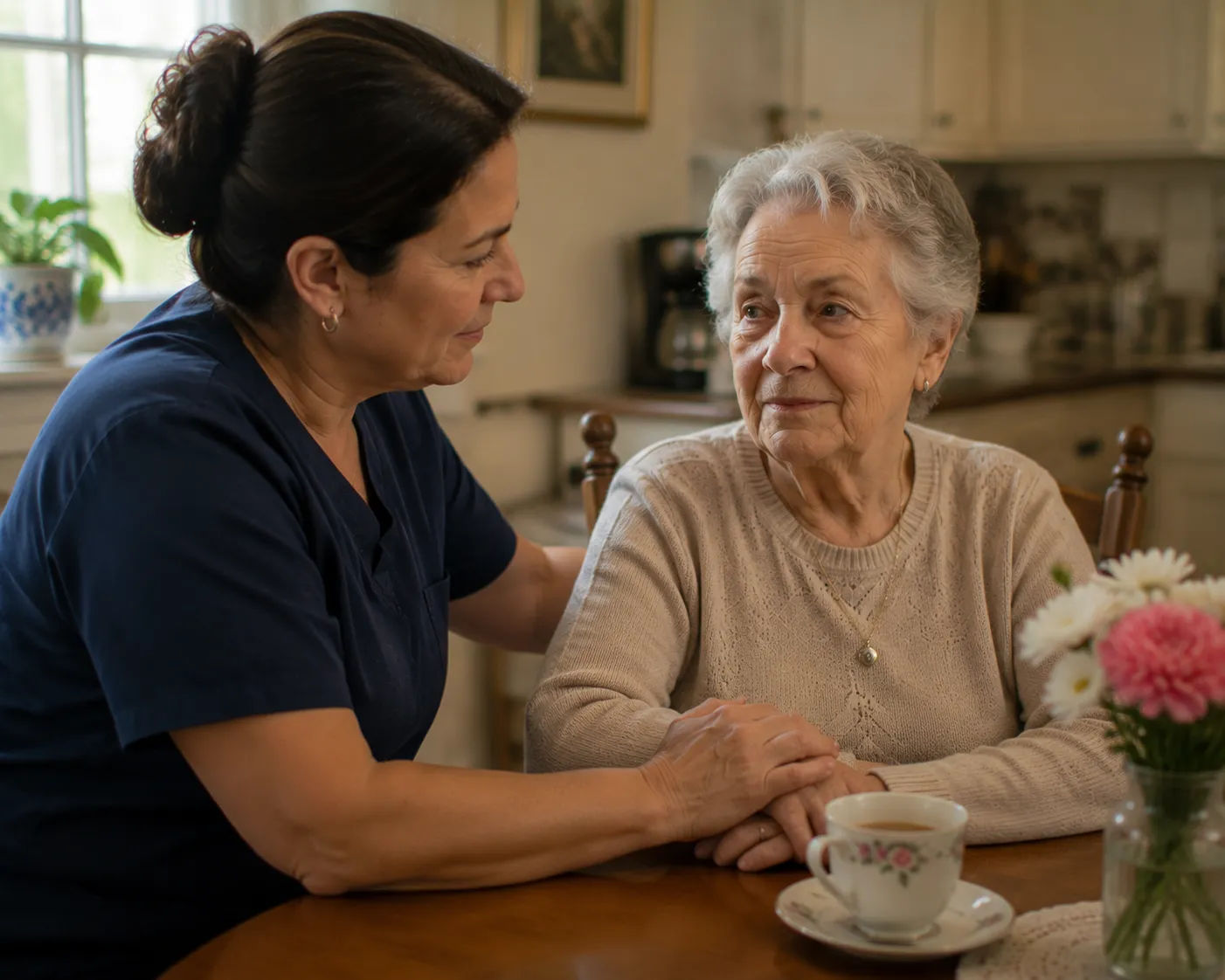
If your mother receives regular support from a professional in-home caregiver, that caregiver often has valuable, specific insight into what currently brings her comfort or engagement. A caregiver who spends consistent time with her may know exactly which songs calm her, which textures she responds to, or which times of day tend to go best.
Dee, Morning Star's founder: "Our caregivers get to know these small details over time — a favorite song, a particular blanket, a time of day that's always easier than others. Families are always welcome to ask us what we've noticed."
It's also worth noting that practical safety-related gifts, like a medical alert pendant or non-slip footwear, can be framed as an act of care and connection rather than a clinical reminder of decline, and can coexist alongside the more sentimental gifts covered above.
Involving Grandchildren Thoughtfully
Grandchildren can still play a meaningful role in Mother's Day even once a grandmother's dementia has progressed significantly, though the interaction may need to be simplified. A short visit, a drawn picture, or a recorded message tends to work better than an extended visit that could overwhelm her. Preparing grandchildren beforehand for what to expect helps the visit go more smoothly for everyone.
A Note for First-Time Dementia Caregivers
For families marking their first Mother's Day since a dementia diagnosis, much of this may feel unfamiliar and disorienting, and it's worth giving yourself permission to figure it out imperfectly this first year. What works well tends to become clearer with each passing occasion, and there's no need to get every detail right immediately — presence and patience matter far more than precision in the early stages of this new normal.
Allowing Space for Grief on This Day
Mother's Day for dementia caregivers can bring up a genuine mix of emotions — grief, love, frustration, sadness — often all at once. It's easy to focus on what dementia has taken, and it's entirely normal to grieve who your mother once was while still cherishing who she is now. Making space for both feelings, rather than forcing a purely celebratory tone, tends to feel more honest and ultimately more supportive for whoever is caring for her.
Building a Sensory Gift Box for Any Stage
Rather than a single gift, many families find success assembling a small sensory box tailored to a mother's specific preferences — a few familiar-scented items, a soft textured object, a small speaker loaded with her favorite songs, and a photo or two of meaningful memories. Unlike a single-use gift, this kind of box can be revisited repeatedly and gives caregivers or family members an easy resource during moments of agitation or restlessness, not just on Mother's Day itself. Building the box together with input from whoever spends the most day-to-day time with her — a spouse, a sibling, or a professional caregiver — ensures it reflects what actually works, rather than assumptions based on her preferences before dementia.
Adapting Family Traditions Rather Than Abandoning Them
Many families feel pressure to either continue every Mother's Day tradition exactly as before or abandon them altogether once dementia progresses, but a middle path often works best. A tradition of a big brunch out might become a quiet at-home meal featuring the same favorite foods; a tradition of a big family gathering might become a smaller, calmer visit. Identifying which part of a tradition mattered most emotionally — the food, the music, the company — rather than the specific mechanics of it, helps families adapt without losing these moments altogether.
Managing Expectations Among Extended Family
Extended family members who see a mother less frequently sometimes struggle to calibrate their expectations for how the day should go, which can create friction or disappointment if they expect a version of Mother's Day from years past. A brief, honest update before the gathering — explaining her current stage, what to expect, and what kind of interaction tends to go well — helps everyone arrive with realistic expectations and reduces the risk of a well-meaning relative unintentionally causing distress by pushing too hard for recognition or engagement she can no longer provide.
The Emotional Weight of Gift-Giving for Family Members
It's worth acknowledging that choosing gifts for a mother with dementia often carries real grief alongside the effort to make the day special — a quiet reckoning with how much has changed since Mother's Days past. This emotional weight is a normal and valid part of the caregiving experience, not a sign that something is being done wrong. Many family members find it helpful to allow space for both the sadness and the genuine warmth of the day to coexist, rather than expecting the day to feel purely celebratory. Support groups specifically for families of dementia patients, whether in person or online, can offer meaningful perspective from others navigating the same seasonal milestones, including how they've approached gift-giving and celebration as the disease progresses.
Photo Books and Memory Tools Worth the Extra Effort
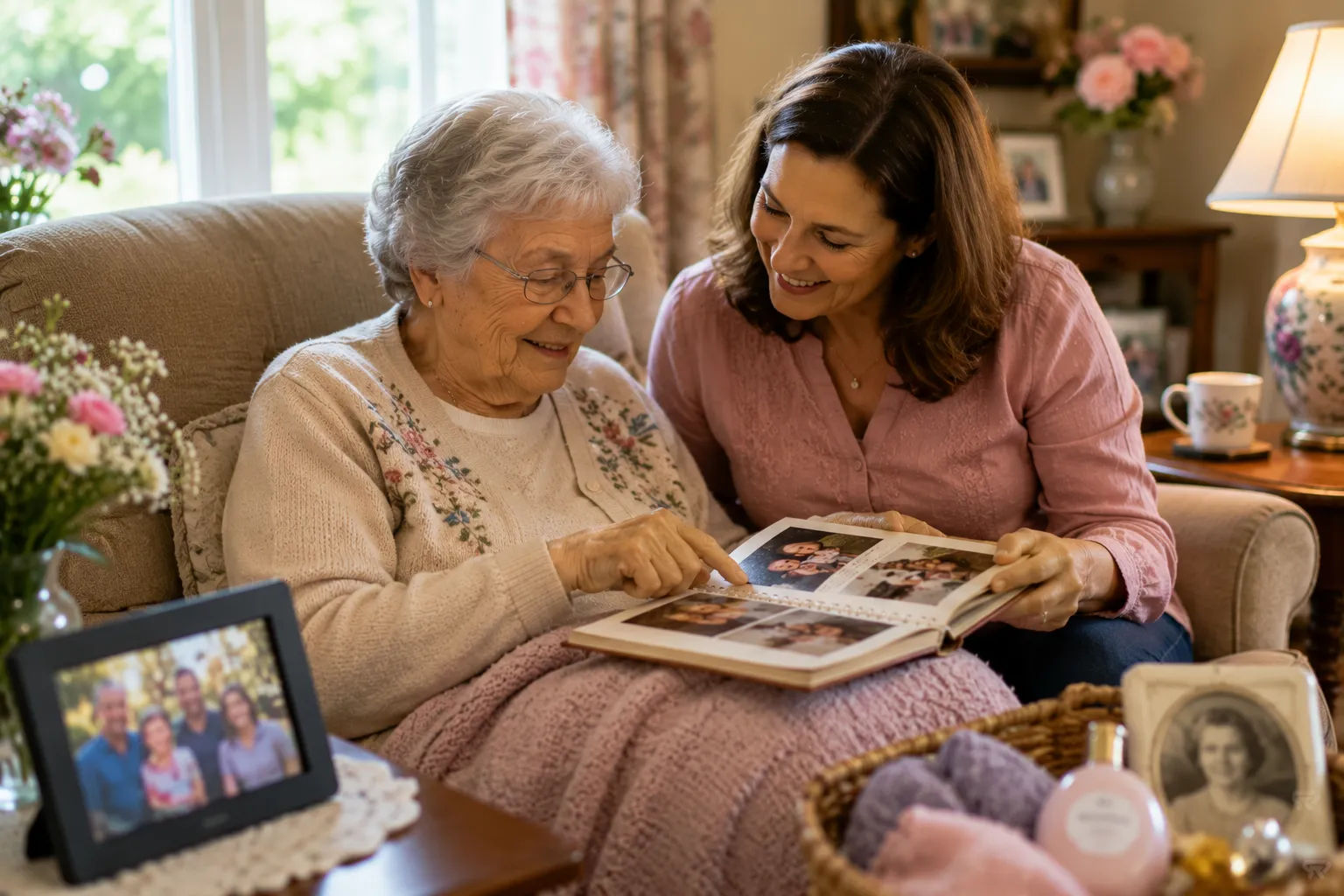
Of all the gift categories covered here, personalized photo books consistently rank among the most successful across every stage of dementia, because they combine visual recognition, sensory engagement (the physical act of flipping pages), and an activity that can be revisited endlessly without becoming repetitive in a bad way — unlike a movie or a puzzle solved once. Investing extra time in building one well — large print, simple one- or two-word captions, chronological or thematic organization — pays off in how much use the gift actually gets.
A Real Family Scenario
For her mother's first Mother's Day since her dementia diagnosis progressed further, Karen scrapped the usual restaurant brunch and instead brought over her mom's favorite records and a stack of old family photo albums. Her mother didn't remember much of the visit afterward, but in the moment, she smiled and hummed along to nearly every song — and Karen realized that had become enough.
Shopping for Gifts as Dementia Progresses Over Time
A gift that worked beautifully last Mother's Day may not fit as well this year, since dementia is a progressive condition and needs shift, sometimes significantly, within a single year. Rather than assuming last year's success will repeat, it's worth reassessing shortly before each occasion — checking in with whoever spends the most day-to-day time with her about what currently brings comfort or engagement, rather than relying on outdated assumptions. Keeping a simple running note of what's worked and what hasn't, updated after each occasion, makes this reassessment faster each time and helps other family members who might be shopping for her stay aligned on her current stage and preferences.
When Mom Lives in a Care Community Rather Than at Home
While this guide focuses on a mother living at home, many of the same stage-based principles apply if she's since moved into a memory care or assisted living community. It's worth checking with community staff before bringing certain gifts, since some communities have policies around food items, certain electronics, or objects that could pose a safety risk in a shared environment. Staff who interact with her daily can also offer the same kind of insight a home caregiver would about what currently brings her comfort.
Involving Professional Caregivers in the Celebration Itself
If a mother receives regular visits from a professional in-home caregiver, including that caregiver in some part of the Mother's Day celebration — even briefly — can add comfort rather than disruption, since she's likely to associate a familiar face with security and routine. Some families choose to schedule the celebration around the caregiver's regular visit specifically for this reason, using the existing routine as an anchor rather than introducing an entirely new schedule for the day.
A Final Thought
Mother's Day gifts for dementia succeed less through the object itself and more through the moment of connection they create. A simple, well-matched gift given with patience and presence tends to matter more than anything elaborate — and for many families, releasing the pressure to make the day look like it used to is itself a kind of gift.
References
- Alzheimer's Foundation of America — Creating a Special Mother's Day for Someone Who Has Dementia
- A Place for Mom — Mother's Day Gifts for Mom with Dementia
This article is for general information and isn't a substitute for medical, legal, or financial advice. If you're concerned about a specific issue, talk to your parent's doctor or an elder law attorney.
Written by
Morning Star Care Team
Morning Star Home Care — Caregiver-Founded and Locally Owned in Bristol, CT.