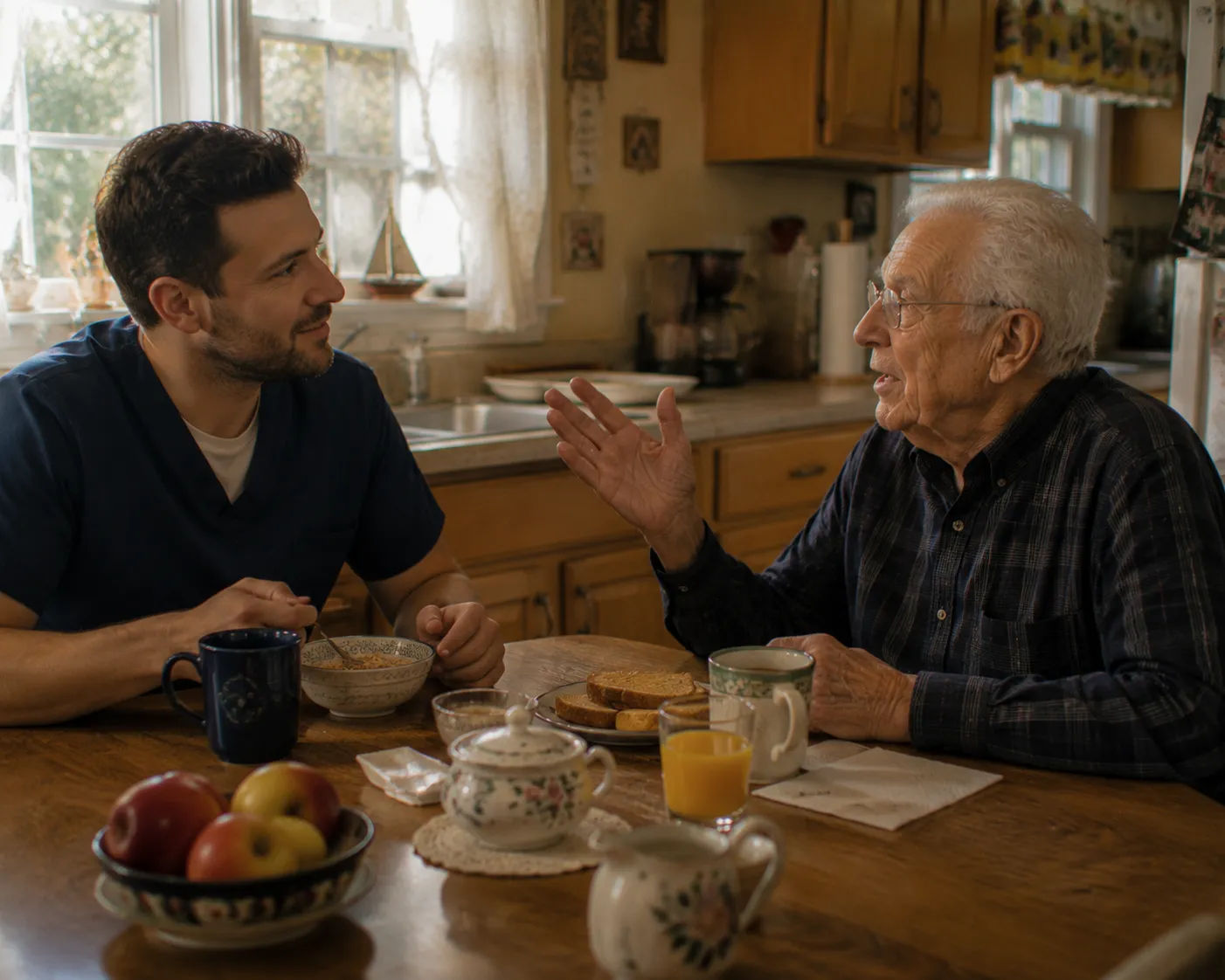

A senior center today looks very different from the outdated stereotype many families still carry in their heads. Modern senior centers offer fitness classes, computer courses, woodworking shops, day trips, tax preparation help, and social programming that draws people back multiple times a week — not a quiet room with a few card tables. This guide covers what's actually available near Bristol, and how to help a reluctant parent give it a try.
Senior centers nationally connect roughly 1 million older adults to community services, and 75% of participants visit one to three times a week, spending an average of over three hours per visit. In one New York study, 96% of members reported genuinely benefiting from attending — a strong endorsement for a resource many families overlook.
The sections below cover specific programs, transportation options, ways to overcome common reluctance, and how a senior center can fit alongside other support your family may already be considering.
Key Takeaways
- Senior centers offer far more than most families expect — fitness, medical services, meals, transportation, classes, and social programming, not just card games.
- The Bristol Senior Center is open to residents 55 and older, located at 240 Stafford Avenue, with weekday hours and dial-a-ride transportation available.
- Participation is linked to real health benefits — better perceived social support, reduced depression and anxiety symptoms, and improved life satisfaction.
- Reluctance is common and usually fades after trying it once — most resistance is about expectations, not the actual experience.
- Transportation barriers have solutions — most senior centers, including Bristol's, offer dial-a-ride or van services for those who no longer drive.
Reviewing this list with a parent directly, rather than describing it generally, often reveals a specific program that genuinely appeals to them even if the overall idea of "a senior center" doesn't sound compelling at first.
What's Actually Available at a Modern Senior Center
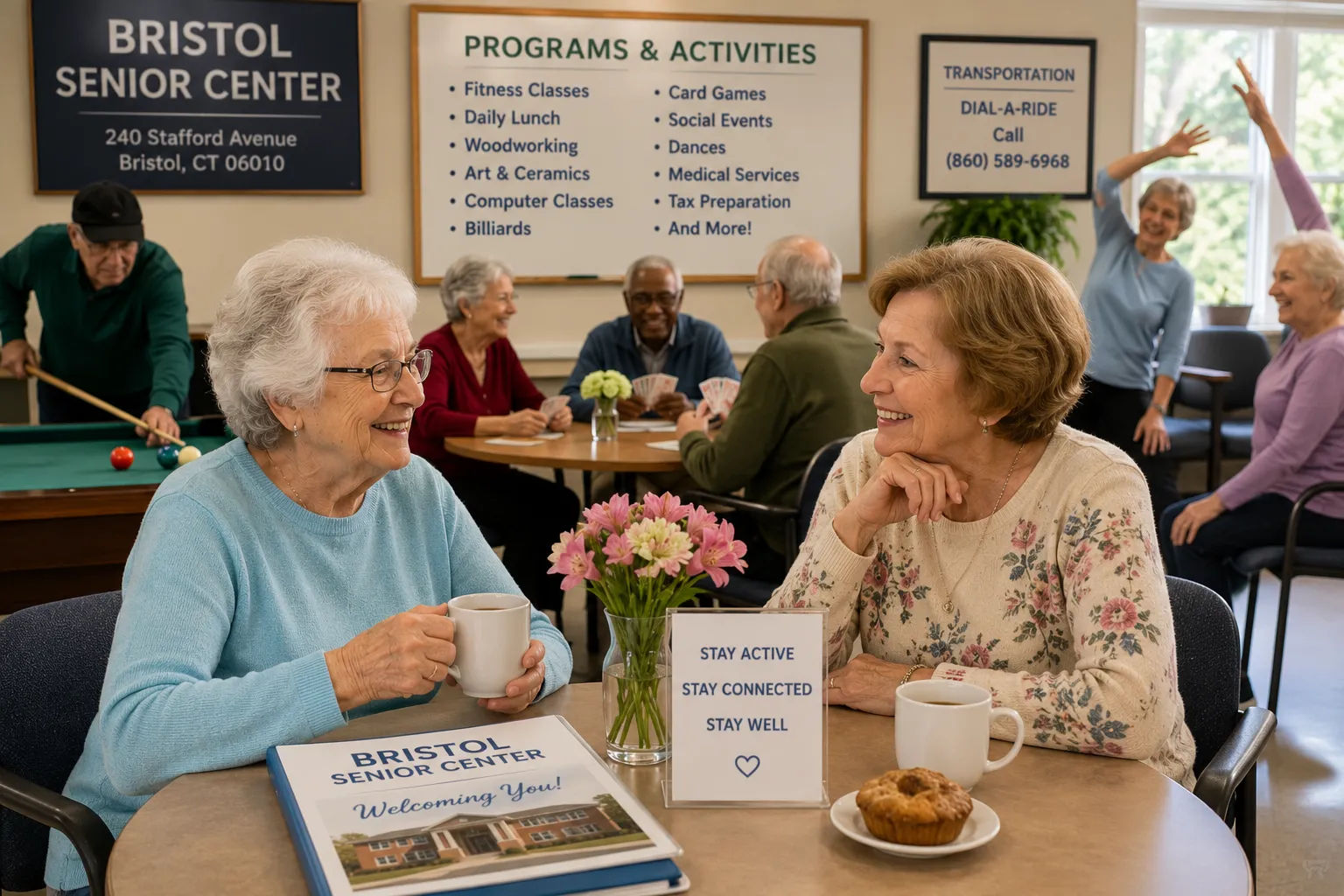
The Bristol Senior Center, open to Bristol residents 55 and older, offers a genuinely wide range of programming: daily lunch, dental and foot care services, Social Security assistance, free income tax preparation, exercise classes including yoga, tai chi, and weight training, a fitness room with treadmills and weight equipment, a billiards parlor, a woodworking shop, ceramics and art classes, weekly dances, computer courses, and card games including pinochle, bridge, mahjong, and canasta.
This range reflects a broader shift in how senior centers operate nationally — modern programming is designed around genuine engagement, fitness, and community, not simply a place to pass time.
Dee, Morning Star's founder: "I always encourage clients to visit a senior center at least once before deciding it's not for them. Most people come back describing something completely different from what they expected — more active, more social, more genuinely enjoyable than the old stereotype."
This kind of concrete, at-a-glance information can make the difference between a parent putting off a visit indefinitely and actually picking up the phone to call.
Quick Overview: Bristol Senior Center
| Detail | Information |
|---|---|
| Location | 240 Stafford Avenue, Bristol, CT 06010 |
| Hours | Weekdays, 8:30 a.m. to 5:00 p.m. |
| Eligibility | Bristol residents age 55 and older |
| Transportation | Dial-A-Ride available — call (860) 589-6968 |
| Sample programs | Fitness classes, daily lunch, tax prep, dental/foot care, card games, woodworking, ceramics, dances |
It's worth sharing this research directly with a skeptical parent, since some are more persuaded by concrete evidence of benefit than by a general appeal to "getting out more." It's worth revisiting this evidence periodically as a reminder of why the effort to overcome initial resistance is genuinely worthwhile, not just a nice-to-have activity.
Health Benefits of Senior Center Participation
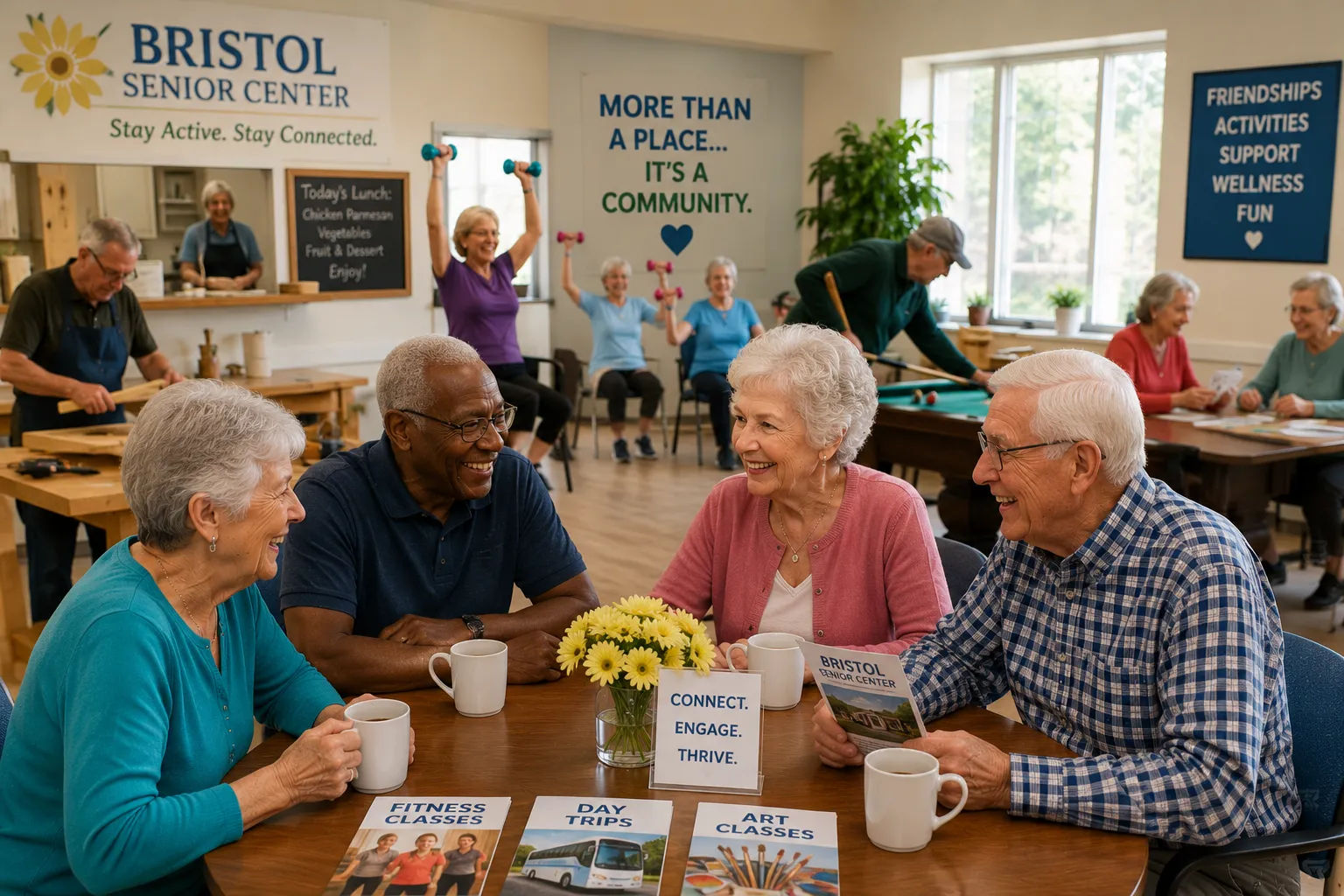
Beyond the social and recreational value, research links regular senior center participation to measurable health benefits — better perceived social support, reduced symptoms of depression and anxiety, higher life satisfaction, and support for managing or delaying chronic disease onset through fitness and wellness programming. These aren't marginal effects; they reflect some of the same benefits research links to combating isolation and loneliness more broadly. For families weighing whether a senior center is worth encouraging, the evidence suggests it's genuinely one of the higher-value, lower-cost interventions available for supporting an aging parent's overall wellbeing. It also helps to acknowledge the reluctance directly rather than dismissing it — validating that trying something new can feel uncomfortable often works better than insisting a parent has nothing to worry about.
Overcoming a Parent's Reluctance
Many older adults resist visiting a senior center based on an outdated mental image — assuming it will feel institutional, unstimulating, or aimed at people much older or frailer than themselves. This reluctance is common and usually doesn't survive an actual visit, but getting a hesitant parent through the door the first time is often the hardest part.
- Frame the first visit as just checking it out, not committing to anything ongoing.
- Offer to go along for the first visit if that would make it more comfortable.
- Focus on a specific activity your parent already enjoys — a card game, a fitness class, woodworking — rather than a general pitch about "socializing."
- Mention the practical services — free tax prep, foot care, Social Security assistance — which can feel like a less socially loaded reason to visit.
"My dad flatly refused for months, insisting he wasn't 'a senior center kind of guy.' I finally got him to go for the free tax prep appointment, and he ended up staying for the lunch and a card game. He's been going twice a week ever since."
Transportation Options
Not having a ride is one of the most common practical barriers to senior center participation, especially for older adults who've stopped driving. The Bristol Senior Center offers Dial-A-Ride transportation, coordinated through the Human Resource Association, making the center accessible even for residents without their own transportation.
Call the doctor now if: your parent has stopped driving and has no clear transportation plan for medical appointments or social activities — arranging a transportation solution should be a priority, not an afterthought.
Reaching out directly to a nearby town's senior center staff, rather than relying solely on a website, often yields more current and complete information about actual programming.
Programs Beyond Bristol
Neighboring Connecticut towns typically operate their own senior centers with similar core offerings — fitness, meals, social activities, and practical services — though specific programming varies. For families whose parent lives in a nearby town, it's worth checking that town's own senior center directly, or contacting the North Central Area Agency on Aging for a broader regional directory. Small details like these often matter more than families expect in determining whether a first visit turns into an ongoing routine or a one-time experiment that never gets repeated.
Making the First Visit a Success
A parent's first impression of a senior center often shapes whether they return. Calling ahead to ask about a specific program of interest, visiting during a well-attended activity rather than a quiet stretch of the day, and introducing your parent to staff or other members rather than leaving them to navigate a new environment alone can all improve the odds of a positive first experience. For a parent with a specific physician-recommended exercise regimen, checking whether the senior center's fitness offerings align with those recommendations, or asking staff directly, can help ensure the activity supports rather than conflicts with medical guidance.
Fitness and Wellness Programming
Physical activity programming at senior centers deserves specific attention, since regular exercise is one of the most protective factors for healthy aging, and group-based fitness tends to produce better long-term adherence than solitary exercise. Classes like tai chi and yoga, offered at Bristol's center, are particularly well suited to older adults — improving balance and flexibility with lower injury risk than higher-impact activities, while still providing meaningful cardiovascular and strength benefits. For a parent who's been sedentary, a beginner-friendly, low-pressure class environment at a senior center can be a much easier entry point back into physical activity than a standard gym, which can feel intimidating or poorly suited to older bodies. These practical entry points are worth mentioning specifically when introducing the idea to a parent who might otherwise dismiss the whole concept out of hand.
Practical Services That Solve Real Problems
Beyond social and fitness programming, senior centers often provide practical services that address genuine logistical burdens — free tax preparation specifically for seniors, help navigating Social Security paperwork, blood pressure clinics, and foot and dental care services that can be difficult to access otherwise. These services alone can justify a visit, even for a parent who isn't initially interested in the social programming.
Dee, Morning Star's founder: "Some of my clients started going to the senior center purely for the tax help or foot care clinic, and only later discovered how much they enjoyed the rest of what's offered. The practical services are sometimes the easiest way in."
Volunteering Opportunities Through Senior Centers
Many senior centers also offer volunteer opportunities for members themselves — helping run programs, assisting newer members, or contributing skills like teaching a class. This can be a meaningful way for an aging parent to find both social connection and a renewed sense of purpose, addressing two protective factors for wellbeing simultaneously. Volunteering through a familiar setting like a senior center a parent already attends can feel like a much lower barrier to entry than seeking out an entirely separate volunteer opportunity elsewhere.
What to Expect on a First Visit
Most senior centers welcome walk-in visitors and are happy to give a brief tour or introduce a first-time visitor to relevant staff and activities. Calling ahead to ask what a typical day looks like, or to time a visit around a specific activity of interest, tends to make the experience feel less like walking into the unknown and more like trying something with a clear purpose. A brief phone conversation ahead of time also gives staff a chance to flag anything specifically relevant to a new visitor's interests or needs, making the first day feel more welcoming and less anonymous.
Encouraging a Reluctant Sibling or Parent Without Pressure
Family pressure, even well-intentioned, can sometimes backfire, making a parent dig in against something they might otherwise have tried. Presenting information calmly, offering to help with logistics, and then letting the decision genuinely rest with the parent — without repeated nagging — tends to produce better long-term results than persistent pushing. Ultimately, the choice belongs to your parent, and respecting that autonomy — even when it means waiting longer than you'd like for them to come around — tends to preserve the relationship better than an ongoing battle of wills.
A Real Family Scenario
After Karen's father Walt stopped driving, she worried he'd lose most of his remaining social contact. A staff member at the Bristol Senior Center suggested Walt try the Tuesday woodworking group, since he'd always enjoyed working with his hands. What started as a single visit became a twice-weekly habit — Walt now has a small group of regulars he sees consistently, uses the Dial-A-Ride service to get there, and has mentioned more than once that it's become one of the things he looks forward to most.
How Senior Centers Complement In-Home Care
A senior center and professional in-home care serve different but complementary roles. A senior center provides structured social activity, fitness, and community engagement outside the home, while in-home care provides personalized daily support and companionship within the home. Many families find the combination works well — a caregiver can help a parent get ready and even provide transportation to and from the senior center, extending the reach of what either service could accomplish alone.
Dee, Morning Star's founder: "We've coordinated with clients to build senior center visits directly into their weekly care schedule — getting them ready, providing transportation, and picking them up afterward. It's one of the more satisfying parts of the job, watching someone re-engage with a community they'd drifted away from."
Bringing this up during an initial home care consultation, if your family is exploring that option, can help build a fuller plan from the outset rather than treating each service separately.
Considerations for Parents With Mobility or Cognitive Limitations
Senior centers generally accommodate a wide range of ability levels, with many offering chair-based fitness classes, accessible facilities, and staff experienced in supporting members with varying mobility needs. For a parent with early-stage cognitive decline, some senior centers also offer specific memory-friendly programming or adult day programs, which provide more structured supervision and activities suited to cognitive support needs. It's worth calling ahead to discuss your parent's specific situation with center staff, who can usually advise on which programs would be the best fit and whether any additional accommodation might be needed. Families shouldn't assume a physical or cognitive limitation automatically rules out senior center participation without first checking what specific accommodations might make it work.
Building a Regular Routine Around Senior Center Visits
The research suggesting frequent visits — multiple times a week — correlate with the strongest benefits points toward routine mattering as much as the specific activities chosen. Establishing a consistent schedule, like "Tuesdays and Thursdays for fitness class" or "every Wednesday for the card game," tends to build lasting habit better than sporadic, occasional visits. Even a modest, twice-weekly commitment tends to outperform an ambitious daily plan that proves unsustainable and gets abandoned within a few weeks. Family involvement in maintaining this routine — a standing reminder call, help with transportation coordination, or simply asking regularly how the visits are going — helps ensure a promising start doesn't quietly fade after a few weeks.
Comparing Senior Centers to Assisted Living Social Programming
Some families considering assisted living do so partly out of concern about a parent's social isolation, assuming a facility is the only way to guarantee regular social contact. A senior center combined with in-home care can, for many families, provide a similar level of social engagement and structured activity while a parent remains in their own home — worth genuinely weighing against a facility move rather than assuming isolation alone justifies that bigger change. This comparison is worth raising explicitly in family conversations about whether a facility move is truly necessary.
Checking Program Schedules Seasonally
Senior center programming often shifts seasonally — outdoor activities and trips in warmer months, more indoor classes and holiday programming in winter. Checking in periodically throughout the year, rather than assuming a single schedule stays constant, helps a family stay aware of new opportunities that might interest a parent. Signing up for a center's newsletter or following its social media, if available, is a simple, low-effort way to stay current on new offerings without needing to call repeatedly.
A Note on Multigenerational and Intergenerational Programming
Some senior centers now offer intergenerational programs bringing together seniors and younger community members — school partnerships, mentorship programs, or shared events. These can be a particularly meaningful option for grandparents interested in connecting with younger people beyond their own family, worth asking about specifically if this kind of engagement appeals to your parent. These programs can also be a valuable, low-pressure way for a parent to feel a continued sense of relevance and connection to the broader community, beyond their own family circle.
A Final Thought
A senior center is one of the more underused resources available to families supporting an aging parent — free or low-cost, close to home, and backed by real evidence of health and wellbeing benefits. The main barrier is usually a first impression built on an outdated stereotype, which a single visit tends to correct.
References
- Bristol, CT Official Website — Senior Center
- National Council on Aging — Get the Facts on Senior Centers
- Forbes Health — What Are Senior Centers and Why Are They Important?
This article is for general information and isn't a substitute for medical, legal, or financial advice. If you're concerned about a specific issue, talk to your parent's doctor or an elder law attorney.
Written by
Morning Star Care Team
Morning Star Home Care — Caregiver-Founded and Locally Owned in Bristol, CT.