
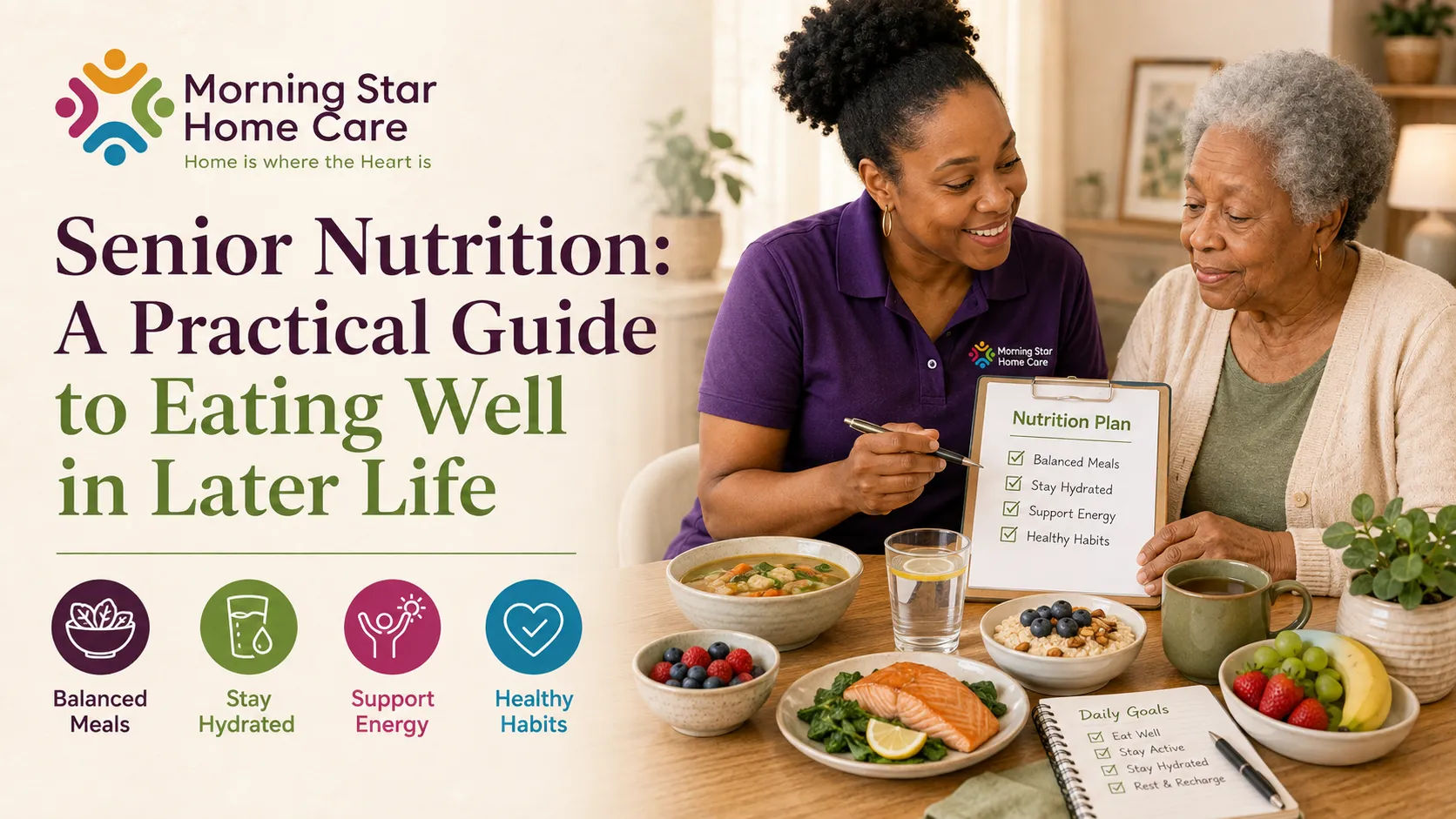
Senior nutrition gets talked about in extremes, either treated as a minor concern ("they eat fine") or reduced to a list of forbidden foods. The reality sits in between: nutritional needs genuinely change with age, and getting them right meaningfully affects energy, immune function, muscle strength, and independence. National data suggests about 1 in 2 older adults is at risk for malnutrition, with roughly 1 in 4 already malnourished or at risk according to more targeted surveys, numbers that are both surprising and largely preventable.
This guide covers what senior nutrition actually requires, the most common gaps, and practical ways families can help without turning every meal into a project.
Key Takeaways
- About 1 in 2 older adults is at risk for malnutrition, and roughly 1 in 4 is already malnourished or at risk, according to national aging data.
- Calorie needs typically decrease with age, but protein, calcium, vitamin D, vitamin B12, and fiber needs stay the same or increase.
- Protein at every meal, not just dinner, helps preserve muscle mass, which naturally declines with age.
- Hydration needs are often underestimated, since thirst signals weaken with age even as fluid needs remain important.
- Social eating measurably improves intake, making mealtime companionship a genuine nutritional intervention, not just a nice-to-have.
Understanding what actually changes nutritionally with age is the foundation for everything that follows.
How Nutritional Needs Actually Change With Age
Aging changes the body's nutritional requirements in ways that aren't always intuitive, some needs decrease while others increase or stay flat.
- Calorie needs generally decrease as metabolism slows and activity levels often drop, but this makes nutrient density more important, not less.
- Protein needs stay the same or increase, since aging bodies are less efficient at using protein to build and maintain muscle, requiring more per meal to achieve the same effect.
- Calcium and vitamin D needs increase, supporting bone density as natural bone loss accelerates with age.
- Vitamin B12 absorption often declines, even with adequate dietary intake, due to reduced stomach acid production common in older adults.
- Fiber needs remain important for digestive health, though total food volume consumed often decreases, making fiber-dense choices more valuable per bite.
This combination, fewer calories needed but similar or greater need for specific nutrients, is exactly why nutrient density matters more with age than at any earlier life stage.
Warning Signs of Poor Nutrition
Malnutrition in older adults often develops gradually and gets missed until it's fairly advanced, so knowing the early signs matters.
- Unintentional weight loss or looser-fitting clothes, even modest amounts, over a period of weeks or months.
- Noticeable fatigue or reduced stamina for everyday activities that used to be manageable.
- Slower wound healing or increased bruising, both linked to inadequate protein and micronutrient intake.
- Skipping meals regularly or eating unusually small portions, especially when eating alone.
- A visibly empty or sparse refrigerator and pantry, which can reflect reduced grocery shopping, cooking ability, or appetite.
Dee, Morning Star's founder: "A near-empty fridge tells us more than almost any conversation about eating habits. It's one of the first things we quietly check on a home visit."
Catching these signs early, before significant weight or muscle loss occurs, makes intervention meaningfully easier and more effective.
Protein: The Most Commonly Overlooked Nutrient
Protein deserves particular attention in senior nutrition because needs increase with age even as overall appetite and food volume tend to decrease, creating a real gap that's easy to miss.
- Spreading protein across all three meals, rather than concentrating it at dinner, helps the body use it more effectively for muscle maintenance.
- Easy protein sources for smaller appetites include eggs, Greek yogurt, cottage cheese, canned fish, and nut butters, all requiring minimal preparation.
- Plant-based protein sources like beans, lentils, and tofu offer fiber alongside protein, useful for digestive health too.
- A protein shake or smoothie can bridge a gap on lower-appetite days without requiring a full meal to be prepared and eaten.
Because protein is so directly tied to muscle preservation, strength, and fall prevention, it's often the single highest-leverage nutrient to focus on.
Hydration: An Easy-to-Miss Piece of the Puzzle
Hydration deserves its own attention in any senior nutrition discussion, since dehydration is common, often subtle, and directly affects energy, cognition, and kidney function.
- Thirst signals weaken with age, meaning an older adult may already be meaningfully dehydrated before feeling thirsty at all.
- Certain medications increase fluid loss, including many diuretics prescribed for blood pressure, making adequate intake even more important.
- Water-rich foods count toward hydration too — soups, melon, cucumber, and citrus all contribute meaningfully alongside plain water.
- A visible reminder system, like a marked water bottle or a glass left by a favorite chair, often works better than relying on memory alone.
Because dehydration symptoms, confusion, fatigue, dizziness, overlap so heavily with other common aging concerns, it's worth ruling out first rather than last.
Common Barriers to Good Nutrition in Older Adults
Poor nutrition in seniors rarely comes down to simply not knowing what to eat, it's usually one or more practical barriers getting in the way.
- Difficulty cooking or grocery shopping due to mobility limitations, reduced strength, or no longer driving.
- Dental problems that make chewing certain foods, particularly meat and raw vegetables, uncomfortable or difficult.
- Reduced sense of taste and smell, which naturally declines with age and can make food genuinely less appealing.
- Social isolation and eating alone, which reliably reduces both the quantity and variety of food consumed.
- Financial constraints on a fixed income, especially as grocery prices have risen faster than many retirement incomes.
- Depression, which commonly reduces appetite and motivation to prepare or eat meals.
Identifying which specific barrier is at play, rather than assuming it's simply a matter of preference, is the key to addressing it effectively.
Practical Meal Strategies That Actually Work
A few practical adjustments tend to make the biggest real-world difference in daily eating habits, more than any specific diet plan.
- Smaller, more frequent meals or snacks often work better than three large meals for someone with a reduced appetite.
- Batch-prepared, freezer-ready portions reduce the daily burden of cooking while still ensuring real, home-style meals are available.
- Nutrient-dense snacks within easy reach — nuts, cheese, yogurt, and fruit — make between-meal eating more likely.
- Making food genuinely enjoyable, using favorite recipes and appealing presentation, rather than optimizing purely for nutrition on paper.
"Once we started prepping small containers Dad could just grab from the fridge, without needing to cook anything, he actually started eating lunch regularly again."
These small, consistent adjustments tend to matter more over time than any single dramatic dietary change.
Meal Delivery and Community Nutrition Programs
Several federally supported programs exist specifically to address senior nutrition, and many families aren't aware of them or assume they don't qualify.
- Meals on Wheels delivers hot or frozen meals directly to homebound seniors, often on a sliding-scale or donation basis rather than a fixed fee.
- Congregate meal sites at senior centers combine a meal with social interaction, addressing both nutrition and isolation simultaneously.
- SNAP (food stamp) benefits are available to many older adults on fixed incomes and are underutilized relative to eligibility.
- Local Area Agencies on Aging can connect families to region-specific nutrition resources, including Connecticut-based programs.
These programs exist precisely because senior malnutrition is a recognized, widespread issue, not because relying on them signals a family failing to provide care.
Supplements: Helpful Addition, Not a Substitute
Multivitamins and nutritional supplements have a real, supportive role in senior nutrition, but they work best alongside food, not as a replacement for it.
- Vitamin B12 supplementation is commonly recommended given reduced absorption with age, often as a standalone supplement rather than through diet alone.
- Vitamin D supplementation is frequently recommended, particularly for those with limited sun exposure, to support bone health.
- Oral nutrition supplements like Ensure or Boost can help bridge gaps on low-appetite days but shouldn't consistently replace regular meals.
- A doctor or pharmacist review of current supplements helps avoid unnecessary duplication or interactions with prescribed medications.
Used as a complement to a broader eating pattern, rather than a shortcut around it, supplements genuinely add value without becoming the whole strategy.
Reading Nutrition Labels for Seniors
Grocery shopping decisions matter as much as meal preparation, and a few label-reading habits can make a meaningful difference over time without requiring a full nutrition overhaul.
- Look for protein grams per serving, prioritizing foods with at least 10-15 grams of protein per serving when possible, especially for easy grab-and-go items.
- Check sodium content, since many older adults are managing blood pressure and canned or processed foods often carry more sodium than expected.
- Favor whole grains and fiber-rich options, which support digestive health and tend to provide steadier energy than refined alternatives.
- Don't over-index on "low calorie" labeling, since the goal for most older adults is nutrient density, not calorie restriction.
These small label-reading habits, practiced consistently at the grocery store, tend to compound into meaningfully better nutrition over months and years.
When to Involve a Registered Dietitian
Not every family needs professional nutrition support, but certain situations genuinely benefit from a registered dietitian's involvement rather than general guidance alone.
- Significant unintentional weight loss or a recent diagnosis of malnutrition warrants a dietitian referral, often available through Medicare with a physician order.
- Managing multiple chronic conditions simultaneously, like diabetes and kidney disease, where dietary recommendations can sometimes conflict without expert guidance.
- Difficulty swallowing or a recent stroke often requires a specialized texture-modified diet plan best developed with professional input.
- A dietitian can also address family disagreements about what a parent "should" be eating with objective, individualized guidance rather than competing opinions.
A referral to a registered dietitian is often underused simply because families don't realize it's available and often covered, not because the need isn't genuinely there.
A Real Family Scenario
Dee's mother Ruth had always been an enthusiastic cook, but after a hip fracture limited her mobility, standing at the stove became painful and grocery trips stopped altogether. Her diet quietly shrank to toast, tea, and whatever was easiest to reach. A caregiver noticed the pattern within the first two weeks of regular visits and flagged it to the family, who arranged for grocery delivery and simple meal prep help. Within a month, Ruth was eating full meals again, not because her appetite had changed, but because the practical barriers standing in the way had been removed.
Ruth's situation reflects a common pattern: the underlying appetite and desire to eat well are often still there, it's the practical logistics that quietly fall away first.
It is worth noting that eating well in later life does not need to mean giving up favorite foods entirely, even when a chronic condition is involved. Most dietary approaches for older adults are about balance, proportion, and frequency rather than strict elimination, and framing changes that way tends to produce much better long-term adherence than an all-or-nothing approach.
How an In-Home Caregiver Supports Better Nutrition
A consistent in-home caregiver directly addresses several of the most common nutrition barriers at once: grocery shopping, meal preparation, and eating alone. Regular presence at mealtimes also creates natural opportunities to notice appetite changes, food aversions, or emerging swallowing difficulties early.
Dee, Morning Star's founder:/?span> "Cooking together, even something simple, tends to get more food eaten than a meal just left on the counter. The company matters as much as the meal itself."
This kind of consistent, hands-on support is often what turns nutritional knowledge into actual daily eating habits.
Nutrition Considerations for Common Health Conditions
Many older adults are managing one or more chronic conditions that add another layer of complexity to eating well, and understanding the basics helps families support rather than second-guess a medical plan.
- Diabetes requires attention to carbohydrate timing and consistency, though this doesn't mean eliminating carbohydrates entirely, just spacing and pairing them thoughtfully.
- Heart disease and high blood pressure often call for reduced sodium intake, which can be managed through fresh foods and herbs rather than salt, without sacrificing flavor entirely.
- Kidney disease may require adjusted protein and potassium intake, making a dietitian's individualized guidance especially valuable rather than following general senior nutrition advice alone.
- Osteoporosis increases the importance of calcium and vitamin D specifically, alongside weight-bearing activity when medically appropriate.
These condition-specific adjustments are best made in coordination with a doctor or dietitian, but knowing the general categories helps a family ask better questions at appointments.
A Final Thought
Good senior nutrition isn't about following a perfect diet, it's about consistently removing the practical barriers, appetite changes, cooking difficulty, isolation, that get in the way of eating well. Small, sustained adjustments tend to matter far more than any single dramatic dietary overhaul.
Involving a parent in food choices whenever possible, rather than simply deciding for them, also tends to improve both intake and overall satisfaction with meals.
Ultimately, the goal of senior nutrition is not perfection but consistency, showing up for meals, noticing changes early, and adjusting practical routines as needs shift over time.
A Note for Connecticut Families
Registered dietitians and Meals on Wheels programs are active throughout the Bristol and Greater Hartford area, and the Connecticut Statewide Respite Care Program and local Area Agencies on Aging can help connect families to region-specific senior nutrition resources.
Families navigating senior nutrition alongside a busy caregiving schedule don't need to solve every barrier at once. Starting with the single most limiting factor, whether that is grocery access, protein intake, or hydration, and building from there tends to produce steadier, more sustainable progress.
References
Written by
Morning Star Care Team
Morning Star Home Care — Caregiver-Founded and Locally Owned in Bristol, CT.