
Traveling with, or planning a trip for, an aging parent takes a different kind of preparation than it used to. These senior travel tips cover the practical groundwork — documents, medications, mobility, and what to do if something goes wrong — so a trip stays a source of joy rather than a source of stress or risk.
Older adults are traveling more than ever. Recent research shows 62% of adults aged 50 and over have taken or plan to take a leisure trip, and travel after 60 has been linked to real health benefits: one study found regular travel reduces mortality risk by 36% and lowers Alzheimer's risk by up to 47%. Encouraging a parent to keep traveling, with the right preparation, is worth the extra planning.
Key Takeaways
- A REAL ID or passport is required for domestic flights — check compliance well before booking.
- Medication planning matters more than almost anything else — enough supply, proper labeling, and a written list for emergencies.
- Building in more time and fewer transitions reduces stress far more than any single gadget or app.
- A written emergency plan, including local medical facilities at the destination, takes minutes to prepare and can matter enormously if something goes wrong.
- Travel insurance with medical coverage is worth the cost for older travelers, especially internationally, where Medicare typically doesn't apply.
Before Booking: Have the Honest Conversation
Before any tickets are purchased, it's worth having a candid conversation about what your parent can realistically manage — how much walking, how many time zones, how much time on their feet in an airport. This isn't about discouraging travel; it's about choosing a trip that fits current ability rather than the ability they had five years ago. A parent who loved backpacking Europe in their sixties may still love traveling in their eighties, just differently — shorter days, more rest stops, accessible transportation.
Dee, Morning Star's founder: "The families who plan the best trips are the ones who ask what would make this easier, not what their parent used to be able to do. Trips built around current ability, not old habits, tend to go far more smoothly."
Documents: What to Check Before You Book
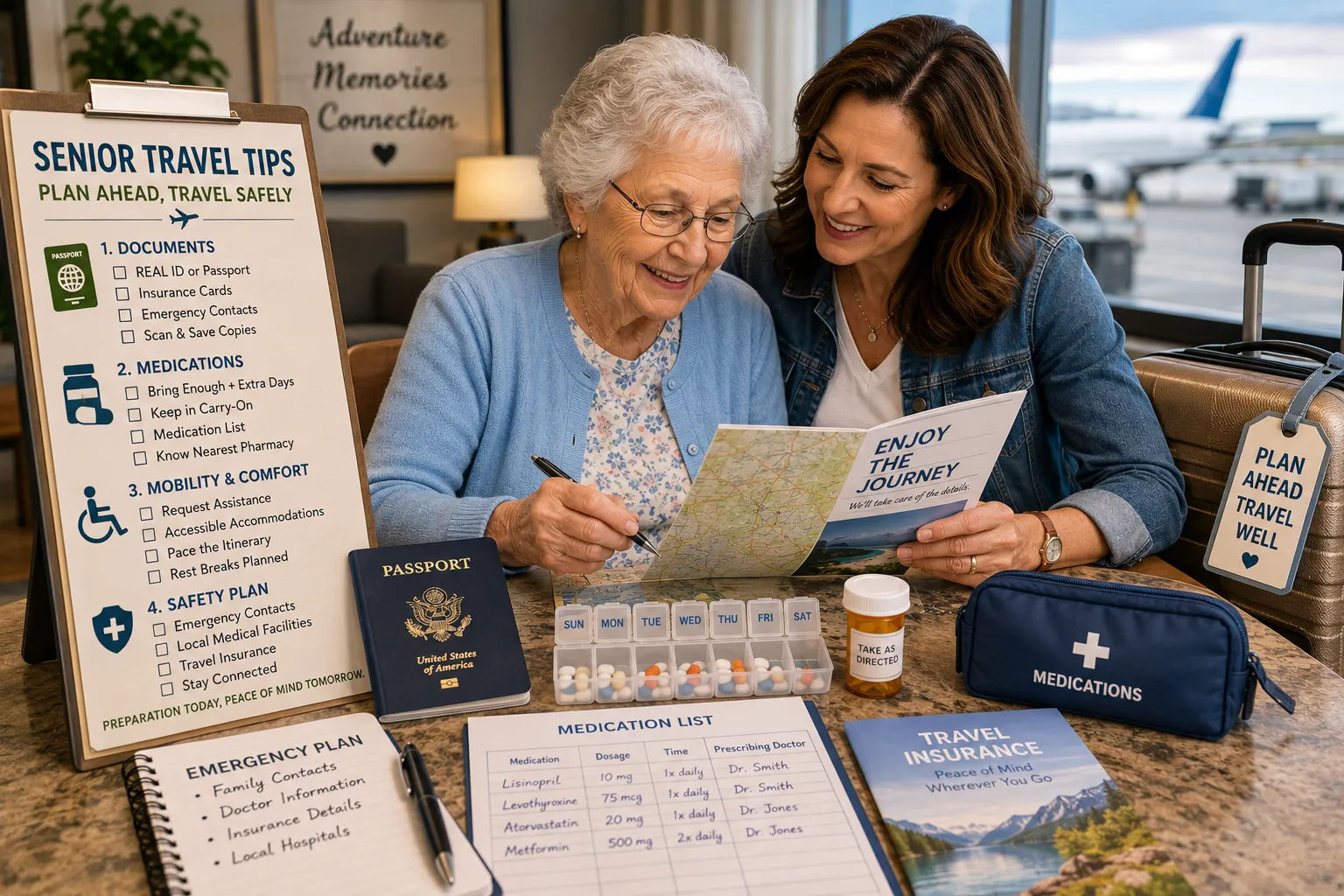
Federal REAL ID requirements mean travelers need a REAL ID-compliant driver's license or a passport to fly domestically within the U.S. — a detail that catches many families off guard, especially if a parent's license hasn't been renewed recently. Checking this well before booking, rather than at the airport, avoids a stressful last-minute scramble.
- Confirm REAL ID compliance or passport validity at least a month before any flight.
- Scan and store digital copies of IDs, insurance cards, and medication lists, accessible by phone in case originals are lost.
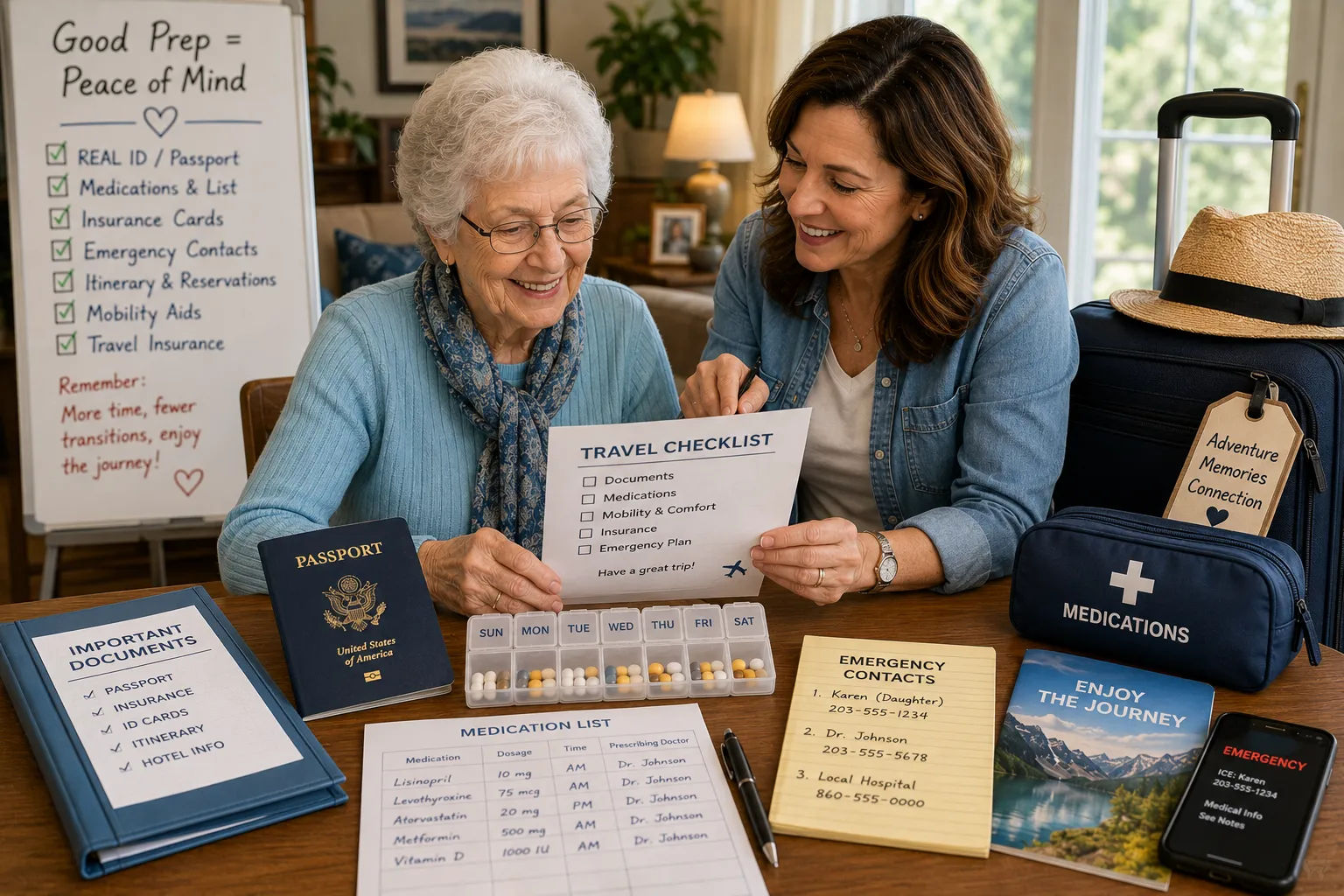
- Carry a printed list of medications, dosages, and prescribing doctors, useful for both TSA screening and any medical situation at the destination.
- Check destination-specific entry requirements for international travel, including any required vaccinations or health documentation.
Medication Planning
Medication logistics are one of the most common places senior travel trips run into trouble, and one of the easiest to plan around in advance. Packing enough medication for the full trip plus a few extra days accounts for delays or extended stays, and keeping medications in original, labeled containers avoids confusion at security checkpoints or if a pharmacy needs to verify a prescription.
- Pack medications in carry-on luggage, never checked bags, in case luggage is lost or delayed.
- Bring several days of extra supply beyond the planned trip length.
- Research pharmacies near the destination in case a refill or replacement becomes necessary.
- Keep a written medication schedule accessible to a travel companion, not just the traveler, in case assistance is needed.
Mobility and Accessibility Planning
Booking with mobility in mind from the start prevents a lot of mid-trip stress. Requesting wheelchair assistance at the airport, choosing accommodations with elevator access and step-free bathrooms, and confirming accessible transportation at the destination are all worth arranging before departure rather than improvising once there.
| Travel Stage | What to Arrange in Advance |
|---|---|
| Airport | Wheelchair assistance, early boarding, TSA Cares assistance line |
| Accommodations | Ground floor or elevator access, grab bars, walk-in shower |
| Local transportation | Accessible taxi or rideshare options, reduced walking distances |
| Activities | Confirm accessibility of tours, seating availability, rest breaks built into itinerary |
TSA's Cares program offers a dedicated assistance line for travelers with disabilities or medical conditions who need extra help navigating security, and calling ahead of a flight can meaningfully reduce day-of stress for both the traveler and anyone accompanying them.
Building in Time and Fewer Transitions
The single biggest adjustment most families make when planning senior travel is simply building in more time — longer layovers, fewer connecting flights, more buffer between activities. Rushing between gates or cramming too much into a single day tends to cause more stress and physical strain than any single accessibility issue. A direct flight that costs slightly more is often worth it purely for the reduction in transitions and physical demands.
"The trip that went best with my dad wasn't the one with the most planned — it was the one where we built in extra time everywhere. We never felt rushed, and he wasn't exhausted by the third day."
Health Considerations Before Departure
A visit to a primary care doctor before a significant trip is worth the appointment, especially for international travel or any trip involving a change in altitude, climate, or time zone. A doctor can flag any concerns specific to the destination, confirm vaccinations are current, and provide a note explaining medical equipment or medications if one is needed for security or customs. Confirm any required or recommended vaccinations for the destination, ask about managing chronic conditions across time zones, and discuss any activity-specific concerns relevant to the itinerary.
Travel Insurance for Older Travelers
Standard Medicare coverage generally does not extend outside the United States, which makes travel insurance with medical coverage particularly important for older travelers heading abroad. A policy that includes medical evacuation coverage is worth the added cost, since emergency transport from a remote destination back to adequate medical care can run into tens of thousands of dollars without it. Confirm what a policy covers for pre-existing conditions, look specifically for medical evacuation coverage, and keep policy documents and an emergency contact number accessible during the trip.
Group Tours and Escorted Travel Options
Escorted group tours designed for older travelers have become a significant part of the senior travel market, combining transportation, accommodations, meals, and activities into a single planned itinerary with a tour manager handling logistics along the way. For a parent nervous about navigating an unfamiliar destination independently, or for a family that can't accompany them personally, an escorted tour can offer meaningful reassurance without sacrificing the experience of travel itself. It's worth researching a tour company's accessibility accommodations specifically, since the pace and physical demands of group tours vary considerably.
Choosing a Destination That Fits
Recent survey data shows 23% of travelers aged 50 and over have changed trip plans specifically to avoid crowded destinations, rising to 26% among travelers 70 and over — a reasonable adjustment given how physically and mentally taxing crowds and long lines can be. Choosing a destination and season that avoids peak crowds, or building a slower-paced itinerary within a busy destination, tends to make the whole trip more enjoyable. The safest destinations for older travelers tend to combine strong healthcare infrastructure with manageable logistics.
An Emergency Plan Before You Go
A short written emergency plan, prepared before departure, can matter enormously if something goes wrong mid-trip. This doesn't need to be elaborate — a document with the nearest hospital to the destination, embassy contact information for international trips, a list of current medications and conditions, and emergency contacts back home covers the essentials.
Call the doctor now if: If a parent has a serious fall, chest pain, sudden confusion, or any symptom that feels like a medical emergency while traveling, treat it as one immediately — call local emergency services or go to the nearest hospital rather than waiting to see if it resolves.
Traveling With a Parent Who Has Dementia or Cognitive Changes
Travel is still possible for many people in earlier stages of dementia, but it requires more structure: a simplified itinerary, a companion who never leaves them unsupervised in unfamiliar environments, and identification (a card or bracelet with contact information) in case of separation. Familiar routines — regular meal times, a consistent bedtime — matter more for someone with cognitive changes than for other travelers, and unfamiliar environments can be more disorienting than families expect.
Packing Smart for a Senior Traveler
- A portable, lightweight mobility aid if walking long distances is a concern, even for someone who doesn't use one daily at home.
- Comfortable, broken-in walking shoes rather than new shoes purchased just before the trip.
- A compact first-aid kit including any over-the-counter medications a parent typically uses.
- A portable charger and phone with location sharing enabled with a travel companion or family member back home.
Packing a Simple Travel Health Kit
Beyond regular prescription medications, a small travel health kit tailored to common issues can prevent a minor problem from derailing a trip. Compression socks reduce blood clot risk on long flights, motion sickness remedies help with turbulence or winding roads, and a basic supply of pain relievers, antacids, and anti-diarrheal medication covers most common travel ailments.
Coordinating Care During the Trip
If a parent normally receives in-home care support, it's worth thinking through how that support translates during travel — whether a companion or family member is covering tasks the caregiver normally handles, or whether a home care agency can help arrange care at the destination for a longer trip. Some home care agencies have partner networks in other regions that can provide temporary coverage, which is worth asking about during trip planning.
Cruises: A Popular but Different Kind of Travel for Seniors
Cruises remain one of the most popular travel formats for older adults, largely because they solve several senior-travel challenges at once: unpacking only once, on-board medical staff for minor issues, and a controlled, accessible environment for getting around. Most major cruise lines offer accessible cabins, priority boarding, and dietary accommodations, but these need to be requested at booking rather than assumed available on arrival.
Managing Jet Lag and Time Zone Changes
Time zone changes affect older travelers differently than younger ones, often requiring more recovery time and more careful management of medication timing, especially for conditions like diabetes where timing matters. Adjusting sleep schedules gradually in the days before departure, staying hydrated during the flight, and avoiding scheduling important activities on the first day at the destination all reduce the impact of jet lag.
Traveling Solo vs. With a Companion
Many older adults travel independently and do so successfully for years, but it's worth having a candid conversation about whether solo travel still fits current health and mobility, or whether a travel companion would make the experience safer and more enjoyable. This isn't necessarily about age alone; a parent managing a new health condition, medication regimen, or mobility change may benefit from companionship even if they've always traveled solo before.
Technology That Helps During Travel
A handful of simple technology tools can meaningfully ease a senior travel trip. Location-sharing apps let family back home see where a parent is in real time, translation apps help bridge language barriers on international trips, and offline map downloads mean navigation still works without reliable cell service. Setting them up and testing them together before departure avoids troubleshooting at the airport.
Communicating the Plan With Extended Family
When multiple family members are involved in a parent's care or well-being, sharing the travel plan ahead of time — dates, destination, emergency contacts, and any care coverage arranged in their absence — keeps everyone informed and avoids confusion if a question or concern comes up while the parent is away.
A Real Family Scenario
When Karen planned a trip to visit her sister with her father Walt, she was nervous about the flight given his recent hip surgery. She called ahead to request wheelchair assistance at both airports, booked a nonstop flight despite the higher cost, and packed his medications with several extra days' supply in his carry-on. The trip went smoothly enough that Walt has already asked when they're going again — proof that the extra planning paid off in confidence as much as safety.
Financial Considerations for Senior Travel
Booking travel insurance, refundable accommodations, and flexible airline tickets costs more upfront but reduces the financial risk of a trip needing to be cancelled or cut short for health reasons — a real possibility that's worth planning for rather than hoping it won't happen. Many credit cards also include some travel insurance and medical evacuation benefits as a cardholder perk.
What to Do If a Health Issue Arises Mid-Trip
Even with careful planning, health issues can come up during travel, and having a clear, calm plan for handling them matters more than trying to prevent every possible scenario. Knowing the location of the nearest hospital or urgent care at the destination before it's needed, keeping travel insurance documents easily accessible, and having a family member back home who can be reached quickly all reduce the chaos if something does happen.
Building Confidence for Future Trips
The first trip after a health change, a mobility decline, or a long gap in travel is often the hardest to plan and the most anxiety-inducing for everyone involved. Starting with a shorter, lower-stakes trip — a weekend visit to family rather than an international vacation — builds confidence and reveals what adjustments actually matter before committing to something bigger.
A Final Thought
Senior travel tips ultimately come down to one theme: plan for the trip your parent can enjoy today, not the one they used to take. With the right preparation — documents in order, medications packed and labeled, accessibility arranged, and a simple emergency plan in place — travel can remain a genuine source of joy and connection well into later life.
References
- The Senior List — Senior Travel and Tourism Statistics in 2026
- National Council on Aging — Safe Travel Tips for Older Adults
- Health in Aging Foundation — Safe Travel Tips for Older Adults (PDF)
This article is for general information and isn't a substitute for medical, legal, or financial advice. If you're concerned about a specific issue, talk to your parent's doctor or an elder law attorney.
Written by
Morning Star Care Team
Morning Star Home Care — Caregiver-Founded and Locally Owned in Bristol, CT.