
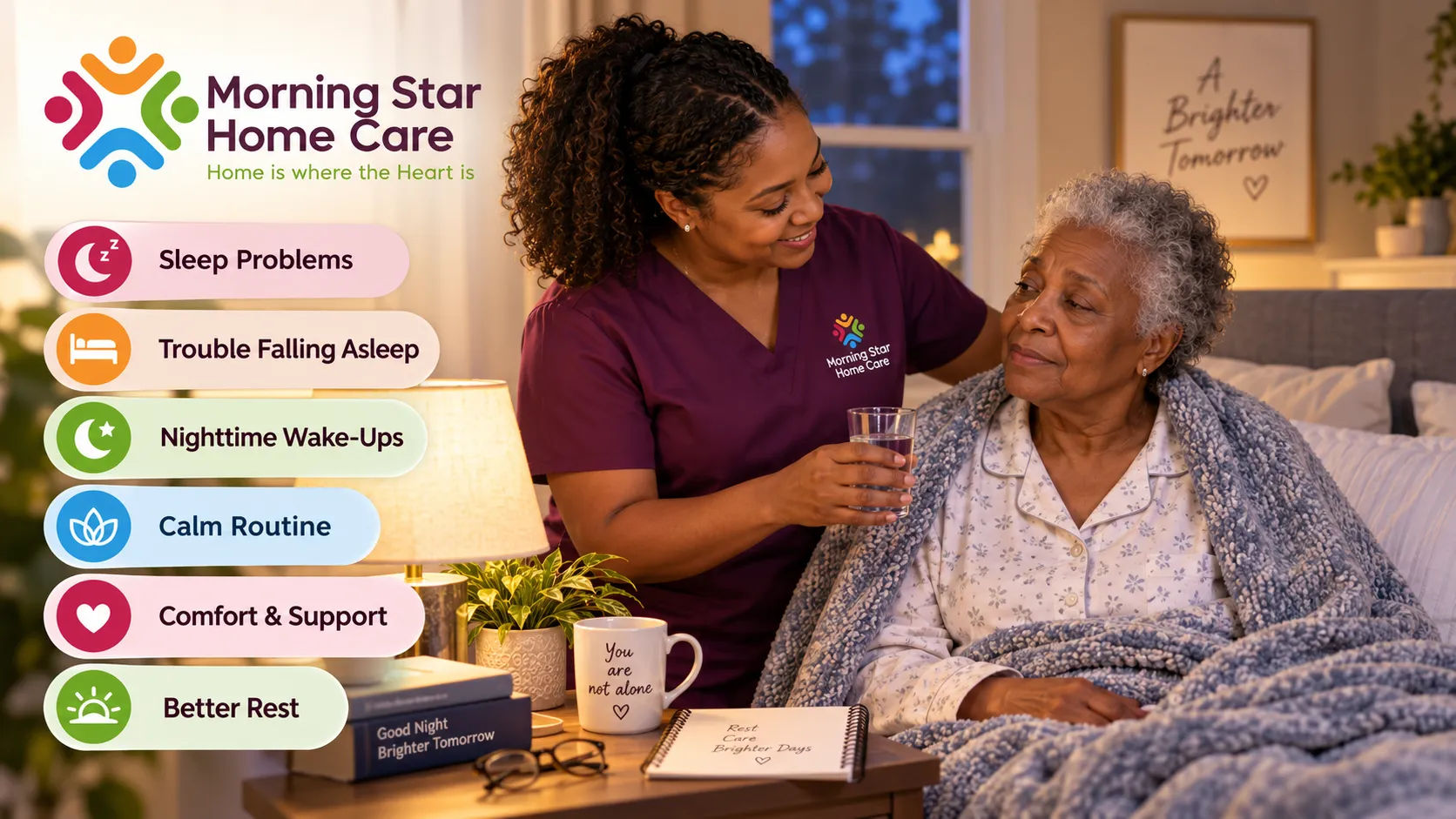
Sleep problems in elderly parents affect a striking share of the older population, up to 48% report insomnia symptoms, though a smaller share, roughly 5%, meet criteria for a clinically significant insomnia disorder. What's genuinely important for families to understand is that sleep problems in elderly patients aren't simply an inevitable consequence of aging. Research consistently points to illness, inactivity, poor sleep habits, and substance use as the major, modifiable causes.
This guide covers what actually causes sleep problems in older adults, why medication isn't always the first answer, and what genuinely helps.
Key Takeaways
- Up to 48% of older adults report insomnia symptoms, though only about 5% meet criteria for a clinically significant insomnia disorder.
- Illness, inactivity, and habits, not aging itself, are the major causes of sleep problems in late life, according to current research.
- Cognitive behavioral therapy for insomnia (CBT-I) is the first-line recommended treatment, generally more effective long-term than sleep medication.
- Sleep medications carry added risks for older adults, including fall risk and interactions with other medications.
- Underlying conditions like depression, chronic pain, or sleep apnea are common, treatable causes worth ruling out.
Understanding that sleep problems are genuinely addressable, not just an accepted part of getting older, opens the door to real improvement for elderly parents.
What Actually Causes Sleep Problems in Older Adults
Contrary to the common assumption that poor sleep is simply part of aging, research points to specific, often modifiable causes behind sleep problems in elderly patients.
- Chronic illness and pain, including heart and lung disease, arthritis, and other conditions that make comfortable sleep more difficult.
- Inactivity and an unstructured daily schedule, which can disrupt the body's natural sleep-wake rhythm.
- Depression and anxiety, both strongly linked to sleep problems, sometimes as cause and sometimes as consequence.
- Alcohol, caffeine, and tobacco use, each of which can meaningfully disrupt sleep quality even when consumed earlier in the day.
- Living alone is associated with higher rates of insomnia symptoms, potentially related to reduced daily structure and social engagement.
Identifying which of these factors might be affecting a specific parent helps target interventions toward genuine, addressable causes rather than assuming nothing can be done.
A useful starting point is simply keeping a brief sleep diary for a week or two, noting bedtime, wake time, and any disruptions, which can reveal patterns worth discussing with a doctor.
Medical Conditions That Disrupt Sleep
Several specific medical conditions common in older adults directly interfere with sleep and deserve evaluation when sleep problems persist.
- Sleep apnea, which becomes more common with age, causes repeated breathing interruptions that fragment sleep, often unnoticed by the person experiencing it.
- Restless legs syndrome creates an uncomfortable urge to move the legs, particularly disruptive when trying to fall asleep.
- Chronic pain conditions, like arthritis, can make finding a comfortable sleeping position genuinely difficult.
- Frequent nighttime urination, common with age and certain medications, repeatedly interrupts sleep continuity.
Dee, Morning Star's founder: "A lot of what looks like normal age-related insomnia actually has a specific, treatable cause underneath it, sleep apnea being one of the most commonly missed ones."
Ruling out these specific medical causes, rather than assuming sleep problems are simply unexplainable, often reveals a genuinely treatable underlying issue.
Medications That Can Interfere With Sleep
Certain medications commonly prescribed to older adults can disrupt sleep as a side effect, making a medication review a worthwhile part of investigating persistent sleep problems.
- Some blood pressure medications can cause insomnia or vivid dreams that disrupt sleep quality.
- Certain antidepressants can be either stimulating or sedating, and timing or dosage adjustments sometimes improve sleep.
- Diuretics taken later in the day can increase nighttime bathroom trips, directly fragmenting sleep.
- Some over-the-counter medications and supplements contain stimulants that can interfere with sleep, sometimes without a person realizing the connection.
Reviewing the full medication list with a doctor or pharmacist, specifically asking about sleep-related side effects, can uncover a straightforward, fixable contributor to persistent sleep problems.
This kind of review connects directly to the broader medication management principles worth applying across a parent’s entire prescription list, not just for sleep specifically.
Why CBT-I Beats Sleeping Pills for Most Older Adults
Current clinical guidance strongly favors cognitive behavioral therapy for insomnia (CBT-I) over medication as the first-line treatment for older adults, for good reason.
- CBT-I addresses the underlying thought and behavior patterns that perpetuate insomnia, producing more durable long-term improvement than medication alone.
- Sleep medications carry meaningful risks for older adults, including increased fall risk, confusion, and interactions with other medications.
- CBT-I has no risk of dependence, unlike some sleep medications that can become harder to stop over time.
- Many CBT-I programs are now available through telehealth, making this evidence-based treatment more accessible than it once was.
Asking a doctor specifically about CBT-I, rather than defaulting to a sleep medication prescription, is a reasonable and increasingly well-supported first step for most older adults with insomnia.
What a CBT-I Program Actually Involves
Understanding what CBT-I involves helps demystify the process and makes it feel less intimidating for a parent considering this approach.
- Sleep restriction therapy, which counterintuitively limits time in bed initially to build stronger sleep drive, is a core CBT-I technique.
- Stimulus control helps re-associate the bed specifically with sleep, rather than wakeful activities like watching TV or worrying.
- Cognitive restructuring addresses unhelpful thoughts and anxiety about sleep itself, which can paradoxically make sleep harder to achieve.
- Programs typically run for several weeks, delivered by a trained therapist, sometimes through telehealth for added convenience.
While CBT-I requires more active engagement than simply taking a pill, its durable, long-term effectiveness makes it genuinely worth the initial investment of time and effort.
Some older adults find the initial sleep restriction phase counterintuitive or challenging, making a therapist familiar with working with this age group especially valuable for staying motivated through the process.
Healthy Sleep Habits That Genuinely Help
Alongside professional treatment when needed, several everyday sleep habits meaningfully improve sleep quality for older adults.
- A consistent sleep and wake schedule, even on weekends, helps regulate the body's natural sleep-wake rhythm.
- Regular physical activity during the day supports better sleep at night, though vigorous exercise close to bedtime can have the opposite effect.
- Limiting caffeine and alcohol, particularly later in the day reduces their disruptive effect on sleep.
- Getting natural light exposure during the day helps reinforce healthy circadian rhythms, particularly important for those who spend most of their time indoors.
- Limiting daytime naps, or keeping them short and earlier in the day, helps preserve nighttime sleep drive.
Building these habits consistently, rather than trying them sporadically, tends to produce the most meaningful improvement in sleep quality over time.
Introducing one or two changes at a time, rather than overhauling every habit simultaneously, tends to make these adjustments more sustainable and easier for a parent to genuinely adopt long-term.
The Sleep Environment: Simple Changes That Add Up
Beyond habits and underlying causes, the physical sleep environment itself plays a meaningful role in sleep quality for older adults.
- A cool, dark, quiet bedroom supports better sleep quality, with blackout curtains or a white noise machine helpful for some.
- A comfortable, supportive mattress and pillows matter more with age, as comfort needs and pressure sensitivity can shift over time.
- Removing screens from the bedroom reduces both light exposure and stimulating content that can interfere with falling asleep.
- Nightlights for bathroom trips reduce fall risk without requiring full lighting that disrupts the ability to fall back asleep.
These environmental adjustments are simple to implement and can meaningfully complement other sleep improvement efforts already underway.
A Real Family Scenario
Ruth had struggled with sleep for years, assuming it was simply part of getting older, until her daughter Karen encouraged her to bring it up specifically with her doctor. An evaluation revealed mild sleep apnea, and treatment alongside a CBT-I program brought about the first genuinely restful sleep Ruth had experienced in years, along with noticeably improved daytime energy and mood.
Ruth's situation reflects how commonly sleep problems in elderly parents get dismissed as unavoidable, when a specific, treatable cause is often hiding underneath.
Karen later reflected that simply asking the doctor a direct question, rather than mentioning sleep in passing, was what finally led to a real evaluation and answer.
How an In-Home Caregiver Supports Better Sleep
A consistent in-home caregiver can support healthy sleep habits for elderly parents, including maintaining a consistent daily schedule, encouraging daytime activity and light exposure, and helping limit late-day caffeine or alcohol. Caregivers can also notice patterns worth mentioning to a doctor, like snoring or breathing pauses that might suggest sleep apnea.
"Having a consistent daily routine, with help keeping Mom active and engaged during the day, made a real, noticeable difference in how well she slept at night."
This kind of daily structure and support directly addresses several of the modifiable factors research identifies as major contributors to sleep problems in older adults.
Caregivers can also help with practical CBT-I elements, like maintaining a consistent wake time and encouraging appropriate daytime light exposure, that support the treatment approach a doctor may have recommended.
A Final Thought
Sleep problems in elderly parents are common, but they're genuinely not an unavoidable part of aging. Identifying underlying causes, whether medical conditions or modifiable habits, and pursuing evidence-based treatment like CBT-I gives elderly parents a real path toward better, more restorative sleep.
Encouraging a parent to bring up sleep problems directly with their doctor, rather than assuming nothing can be done, is one of the most valuable steps a family can take.
Given how many downstream effects poor sleep has on mood, cognition, and physical health, addressing sleep problems genuinely ranks among the highest-value health interventions a family can pursue for an aging parent.
When Sleep Problems and Dementia Overlap
Sleep problems and dementia frequently intersect, and understanding this connection helps families provide more informed support for a parent managing both.
- Sleep disturbances are common in dementia, sometimes appearing even before other symptoms become noticeable.
- Poor sleep may itself contribute to cognitive decline, making sleep quality a genuine area of focus for supporting brain health.
- Sundowning, increased confusion in the evening, often overlaps with sleep-wake cycle disruption common in dementia.
- Treating underlying sleep problems can sometimes meaningfully improve daytime cognitive function and behavior in someone with dementia.
For families managing both sleep problems and cognitive changes, addressing sleep specifically, rather than assuming it’s simply part of the dementia itself, is often a worthwhile and underexplored avenue.
A Note for Connecticut Families
Sleep specialists and CBT-I programs are increasingly available, including through telehealth, at practices throughout the Bristol and Greater Hartford area, worth asking a primary care doctor about directly.
Home care providers familiar with the region can help maintain the consistent daily routines and healthy habits that genuinely support better sleep.
Sleep centers affiliated with hospitals in the Greater Hartford area can conduct sleep studies to evaluate for sleep apnea and other disorders that commonly disrupt sleep in older adults.
Written by
Morning Star Care Team
Morning Star Home Care — Caregiver-Founded and Locally Owned in Bristol, CT.