
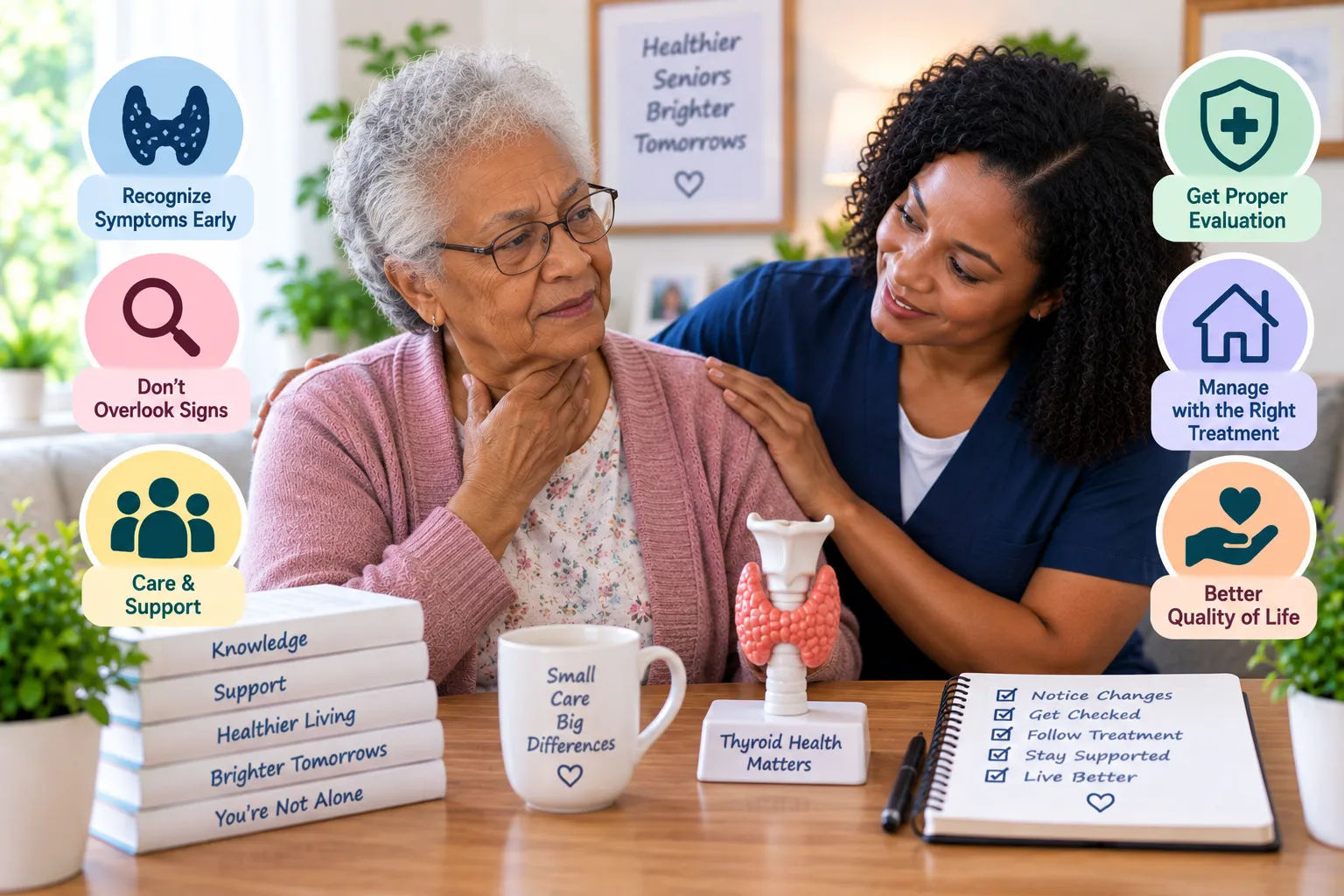
Thyroid problems in elderly parents represent one of the more commonly missed diagnoses in geriatric medicine, precisely because the symptoms so often masquerade as ordinary aging or other conditions entirely. Hypothyroidism alone may go undiagnosed in as many as 1 in 4 nursing home residents, while community-based studies estimate prevalence near 24% among older adults. Hyperthyroidism, while less common, still affects a meaningful share of this population and can present in ways doctors and families don't immediately associate with thyroid dysfunction.
This guide covers why thyroid problems in elderly patients are so often overlooked, the subtle symptom patterns worth recognizing, and why a simple blood test can be so genuinely revealing.
Key Takeaways
- Thyroid problems in elderly parents are common but frequently undiagnosed, with hypothyroidism potentially affecting up to 1 in 4 nursing home residents.
- Hyperthyroidism affects up to 2.3% of older adults, though it often presents atypically in this age group.
- Both conditions present differently in older adults, often mimicking normal aging rather than showing classic textbook symptoms.
- Fatigue, weight changes, memory issues, and heart rhythm problems can all be signs of underlying thyroid dysfunction rather than simple aging.
- A simple blood test can diagnose thyroid problems, and treatment is often straightforward and highly effective.
Understanding both how common and how easily overlooked thyroid dysfunction is helps families consider it as a genuine possibility behind symptoms otherwise attributed to aging.
Why Thyroid Problems in Elderly Patients Are Frequently Missed
Several factors combine to make thyroid dysfunction one of the more commonly overlooked diagnoses in older adults.
- Symptoms often present subtly and non-specifically, frequently resembling issues with the bowel, heart, or nervous system rather than classic thyroid signs.
- Many symptoms overlap significantly with normal aging changes, including fatigue, weight changes, and mild cognitive shifts.
- Older adults often have fewer or milder symptoms than younger people with the same degree of thyroid dysfunction, making detection harder without testing.
- Thyroid function isn't always included in routine screening, meaning it can go unchecked unless specifically requested or clinically suspected.
This combination of subtle, easily misattributed symptoms explains why thyroid problems deserve proactive consideration rather than being ruled out simply because a parent doesn't show classic textbook signs.
Who Should Be Screened for Thyroid Problems
Given how easily thyroid dysfunction can be missed, understanding who benefits most from proactive screening helps families advocate effectively.
- Adults with unexplained fatigue, weight changes, or cognitive shifts are reasonable candidates for thyroid testing as part of a broader workup.
- Those with a family history of thyroid disease may benefit from periodic screening even without obvious symptoms.
- Some geriatric guidelines recommend periodic thyroid screening for older adults generally, given how common and easily missed these conditions are.
- Anyone with new or worsening heart rhythm problems should have thyroid function considered as part of the evaluation.
Discussing thyroid screening proactively with a parent's doctor, rather than waiting for a specific trigger, can be a reasonable step given how common and treatable these conditions are.
Recognizing Hypothyroidism in Elderly Patients
An underactive thyroid, or hypothyroidism, is the more common thyroid condition in older adults, and its symptoms are worth understanding specifically.
- Fatigue and increased sleepiness are among the most common symptoms, often mistaken for simply slowing down with age.
- Weight gain can occur even without changes in diet, related to the thyroid's role in regulating metabolism.
- Dry skin and constipation are common physical symptoms that can be easily attributed to other causes.
- Memory loss or decreased cognitive function can sometimes be the only noticeable symptom of hypothyroidism in older adults, occasionally mistaken for early dementia.
Call the doctor now if: If a parent shows a combination of unexplained fatigue, weight gain, and cognitive changes, requesting a thyroid function blood test is a reasonable, low-risk step toward finding an answer.
Because memory and cognitive changes can be the primary symptom, considering thyroid dysfunction before assuming cognitive decline is unrelated and untreatable is genuinely worthwhile.
Recognizing Hyperthyroidism in Elderly Patients
An overactive thyroid, or hyperthyroidism, is less common but presents in a particularly atypical, easily missed way in older adults.
- Abnormal heart rhythms, including atrial fibrillation or a rapid heartbeat, are a common and important presentation of hyperthyroidism in this age group.
- Apathetic thyrotoxicosis, a specific form seen in older adults, causes symptoms similar to hypothyroidism, like fatigue and lethargy, rather than the classic hyperactivity seen in younger patients.
- Unexplained weight loss despite normal or increased appetite can be a sign worth investigating.
- Existing heart conditions can be worsened by underlying hyperthyroidism, making this connection particularly important to recognize.
Dee, Morning Star's founder: "The connection between my mother's new heart rhythm problem and her thyroid wasn't something any of us would have guessed, but once it was treated, both issues improved together."
This atypical presentation, where hyperthyroidism can look like its opposite condition in older adults, is exactly why unexplained cardiac symptoms sometimes warrant thyroid testing as part of the workup.
Thyroid Function's Connection to Other Conditions
Because thyroid hormone affects nearly every system in the body, thyroid dysfunction can influence or complicate several other health conditions common in older adults.
- Untreated hypothyroidism can worsen cholesterol levels, affecting cardiovascular risk over time.
- Thyroid dysfunction can complicate diabetes management, affecting blood sugar control in ways that aren't always obvious.
- Both hypothyroidism and hyperthyroidism can affect bone health, making thyroid function relevant to osteoporosis risk.
- Untreated hypothyroidism has been associated with worse surgical outcomes, making pre-surgical thyroid screening genuinely valuable.
These broader connections underscore why identifying and treating thyroid dysfunction can have ripple effects across a parent's overall health, beyond just the direct thyroid symptoms.
Diagnosis and Treatment
Fortunately, both diagnosing and treating thyroid problems in elderly patients is generally straightforward once the condition is suspected and tested for.
- A simple blood test measuring thyroid hormone levels can confirm or rule out thyroid dysfunction quickly and reliably.
- Hypothyroidism is typically treated with a daily thyroid hormone replacement medication, often producing meaningful symptom improvement.
- Hyperthyroidism treatment varies based on the underlying cause, potentially including medication, radioactive iodine therapy, or, less commonly, surgery.
- Regular monitoring helps ensure treatment doses remain appropriate over time, since needs can shift.
This relatively simple diagnostic and treatment pathway underscores why pursuing testing, even for vague or nonspecific symptoms, can lead to genuinely meaningful improvement.
A Real Family Scenario
Patricia had noticed her mother becoming increasingly forgetful and fatigued over about a year, changes she and her siblings had quietly begun to fear meant early dementia. During a routine appointment, her mother's doctor suggested checking thyroid function alongside other tests, a step Patricia hadn't expected given her mother showed none of the classic thyroid symptoms she'd heard of. The test revealed significant hypothyroidism, and within a few months of starting treatment, her mother's memory and energy improved substantially, a relief that reframed what the family had feared was an irreversible decline.
How an In-Home Caregiver Supports Thyroid Health
An in-home caregiver can provide genuinely valuable support for a parent managing thyroid problems, both in daily management and in noticing symptoms worth investigating.
- Supporting consistent medication use, which is essential for effectively managing thyroid conditions.
- Noticing changes in energy, weight, or cognitive function and communicating these patterns to family and doctors.
- Helping coordinate follow-up appointments for monitoring thyroid hormone levels over time.
- Providing patient, attentive daily support while a parent's thyroid treatment takes effect, since improvement can take weeks to become fully apparent.
"Having someone consistently around meant the subtle changes in Mom's energy and memory got noticed and mentioned to her doctor, rather than being written off as just getting older."
This kind of attentive, consistent presence helps families catch the subtle symptom patterns that so often point toward an underlying, treatable thyroid condition.
A Final Thought
Thyroid problems in elderly parents are common enough, and subtle enough, that they deserve genuine consideration whenever unexplained fatigue, weight changes, cognitive shifts, or heart rhythm issues arise. A simple blood test can reveal a genuinely treatable cause behind symptoms families might otherwise have assumed were an unavoidable part of aging, making this one of the more worthwhile, low-effort tests to request when something doesn't quite add up.
A Note for Connecticut Families
Morning Star Home Care supports families across Bristol and the greater Connecticut area with in-home caregiving that includes attentive daily observation and medication support, helping identify and manage thyroid and other health changes that can otherwise go unnoticed. This article completes our Health and Wellness resource series, part of an ongoing effort to bring families across Connecticut clear, practical guidance on the health topics that matter most for aging parents.
Written by
Morning Star Care Team
Morning Star Home Care — Caregiver-Founded and Locally Owned in Bristol, CT.