If you're in the position of evaluating a home care agency in Connecticut right now, you're probably doing it under some pressure. A parent's situation has changed. A discharge date from the hospital has been set. Or you've simply reached the point where you can no longer pretend the current arrangement is sustainable. You need to make a decision, and you need to make it correctly.
The problem is that most families don't know what questions to ask. They speak with an agency, it sounds professional, the coordinator is warm and reassuring, and they move forward. And then, a few weeks in, something happens that could have been predicted if only they had known what to look for.
These five questions cut through the surface presentation and get to the things that actually determine whether a home care agency in Connecticut can be trusted with someone you love.
Question 1: Is your agency registered by the Connecticut Department of Public Health?
Licensure is the baseline. In Connecticut, home care agencies that provide personal care, companion care, and related services must be registered by the state Department of Public Health. Licensure means the agency has met minimum requirements for caregiver training, background screening, supervision, and service quality. An agency without a current, valid license is operating outside those requirements entirely.
Ask directly: What is your license number, and is it current? A legitimate agency will answer this without hesitation and provide the information for your own verification. If you receive a vague response, a deflection to marketing language about quality and experience, or a claim that they operate under a different type of registration, take that seriously. It matters.
Connecticut families also have the right to check an agency's license status through the Department of Public Health. Do it. It takes five minutes and gives you independent confirmation of what the agency tells you.
Morning Star Home Care is a fully registered Connecticut home care agency, nurse-owned since 2017. You can learn more about our standards and approach on our about page.
Question 2: How do you screen and train your caregivers?
The agency you hire is only as trustworthy as the caregivers it places. A professional-sounding organization with a clean website can still send an undertrained, inadequately screened caregiver into your parent's home if their internal processes are weak.
Ask specifically:
- What does your background check cover? (State and federal criminal history? Identity verification? Sex offender registry? References from past employers?)
- Is the background check conducted through a verified third-party screening service, or does the agency rely on self-reported information?
- What training do caregivers complete before their first placement? How many hours? Who delivers it?
- How is caregiver performance monitored after they begin working with a client?
A strong agency will answer each of these questions in specific, confident terms. An agency that gives you general assurances without specifics, or tells you only that their caregivers are experienced and caring, is telling you they don't have documented processes they're proud to describe.
Morning Star Home Care was founded by a nurse clinician with more than ten years of direct patient care experience. That clinical foundation shapes how caregivers are selected, trained, and supervised, something a purely administrative agency structure cannot replicate.
Why the right questions saved one family from a poor match
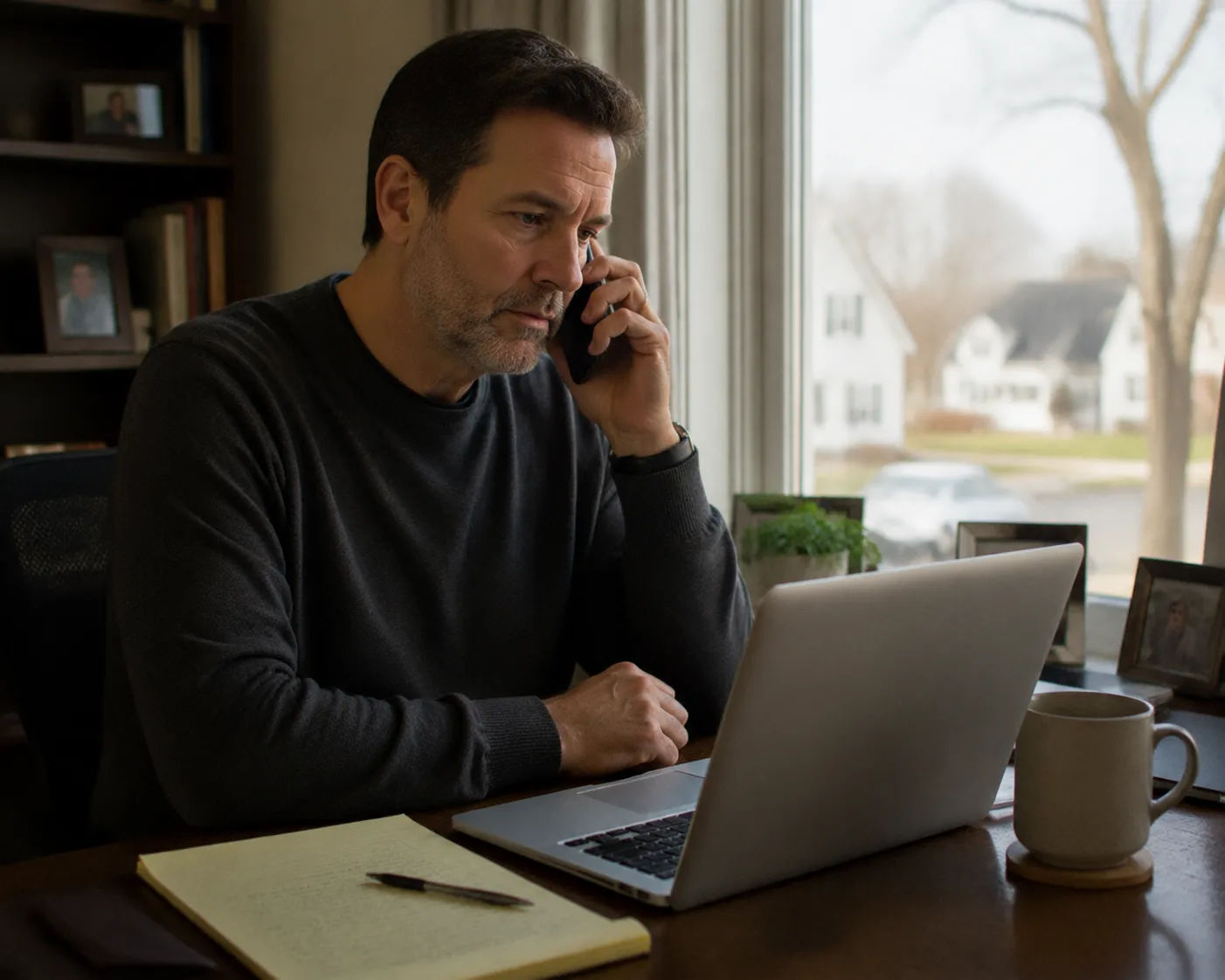
When Phillip got the call from his mother's neighbor in Bristol that she had been found confused in her kitchen on a Tuesday afternoon, he was in a hotel in Charlotte for a work conference. He booked a flight home that evening and spent the overnight flight trying to figure out what came next.
His mother, 82, had been living alone since his father's death three years earlier. She was sharp on most days, but what the neighbor described, the open stove, the disorientation, the untouched medication organizer on the counter, made clear that something had shifted in a way Phillip could no longer manage remotely.
He contacted three home care agencies that week. Two of them were responsive and professional-sounding. He was ready to go with the first one he spoke to until he remembered to ask the question his sister had texted him: Does the agency carry liability insurance?
The first agency paused. They said they would get back to him on the details. The second one answered immediately, confirmed the coverage amount, and offered to provide documentation. That agency also described their backup caregiver protocol without him having to ask. That was the agency Phillip chose. His mother had the same caregiver five mornings a week for the following fourteen months.
The questions he asked were not complicated. But they separated two agencies that looked similar on the surface.
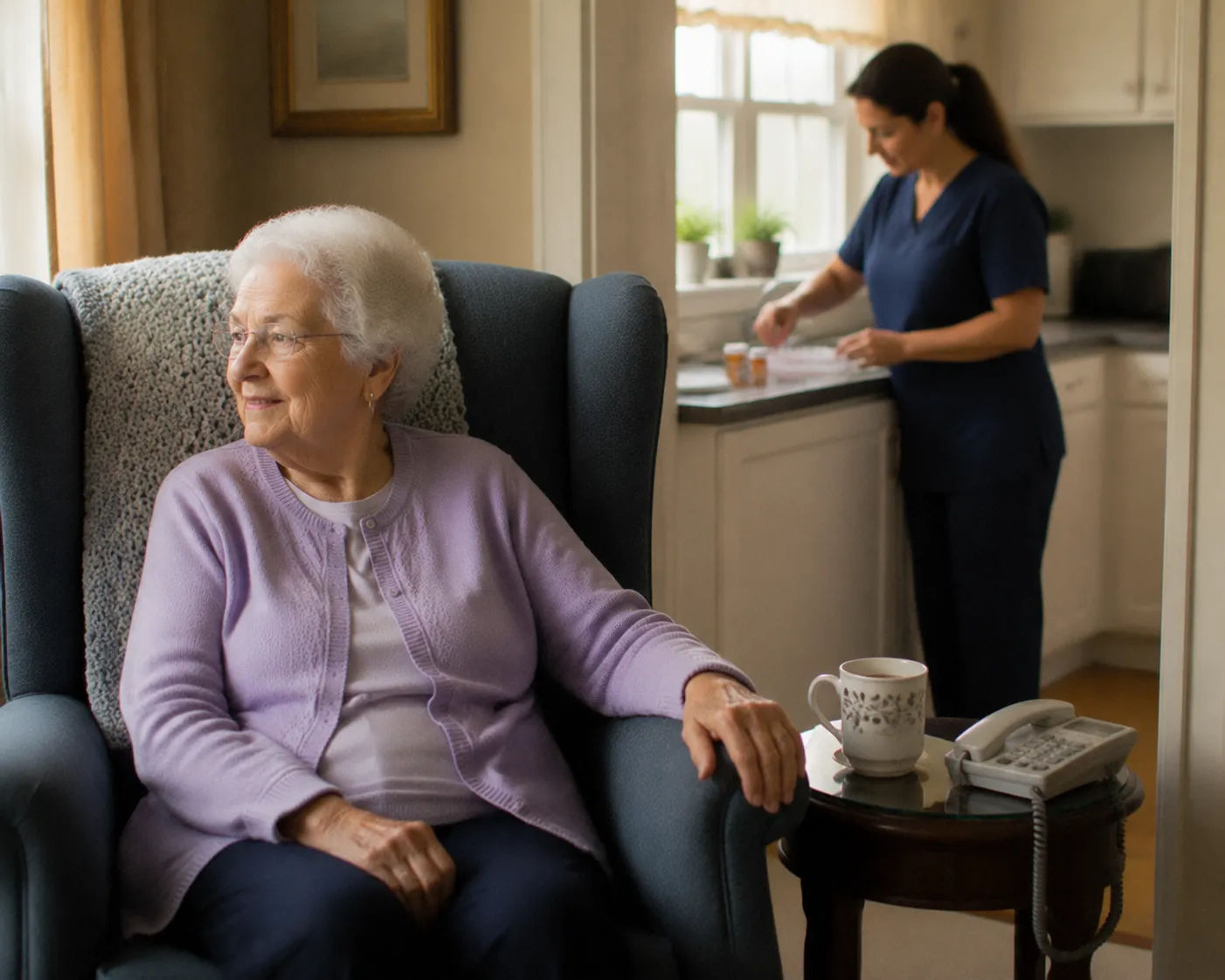
Question 3: What happens when our regular caregiver is unavailable?
Caregiver consistency matters enormously for seniors, particularly those adjusting to in-home care for the first time or those with memory challenges. But even the most reliable caregiver will occasionally be sick, have a family emergency, or need time away. The question is not whether this will happen. It is what the agency does when it does.
Ask: What is your backup caregiver policy? How quickly can a replacement be arranged? Will the backup caregiver be briefed on my loved one's care plan and specific needs?
An agency with a genuine backup system maintains a roster of trained caregivers familiar with the agency's standards and can deploy a replacement on the same day in most cases. An agency without this system effectively leaves the family to manage coverage on their own, which is precisely what most families are paying to avoid.
A single-caregiver independent arrangement, however affordable, has no backup by definition. This is one of the most significant operational differences between working with a registered agency and hiring privately.
Question 4: How do you communicate with the family between visits?
For families managing a parent's care from a distance, or even from across town, what happens between visits can be as important as what happens during them. A caregiver who notices that a senior seems more confused than usual, hasn't eaten much, or seems to have bruised an arm needs a clear path to communicate that observation to the family.
Ask: How do you keep the family informed after each visit? Who do I contact if I have a concern? What happens if the caregiver observes something that warrants attention?
Quality agencies have established communication channels and a culture of transparency. They do not wait for families to ask questions. They proactively share relevant observations from each visit, flag changes in condition as soon as they are noticed, and ensure the family always knows what the caregiver saw.
Question 5: What does the care plan process look like?
A care plan built from a proper in-home assessment is how professional agencies ensure that what happens during each visit is actually tailored to the person. Ask whether an assessment precedes care, who conducts it, what it covers, and how often the plan is reviewed and updated.
An agency that creates a care plan based on a phone intake rather than a home visit is working with incomplete information. An agency that never updates the plan as the senior's needs change is leaving the family to advocate for adjustments that should happen automatically. The care plan process tells you a great deal about how seriously an agency takes individualized care.
At Morning Star Home Care, care plans are built from in-home assessments conducted by experienced coordinators and updated as needs evolve. To explore what we offer, view our full home care services.
The right questions lead to the right agency
Choosing a home care agency in Connecticut is one of the most consequential decisions a family makes during a loved one's aging journey. The agencies that take these five questions seriously, and answer them well, are the agencies that have built the processes behind their reassuring words. The ones that cannot are showing you something important before care begins.
The team at Morning Star Home Care welcomes every one of these questions and will answer them directly. When you're ready to talk, contact Morning Star Home Care to schedule a free consultation. No pressure, no obligation, just honest answers.
Morning Star Home Care serves Bristol, Southington, Plainville, Plymouth, and surrounding communities in Hartford County, Connecticut.
External Resource: How to find and evaluate home care agencies — Medicare.gov
Written by
Morning Star Care Team
Morning Star Home Care — Caregiver-Founded and Locally Owned in Bristol, CT.