Most families don't know exactly what a home health aide does until they need one. The term gets used loosely, sometimes interchangeably with companion caregiver, sometimes as a synonym for any in-home support worker. When a physician orders home health aide services in Connecticut, or when a family starts researching options for a loved one, the specifics of what this role actually involves are rarely clear from the name alone.
Understanding what a home health aide does, and just as importantly what falls outside that role, shapes every decision that follows. It determines whether the care your parent is receiving matches what they actually need, whether it is funded through the right channel, and whether the professional in your parent's home is operating within their appropriate scope of practice.
This guide explains the daily duties of a home health aide, the limits of that role, how it differs from other types of in-home care workers, and what Connecticut families should know before arranging this type of support.
What home health aide services in Connecticut include
A home health aide (HHA) is a trained professional who provides personal care and basic health support to individuals who need help with daily living and some basic health maintenance. In Connecticut, home health aides must complete a state-approved training program and meet certification requirements if they are working within a Medicare-certified agency setting.
Home health aide services in Connecticut typically include the following:
- Personal care assistance: bathing, showering, oral hygiene, dressing, grooming, and hair care
- Toileting assistance and continence care, including catheter and ostomy care as directed by a supervising nurse
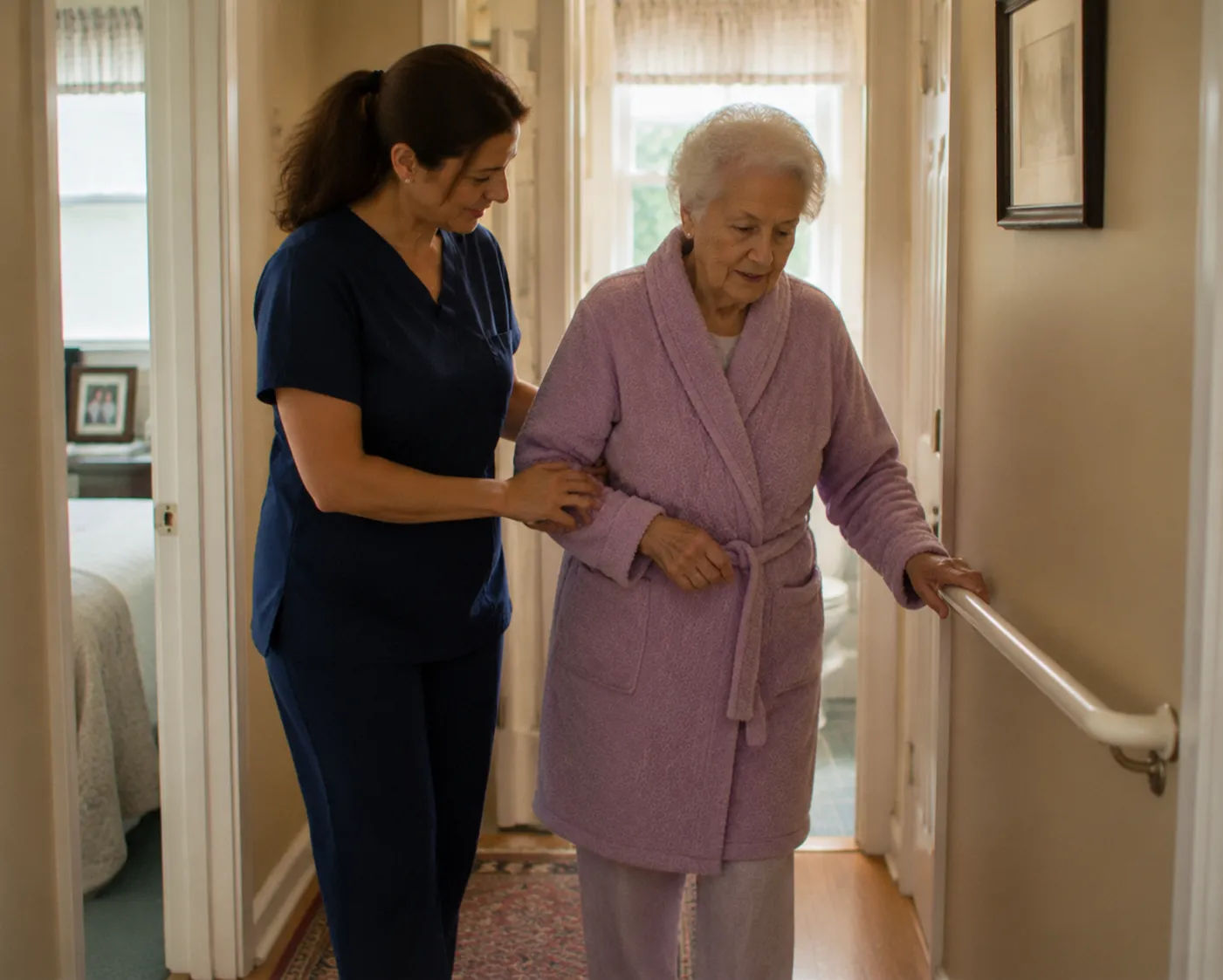
- Safe transfers and ambulation support: helping a senior move from bed to chair, navigate hallways, use a walker or wheelchair, and manage stairs safely
- Vital sign monitoring: checking and recording blood pressure, pulse, temperature, and respiration as directed by a registered clinical supervisor
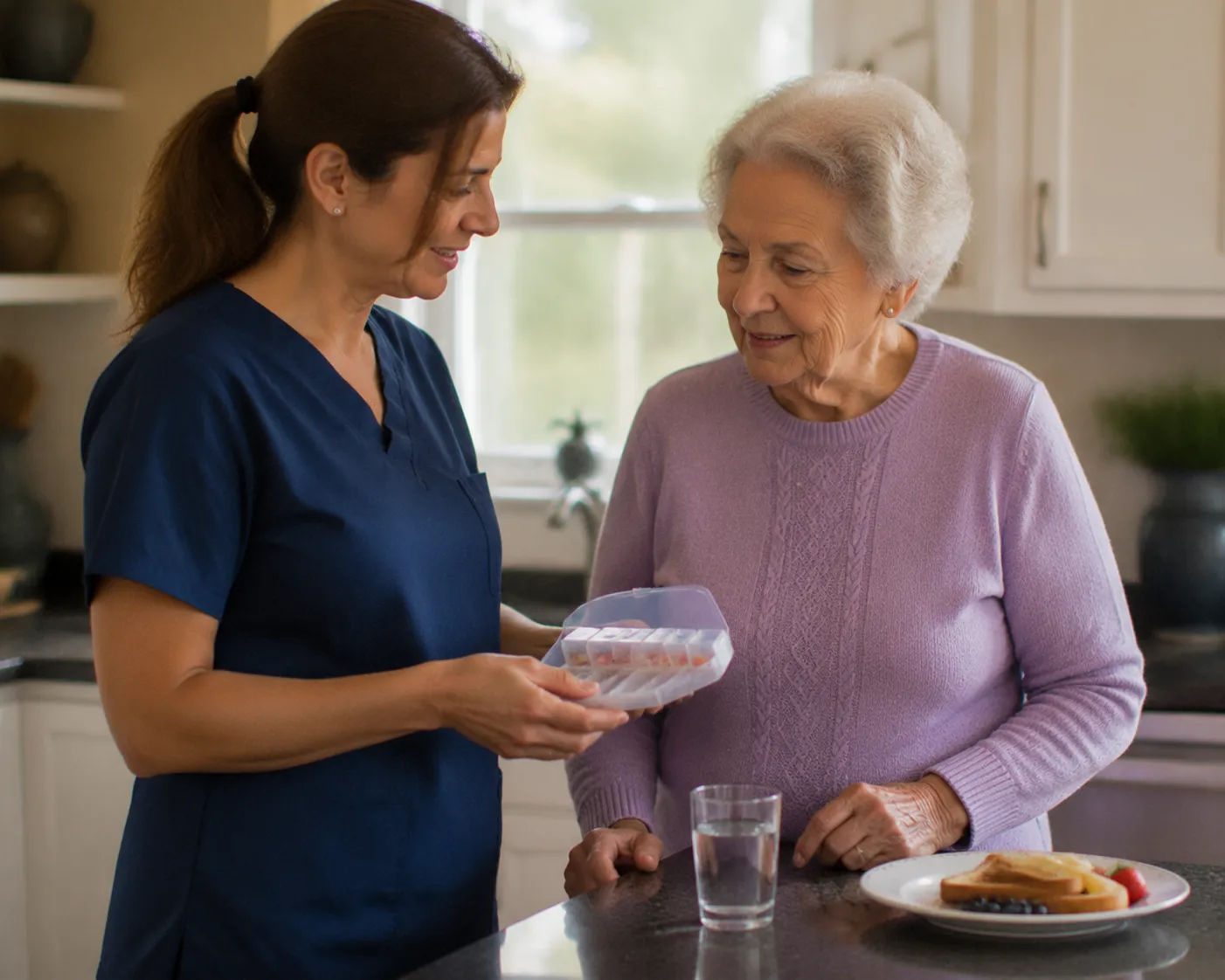
- Medication assistance: reminders, setup, and supervised self-administration within the caregiver's scope and under nurse direction
- Wound care assistance under clinical supervision
- Meal preparation and feeding assistance when needed
- Light housekeeping related to the senior's health and hygiene
- Observation and documentation: noting changes in the senior's condition and communicating them to the supervising nurse or care team
In a Medicare-certified home health setting, a home health aide works as part of a broader care team, typically including a registered nurse who sets the care plan and supervises the aide's work. The aide implements the plan under that clinical direction.
Morning Star Home Care is nurse-owned, which means every care plan is built with clinical oversight from the start. Learn more about our home health aide services and what makes them different.
What a home health aide does NOT do
Understanding the limits of a home health aide's scope is as important as understanding what they can do. Home health aides in Connecticut are not registered nurses. There are specific tasks they cannot perform, regardless of the circumstance.
A home health aide in Connecticut cannot:
- Administer prescription medications or make decisions about medication dosage or scheduling without nurse direction
- Perform wound care beyond what is specifically trained and directed by a supervising nurse
- Provide medical diagnoses or clinical assessments
- Perform invasive procedures of any kind
- Make independent clinical decisions about a patient's care plan
These limits are not arbitrary. They exist because the tasks beyond them require clinical training, licensure, and accountability that home health aides do not hold. When a family wants clinical care performed in the home, that falls to a registered nurse, registered practical nurse, or other registered professional.
For many Connecticut families, the right care arrangement includes both a home health aide handling personal care and health monitoring, and periodic skilled nursing visits for the clinical tasks that require a registered provider.
Why one Connecticut family finally understood what they needed
After her husband of forty-six years died in the spring, Frances began a slow retreat that her children watched with growing concern. She ate less. She slept irregularly. She stopped returning the calls of friends she had known since the 1970s. Her physician found nothing wrong. Her blood pressure was managed. Her medications were technically in order.
What her physician could not see on a quarterly check-up was that Frances was taking her medications inconsistently, some days skipping her afternoon pills entirely, not from forgetfulness but from a kind of indifference that had settled over her since her husband's death. Some mornings she didn't bathe. Some evenings she didn't eat more than a few crackers.
Her daughter, after one visit that left her genuinely shaken, looked into what home health aide services in Connecticut could provide. She wasn't sure whether her mother needed a nurse or a companion or something else entirely.
What the care coordinator explained was that Frances didn't need skilled nursing. She needed someone present in the mornings with the patience and training to help her through her routine, ensure her medications were taken, prepare a real breakfast, and be a warm, consistent human presence during the hours that had become the hardest to get through alone.
A home health aide covered the personal care and medication support. A companion caregiver handled the afternoons twice a week. Within six weeks, Frances had regained something of the steadiness her family had been watching disappear.
Home health aide vs. companion caregiver vs. registered nurse: knowing the difference
Connecticut families often encounter these three roles during the research process without a clear sense of how they differ. Here is a practical distinction:
Registered nurse (RN or LPN). Provides clinical care ordered by a physician. Can administer medications, perform clinical assessments, manage wounds, and make independent clinical decisions. Required for medically complex situations.
Home health aide (HHA). Provides personal care and basic health support under the direction of a registered nurse. Certified through a state-approved program. Works within a defined scope and reports to clinical supervisors. Appropriate when personal care support and basic health monitoring are needed as part of a physician-ordered care plan.
Companion caregiver. Provides non-medical personal care, companionship, meal preparation, medication reminders, and daily living support. Does not require certification in the same way, though quality agencies train caregivers thoroughly. Appropriate when daily support is needed without a physician-ordered clinical care plan.
The right answer for a specific senior depends on their medical situation, the tasks that need to be performed, and whether a physician has ordered home health services. A care coordinator at a nurse-owned agency can help a family identify which combination of roles fits the actual situation.
To understand the full range of non-medical support available alongside home health aide services, explore our companion care services.
How home health aide services are funded in Connecticut
Funding for home health aide services in Connecticut depends on the type of care being provided and the individual's circumstances.
Medicare. Medicare covers home health aide services when a physician certifies that the patient is homebound and requires skilled nursing or therapy services as part of a care plan. Home health aide visits must be provided alongside skilled care. Medicare does not cover aide visits that are provided without a skilled service component.
Connecticut Medicaid. Connecticut's Medicaid program covers personal care assistance for eligible low-income individuals through programs including CT PAS. Eligibility is based on income, assets, and a documented functional need for care.
VA benefits. Veterans and surviving spouses may qualify for VA benefits that cover in-home caregiver support, including the Aid and Attendance pension supplement. This program is significantly underused among Connecticut's veteran population.
Private pay. Families who do not qualify for funded programs, or who need more hours than funded programs cover, pay privately. Private long-term care insurance may apply if a policy is in place.
A care coordinator can walk through which funding pathways apply to your family's situation. Understanding the options before arranging care avoids the frustration of discovering coverage gaps after services have already begun.
Written by
Morning Star Care Team
Morning Star Home Care — Caregiver-Founded and Locally Owned in Bristol, CT.