
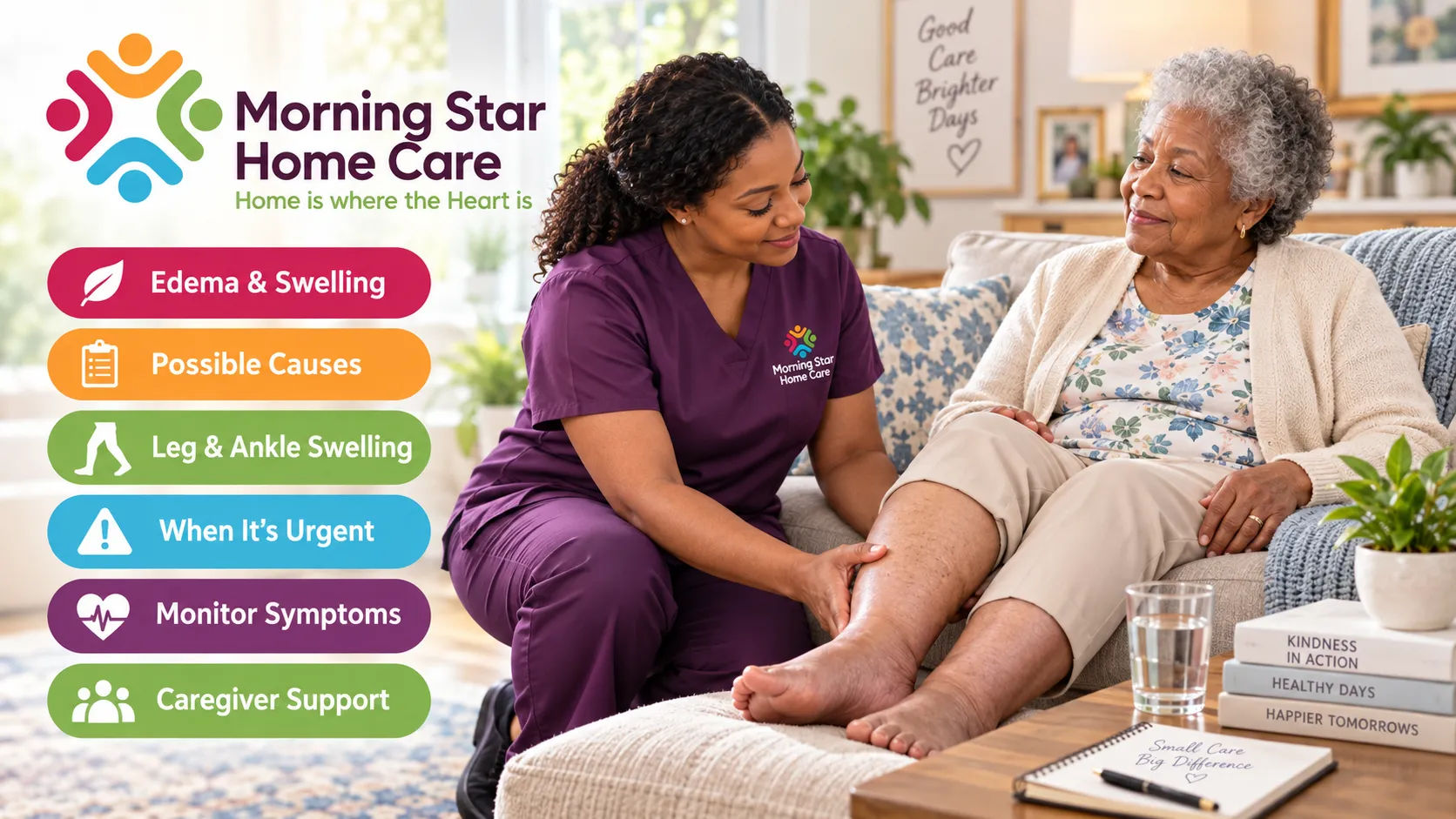
Edema in elderly parents, the medical term for fluid buildup causing swelling, is a remarkably common complaint, affecting roughly 19-20% of seniors in the United States. While it's often a benign, manageable symptom of circulatory changes that come with age, edema can occasionally signal something more serious, making it worth understanding both the common causes and the warning signs that deserve urgent attention.
This guide covers what typically causes edema in elderly parents, effective home management, and the specific situations that call for prompt medical evaluation.
Key Takeaways
- Edema in elderly parents affects roughly 19-20% of seniors, most commonly in the legs, ankles, and feet.
- Chronic venous insufficiency accounts for about 70% of cases, making it the leading cause of leg swelling in older adults.
- Heart failure, kidney problems, and certain medications are other common contributors worth ruling out.
- Leg elevation, compression stockings, and reduced sodium are effective, evidence-based home management strategies.
- Sudden swelling in just one leg can indicate a blood clot and requires urgent medical evaluation.
Understanding these fundamentals helps families distinguish ordinary, manageable edema from swelling that warrants a prompt call to the doctor.
What Causes Edema in Elderly Parents
Several circulatory and health-related changes make edema increasingly common as people age.
- Chronic venous insufficiency, accounting for about 70% of cases, occurs when leg veins struggle to efficiently return blood to the heart, allowing fluid to pool.
- Reduced circulation is a natural part of aging, making the aging body less efficient at pumping fluid back toward the heart.
- Congestive heart failure can cause significant fluid retention, often presenting alongside other symptoms like shortness of breath.
- Kidney problems can also lead to fluid buildup, as the kidneys play a central role in regulating fluid balance.
- Prolonged sitting or standing causes dependent edema, as gravity pulls fluid into the legs during long periods of inactivity.
Understanding which of these factors is contributing to a parent's specific case helps guide the most effective management approach.
Who Is Most at Risk for Edema
Certain groups of older adults face a higher likelihood of developing edema, which helps families anticipate and monitor for it proactively.
- Women are more likely to develop edema than men, for reasons related to hormonal and vascular differences.
- Obesity increases the risk of edema, partly due to added pressure on the circulatory system.
- Those with hypertension or existing heart disease face elevated risk given the overlap between circulatory and cardiac health.
- A history of blood clots or vein problems increases the likelihood of recurring or chronic edema.
Recognizing these risk factors helps families and care teams watch more closely for edema in parents who fall into one or more of these higher-risk categories.
Medications That Commonly Cause Swelling
Certain medications are well-known contributors to edema in elderly patients, and reviewing a parent's medication list can sometimes reveal an easily addressed cause.
- Calcium channel blockers, commonly prescribed for blood pressure, are among the most frequent medication-related causes of leg swelling.
- NSAIDs, including common over-the-counter pain relievers, can contribute to fluid retention with regular use.
- Steroids are another well-recognized cause of increased fluid retention and swelling.
- Certain diabetes medications have also been associated with increased swelling in some patients.
Call the doctor now if: If new or worsening swelling develops after starting a new medication, mention it to the prescribing doctor, since a dosage adjustment or alternative may resolve it.
Reviewing medications with a doctor or pharmacist is often one of the simplest, most effective first steps in addressing unexplained or worsening edema.
Skin Care Considerations With Chronic Swelling
Persistent edema can affect the skin over the swollen area, making skin care an important, often overlooked, part of long-term management.
- Swollen skin becomes more fragile and prone to breakdown, making gentle care and regular moisturizing important.
- Chronic edema can eventually lead to skin discoloration or thickening if left unmanaged over extended periods.
- Watching for any breaks in the skin or signs of infection over swollen areas matters, since compromised skin heals more slowly.
Attending to skin health alongside swelling itself helps prevent secondary complications that can develop from long-standing, unaddressed edema.
Recognizing When Edema Requires Urgent Attention
While most edema in elderly parents is a manageable, chronic issue, certain presentations require prompt medical evaluation.
- Sudden swelling in just one leg can indicate a blood clot, or deep vein thrombosis, which requires urgent evaluation given the risk of the clot traveling to the lungs.
- Swelling accompanied by chest pain or shortness of breath could indicate a serious cardiac or pulmonary issue and warrants emergency care.
- Redness, warmth, or pain in the swollen area can indicate infection or a blood clot and should be evaluated promptly.
- Rapidly worsening swelling over a day or two deserves medical attention rather than a wait-and-see approach.
Dee, Morning Star's founder: "The sudden one-sided swelling my mother had turned out to be a blood clot, and I'm genuinely grateful we didn't wait to see if it would just go away on its own."
Knowing this specific distinction, sudden and one-sided versus gradual and both-legged, is one of the most important pieces of information a family can carry when evaluating a parent's swelling.
Distinguishing Edema From Other Causes of Leg Changes
Not every change in leg appearance is edema, and understanding a few key distinctions helps families describe symptoms more accurately to a doctor.
- True edema leaves a temporary indentation when pressed, known as pitting, which distinguishes it from other types of swelling.
- Muscle changes or weight gain can sometimes be mistaken for edema but don't share this pitting characteristic.
- Lymphedema, a different condition involving the lymphatic system, can look similar but typically requires different management approaches.
Mentioning whether swelling pits when pressed, and how quickly it developed, gives a doctor valuable diagnostic information right from the first conversation.
Effective Home Management for Ordinary Edema
For the more common, chronic forms of edema, several evidence-based strategies can meaningfully reduce swelling and discomfort.
- Elevating the legs above heart level for periods throughout the day helps fluid drain more effectively.
- Wearing properly fitted compression stockings provides consistent, gentle pressure that supports better circulation.
- Reducing sodium intake helps limit fluid retention throughout the body.
- Staying appropriately active, including regular walking when possible, helps the circulatory system move fluid more effectively.
- Avoiding prolonged sitting or standing without movement breaks reduces the dependent edema that comes from gravity pulling fluid downward.
These consistent daily habits, while requiring some routine adjustment, often produce noticeable improvement in chronic, benign edema over just a few weeks.
Diagnostic Steps a Doctor May Take
When edema is new, worsening, or unclear in cause, a doctor typically follows a systematic approach to identify what's driving it.
- A physical exam assessing the pattern and location of swelling provides important initial clues about the likely cause.
- Blood tests checking kidney function, heart markers, and other values help rule out or confirm systemic causes.
- An ultrasound of the leg may be ordered if a blood clot is suspected, since this provides a clear, reliable diagnosis.
- A medication review is often one of the simplest and most revealing steps in identifying a treatable cause.
This structured diagnostic approach helps ensure the underlying cause is correctly identified, since treatment differs meaningfully depending on the source of the swelling.
A Real Family Scenario
Frank noticed his father's ankles had become increasingly swollen over several months, something his father dismissed as simply part of getting older. A doctor's visit revealed mild chronic venous insufficiency, not an emergency, but worth addressing. With compression stockings, more frequent leg elevation during the day, and modest dietary sodium reductions, the swelling improved significantly within a month. The experience also prompted Frank to learn the difference between this gradual, both-legged swelling and the sudden, one-sided kind that would warrant urgent care, knowledge that gave him real peace of mind going forward.
How an In-Home Caregiver Supports Edema Management
An in-home caregiver can provide valuable, consistent support for managing edema and recognizing when swelling has changed in a way that warrants medical attention.
- Encouraging and assisting with regular leg elevation throughout the day, which can be easy to forget without a reminder.
- Helping put on compression stockings, which can be physically difficult for some older adults to manage independently.
- Monitoring for changes in swelling patterns, including noticing if swelling becomes sudden, one-sided, or accompanied by other symptoms.
- Supporting a lower-sodium diet through thoughtful meal preparation.
"Having someone remind Dad to put his feet up during the day made a real difference, it's such a simple thing, but easy to skip without a nudge."
This kind of steady, attentive support helps families manage everyday edema effectively while staying alert to the less common but more urgent situations that require prompt action.
A Final Thought
Edema in elderly parents is, in most cases, a manageable and even expected part of aging circulation, responding well to simple, consistent home strategies. Still, learning to recognize the specific warning signs of a more urgent cause, particularly sudden, one-sided swelling, gives families the confidence to act quickly on the rare occasions it truly matters.
A Note for Connecticut Families
Morning Star Home Care supports families across Bristol and the greater Connecticut area with in-home caregiving that includes attentive daily support for managing edema, from leg elevation reminders to monitoring for concerning changes worth reporting to a doctor.
References
Written by
Morning Star Care Team
Morning Star Home Care — Caregiver-Founded and Locally Owned in Bristol, CT.