
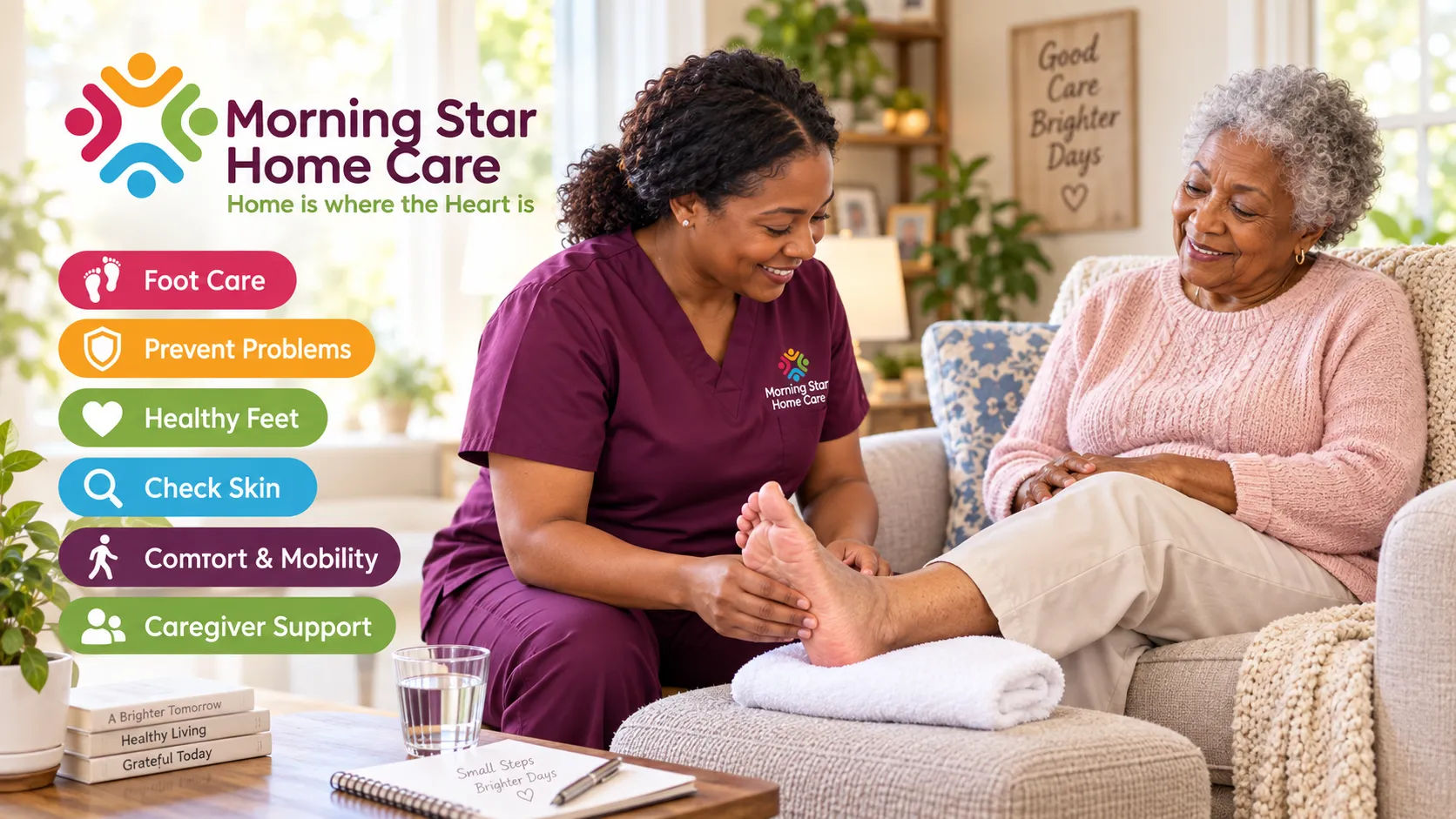
Foot care for seniors deserves far more attention than it typically gets, given how directly foot health connects to fall risk and overall mobility. In a landmark BMJ randomized controlled trial, older adults with disabling foot pain who received podiatry-led intervention experienced 36% fewer falls over 12 months compared to usual care, a striking demonstration of how much foot care for seniors matters for safety, not just comfort.
This guide covers the common foot problems affecting older adults, why foot care connects so directly to fall prevention, and practical steps for keeping a parent's feet healthy.
Key Takeaways
- Podiatry-led foot care reduced falls by 36% over 12 months in a BMJ randomized controlled trial of older adults with foot pain.
- Foot problems and unsafe footwear are recognized fall-risk factors according to both the National Institute on Aging and the CDC.
- Diabetic neuropathy affects more than half of people with diabetes, silently reducing sensation needed to notice foot injuries early.
- Patients with existing foot ulcers face roughly double the fall risk, underscoring how foot problems compound other safety concerns.
- Daily foot checks and properly fitted footwear are simple, low-cost habits with outsized safety benefit.
Understanding foot care for seniors as a genuine fall-prevention strategy, not just a comfort issue, helps families prioritize it appropriately.
Common Foot Problems in Older Adults
Several foot conditions become more common with age and deserve regular attention as part of foot care for seniors.
- Dry, cracked skin, which can develop into painful fissures or provide an entry point for infection if left unaddressed.
- Thickened or ingrown toenails, which become more difficult to manage independently as flexibility and vision decline.
- Bunions, hammertoes, and other structural changes that develop or worsen over years, often affecting fit and comfort in standard footwear.
- Corns and calluses, which can become painful pressure points, particularly problematic for those with reduced foot sensation.
Regular attention to these common issues, rather than waiting for pain to become significant, is the foundation of effective preventive foot care.
Many of these conditions develop so gradually that a parent may not fully recognize how much their comfort or gait has changed until the issue is directly pointed out or addressed.
Why Foot Health Is a Fall-Prevention Issue
The connection between foot care for seniors and fall prevention is stronger than many families realize, supported by solid clinical evidence.
- Foot pain changes how a person walks, often in ways that reduce stability and increase fall risk, even when the change feels subtle.
- A landmark BMJ trial found 36% fewer falls among older adults who received podiatry-led care for disabling foot pain, compared to those receiving usual care.
- Unsafe or poorly fitted footwear is specifically identified by the CDC and National Institute on Aging as a modifiable fall-risk factor.
- Reduced sensation from neuropathy makes it harder to sense uneven surfaces or subtle balance shifts that would otherwise prompt a corrective response.
Dee, Morning Star's founder: "Foot pain changes gait in ways people don't always notice consciously, but the body compensates, and that compensation is often what leads to a fall. Treating the foot pain itself can meaningfully reduce that risk."
Recognizing foot care as a genuine fall-prevention strategy, backed by strong clinical evidence, helps elevate its priority in an older adult's overall care plan.
Diabetic Foot Care: Extra Vigilance Required
For older adults with diabetes, foot care requires heightened attention given the added risks diabetes introduces.
- Neuropathy affects more than half of people with diabetes, reducing the ability to feel cuts, blisters, or pressure points that would otherwise prompt attention.
- Reduced circulation common with diabetes slows healing, making even minor injuries potentially serious if not caught early.
- Daily foot inspections become especially important for anyone with diabetic neuropathy, since injuries may not be felt.
- Patients with existing foot ulcers face roughly double the fall risk, making ulcer prevention a safety issue as much as a wound-care one.
Call the doctor now if: If a parent with diabetes notices any cut, blister, redness, or wound on their foot, no matter how minor it seems, contact their doctor promptly rather than waiting to see if it heals on its own.
This heightened vigilance isn't excessive caution, it reflects genuine, well-documented risk specific to diabetic foot health.
Nerve and Circulation Testing: What Screenings Involve
Regular screening for neuropathy and circulation problems helps catch declining foot health before symptoms become obvious, particularly important for anyone with diabetes.
- Monofilament testing checks sensation using a simple, painless touch test, often performed at routine diabetes checkups.
- Pulse checks in the feet assess circulation, another important factor in wound healing and overall foot health.
- Annual comprehensive foot exams are recommended for anyone with diabetes, per most clinical guidelines, even without noticeable symptoms.
- Vibration perception testing provides another way to assess nerve function and catch early neuropathy.
These screenings, often quick and painless, provide valuable early warning that allows preventive steps before a more serious problem develops.
Asking a primary care doctor directly whether a parent is due for one of these screenings, rather than assuming it happens automatically, helps ensure it doesn’t get overlooked amid other health priorities.
Practical Daily Foot Care Habits
A few consistent daily and weekly habits form the foundation of effective foot care for seniors, most requiring only a few minutes.
- Daily visual foot checks, looking for cuts, redness, swelling, or changes in skin color, especially important for anyone with reduced sensation.
- Washing and thoroughly drying feet daily, including between the toes, to prevent fungal infections.
- Moisturizing dry skin regularly, while avoiding lotion between the toes where excess moisture can promote fungal growth.
- Trimming toenails straight across to prevent ingrown nails, or having a podiatrist handle trimming for anyone with diabetes or reduced sensation.
These small daily habits, consistently maintained, catch problems early when they're far easier and less risky to address.
Setting a consistent time for foot checks, like right after a shower or before bed, helps turn this habit into an automatic part of a daily routine rather than something easily forgotten.
Choosing the Right Footwear
Footwear plays a significant, evidence-backed role in both comfort and fall prevention, making it worth genuine attention rather than an afterthought.
- Properly fitted shoes with adequate room in the toe box reduce pressure points and accommodate common age-related foot changes.
- Supportive, non-slip soles provide better stability than smooth-soled slippers or worn-out shoes.
- Avoiding walking barefoot or in socks alone, even at home, reduces both injury and fall risk.
- Replacing worn-out footwear promptly, since deteriorating tread and support quietly increase fall risk over time.
A properly fitted shoe, reassessed periodically as foot shape changes with age, is one of the simplest and most effective fall-prevention investments a family can make.
Many specialty shoe stores and podiatry offices offer professional shoe fitting specifically for older adults, a worthwhile step given how much foot shape and needs can change over the years.
When to See a Podiatrist
While some foot care can be managed at home, certain situations call for a podiatrist's professional attention rather than self-care alone.
- Any diabetic patient generally benefits from regular podiatry care, given the elevated risks associated with neuropathy and reduced circulation.
- Thickened, difficult-to-cut toenails are often safer and more comfortably managed by a podiatrist than attempted independently.
- Any wound, ulcer, or persistent redness warrants prompt podiatry or medical evaluation rather than waiting to see if it resolves on its own.
- Ongoing foot pain affecting mobility deserves evaluation given the demonstrated connection between foot pain treatment and reduced fall risk.
Many older adults benefit from routine podiatry visits every six to eight weeks, particularly those managing diabetes or difficulty with their own nail and skin care.
Insurance, including Medicare, often covers medically necessary podiatry care, particularly for patients with diabetes, though coverage details are worth confirming directly with a provider’s billing office beforehand.
Foot Care and Balance Training Together
Foot care works best as part of a broader fall-prevention strategy that also addresses balance and strength, since healthy feet alone don't guarantee stability.
- Balance exercises recommended by a physical therapist complement foot care by addressing the muscular and neurological side of stability.
- Strength training for the lower legs and ankles supports the stability that healthy feet alone can't fully provide.
- A combined approach addressing both foot health and balance tends to produce better fall-prevention outcomes than either addressed in isolation.
Discussing a comprehensive fall-prevention plan with both a podiatrist and physical therapist often yields better results than focusing on foot care alone.
Many outpatient rehabilitation centers now offer coordinated programs specifically designed to address both foot health and balance together, streamlining what might otherwise require separate, uncoordinated appointments.
A Real Family Scenario
Frank's daughter Karen didn't think much about his foot care until she noticed him wincing while walking to the mailbox, discovering upon closer inspection a painful callus that had gone unaddressed for months due to his diabetic neuropathy making it hard for him to feel the developing problem. A podiatrist visit resolved the immediate issue and set up a regular care schedule, and Frank's gait, and his confidence walking around the house, noticeably improved within weeks.
Frank's situation illustrates how easily foot problems can develop unnoticed, particularly with reduced sensation, and how directly addressing them can improve mobility and safety.
Karen also started scheduling regular podiatry visits on the family calendar going forward, treating them with the same routine importance as any other recurring medical appointment.
How an In-Home Caregiver Supports Foot Care
A consistent in-home caregiver can provide genuinely valuable support for foot care for seniors, including daily foot checks for anyone with reduced sensation, helping with washing and moisturizing for those with limited flexibility, and noticing early signs of problems that a parent themselves might not feel or see clearly. Caregivers can also help coordinate and prepare for regular podiatry appointments.
"Dad couldn't always see or feel problems with his own feet given his neuropathy, so having someone check regularly caught issues early instead of after they'd become a bigger problem."
This kind of consistent, attentive care often catches developing problems well before they become painful or genuinely dangerous, directly supporting both mobility and fall prevention.
Caregivers can also help a parent apply moisturizer and put on compression socks or supportive footwear, tasks that can become genuinely difficult with limited flexibility or arthritis in the hands.
A Final Thought
Foot care for seniors is a simple, low-cost habit with an outsized impact on safety, mobility, and independence, backed by clinical evidence showing genuine fall-risk reduction. Making daily foot checks and proper footwear a consistent part of a parent's routine is one of the most practical steps a family can take.
A little regular attention to foot health often pays off far beyond comfort, supporting the mobility and stability that keep a parent safely independent.
Given the strength of the evidence connecting foot care to fall prevention, treating regular podiatry visits with the same seriousness as any other preventive medical appointment is a genuinely worthwhile investment in a parent's long-term safety.
Nail Care Precautions Worth Knowing
Nail care might seem like a minor detail, but a few important precautions specifically apply to older adults, particularly those with diabetes or circulation problems.
- Never use sharp scissors or blades to remove calluses or corns at home, a practice that can lead to serious injury and infection, especially with reduced sensation.
- Over-the-counter corn and callus removal products can be too harsh for aging or diabetic skin and are generally best avoided without professional guidance.
- Anyone with diabetes should have toenail trimming handled by a podiatrist rather than attempted independently, given the elevated infection risk.
These precautions might seem overly cautious for something as routine as nail care, but they reflect genuine, well-documented risks specific to aging and diabetic feet.
A Note for Connecticut Families
Podiatrists throughout the Bristol and Greater Hartford area typically accept Medicare for medically necessary foot care, particularly for patients with diabetes, worth confirming coverage details directly.
Home care providers familiar with the region can help with daily foot checks and coordinate regular podiatry visits as part of a broader fall-prevention plan.
Local fall-prevention programs offered through senior centers and hospitals in the region often incorporate foot health screening alongside balance and strength assessments, worth asking about directly.
References
- Podimetrics — Standing Strong: Addressing Fall Risk in Diabetes Care
- StatPearls — Diabetic Foot Care
- FeetHealth — Foot Care for Seniors: Daily Care and Warning Signs
Written by
Morning Star Care Team
Morning Star Home Care — Caregiver-Founded and Locally Owned in Bristol, CT.