Choosing gifts for a recovering parent after a hospital stay is different from ordinary gift-giving — the goal isn't novelty or surprise, it's actively supporting comfort, safety, and healing during a vulnerable stretch of time. The right gift at this moment can genuinely ease the transition home, while the wrong one can add clutter or even risk to a household that's already adjusting to new limitations.
This transition matters more than families sometimes realize. Research on older adults shows 30-day hospital readmission rates around 5.6% and 180-day rates as high as 23.2%, and discharge to a patient's own home is itself a known predictor of readmission within 30 days — meaning the recovery period at home carries real risk, not just inconvenience. A thoughtful, practical gift during this window can be part of what keeps a parent safe and comfortable enough to avoid a return trip to the hospital.
Key Takeaways
- Comfort and practicality matter most during recovery — this isn't the moment for novelty gifts.
- Gifts that reduce physical strain, like a shower chair or a grabber tool, directly support safer healing.
- Meal support is one of the most consistently appreciated gifts during any recovery period.
- Entertainment for long, restricted days matters more than it might seem, since boredom and isolation slow emotional recovery.
- Coordinating with whoever is managing daily care ensures the gift complements the recovery plan rather than working against it.
What Makes Recovery Different From Ordinary Gift-Giving
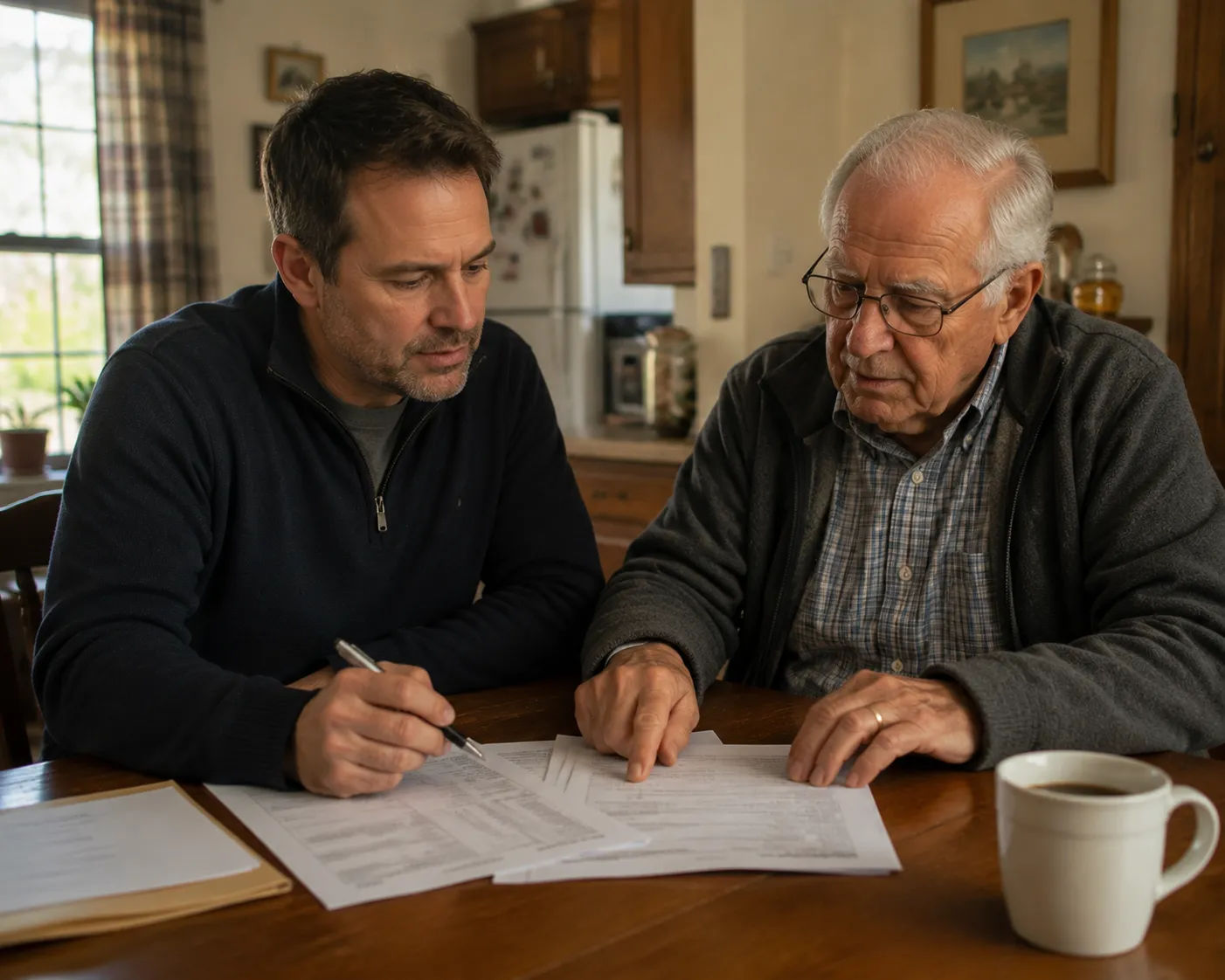
A parent recovering at home is navigating physical limitations, medication schedules, follow-up appointments, and often real fatigue — all at once. Gifts chosen for this moment need to reduce friction in daily tasks, not add to the list of things to manage. A beautiful but complicated gift can become one more source of stress during a period that already has plenty.
Dee, Morning Star's founder: "The families who help recovery go smoothest aren't the ones who bring the most gifts — they're the ones who ask what would make today easier, and bring exactly that."
The First Week Home: What Tends to Matter Most
The first several days after discharge are usually the most physically demanding part of recovery, even though they're also when the most visitors and get-well gestures tend to arrive. Fatigue is often more significant than expected, even for procedures that seemed minor going in, and a parent may need more rest and less stimulation than well-meaning visitors assume. Coordinating visits so they're spaced out, rather than everyone arriving the first weekend, tends to support recovery better than a flurry of attention followed by a sudden drop-off.
Comfort Gifts for Physical Healing
Recovery often means spending more time than usual sitting or lying down, which makes comfort items genuinely functional rather than merely nice to have.
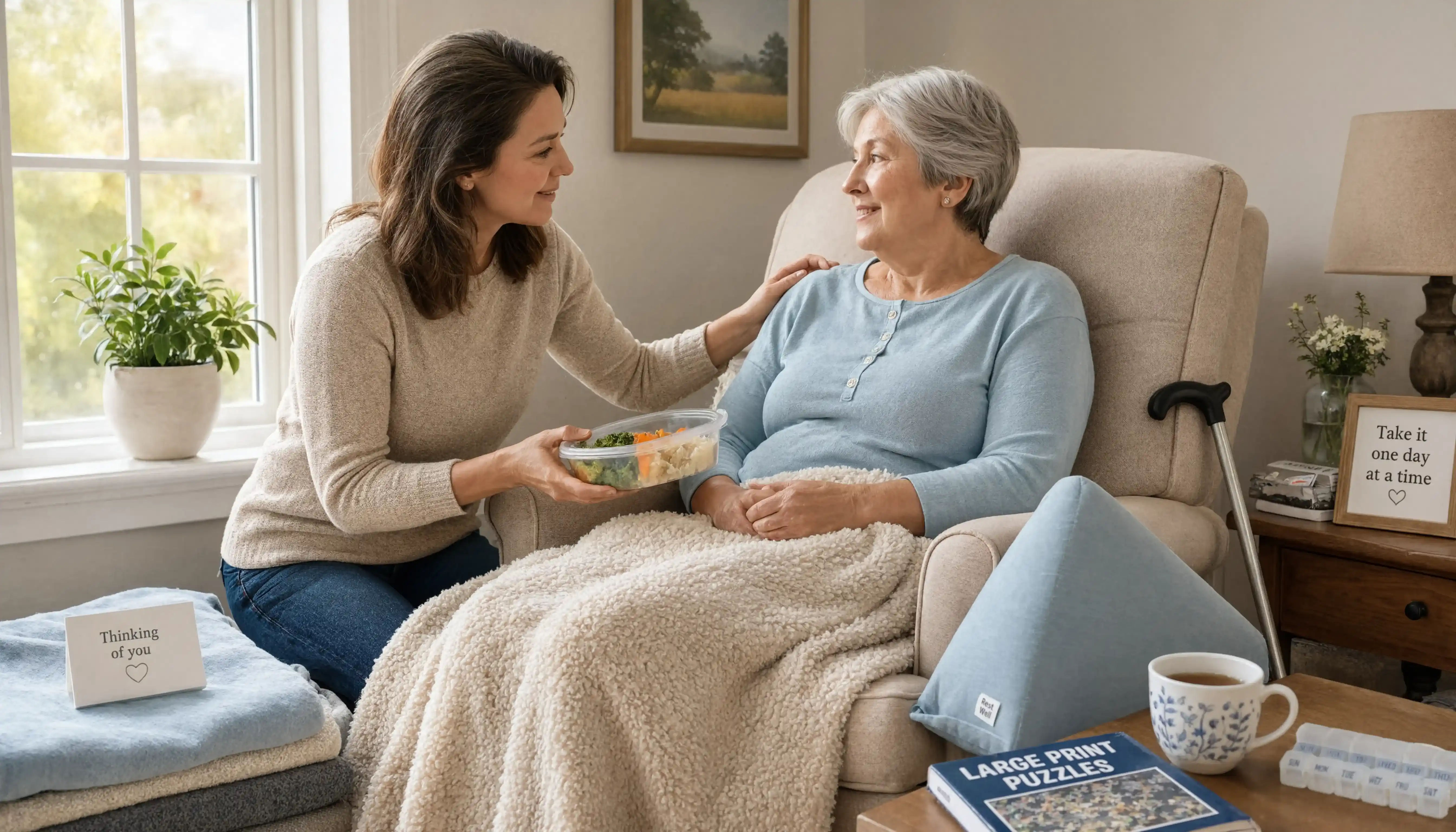
- A supportive recovery pillow — a wedge pillow for elevation after surgery, or a specialized pillow for a specific procedure like hip or heart surgery.
- Soft, easy-to-manage loungewear or adaptive clothing that avoids pulling over the head or requiring complex closures.
- A heated or cooling pad for managing pain or swelling, as appropriate to the specific recovery.
- A cozy, washable throw blanket for a recliner or hospital-style bed at home.
Practical Gifts That Reduce Physical Strain
Small assistive tools can meaningfully reduce the physical effort required for everyday tasks during recovery, which matters both for comfort and for reducing the risk of a fall or re-injury while reaching, bending, or standing unnecessarily.
- A grabber or reacher tool to avoid bending or overreaching for dropped or distant items.
- A shower chair or bath bench for safer bathing during limited mobility.
- A bedside table or over-bed table to keep essentials within easy reach without getting up.
- Non-slip socks or slippers with good grip for safer movement around the house.
Meal Support
Meal delivery or prepared food is consistently one of the most appreciated gifts during any recovery period, since cooking is often one of the first tasks a recovering parent has to give up, even temporarily. A few options work well depending on the specific situation.
| Meal Support Option | Best For |
|---|---|
| Homemade freezer meals | Families nearby who want to help hands-on |
| Meal delivery service | Longer recoveries or when family is out of town |
| Grocery delivery with easy-prep items | A parent who can still cook a little but not shop |
| Meal train coordinated among friends | Building community support during a longer recovery |
It's worth checking on any dietary restrictions tied to the specific recovery — low-sodium after cardiac events, soft foods after certain surgeries, diabetic-friendly options — before arranging meal gifts, since a well-intentioned meal that doesn't fit medical restrictions can create more work rather than less.

Entertainment for Long, Restricted Days
Recovery often means long stretches of limited activity, and boredom during this time can affect mood and slow emotional recovery in ways that are easy to underestimate. Entertainment gifts that don't require significant physical effort help fill this time meaningfully.
- An audiobook or streaming subscription for entertainment that doesn't require holding a book or reading small print.
- A large-print puzzle book or word search collection for light mental engagement.
- A tablet loaded with favorite shows or a video-calling app to stay connected with family during a housebound stretch.
- A comfortable lap desk for using a laptop, tablet, or puzzle book while resting in bed or a recliner.
Transportation Support
Getting to follow-up appointments is one of the most consistently underestimated logistical challenges during recovery, especially if driving isn't yet advised or if a parent lives alone without easy access to transportation. Offering to drive, arranging a rideshare account set up in advance, or researching medical transportation services available in the area are all practical gifts that directly reduce the risk of a missed appointment turning into a bigger problem.
Gifts That Support Medication and Appointment Management
Recovery often involves a new or more complex medication schedule, along with a string of follow-up appointments, and gifts that support this logistical side of healing can be just as valuable as anything comfort-focused.
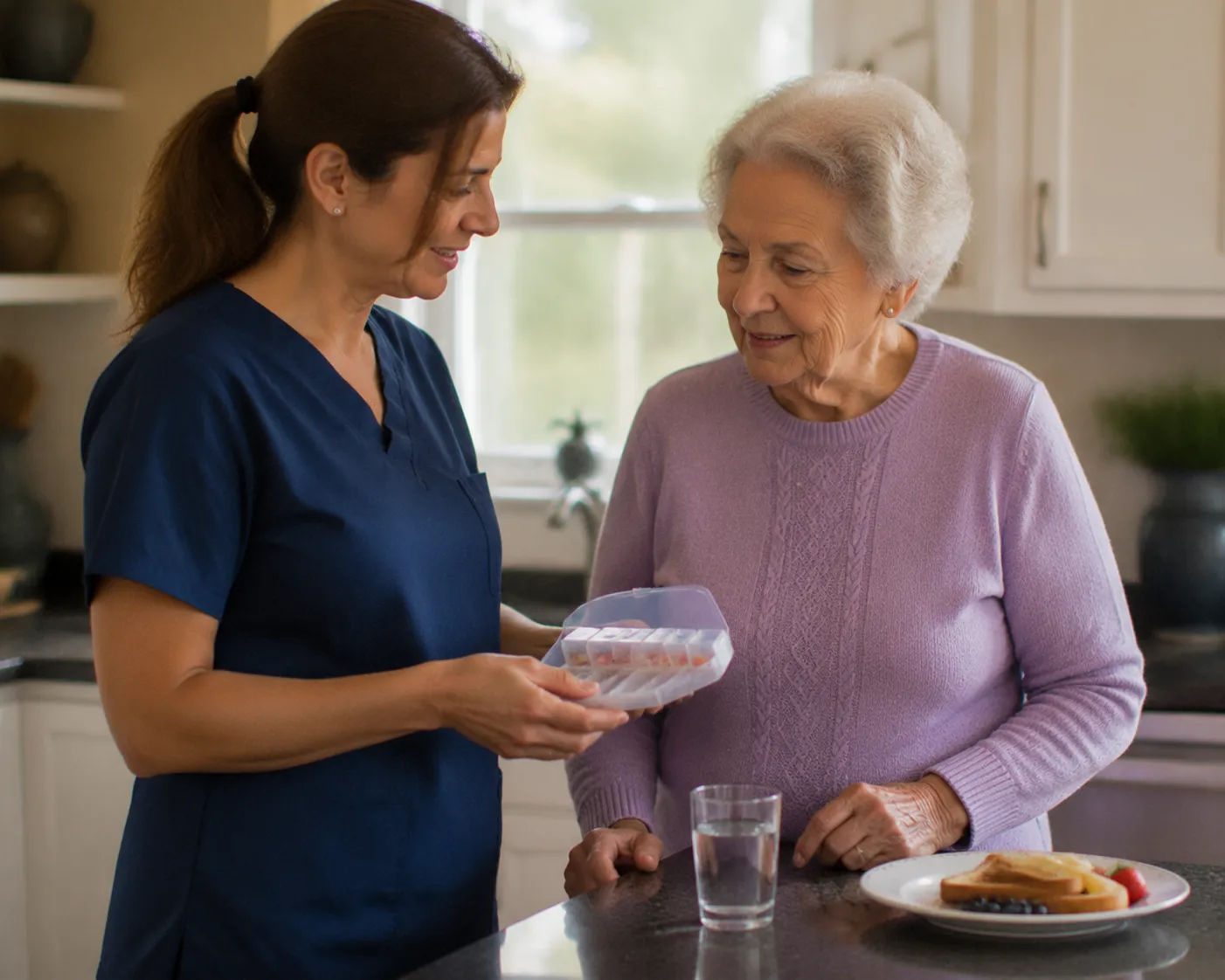
- A weekly pill organizer with clear labeling for managing a new or adjusted medication schedule.
- A simple whiteboard or notepad for tracking symptoms, questions for the doctor, and appointment dates.
- Offering to drive to follow-up appointments — a gift of time that matters enormously during a recovery period when driving may not be advised.
Gifts for the Caregiver, Too
The person providing the bulk of day-to-day recovery support — often a spouse, adult child, or sibling — is managing real strain of their own, even if the attention understandably centers on the recovering parent. A small gesture of support for that caregiver, a meal they don't have to cook, an offer to take over a task for an afternoon, or simply acknowledgment of how much they're managing, matters more than it might seem and helps sustain their ability to keep providing care.
Gifts to Approach Carefully During Recovery
- Anything requiring assembly or significant setup during a period when energy is limited.
- Flowers or plants, in certain hospital or post-surgical contexts — some conditions or medications call for caution around live plants; check with the medical team if uncertain.
- Rich or heavy foods that may not fit dietary restrictions during recovery, however well-intentioned.
- Gifts implying an expectation of activity a parent isn't yet cleared for, which can create pressure rather than support.
The Gift of Presence During Recovery
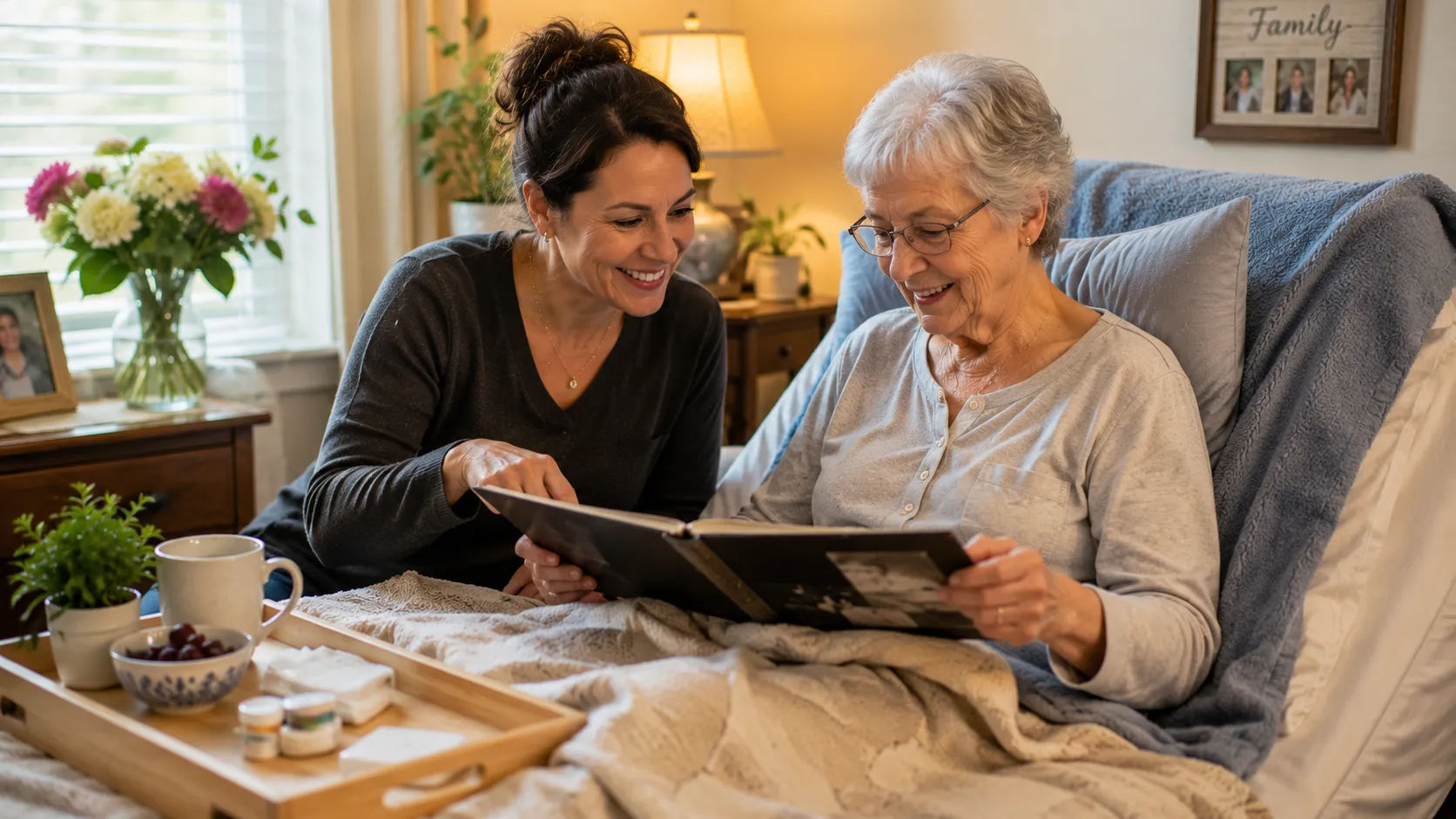
For many recovering parents, consistent, low-key presence matters more than any single gift — someone checking in daily, sitting with them for part of an afternoon, or simply being available if something is needed. Recovery can be isolating, especially once the initial flurry of hospital visits and get-well calls tapers off in the weeks that follow, often exactly when support is still very much needed.
"Everyone showed up the first week Dad was home from the hospital. By week three, it was just me stopping by, and that's when he actually needed the company most — the boredom and loneliness had really set in by then."
Coordinating Gifts and Support With Whoever Manages Daily Care
If a parent has a spouse, family member, or professional caregiver managing day-to-day recovery care, checking with that person before bringing a gift ensures it fits the actual recovery plan. A caregiver may know that a certain food isn't currently allowed, that a particular activity is discouraged by the doctor, or that a specific practical item is exactly what's needed but hasn't been mentioned to visiting family.
Dee, Morning Star's founder: "We always tell families: ask us what's actually needed before you buy something. Sometimes it's obvious — a shower chair, a grabber tool — and sometimes it's something small nobody would think to buy, like a specific snack that's easy on a sensitive stomach."
Pacing Physical Therapy and Home Exercises
Many recoveries involve prescribed physical therapy exercises to be done at home, and gifts that support consistency with this routine — a simple checklist, a comfortable exercise mat, or just encouragement and accountability from a family member — can meaningfully affect how well and how quickly a parent regains function. It's worth checking in specifically about whether home exercises are being kept up with, since this is an easy part of a recovery plan to quietly let slide, especially once formal physical therapy visits taper off.
Longer-Term Recovery Gifts
For a recovery expected to last several weeks or months, gifts with more staying power than a single get-well item can provide ongoing support. A subscription meal service, an ongoing housekeeping service to reduce physical strain, or a recurring grocery delivery arrangement all provide help that extends well beyond the first difficult week.
Recovery-Specific Gifts by Condition
The most useful gifts often depend heavily on the specific reason for hospitalization, since needs after a cardiac event differ substantially from needs after a hip fracture, a stroke, or major abdominal surgery. Tailoring a gift to the actual recovery, rather than a generic get-well category, tends to produce something far more genuinely helpful.
| Recovery Type | Especially Helpful Gifts |
|---|---|
| Hip or knee replacement | Reacher tool, shower chair, elevated toilet seat, non-slip footwear |
| Cardiac event or surgery | Low-sodium prepared meals, a simple activity tracker, a comfortable recliner cushion |
| Stroke recovery | Large-print materials, adaptive utensils, patience-friendly entertainment like audiobooks |
| Abdominal or major surgery | Loose, soft clothing avoiding waistbands, a supportive pillow for coughing or movement, bland prepared meals |
Preparing the Home Before Discharge
Some of the most valuable support happens before a parent even arrives home from the hospital — rearranging furniture to create a clear walking path, removing loose rugs that pose a fall risk, and setting up a recovery space on the main floor if stairs will be difficult for a while. A gift of this kind of home preparation, done quietly before discharge day, can matter more than anything purchased, since it directly reduces the most common risk during early recovery: a fall.
- Clearing walkways of clutter, cords, and loose rugs throughout frequently used rooms.
- Setting up a temporary bedroom on the main floor if stairs will be a challenge during initial recovery.
- Stocking the bathroom with grab bars or a raised toilet seat before the first night home, not after a scare.
- Placing frequently used items within easy reach in the kitchen and bedroom to reduce unnecessary bending or reaching.
Supporting Emotional Recovery, Not Just Physical
Recovery from a hospital stay often carries an emotional weight that's easy to overlook amid the practical logistics — fear about future health, frustration with temporary dependence, or grief over lost capability, especially if the hospitalization revealed a more serious or chronic condition than previously known. Gifts and gestures that acknowledge this emotional dimension, not just the physical one, round out a more complete kind of support. A journal for processing the experience, a simple card acknowledging how hard the hospitalization was, or just consistently asking how someone is really doing, beyond the physical symptoms, can matter as much as any comfort item on this list.
When to Involve a Home Care Professional
For recoveries expected to last more than a few weeks, or when family members can't be present as consistently as the situation requires, bringing in professional in-home care support can be one of the most valuable gifts a family provides, even though it doesn't come wrapped in paper. A trained caregiver can assist with mobility, medication reminders, light housekeeping, and meal preparation, reducing both the physical burden on a recovering parent and the logistical burden on family members trying to juggle their own responsibilities.
Dee, Morning Star's founder: "Families sometimes wait too long to bring in professional support after a hospital stay, thinking they should be able to manage it themselves. Getting help early, even temporarily, often makes the whole recovery go more smoothly for everyone."
Avoiding Common Post-Discharge Mistakes
A few recurring mistakes tend to complicate recovery at home, worth watching for regardless of the specific condition. Skipping or rescheduling follow-up appointments due to transportation difficulty is one of the most common and most preventable contributors to readmission. Misunderstanding medication instructions, particularly when a hospital stay introduces several new prescriptions at once, is another. And returning to normal activity levels too quickly, often out of a desire to feel "back to normal," can undo real progress.
- Confirm every follow-up appointment is on the calendar with transportation arranged before leaving the hospital.
- Review the full discharge medication list with a pharmacist if anything is unclear, rather than guessing.
- Resist the urge to resume full activity before a doctor has explicitly cleared it, even if symptoms feel improved.
Building a Simple Recovery Support Schedule
For families with several people wanting to help, a simple shared schedule — who's bringing a meal on which day, who's driving to which appointment, who's checking in on which afternoon — prevents both gaps in coverage and the opposite problem of everyone showing up the same day and no one the next. This kind of light coordination, more than any individual gift, often determines how smoothly a recovery period actually goes.
Involving Grandchildren During Recovery
Grandchildren can play a genuinely helpful role during a grandparent's recovery, even in small ways — a drawn card, a short visit that doesn't overstay, or simply video calls that provide a welcome distraction from the monotony of a restricted recovery routine. Preparing grandchildren for what to expect, including any visible changes like a cast, a wheelchair, or reduced energy, helps the interaction feel natural rather than alarming for younger visitors.
A Real Family Scenario
When Walt came home after hip replacement surgery, Karen focused her first gift on practicality rather than sentiment: a grabber tool, a shower chair, and a week of prepped freezer meals in his favorite dishes. It wasn't glamorous, but Walt mentioned weeks later that the shower chair alone made him feel safe enough to bathe independently again, faster than he expected — a small gift that meaningfully supported his recovery and his confidence at the same time.
Documenting the Recovery for Future Reference
Keeping a simple record of how a recovery unfolded — what helped, what didn't, how long each stage took — can be genuinely useful if a similar situation arises again, either for the same parent or another family member down the road. This kind of informal documentation turns a difficult experience into a resource the family can draw on later, rather than starting from scratch each time a health crisis occurs.
Recognizing Warning Signs During Recovery
Families supporting a recovering parent should know the warning signs that suggest a return to the hospital may be needed, rather than waiting to see if a symptom resolves on its own. Sudden confusion, a new or worsening fever, increased pain despite medication, signs of infection at a surgical site, or difficulty breathing all warrant prompt medical attention rather than a wait-and-see approach.
Call the doctor now if: If a recovering parent develops sudden confusion, chest pain, difficulty breathing, or any symptom that feels seriously wrong, treat it as a medical emergency and seek care immediately rather than waiting for a scheduled follow-up appointment.
Balancing Independence and Support During Recovery
Many recovering parents feel a strong urge to prove they're managing fine, sometimes downplaying real difficulty out of pride or a wish not to burden family. Striking the right balance — offering help without insisting on taking over every task — supports both the physical and emotional sides of recovery. Asking specific questions ("can I help with the shower today") rather than general ones ("do you need help") tends to get a more honest answer, since specific offers are easier to accept than an open-ended one that feels like admitting broader weakness.
When Recovery Reveals a Longer-Term Care Need
Sometimes a hospital stay reveals that a parent needs more ongoing support than anyone realized before the hospitalization — a decline that was gradual and easy to miss day to day becomes obvious once a health crisis forces a closer look. If this is the case, the recovery period is also a natural moment to have a broader conversation about longer-term care options, rather than treating the current recovery as a temporary blip that will fully resolve back to how things were before. Families who use this window to honestly assess ongoing needs, rather than assuming a full return to the prior baseline, tend to avoid a second, more disruptive crisis down the road.
A Final Thought
Gifts for a recovering parent work best when they genuinely reduce a burden, even a small one, during a period when nearly everything feels harder than usual. A grabber tool, a week of meals, or simply consistent, quiet company often matters more than anything wrapped in paper — and the thoughtfulness of choosing something truly useful tends to be remembered long after the recovery itself is complete.
References
- PMC — Prevalence of Hospital Readmission, Related Causes and Determinants in Older People
- AHRQ PSNet — Hospital at Home Care Reduces Costs, Readmissions, and Complications
This article is for general information and isn't a substitute for medical, legal, or financial advice. If you're concerned about a specific issue, talk to your parent's doctor or an elder law attorney.
Written by
Morning Star Care Team
Morning Star Home Care — Caregiver-Founded and Locally Owned in Bristol, CT.