
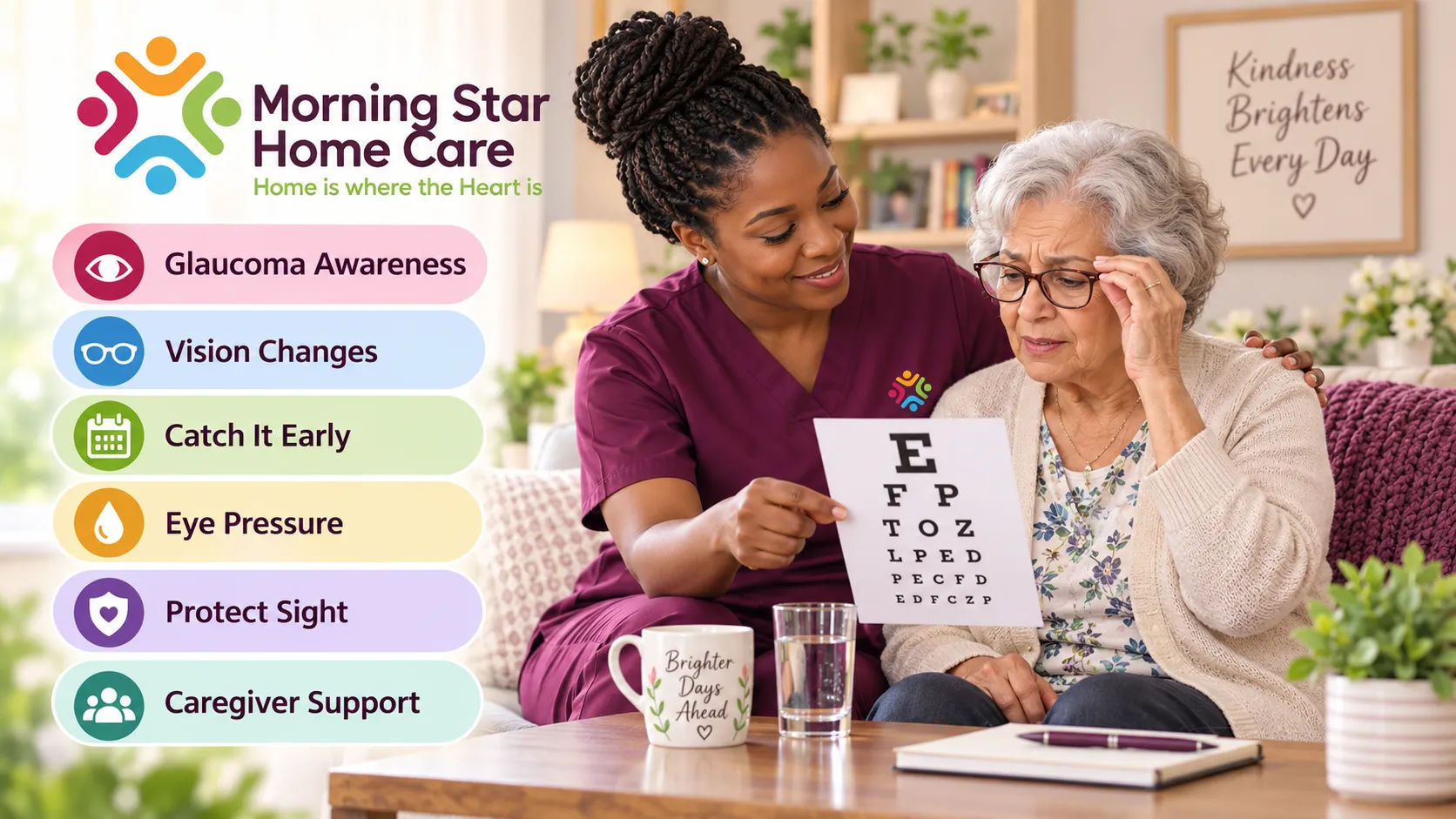
Glaucoma in elderly parents deserves genuine attention precisely because it's so often silent, earning its reputation as the 'thief of sight' by causing no noticeable symptoms until meaningful, permanent vision loss has already taken place. With prevalence reaching as high as 3.5% among older adults and climbing further with age, this is a condition where prevention through regular screening matters far more than waiting for symptoms to appear.
This guide covers how glaucoma develops, why regular eye exams are so essential, and what families can do to support early detection and effective management.
Key Takeaways
- Glaucoma in elderly parents affects up to 3.5% of older adults, with risk increasing significantly with age.
- Glaucoma typically causes no symptoms until significant vision loss has occurred, earning its nickname as the silent thief of sight.
- Vision loss usually begins with peripheral vision, which is easily overlooked until it becomes substantial.
- Regular comprehensive eye exams are the most reliable way to detect glaucoma before irreversible damage occurs.
- Treatment can prevent further damage but cannot restore vision already lost, making early detection genuinely critical.
Understanding these basics underscores why proactive screening, rather than waiting for symptoms, is the single most important step families can encourage.
Understanding Glaucoma in Elderly Patients
Glaucoma refers to a group of eye conditions that damage the optic nerve, most often related to elevated pressure within the eye.
- Increased pressure inside the eye gradually damages the optic nerve, which is responsible for transmitting visual information to the brain.
- The most common form, open-angle glaucoma, develops slowly over years, making it especially easy to miss without regular screening.
- Age is the single strongest risk factor, with prevalence increasing substantially after 60.
- Family history, diabetes, and high blood pressure also increase an individual's risk of developing glaucoma.
Understanding this gradual, pressure-related mechanism helps explain why glaucoma can progress so far before a person notices any change in their vision.
Why Glaucoma in Elderly Parents Often Goes Unnoticed
The specific way glaucoma affects vision explains why it's so often missed until significant damage has occurred.
- Vision loss typically begins in the peripheral, or side, vision, an area people rarely pay close attention to in daily life.
- The brain often compensates for early vision loss, filling in gaps in a way that can mask the problem from the person experiencing it.
- By the time central vision is affected, substantial and irreversible optic nerve damage has typically already occurred.
- Many people with glaucoma feel entirely normal right up until a routine eye exam reveals a problem.
Dee, Morning Star's founder: "My father had no idea anything was wrong with his vision until his eye doctor found it during a routine exam, he genuinely felt like his eyesight was fine."
This disconnect between how a person feels and what's actually happening inside the eye is exactly why regular professional screening matters so much more than self-assessment.
Risk Factors Worth Discussing With a Doctor
Beyond age itself, several additional factors increase the likelihood of developing glaucoma, and reviewing these with a parent's doctor helps determine appropriate screening frequency.
- A family history of glaucoma significantly increases individual risk and often warrants earlier or more frequent screening.
- Diabetes and high blood pressure are both associated with increased glaucoma risk.
- Nearsightedness (myopia) has also been linked to higher glaucoma risk in some individuals.
- Certain ethnic backgrounds carry higher risk, with some populations experiencing notably higher glaucoma prevalence and earlier onset.
Sharing a complete family and health history with an eye doctor helps ensure screening frequency is appropriately tailored to a parent's individual risk profile.
The Critical Role of Regular Eye Exams
Because glaucoma in elderly patients so rarely announces itself through symptoms, comprehensive eye exams become the primary tool for early detection.
- A comprehensive eye exam measures eye pressure and examines the optic nerve, both key indicators of glaucoma.
- Adults over 60 are generally recommended to have eye exams annually, or more frequently if risk factors are present.
- Those with a family history of glaucoma or other risk factors may need more frequent screening starting at a younger age.
- Early detection allows treatment to begin before substantial vision loss occurs, which is the single most important factor in preserving remaining vision.
Call the doctor now if: If a parent hasn't had a comprehensive eye exam within the past year, especially if they're over 60 or have a family history of glaucoma, scheduling one is one of the most valuable preventive steps available.
Encouraging and helping arrange these regular exams is genuinely one of the most impactful things a family can do to protect a parent's long-term vision.
Living Well With Vision Changes From Glaucoma
For parents who do experience some vision loss despite treatment, practical adaptations can help maintain independence and safety.
- Improving home lighting throughout the house helps compensate for reduced peripheral awareness.
- Removing tripping hazards and clutter becomes especially important as peripheral vision narrows.
- Low-vision aids and magnification tools can help with reading and close-up tasks.
- Orientation and mobility training through vision rehabilitation services can help a parent adapt safely to vision changes.
These adaptations, combined with continued treatment adherence, help many people with glaucoma maintain meaningful independence even as some vision changes occur.
Recognizing Acute Angle-Closure Glaucoma: A Medical Emergency
Unlike the gradual, silent progression of typical glaucoma, one form, acute angle-closure glaucoma, causes sudden, severe symptoms and constitutes a true medical emergency.
- Severe eye pain and headache can develop suddenly and intensely with this form of glaucoma.
- Blurred vision and halos around lights are characteristic symptoms that appear abruptly.
- Nausea and vomiting frequently accompany the eye pain in acute angle-closure glaucoma.
- Eye redness is often visibly apparent alongside these other symptoms.
Because this form can cause permanent vision loss within hours if untreated, recognizing these symptoms as a true emergency, warranting an immediate trip to the emergency room or eye doctor, is critical.
Treatment Options for Managing Glaucoma
While glaucoma treatment cannot reverse vision already lost, it can effectively prevent or slow further damage when started early and followed consistently.
- Prescription eye drops are typically the first line of treatment, working to reduce pressure within the eye.
- Taking eye drops consistently and correctly is critical, since missed doses allow pressure to rise and damage to continue.
- Laser treatments can improve fluid drainage when eye drops alone aren't sufficiently controlling pressure.
- Surgery may be recommended in more advanced or difficult-to-control cases, offering another option for pressure management.
Consistency with prescribed treatment, particularly eye drops, is genuinely one of the most important factors determining how well a parent's remaining vision is preserved over time.
Common Challenges With Eye Drop Adherence
Despite how important consistent eye drop use is, many older adults struggle with adherence for practical reasons worth understanding and addressing.
- Arthritis or reduced dexterity can make squeezing and accurately aiming eye drop bottles genuinely difficult.
- Forgetting doses is common, especially when eye drops must be used multiple times daily alongside other medications.
- Some drops cause temporary stinging or discomfort, which can discourage consistent use without understanding it's normal and temporary.
- Cost concerns sometimes lead patients to skip or ration doses, a habit worth discussing openly with a doctor or pharmacist.
Identifying which specific barrier is affecting a parent's adherence allows for a targeted solution, whether that's a dispensing aid, reminder system, or a conversation with the prescribing doctor.
A Real Family Scenario
Margaret's annual eye exam revealed elevated eye pressure and early signs of optic nerve damage, findings that came as a complete surprise since she'd noticed nothing different about her vision. Her daughter helped her understand the diagnosis and the importance of using her prescribed eye drops every single day, setting up a phone reminder to help. Five years later, Margaret's vision has remained stable, a result her ophthalmologist directly credited to catching the condition early and her consistency with treatment ever since.
How an In-Home Caregiver Supports Glaucoma Management
An in-home caregiver can provide genuinely valuable support for a parent managing glaucoma, particularly around the consistency that treatment success depends on.
- Reminding a parent to use prescribed eye drops daily, which is often the single most important factor in preventing further vision loss.
- Helping schedule and attend regular eye exam appointments to monitor the condition's progression over time.
- Adapting the home environment for changing vision, including improved lighting and reduced fall hazards.
- Providing emotional support as a parent adjusts to any vision changes that do occur despite treatment.
"The eye drop reminders became such a simple, consistent part of Mom's routine, and knowing they're being used correctly every day gives real peace of mind."
This kind of steady, practical support directly addresses the treatment consistency that makes the biggest difference in preserving vision over the long term.
A Final Thought
Glaucoma in elderly parents is precisely the kind of condition where proactive screening matters more than watching for symptoms, since by the time symptoms appear, meaningful damage has typically already occurred. Encouraging regular comprehensive eye exams, and supporting consistent treatment once diagnosed, gives families a genuinely powerful way to help protect a parent's independence and quality of life through their vision.
A Note for Connecticut Families
Morning Star Home Care supports families across Bristol and the greater Connecticut area with in-home caregiving that includes medication reminders for eye drops, transportation to eye exam appointments, and support adapting the home for changing vision needs.
References
- Eyes On Eyecare — 2025 Glaucoma Report
- MeetCaregivers — Glaucoma Guide For Seniors: Prevention & Treatment
Written by
Morning Star Care Team
Morning Star Home Care — Caregiver-Founded and Locally Owned in Bristol, CT.