
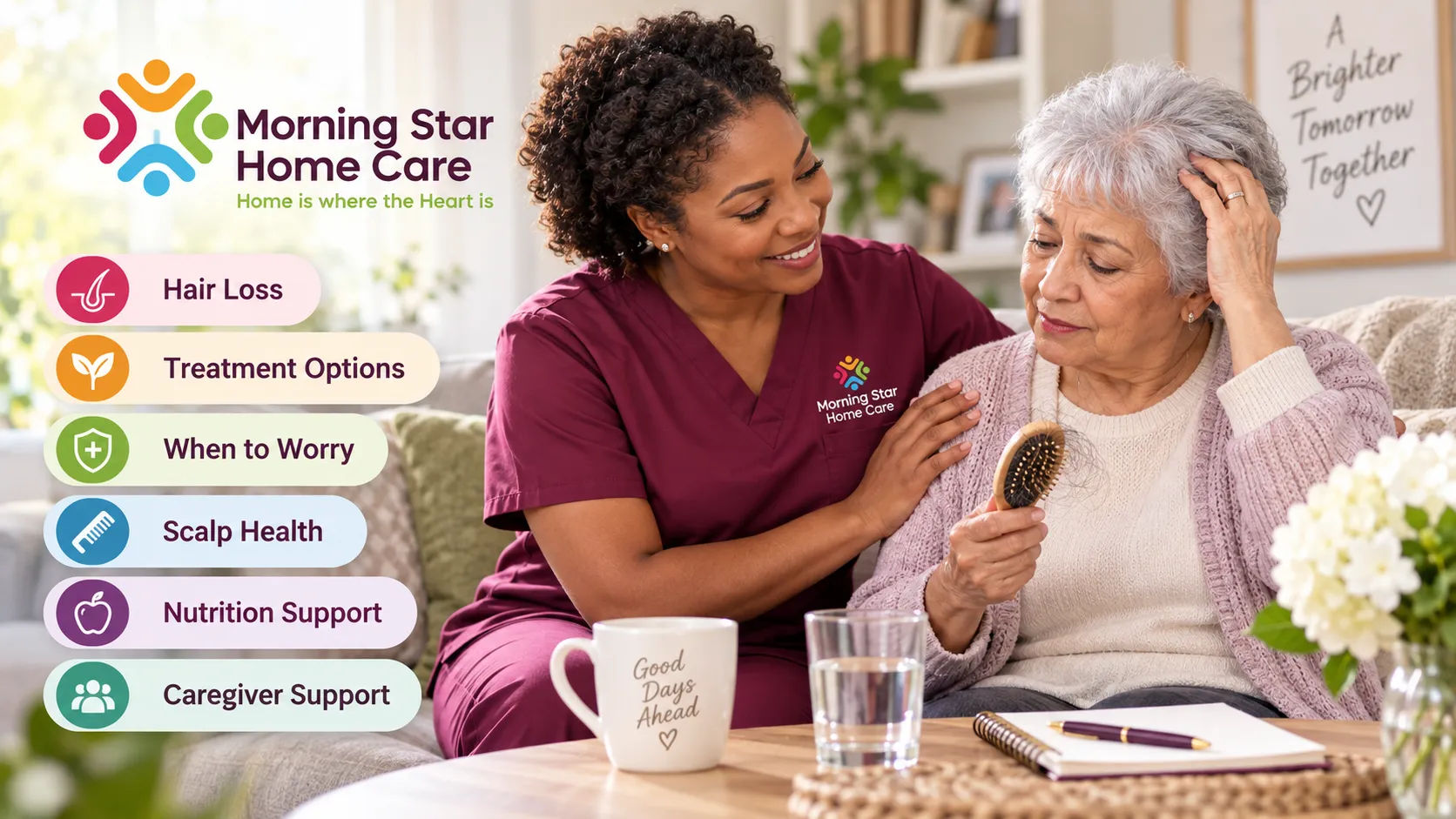
Hair loss in elderly parents is a genuinely common experience, affecting an estimated 53% of men and 37% of women after age 65, with prevalence climbing notably higher among the oldest adults. While hair thinning is often simply a normal, expected part of aging, understanding the different possible causes helps families know when it's purely cosmetic and when it might warrant a closer look.
This guide covers the most common causes of hair loss in elderly patients, available treatment options, and the specific patterns that sometimes signal an underlying health issue.
Key Takeaways
- Hair loss in elderly parents affects an estimated 53% of men and 37% of women after age 65, with rates increasing further in the oldest populations.
- Genetics and hormonal changes are the most common causes, including androgenetic alopecia in men and declining estrogen in women after menopause.
- Nutritional deficiencies and chronic illness can also contribute to hair thinning and loss.
- Treatment options include minoxidil, finasteride, and other therapies, with meaningful results possible for many patients.
- Sudden or patchy hair loss differs from typical gradual thinning and can sometimes signal an underlying health issue worth investigating.
Understanding both the common, expected patterns of age-related hair loss and the less common warning signs helps families respond appropriately to changes in a parent's hair.
Common Causes of Hair Loss in Elderly Patients
Most hair loss in older adults reflects a combination of genetic and hormonal factors that become more pronounced with age.
- Androgenetic alopecia, or male-pattern baldness, typically begins earlier in life but becomes more pronounced with age, causing a receding hairline and crown thinning.
- Hormonal changes after menopause are among the most common causes of hair thinning in older women, as declining estrogen allows testosterone's thinning effects to become more noticeable.
- Genetics play a significant role in determining both the likelihood and pattern of hair loss with age.
- Reduced hair follicle activity naturally occurs with age, contributing to overall thinning even without a specific underlying condition.
Understanding these common, largely genetic and hormonal drivers helps families recognize that a meaningful amount of hair thinning with age is simply expected, not necessarily a sign of a health problem.
Other Contributing Factors Worth Considering
Beyond genetics and hormones, several additional factors can contribute to or worsen hair loss in elderly patients.
- Poor nutrition, including inadequate protein or iron intake, can contribute to hair thinning, since hair follicles require adequate nutrients for healthy growth.
- Chronic illness and significant physical stress can trigger a temporary but sometimes noticeable increase in hair shedding.
- Certain medications, including some blood thinners, blood pressure medications, and chemotherapy drugs, list hair loss as a known side effect.
- Autoimmune conditions can occasionally cause hair loss, sometimes in a distinctive patchy pattern different from typical thinning.
Call the doctor now if: If a parent's hair loss coincides with starting a new medication or recovering from a significant illness, mentioning this timeline to their doctor can help identify a likely, often temporary, cause.
Considering these additional factors helps provide a more complete picture of what might be contributing to a parent's specific pattern of hair loss.
Gender Differences in Hair Loss Patterns
Hair loss tends to present differently between men and women, and understanding these distinct patterns helps set realistic expectations for treatment.
- Men typically experience a receding hairline and crown thinning, a pattern that often begins decades before becoming pronounced in later life.
- Women more often experience diffuse thinning across the top of the scalp rather than a receding hairline or complete baldness.
- Hormonal shifts around menopause make the years following this transition a particularly common time for women to notice increased thinning.
- Treatment approaches sometimes differ by gender, given these distinct patterns and underlying hormonal mechanisms.
Recognizing which pattern a parent is experiencing helps guide a more informed conversation with a dermatologist about realistic treatment expectations.
When Hair Loss Signals Something More
While most hair loss in elderly patients is a normal, gradual process, certain patterns differ meaningfully and deserve medical attention.
- Sudden, rapid hair loss over a short period differs from the gradual thinning typical of age-related causes and warrants evaluation.
- Patchy hair loss in distinct, well-defined areas can indicate an autoimmune condition rather than typical age-related thinning.
- Hair loss accompanied by other symptoms, such as fatigue, weight changes, or skin changes, should be evaluated together rather than in isolation.
- Scalp itching, pain, or visible changes alongside hair loss can indicate a treatable scalp condition.
Dee, Morning Star's founder: "The gradual thinning my father experienced over years felt completely different from the sudden patch that appeared on my mother's scalp, and her doctor confirmed that difference mattered clinically."
Recognizing this distinction between gradual, expected thinning and sudden or patchy loss helps families know when a dermatology evaluation is genuinely warranted.
Practical Hair Care Adjustments for Thinning Hair
Beyond medical treatment, several practical care adjustments can help protect and make the most of thinning hair.
- Gentle handling during washing and styling reduces unnecessary breakage of already-fragile hair.
- Avoiding tight hairstyles that pull on the scalp helps prevent additional hair loss from mechanical stress.
- Using volumizing products designed for thinning hair can help hair appear fuller without requiring medical treatment.
- Protecting the scalp from sun exposure becomes more important as thinning hair provides less natural coverage.
These practical adjustments, while not addressing the underlying cause, can meaningfully improve both hair health and a parent's comfort and confidence day to day.
Treatment Options for Hair Loss
Several evidence-based treatment options exist for hair loss in elderly patients, with effectiveness varying based on the underlying cause and individual factors.
- Topical minoxidil is a widely used, over-the-counter option for both men and women, with clinical studies showing meaningful improvement for many users.
- Finasteride, a prescription medication for men, can help slow androgenetic alopecia progression, though it requires ongoing use and a doctor's guidance.
- Addressing underlying nutritional deficiencies, when present, can improve hair health as part of a broader treatment approach.
- More advanced options like low-level laser therapy or platelet-rich plasma treatments are available for those seeking more intensive intervention.
Discussing these options with a dermatologist helps identify the most appropriate, realistic approach based on a parent's specific pattern and cause of hair loss.
A Real Family Scenario
When Diane noticed a distinct, coin-shaped bald patch on her mother's scalp, quite different from the gradual thinning she'd noticed over the years, she scheduled a dermatology appointment right away. The diagnosis, alopecia areata, an autoimmune condition, was something Diane hadn't expected, having assumed all hair loss at her mother's age was simply part of aging. With appropriate treatment, much of her mother's hair in that area regrew over several months, a result that reinforced for Diane how important it had been to recognize the pattern as different from ordinary age-related thinning.
How an In-Home Caregiver Supports Hair and Scalp Health
An in-home caregiver can provide valuable, attentive support for a parent experiencing hair loss, both practically and in monitoring for concerning changes.
- Supporting a nutrient-rich diet that provides the protein, iron, and other nutrients important for healthy hair growth.
- Assisting with gentle hair and scalp care, which becomes especially important for thinning or fragile hair.
- Noticing changes in hair loss patterns and communicating anything unusual, like sudden or patchy loss, to family and doctors.
- Providing emotional support, since hair loss can affect a parent's confidence and self-image, regardless of the underlying cause.
"Just being there to notice when something about Mom's hair loss seemed different from before, and gently bringing it up, ended up mattering more than I expected."
This kind of attentive, consistent support helps ensure that changes in hair health, whether purely cosmetic or worth medical attention, don't go unnoticed.
A Final Thought
Hair loss in elderly parents is common enough to often be simply a normal, expected part of aging, driven largely by genetics and hormonal changes. Still, recognizing the distinction between gradual, typical thinning and sudden or patchy loss helps families know when to pursue treatment options versus when a medical evaluation for an underlying cause is genuinely warranted.
A Note for Connecticut Families
Morning Star Home Care supports families across Bristol and the greater Connecticut area with in-home caregiving that includes attentive personal care support, helping older adults maintain comfort and confidence through the changes that come with aging.
References
- Vera Clinic — Hair Loss in the Elderly: Signs, Causes, and Treatments
- MDhair — Hair Loss in Women in Their 60s and 70s
Written by
Morning Star Care Team
Morning Star Home Care — Caregiver-Founded and Locally Owned in Bristol, CT.