
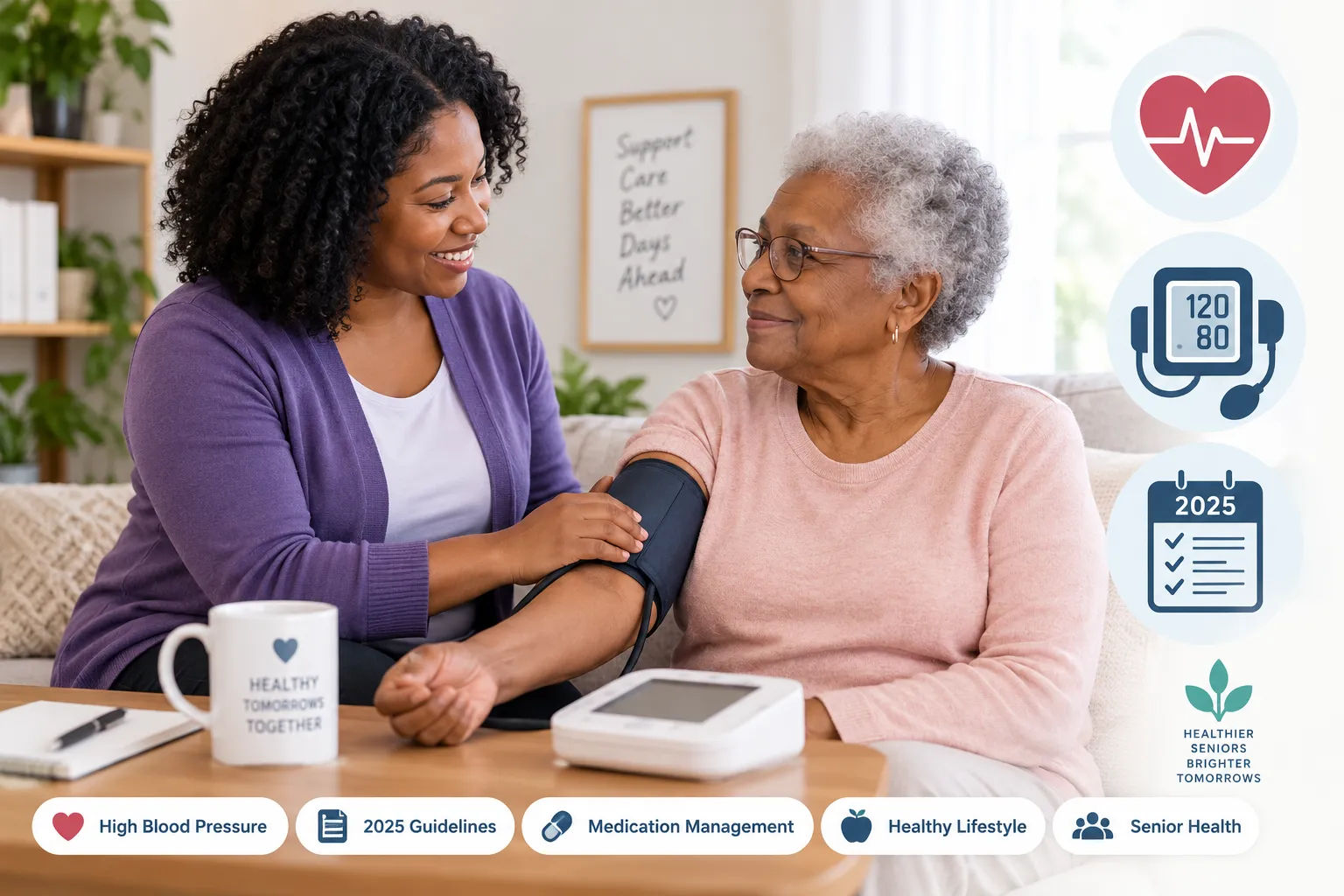
High blood pressure in elderly parents is now managed with more individualized nuance than in years past, following the 2025 AHA/ACC hypertension guideline update. One of the most significant changes: about 11% of adults 65-79 with stage 1 hypertension no longer automatically qualify for blood pressure medication under the new guidelines, specifically those who are generally healthy with lower predicted 10-year cardiovascular risk. Understanding these changes helps families make sense of a doctor's treatment recommendations for high blood pressure in elderly patients.
This guide covers what changed in the 2025 guidelines, how treatment decisions are now individualized, and what families should understand about managing high blood pressure in an elderly parent.
Key Takeaways
- The 2025 AHA/ACC guidelines individualize hypertension treatment using a 10-year cardiovascular risk calculation, not blood pressure numbers alone.
- About 11% of adults 65-79 with stage 1 hypertension no longer automatically qualify for medication if their predicted cardiovascular risk is low.
- The general blood pressure target remains under 130/80 for most adults, with individualized goals for frail older adults or those with limited life expectancy.
- Treatment eligibility actually increased for some older adults, with the largest net gains concentrated in the 60-69 age group specifically.
- The new guidelines reflect a broader shift toward personalized, risk-based treatment rather than one-size-fits-all blood pressure targets.
Understanding this more individualized, nuanced approach helps families make sense of why a doctor's specific recommendation for a parent might differ from what they expected or from a sibling's own treatment plan.
What Changed in the 2025 Guidelines
The 2025 AHA/ACC hypertension guideline update introduced meaningful changes to how high blood pressure in elderly patients is evaluated and treated.
- The guidelines now formally incorporate PREVENT risk equations, predicting a person's individual 10-year cardiovascular risk rather than relying on blood pressure numbers in isolation.
- Treatment is recommended for stage 1 hypertension if a person has existing cardiovascular disease, diabetes, chronic kidney disease, or a predicted 10-year risk of 7.5% or higher.
- Lower-risk individuals with stage 1 hypertension may now be managed with lifestyle changes alone rather than immediate medication.
- The overall treatment goal remains under 130/80 for most adults, with specific considerations for those needing institutional care or with limited life expectancy.
This shift toward individualized, risk-based treatment represents a genuine change from prior guidelines that applied more uniform blood pressure thresholds regardless of a person's overall risk profile.
Why Some Healthy Older Adults No Longer Need Medication
Perhaps the most notable change for families managing high blood pressure in elderly parents is the shift away from automatic medication for all older adults with elevated readings.
- About 11% of adults 65-79 with stage 1 hypertension are now considered exempt from routine medication if they're generally healthy with lower predicted cardiovascular risk.
- This reflects growing recognition that medication carries real tradeoffs, including fall risk and side effects, that matter more for some individuals than others.
- The decision is individualized, based on a person's specific calculated risk, not simply their age or blood pressure reading alone.
- This doesn't mean blood pressure monitoring stops, ongoing tracking remains important even for those managed with lifestyle changes alone.
Dee, Morning Star's founder: "The new guidelines really reflect a more thoughtful, individualized approach, recognizing that a healthy, active 68-year-old and a frail 85-year-old shouldn't necessarily have the exact same treatment target."
Understanding this individualized approach helps families avoid assuming a doctor is undertreating a parent when they're actually following current, evidence-based, risk-calibrated guidance.
Why Treatment Increased for Some Older Adults
Interestingly, the 2025 guidelines didn't uniformly reduce treatment for older adults, treatment eligibility actually increased for some, reflecting the individualized nature of the new approach.
- The largest net gain in treatment eligibility occurred in adults 60-69, with a 5.6 percentage point increase compared to prior guidelines.
- Adults 70-79 also saw a net increase in eligibility, of 2.7 percentage points, though smaller than the 60-69 group.
- This reflects that some older adults have higher calculated cardiovascular risk than blood pressure numbers alone would suggest, warranting treatment they might not have received under prior guidelines.
This nuanced pattern, some older adults gaining treatment eligibility while others lose it, underscores that the new guidelines are genuinely about individualized risk, not a blanket loosening or tightening of standards.
Lifestyle Approaches Alongside or Instead of Medication
Whether or not medication is part of a parent's treatment plan, lifestyle measures remain a foundational part of managing high blood pressure in elderly patients.
- Reducing sodium intake remains one of the most effective dietary changes for supporting healthy blood pressure.
- Regular physical activity, tailored to a person's mobility and overall health, supports better blood pressure control.
- Maintaining a healthy weight meaningfully supports blood pressure management alongside other cardiovascular benefits.
- Limiting alcohol and managing stress both contribute to better blood pressure control over time.
For older adults now managed without medication under the new guidelines, these lifestyle measures become even more central to their ongoing blood pressure management.
Balancing Blood Pressure Control With Fall Risk
A significant consideration in treating high blood pressure in elderly patients is balancing cardiovascular benefit against the fall risk that overly aggressive treatment can introduce.
- Blood pressure medication can contribute to orthostatic hypotension, a drop in blood pressure upon standing that increases fall risk.
- Frail older adults or those with a history of falls may benefit from a more conservative blood pressure target that reduces this risk.
- This balance is exactly why individualized treatment matters more for older adults than a single universal blood pressure target.
- Regular reassessment as a parent's health and functional status change over time helps ensure the treatment approach continues to fit their current situation.
This balance between cardiovascular protection and fall-risk safety reflects the same individualized thinking now built into current hypertension guidelines for older adults.
This overlap between blood pressure management and fall prevention connects directly to the broader orthostatic hypotension considerations worth discussing with a parent’s doctor as part of a complete treatment picture.
Home Blood Pressure Monitoring: A Valuable Tool
Regular home blood pressure monitoring provides valuable information that complements periodic office visits, particularly important given the more individualized, nuanced approach current guidelines call for.
- A validated home blood pressure monitor allows for more frequent readings than occasional doctor visits alone provide.
- Taking readings at consistent times, and in the same position, produces more reliable, comparable data over time.
- Sharing a log of home readings with a doctor provides a fuller picture than a single office reading, which can be affected by anxiety or other factors.
- Home monitoring can also help catch orthostatic drops when combined with standing readings, connecting to the broader fall-risk considerations discussed elsewhere.
Consistent home monitoring gives both families and doctors a more complete, reliable basis for the kind of individualized treatment decisions current guidelines emphasize.
Talking to a Parent About Their Changing Treatment Plan
Whether medication is being added, reduced, or discontinued under the new guidelines, discussing these changes clearly with a parent helps them understand and feel confident in their care.
- Explain the individualized reasoning behind any change, whether it's their specific calculated risk, fall history, or overall health picture.
- Reassure a parent that a treatment change doesn’t mean their health has declined if the change reflects updated guidelines rather than a new problem.
- Encourage continued monitoring even when medication is reduced, since blood pressure still deserves ongoing attention.
Clear communication about why a treatment plan is changing helps a parent feel like an informed partner in their care, rather than confused or anxious about the shift.
A Real Family Scenario
Frank's blood pressure readings had prompted years of steadily increasing medication doses, until a comprehensive review under the new guidelines revealed his overall cardiovascular risk was actually quite low given his active lifestyle and lack of other risk factors. His doctor reduced his medication, monitoring closely afterward, and Frank reported feeling noticeably less dizzy and more energetic without any meaningful change in his cardiovascular risk profile.
Frank's situation illustrates exactly the kind of individualized reassessment the new guidelines are designed to support, treatment matched to actual risk rather than blood pressure numbers alone.
Karen noted that requesting a full reassessment under the newer guidelines, rather than simply continuing an existing prescription indefinitely, was what prompted this beneficial change for her father.
How an In-Home Caregiver Supports Blood Pressure Management
A consistent in-home caregiver can meaningfully support the management of high blood pressure in elderly parents, including consistent medication reminders, monitoring for symptoms like dizziness that might indicate blood pressure is too aggressively controlled, and supporting the lifestyle changes, diet and activity, that remain important regardless of medication status.
"Having someone track how Dad felt day to day, not just the numbers on the blood pressure cuff, gave the doctor a much fuller picture when deciding whether his treatment was actually right for him."
This kind of daily, holistic observation complements the periodic, numbers-focused view a doctor gets during office visits, supporting the individualized approach current guidelines call for.
Caregivers can also help maintain the home blood pressure monitoring log discussed earlier, ensuring a doctor has consistent, complete data to inform their individualized treatment decisions.
A Final Thought
High blood pressure in elderly parents is now managed with more nuance and individualization than in years past, reflecting the 2025 guideline update's shift toward personalized, risk-based treatment. Understanding this shift helps families engage more confidently with a parent's care team about what treatment approach genuinely fits their specific situation.
Asking a doctor directly how a parent's individual cardiovascular risk and overall health factored into their specific blood pressure target is a valuable way to understand and support their current treatment plan.
Staying engaged with these evolving guidelines, rather than assuming a fixed, unchanging approach applies indefinitely, helps ensure a parent’s treatment continues to reflect current best practice.
A Note for Connecticut Families
Primary care physicians and cardiologists throughout the Bristol and Greater Hartford area are incorporating the 2025 guidelines into their practice, and it's reasonable to ask directly how these updates apply to a parent's specific treatment plan.
Home care providers familiar with the region can support consistent medication routines and monitor for symptoms worth reporting back to a parent's doctor.
Many pharmacies in the region also offer free blood pressure checks, a convenient supplement to home monitoring and periodic doctor visits.
References
- American Heart Association / American College of Cardiology — 2025 Guideline for the Prevention, Detection, Evaluation and Management of High Blood Pressure in Adults
- Epic Research — 2025 Hypertension Guideline Update Modestly Expands Stage 1 Treatment Eligibility
- MedicalXpress — New Hypertension Guideline Does Not Recommend Routine Treatment for All Adults Over 65
Written by
Morning Star Care Team
Morning Star Home Care — Caregiver-Founded and Locally Owned in Bristol, CT.