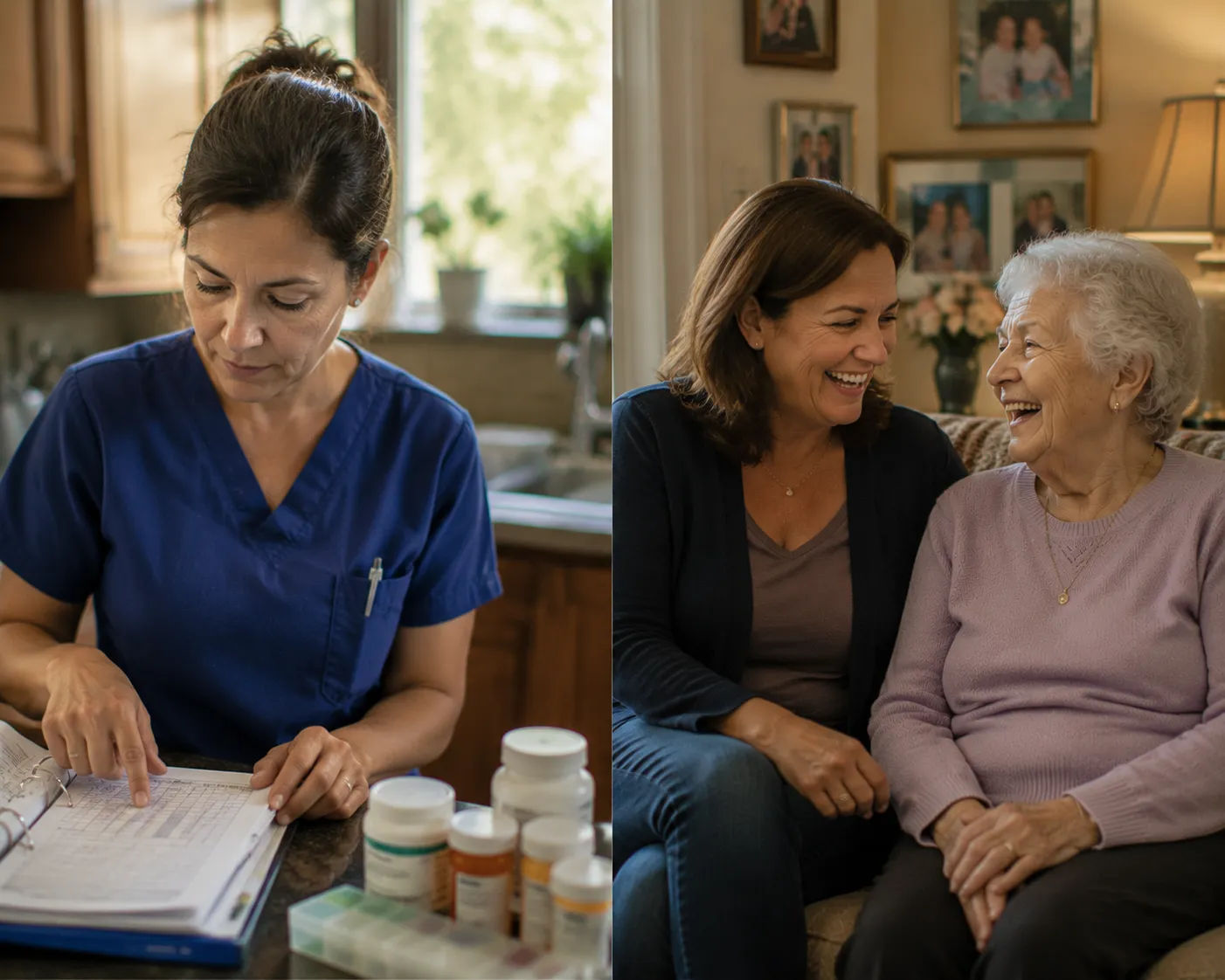
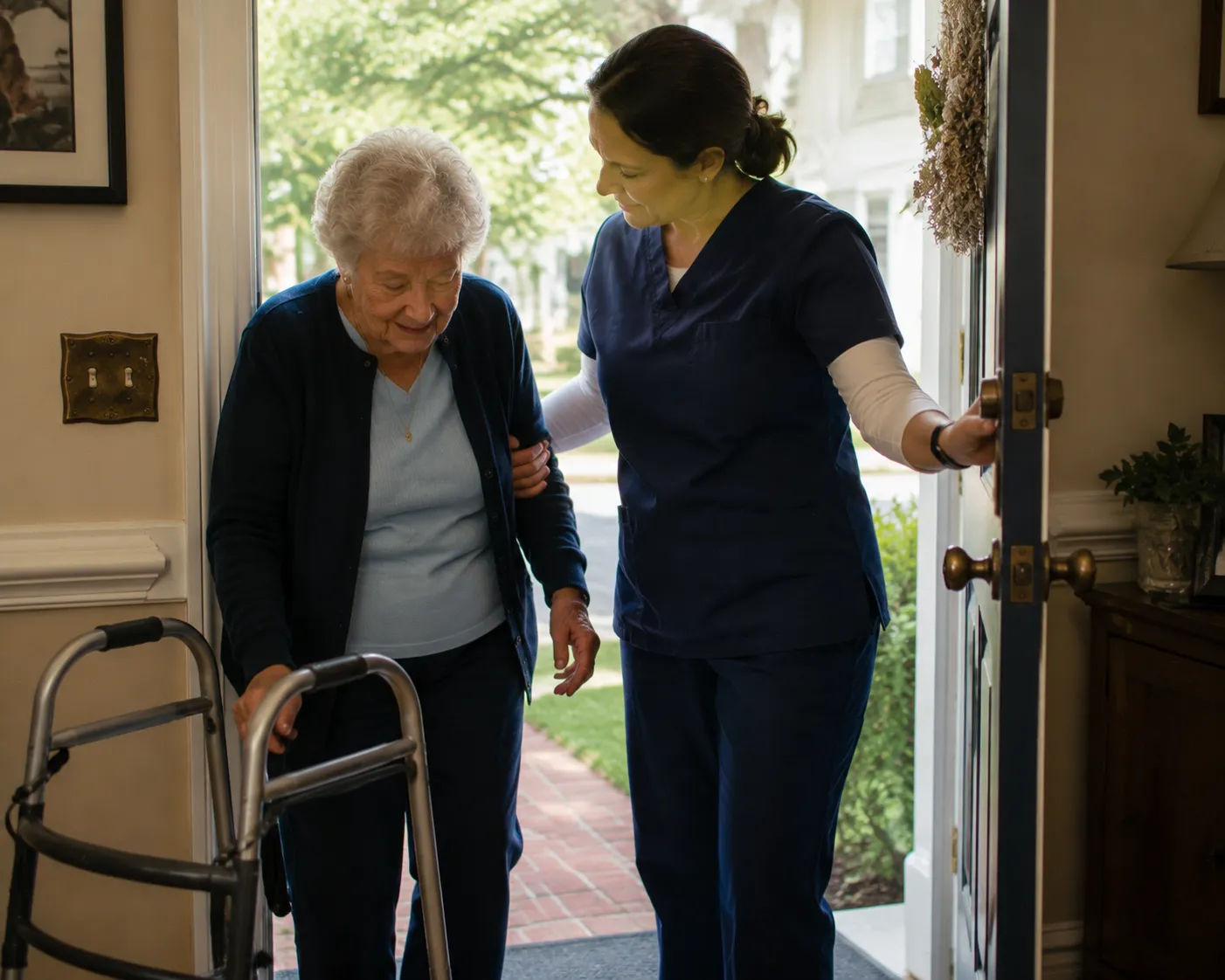
It was a Wednesday afternoon when Kevin's phone rang and the voice on the other end said his mother had been admitted to the hospital in Bristol with a hip fracture. He was at his desk in Hartford, trying to process what that meant, already running through logistics in his head before he had even grabbed his coat. Surgery was scheduled for the following morning. Recovery would take weeks. And his mother, 79, fiercely independent, living alone in the house she had owned for thirty-four years, was not going to be ready to go home to an empty kitchen and a staircase on her own.
The hospital social worker mentioned home care after hospital discharge in Connecticut. Kevin wrote it down. He had no idea where to start.
If your family is in a version of this moment right now, this article is for you. The transition home after a hospitalization is one of the most important and time-sensitive decisions a Connecticut family can make. Knowing what to arrange, how quickly to move, and what questions to ask can make all the difference in how safely and smoothly a loved one returns home.
Why the transition home is the most vulnerable period
The days immediately following a hospital discharge are, statistically, the most dangerous for older adults. Research published in the New England Journal of Medicine found that nearly one in five Medicare patients is readmitted to the hospital within 30 days of discharge, often due to complications that proper in-home support could have prevented.
For seniors recovering from surgery, a stroke, a serious infection, or a significant fall, going home is not a return to normal. It is a period requiring careful management: medications taken on schedule, wound care monitored, meals prepared, mobility limitations respected, and someone present who knows what warning signs to watch for.
Families who try to manage post-discharge care entirely on their own, without clinical training and while managing jobs and their own households, frequently find themselves overwhelmed within the first week. Seniors left alone during this period face real risk: missed medications, falls, inadequate nutrition, and the kind of quiet decline that can undo weeks of hospital recovery.
Arranging home care after hospital discharge in Connecticut is not a luxury. For many seniors, it is the difference between a genuine recovery and a return trip to the emergency room.
Morning Star Home Care is nurse-owned and founded by a clinician with more than ten years of hands-on experience. That clinical background matters for post-discharge care. You can learn more about our home health aide services and professional standards.
What to arrange before your loved one leaves the hospital
The best time to begin organizing in-home care is before the discharge date, ideally several days in advance. Here is what families should be thinking about as soon as a discharge timeline becomes clear:
Request a discharge planning meeting. Every hospital is required to have a discharge planning process, typically managed by a social worker or case manager. Ask to be included in that meeting. This is where you will learn what level of care is recommended, whether any skilled nursing visits have been ordered, and what the medical team expects during the recovery period.
Understand the medication changes. Hospital stays frequently result in new prescriptions, dosage adjustments, or discontinued medications. Before your loved one leaves, make sure someone understands the updated schedule and can ensure it is followed correctly at home. Morning Star Home Care provides
medication reminders as part of daily in-home support, which is one of the most important safeguards during the recovery period.
Assess the home environment. A home that was safe before hospitalization may not be safe during recovery. Think about stairs, bathroom grab bars, loose rugs, and the height of the bed. A home care assessment can flag these issues and recommend practical modifications before your loved one arrives home.
Contact a home care agency early. Reach out to a Connecticut home care agency two to three days before the anticipated discharge date. Quality agencies can accommodate urgent placement, but the sooner they are contacted, the better the caregiver match and care plan will be.
Many families wait until discharge paperwork is in hand. At that point, the hospital may be ready to send your loved one home that same afternoon. Starting a few days earlier reduces that pressure significantly.
What in-home care after hospital discharge in Connecticut looks like
Post-discharge home care typically involves two types of support, often delivered at the same time:
Skilled home health care. If a physician has ordered skilled nursing visits, wound care, physical therapy, or occupational therapy as part of the recovery plan, these are typically covered by Medicare for eligible patients through a Medicare-certified home health agency. This is medically focused care, delivered by registered professionals, usually a few times per week.
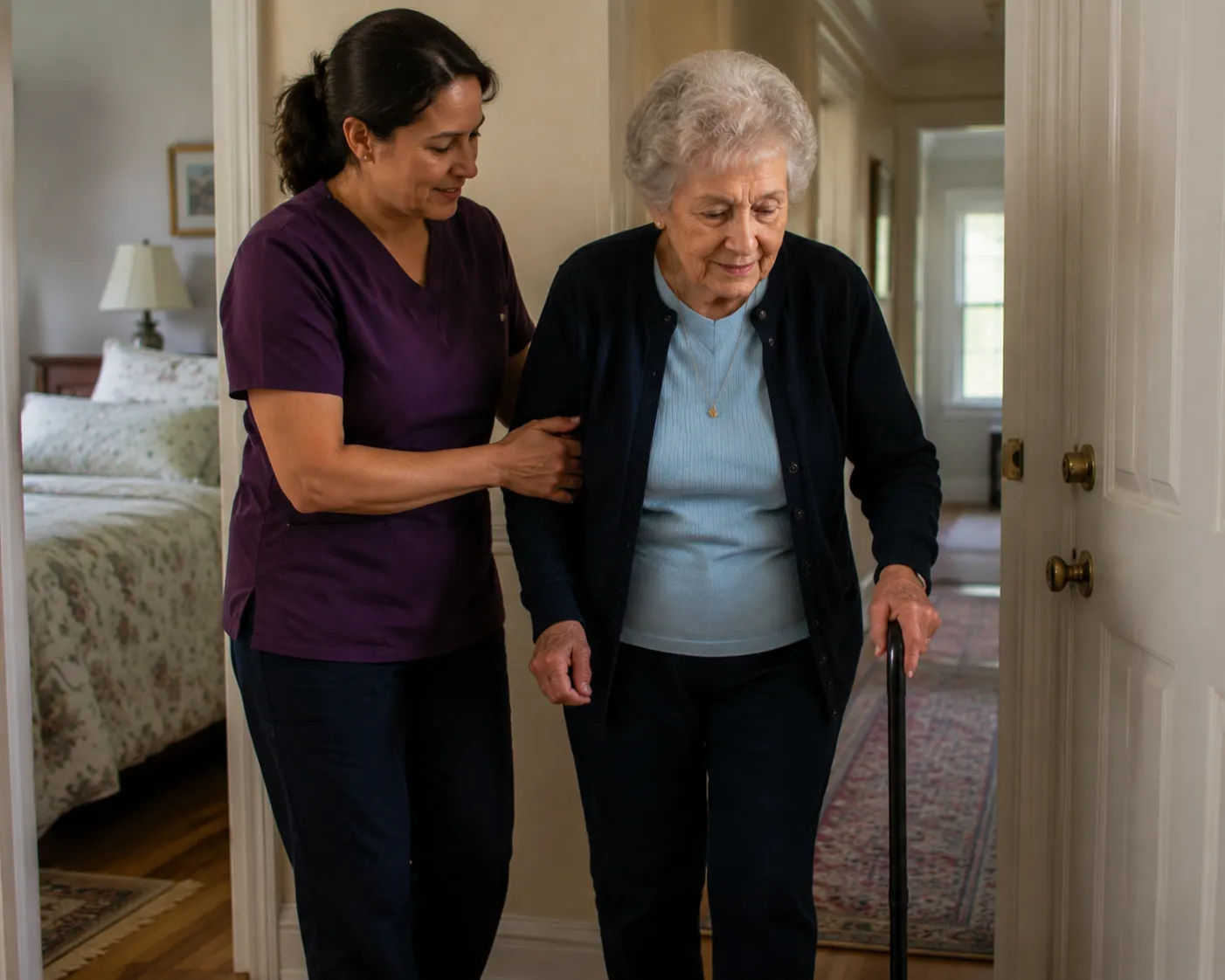
Non-medical home care assistance. This is the in-home support that covers daily living: personal hygiene, meals, medication reminders, light housekeeping, mobility assistance, and companionship. This type of care is not covered by Medicare but is essential for seniors who cannot manage basic daily tasks on their own during recovery.
Most families navigating home care after hospital discharge in Connecticut need both types. The skilled nursing visits address the clinical side of recovery. The home care aide handles the daily realities that make recovery at home actually possible.
For Kevin's mother, recovering from hip surgery, this meant a physical therapist visiting three mornings a week and a home care aide from a Bristol-area agency helping each morning and evening with bathing, meals, and medication reminders. What could have been a frightening, chaotic return home became a structured recovery. She did not go back to the hospital.
Morning Star Home Care also offers overnight care options for families whose loved ones need supervision during nighttime hours following discharge, particularly in the first week or two at home.
How to choose a home care agency for post-discharge support in Connecticut
Not all agencies are equally prepared to handle post-hospital care. When evaluating a Connecticut home care agency for this type of support, look for:
Availability and responsiveness. Post-discharge care is time-sensitive. An agency that takes multiple days to respond or cannot confirm caregiver availability within 24 to 48 hours is not the right fit for an urgent situation.
Experienced, trained caregivers. Home care aides working with post-surgical or post-hospital patients need to understand mobility limitations, recognize signs of complications, and know when to alert a family member or medical provider. Ask how caregivers are trained specifically for recovery-period care.
Clear family communication. When a loved one is recovering at home and a family member cannot be there every day, consistent updates from the agency become essential. You need to know what each visit looked like, what the caregiver observed, and whether anything has changed.
A structured, individualized care plan. A plan built from an actual in-home assessment (not a generic template) gives recovery-period care the structure it needs. It should reflect the discharge instructions, the home environment, and the specific tasks the caregiver handles at each visit.
Families in Bristol, Southington, and Plainville have access to locally rooted home care providers who understand the community and can respond quickly. That local responsiveness matters enormously in a high-urgency transition.
Giving yourself permission to ask for help
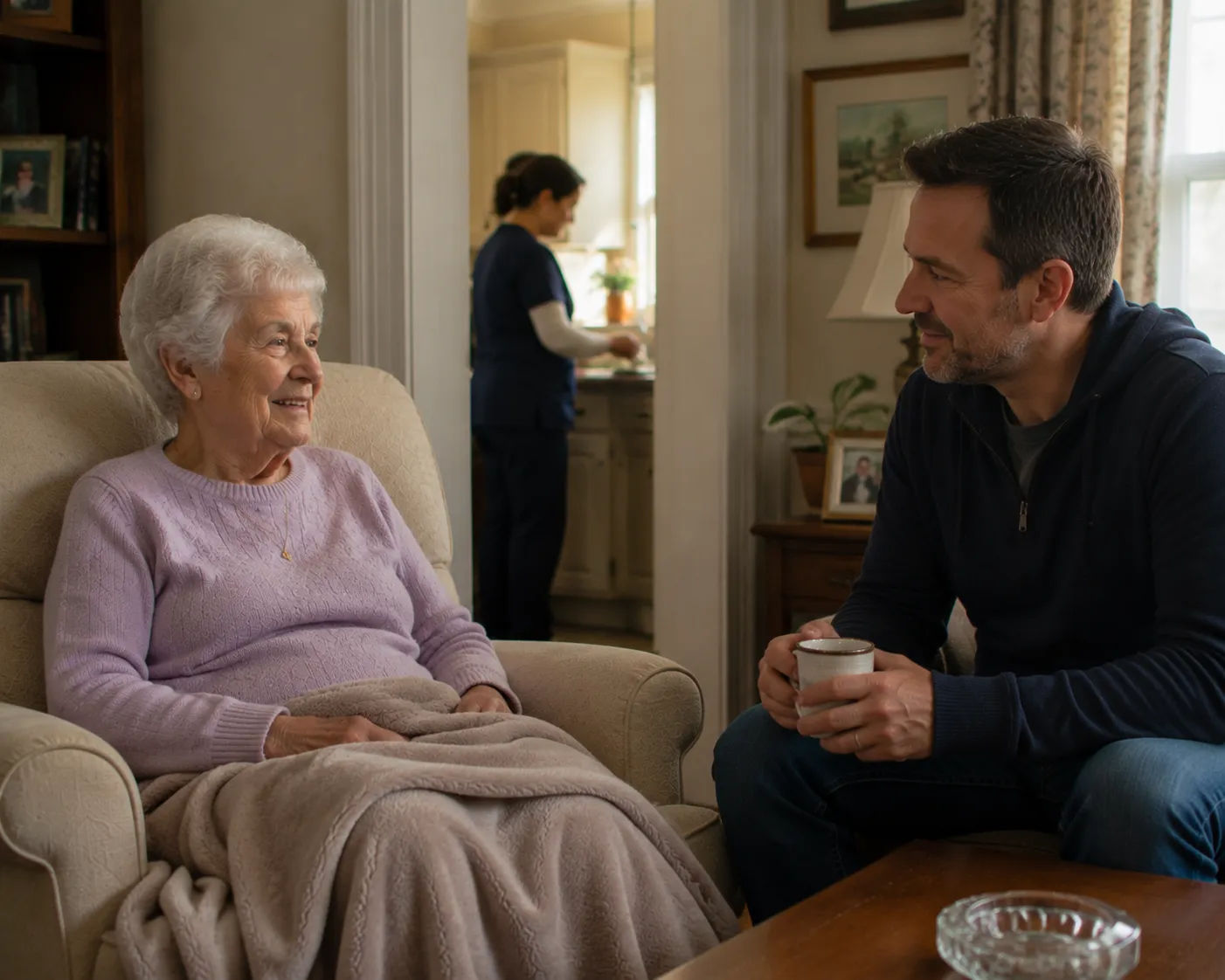
There is a particular kind of guilt that surfaces when a parent is coming home from the hospital and a family member realizes they cannot be there the way they wish they could. Kevin felt it. The quiet sense that a devoted son would rearrange everything to handle it himself. That calling an agency meant taking a shortcut through something that should not have shortcuts.
What he found instead was that the home care aide who came each morning had training and steadiness he simply did not have. She knew how to help his mother safely in and out of the shower. She knew which medications came at which times. Two weeks into the recovery, she noticed something was off, made a call, and caught a developing complication before it became serious.
Asking for professional in-home support after a hospital discharge is not giving up on your parent. It is giving them the best possible chance at a real recovery. And it allows family relationships to function the way they should: as a source of love, not a source of exhaustion and inadequacy.
Written by
Morning Star Care Team
Morning Star Home Care — Caregiver-Founded and Locally Owned in Bristol, CT.