
Supporting a grieving parent after the loss of a spouse is one of the harder things an adult child faces — not because you don't know how to be kind, but because grief in later life doesn't always look the way families expect, and it carries real physical health risks that are worth understanding clearly.
The period right after losing a spouse carries a documented and serious risk: research on the "widowhood effect" found a 66% increase in mortality risk in the first three months after a spouse's death, and elevated risk continuing into the following year. Most older adults do recover and rebuild a meaningful life, but roughly 1 in 10 develop prolonged, complicated grief that benefits from professional support.
Key Takeaways
- The first few months after a spouse's death carry real physical health risk — the "widowhood effect" is a documented phenomenon, not just an emotional expression.
- Most grief gradually eases over about 18 months, though the timeline varies significantly by individual.
- About 1 in 10 older adults develop complicated or prolonged grief that doesn't follow the typical trajectory and may need professional support.
- Presence matters more than advice — most grieving parents need consistent company and patience, not solutions or cheering up.
- Watch for signs of depression separate from normal grief — persistent hopelessness, self-neglect, or withdrawal that doesn't ease over time.
None of this means every grieving parent is at acute risk — most navigate this period and gradually rebuild a meaningful life. But understanding the real stakes helps families take the period seriously rather than assuming grief is purely an emotional matter with no physical dimension.
Why Grief in Later Life Deserves Special Attention
The loss of a spouse after decades together is widely considered one of the most stressful experiences a person can go through, and for older adults, it often compounds other vulnerabilities — physical health conditions, reduced social networks, and sometimes the loss of a primary caregiver if the deceased spouse had been providing daily support. This combination of grief and practical upheaval makes early support especially important.
The documented "widowhood effect" — elevated risk of death in the months following a spouse's loss — reflects real physiological and behavioral factors: disrupted sleep, reduced appetite, skipped medications, and the loss of a partner who may have been monitoring health concerns. This isn't meant to frighten families, but to underscore why active support in this period matters beyond emotional comfort alone.
Dee, Morning Star's founder: "I always tell families that the first few months after a spouse passes are a genuine health risk period, not just an emotional one. Regular check-ins, help with medications, and simply making sure meals are happening can matter as much as comforting words."
What Normal Grief Looks Like in Older Adults
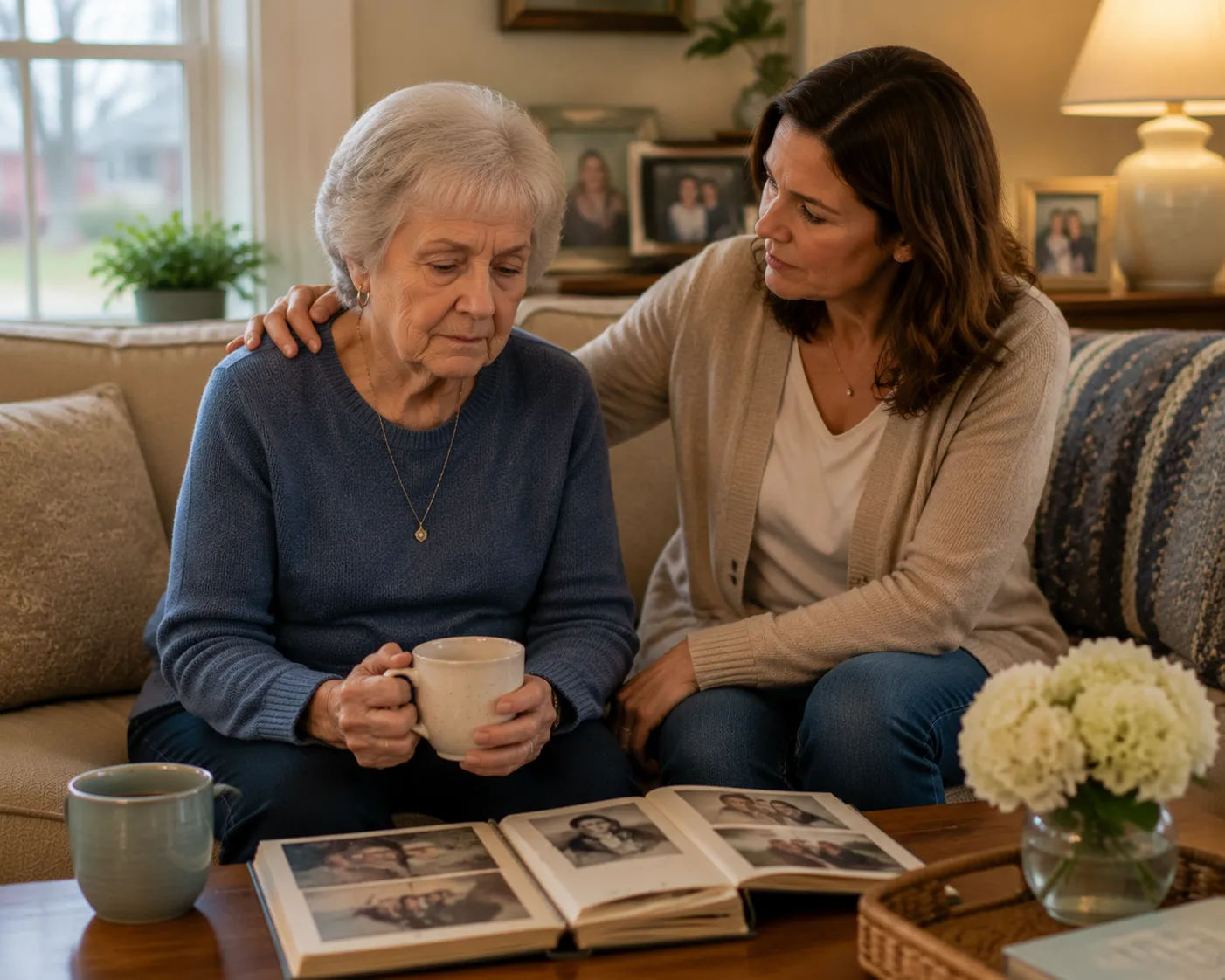
Grief in later life often looks different than families expect. Rather than dramatic emotional displays, many older adults grieve more quietly — withdrawing somewhat, going through the motions of daily routines, occasionally breaking down unexpectedly at a reminder of the person they lost. This quieter presentation doesn't mean the grief is less intense; it often reflects a generation more accustomed to processing emotion privately.
| Typical Grief Reaction | When to Be More Concerned |
|---|---|
| Sadness that comes in waves, sometimes triggered by reminders | Persistent, unrelenting sadness with no lighter moments at all |
| Some withdrawal from social activities initially | Complete withdrawal lasting many weeks with no improvement |
| Difficulty sleeping or reduced appetite short-term | Significant weight loss or sleep disruption continuing for months |
| Occasional talk about missing the deceased spouse | Expressed hopelessness or statements about not wanting to continue living |
| Gradual return to some routines over weeks to months | No movement toward any routine or engagement after several months |
How to Actually Help
Show Up Consistently, Not Just Immediately After
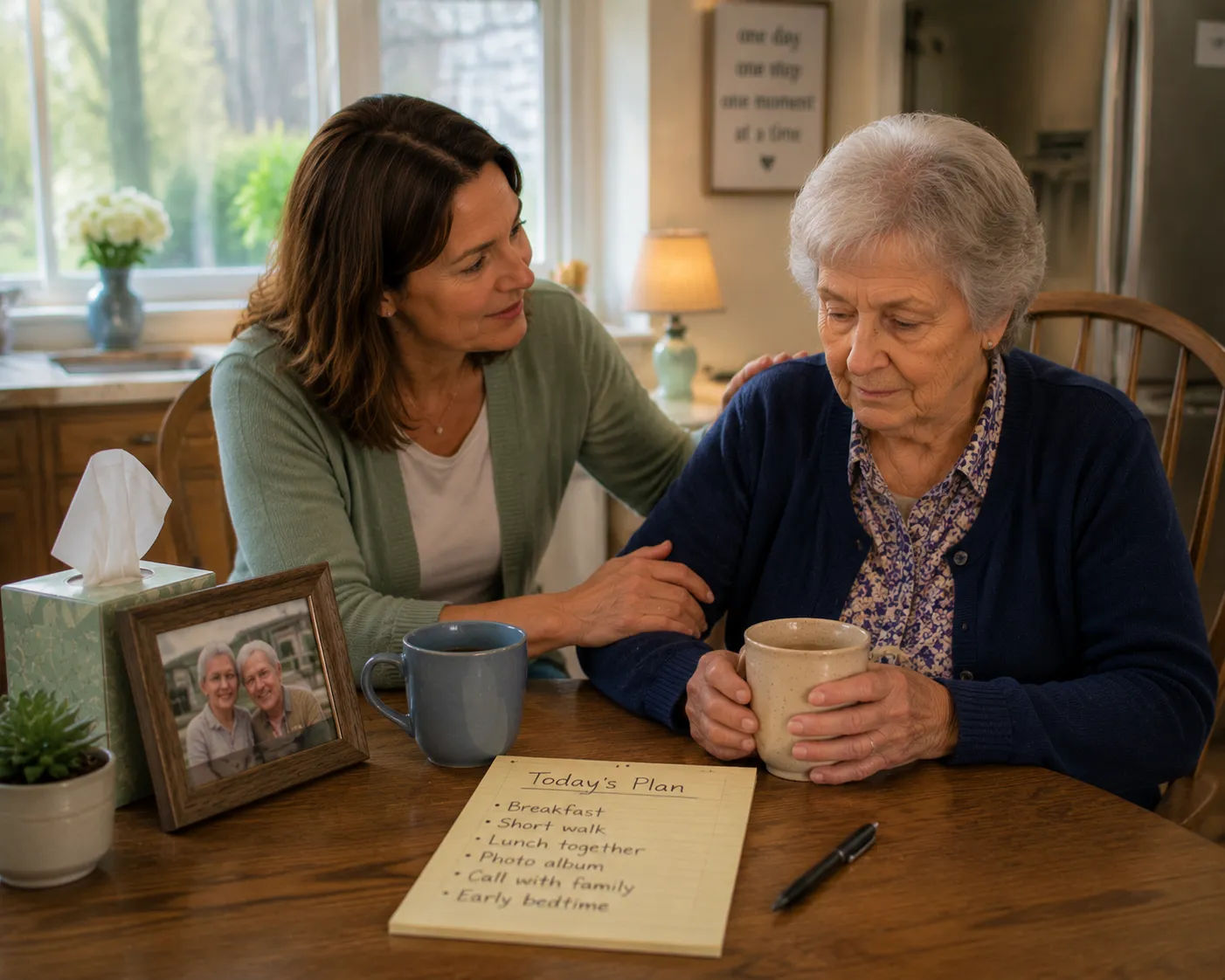
Support tends to be abundant in the first days and weeks after a death, then falls off sharply just as the harder, lonelier period of grief begins. Scheduling regular, ongoing check-ins — not just around the funeral — matters more than an intense initial burst of attention that fades.
Listen Without Trying to Fix
Most grieving parents don't need advice, reassurance that "they're in a better place," or encouragement to move on. They need someone willing to sit with the loss, ask about the person who died, and tolerate silence or repeated stories without rushing to change the subject.
"After my mom passed, what helped my dad most wasn't anyone telling him it would get better. It was my sister calling every single day, even just for five minutes, and actually asking him to tell her about mom rather than avoiding the subject."
Help With Practical Tasks Without Being Asked
Grief consumes enormous energy, and practical tasks — meals, bills, medical appointments, home maintenance the deceased spouse used to handle — can pile up. Offering specific, concrete help ("I'm bringing dinner Tuesday" rather than "let me know if you need anything") tends to get accepted far more readily than an open-ended offer.
Respect Their Own Pace
Grief doesn't follow a fixed timeline, and well-meaning family members sometimes push a parent toward "moving on" faster than feels right to them. Following their lead — when they want to talk about the person, when they're ready to sort through belongings, when they're open to new activities — respects a process that's genuinely theirs to navigate.
Watching for Signs Beyond Normal Grief
It's important to distinguish between the natural, if intense, grief process and clinical depression, which sometimes develops in the wake of loss and requires treatment. Research shows the likelihood of depression roughly doubles in the period following spousal loss compared to before, making this a genuinely common, not rare, concern.
Call the doctor now if: your grieving parent expresses hopelessness, talks about not wanting to go on, stops eating or taking medications, or withdraws completely for weeks with no improvement — these warrant an urgent conversation with their physician, and if there's any indication of suicidal thinking, immediate professional help.
Supporting Practical Needs After a Spouse's Death
Beyond emotional support, a surviving spouse often faces a wave of practical burdens that the deceased spouse previously managed — finances, home maintenance, cooking, medical appointments, even simple things like knowing which day the trash goes out. Identifying what the deceased spouse used to handle, and helping fill that specific gap, can reduce a significant source of stress during an already difficult time.
- Financial matters: bills, accounts, and any paperwork the other spouse previously managed.
- Household tasks: meals, cleaning, home maintenance, or errands the deceased spouse used to do.
- Medical care coordination: appointments, medications, and health monitoring, especially if the deceased spouse had been a de facto caregiver.
- Social connection: actively helping rebuild social contact, since losing a spouse often means losing a primary source of daily companionship.
How Professional Support Can Help
For a grieving parent living alone, a companion caregiver can provide consistent, regular contact that eases both the practical and emotional burden of loss — someone present for meals, conversation, and daily tasks during a period when isolation carries real risk. This isn't a replacement for family involvement, but it can fill gaps, especially for families who live at a distance or can't be present as often as they'd like.
Dee, Morning Star's founder: "We've supported several clients through the loss of a spouse, and the structure a regular caregiver visit provides — someone showing up at the same time each day, checking in, making sure meals happen — often makes a real difference during that first difficult year."
Grief Around Holidays and Anniversaries
Certain dates — the couple's anniversary, holidays previously spent together, the spouse's birthday — often trigger a fresh wave of grief even long after the initial loss, sometimes catching families off guard when a parent who seemed to be doing better suddenly struggles again around these dates. Anticipating these dates and planning something specific — a phone call, a visit, an acknowledgment of the day rather than avoiding it — tends to help more than treating the day as though it's ordinary. Some families create new traditions around these dates that honor the loss directly, like visiting a meaningful place or sharing memories together, rather than either ignoring the anniversary or treating it purely as a day of sadness.
Sibling Coordination During a Parent's Grief
When multiple adult children are involved, coordinating support prevents both gaps (each sibling assuming another is checking in) and overwhelm (a parent receiving so many simultaneous, well-meaning check-ins that it becomes exhausting). A simple shared schedule — who calls or visits which days — can help ensure consistent coverage without duplicated effort. It's also worth having an honest conversation among siblings about how each of you is grieving individually, since a parent's loss is also a loss for adult children, who may be trying to support a parent while processing their own grief simultaneously.
When a Grieving Parent Also Needs Increased Care
Sometimes the loss of a spouse reveals or accelerates care needs that the deceased spouse had quietly been managing — medication reminders, meal preparation, household tasks. Families sometimes discover, only after a spouse's death, how much informal caregiving had been happening between the couple, and the surviving spouse may need more practical support than expected, separate from the emotional support of grief. This is worth assessing honestly rather than assuming a parent who managed fine with a spouse's quiet support will automatically manage fine alone — a home safety and needs assessment can help clarify what support is now genuinely needed.
A Real Family Scenario
When Karen's mother passed away, her father Walt went quiet in a way that worried the whole family — he stopped cooking for himself, skipped his usual walks, and seemed to be simply going through the motions. Rather than pushing him to "get back to normal," Karen and her siblings set up a rotating schedule of daily calls and weekend visits, and arranged a companion caregiver to visit a few afternoons a week. It took nearly a year, but Walt gradually re-engaged with friends and his old routines — and Karen credits the consistent, patient presence, more than any single conversation, with helping him through it.
Grief Counseling and Professional Support
Individual grief counseling or therapy can provide a level of support that even the most attentive family can't fully replicate — a trained professional experienced specifically in bereavement, offering both a neutral space to process emotions and tools for coping that go beyond what most family members know how to offer. This is worth suggesting even for parents who've never engaged with therapy before, framed as support during an unusually difficult time rather than a sign of failing to cope on their own. Hospice organizations often provide bereavement counseling services, sometimes free of charge, even to families who weren't previously hospice patients — this can be an underused resource worth researching directly.
Helping a Parent Navigate Decisions After Loss
In the weeks and months after a spouse's death, well-meaning family or friends sometimes pressure a grieving parent to make major decisions quickly — selling the house, moving in with family, giving away belongings. Most grief and financial experts recommend delaying major, irreversible decisions for at least several months to a year when possible, since judgment and clarity are often affected during acute grief. Helping a parent distinguish between decisions that genuinely need to happen soon (practical, time-sensitive matters) and those that can wait until they're in a clearer state of mind protects them from choices they might later regret.
Connecticut Resources
- North Central Area Agency on Aging: bereavement and caregiver resources. (ncaaact.org)
- 211 Connecticut: statewide resource and referral line, including mental health support. (211ct.org)
Taking Care of Yourself While Supporting a Grieving Parent
Adult children supporting a grieving parent are often processing their own grief simultaneously — the loss of the same parent, in the case of a shared family loss, or the strain of caregiving during an already emotional time. It's worth acknowledging this rather than putting all attention on the surviving parent's needs while neglecting your own grief and wellbeing. Seeking your own support — whether through friends, your own counseling, or simply acknowledging to your parent that this is hard for you too — isn't a distraction from supporting them. Often, families who process grief more openly together, rather than one person performing strength for everyone else, come through the experience with stronger relationships.
A Final Thought
Supporting a grieving parent takes patience, consistency, and a willingness to sit with discomfort rather than rush toward resolution. The families who navigate this well tend to combine steady presence with attentiveness to warning signs — not treating grief as a problem to solve quickly, but also not assuming every difficulty will simply resolve on its own.
References
- Age in Action — Grief and Loss Among Older Adults
- Find My Therapist — The Widowhood Effect: Coping With the Loss of a Spouse
- PMC — Effect of Spousal Loss on Depression in Older Adults
This article is for general information and isn't a substitute for medical, legal, or financial advice. If you're concerned about a specific issue, talk to your parent's doctor or an elder law attorney.
Written by
Morning Star Care Team
Morning Star Home Care — Caregiver-Founded and Locally Owned in Bristol, CT.