
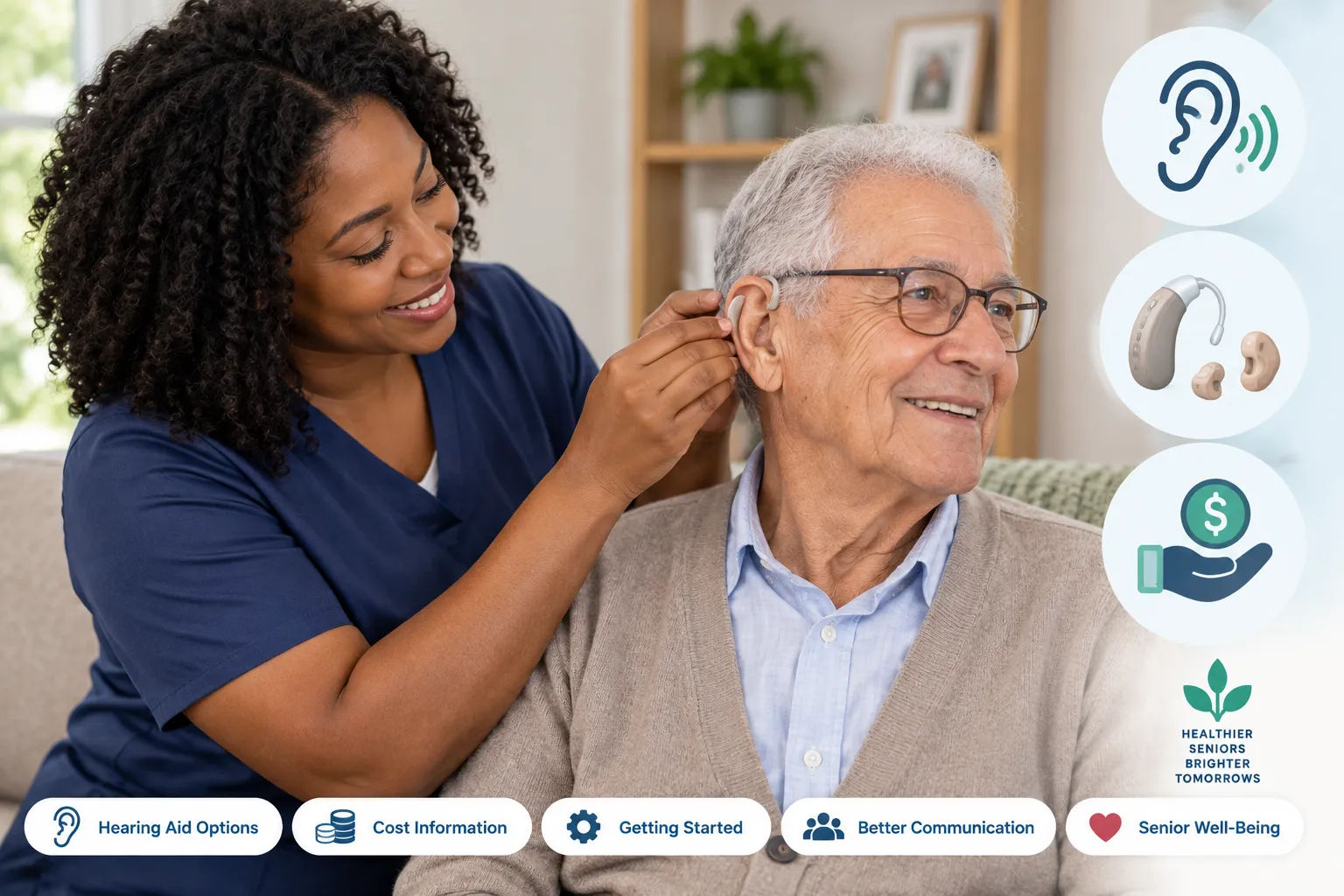
Hearing aids for seniors offer genuine, well-documented benefit, yet adoption remains surprisingly low relative to need. An estimated 28.8 million U.S. adults could benefit from hearing aids, but fewer than 1 in 5 currently use them, and among Medicare beneficiaries 71 and older with hearing loss, only about 29.2% actually use hearing aids. Understanding the real costs, options, and process for hearing aids for seniors helps families close this gap and support a parent toward genuinely improved hearing and quality of life.
This guide covers the current landscape of hearing aids for seniors, including OTC versus prescription options, realistic costs, and what the fitting process actually involves.
Key Takeaways
- Fewer than 1 in 5 adults who could benefit from hearing aids currently use them, despite an estimated 28.8 million U.S. adults who could benefit.
- Among Medicare beneficiaries 71 and older with hearing loss, only about 29.2% use hearing aids, showing a substantial treatment gap even in this age group.
- Cost remains the primary barrier, with prescription hearing aids running a median of $1,560 each, though newer OTC options average around $150.
- Over-the-counter hearing aids, now legally available without a prescription, have meaningfully improved affordability and access for mild to moderate hearing loss.
- A hearing evaluation is the right starting point for determining whether OTC or prescription hearing aids are the appropriate choice.
Understanding both the real benefits and the real barriers helps families approach hearing aids for seniors as a genuinely achievable step, not an overwhelming one.
OTC vs. Prescription Hearing Aids: What's the Difference
The hearing aid landscape changed significantly with the introduction of over-the-counter options, and understanding the difference helps families make an informed choice.
- Over-the-counter (OTC) hearing aids are available without a prescription or audiologist visit, intended for adults with perceived mild to moderate hearing loss.
- Prescription hearing aids require an audiologist evaluation and are custom-fitted, generally recommended for moderate to severe hearing loss or more complex hearing profiles.
- Cost differs substantially, with a median of $150 for OTC options compared to $1,560 for prescription hearing aids.
- Prescription options typically include more comprehensive support, including professional fitting, adjustments, and follow-up care as part of the cost.
For many older adults with mild to moderate hearing loss, OTC options offer a meaningfully more affordable entry point, though a hearing evaluation helps confirm which category actually fits a person's needs.
Why Hearing Aid Adoption Remains So Low
Despite genuine benefit, several barriers keep hearing aid adoption well below the level of need among older adults.
- Cost remains the most significant barrier, with prescription hearing aids costing up to $8,000 per set before OTC options became available.
- Stigma around hearing aids persists for some older adults, who may associate them with visible signs of aging.
- Underestimating the impact of hearing loss is common, since gradual hearing decline is easy to adapt to and normalize rather than recognize as something worth addressing.
- Lack of awareness about newer, more affordable options means some older adults still assume hearing aids are financially out of reach.
Dee, Morning Star's founder: "A lot of resistance to hearing aids comes from not realizing how much more affordable and less conspicuous the newer options are compared to what people remember from years ago."
Addressing these specific barriers directly, rather than assuming reluctance reflects a lack of interest, often opens the door to a parent genuinely considering hearing aids.
Choosing the Right Type of Hearing Aid
Beyond the OTC versus prescription decision, hearing aids come in several physical styles, each with different tradeoffs worth understanding.
- Behind-the-ear (BTE) models are generally easier to handle for those with limited dexterity and tend to offer longer battery life.
- In-the-ear (ITE) and in-the-canal (ITC) models are less visible but can be more challenging to insert and adjust for some users.
- Rechargeable options eliminate the need to handle small batteries, a genuinely helpful feature for anyone with arthritis or vision changes.
- Bluetooth-enabled hearing aids can connect directly to phones and TVs, offering additional convenience for some users.
Considering a parent's specific dexterity, vision, and lifestyle needs, not just cost alone, helps identify which style is genuinely the best fit.
The Real Benefits of Treating Hearing Loss
Beyond the obvious benefit of hearing better, treating hearing loss with hearing aids connects to several other important areas of health and wellbeing.
- Reduced social isolation, since untreated hearing loss often leads people to withdraw from conversations and social situations.
- Better safety awareness, including hearing alarms, doorbells, and traffic sounds that untreated hearing loss can miss.
- Some research links treated hearing loss to better cognitive outcomes, reflecting the connection between hearing and cognitive engagement.
- Improved communication with family, reducing the frustration and misunderstanding that untreated hearing loss can create in relationships.
These broader benefits make addressing hearing loss worth genuine priority, not simply a matter of convenience or comfort.
Framing hearing aids around these broader benefits, rather than purely as a device for hearing better, often resonates more with a hesitant parent than discussing hearing loss in isolation.
What the Fitting Process Actually Involves
Understanding what to expect makes the process of getting hearing aids for seniors feel less intimidating and more manageable.
- A hearing evaluation, either with an audiologist for prescription options or a self-administered test for OTC devices, establishes the degree and type of hearing loss.
- Selecting a device based on the evaluation results, lifestyle needs, and budget, with options ranging from basic to feature-rich.
- A fitting and adjustment period, typically several weeks, during which the brain adjusts to hearing sounds that may have gone unheard for years.
- Follow-up adjustments, particularly important for prescription hearing aids, to fine-tune settings as a person adapts.
Setting realistic expectations about this adjustment period helps prevent a parent from giving up on hearing aids too early, before their brain has had time to adapt.
Caring for Hearing Aids: Maintenance Basics
Proper daily care extends the life of hearing aids and ensures they continue functioning well, a worthwhile habit to build from the start.
- Daily cleaning with a soft, dry cloth removes earwax and debris that can affect sound quality.
- Proper storage, in a dry case away from heat and moisture, protects the delicate internal components.
- Regular battery changes or charging, depending on the model, ensures the devices are ready for consistent daily use.
- Periodic professional cleanings, often available at the point of purchase, keep prescription hearing aids functioning at their best.
These simple maintenance habits, once established as routine, help ensure hearing aids continue delivering their full benefit over the years of use.
Building these habits into an existing daily routine, like cleaning hearing aids right after removing them each evening, makes consistent care far more sustainable than treating it as a separate task to remember.
Insurance and Financial Assistance Options
Beyond OTC affordability, several other paths can help reduce the financial burden of hearing aids for seniors.
- Medicare Advantage plans sometimes include hearing aid benefits not covered by original Medicare, worth reviewing during open enrollment.
- Veterans with qualifying service-connected hearing loss may be eligible for hearing aids through VA benefits.
- Nonprofit organizations and hearing aid banks in some areas provide low-cost or donated devices for those with financial need.
- Flexible spending or health savings accounts can often be used to cover hearing aid costs, reducing the effective out-of-pocket expense.
Exploring these options before assuming cost is an insurmountable barrier often reveals more affordable paths than a parent might expect.
A brief conversation with a benefits counselor or the audiologist’s office billing team can often clarify exactly which of these options a specific parent qualifies for.
A Real Family Scenario
Ruth's daughter Karen had suggested hearing aids for years, but Ruth resisted, assuming they'd be expensive and conspicuous. After Karen shared information about newer, more affordable OTC options, Ruth agreed to a hearing evaluation, discovered her hearing loss was mild to moderate, and started with an OTC device that made a noticeable difference in her ability to follow conversations at family gatherings within weeks.
Ruth's situation reflects how outdated assumptions about cost and visibility often hold people back from a genuinely more accessible option than they realize exists today.
Karen also noted how much easier the conversation became once she had specific, current information to share, rather than a general suggestion that Ruth might benefit from hearing aids.
How an In-Home Caregiver Supports Hearing Aid Use
A consistent in-home caregiver can provide meaningful support for someone adjusting to hearing aids for seniors, including reminders to wear and properly maintain the devices, help with cleaning and battery changes, and patient communication during the adjustment period when hearing aids may feel unfamiliar or occasionally uncomfortable.
"Having someone around to gently remind Mom to put her hearing aids in each morning made a real difference in how consistently she actually used them during that first adjustment month."
This kind of consistent, patient support often determines whether a parent sticks with hearing aids long enough to experience their genuine benefit.
Caregivers can also accompany a parent to follow-up appointments and help communicate feedback about fit or sound quality, valuable information for fine-tuning the devices.
A Final Thought
Hearing aids for seniors have become genuinely more accessible and affordable than many families realize, yet adoption remains well below the level of actual need. Understanding the current options, realistic costs, and what the process actually involves helps families support a parent toward this often life-improving step.
Addressing outdated assumptions about cost and visibility, and providing patient support through the adjustment period, gives a parent the best chance of genuinely benefiting from hearing aids.
As OTC options continue to expand access and technology improves, the barriers that have historically kept hearing aid adoption low are genuinely becoming easier to overcome for more families every year.
When OTC Isn't Enough: Signs a Prescription Device Is Needed
While OTC hearing aids serve many with mild to moderate hearing loss well, certain signs suggest a prescription device and professional evaluation are the more appropriate path.
- Significant difficulty understanding speech even in quiet settings may indicate hearing loss beyond what OTC devices are designed to address.
- Trying an OTC device without noticeable improvement is a reasonable signal to pursue a full audiologist evaluation instead.
- Additional symptoms like ringing in the ears, dizziness, or ear pain warrant a medical evaluation rather than an OTC purchase alone.
Starting with OTC options is reasonable for many, but staying attentive to whether they’re genuinely working helps ensure a parent doesn’t settle for an inadequate solution.
A Note for Connecticut Families
Audiologists throughout the Bristol and Greater Hartford area offer hearing evaluations, and several retailers in the region now carry OTC hearing aid options as well, worth comparing directly.
Home care providers familiar with the region can help with daily hearing aid maintenance and provide the patient, consistent support that eases the adjustment period.
Some local senior centers and community organizations in the region host free or low-cost hearing screening events, a convenient first step worth checking for directly.
References
- SeniorLiving.org — Hearing Loss Statistics and Data in 2026
- ConsumerAffairs — Hearing Aid Statistics 2026
- PMC — Are Over-the-Counter Hearing Aids Affordable, Accessible, and Satisfactory? Insights from MarkeTrak 25 Survey Data
Written by
Morning Star Care Team
Morning Star Home Care — Caregiver-Founded and Locally Owned in Bristol, CT.