Osteoporosis in elderly parents affects a striking share of the population, and often progresses silently until a fracture reveals it. Osteoporosis affects roughly 10 million Americans, with women disproportionately affected, and worldwide, 1 in 3 women and 1 in 5 men over 50 will experience an osteoporotic fracture during their lifetime. Understanding osteoporosis in elderly patients matters because, unlike many conditions, it's genuinely preventable and treatable, even when diagnosed later in life.
This guide covers how osteoporosis develops, current screening recommendations, and the prevention and treatment strategies that genuinely reduce fracture risk.
Key Takeaways
- Worldwide, 1 in 3 women and 1 in 5 men over 50 will experience an osteoporotic fracture during their lifetime.
- The USPSTF's 2025 recommendation calls for osteoporosis screening in women 65 and older, an important preventive step often missed.
- Treatment benefits extend even to adults over 80, contradicting the common assumption that it's too late to matter at advanced age.
- Weight-bearing exercise, calcium, vitamin D, and fall prevention form the foundation of effective osteoporosis prevention and management.
- Osteoporotic fractures, particularly hip fractures carry serious consequences for independence and long-term health, making prevention genuinely worthwhile.
Understanding both the real risk and the genuinely effective prevention and treatment options available helps families take osteoporosis seriously without feeling helpless about it.
Understanding Osteoporosis in Elderly Adults
Osteoporosis in elderly patients develops as bone density decreases over time, making bones more fragile and prone to fracture from even minor falls or bumps.
- Bone loss accelerates after menopause for women, explaining why osteoporosis disproportionately affects older women.
- Men develop osteoporosis too, though generally later and less frequently, with roughly 1 in 5 men over 50 experiencing a fracture.
- Osteoporosis often has no symptoms until a fracture occurs, earning it a reputation as a "silent" disease.
- Certain factors increase risk, including family history, low body weight, smoking, excessive alcohol use, and certain medications like long-term steroid use.
Understanding these risk factors helps identify who might benefit most from proactive screening and prevention, rather than waiting for a fracture to prompt attention.
Why Screening Matters: The 2025 Recommendations
Current clinical guidance strongly supports proactive osteoporosis screening, reflecting how much fracture prevention benefits from catching low bone density before an injury occurs.
- The USPSTF's 2025 recommendation statement calls for osteoporosis screening in women 65 and older using bone density testing.
- Screening typically involves a simple, painless bone density scan called a DEXA scan, which measures bone mineral density.
- Men and younger postmenopausal women with specific risk factors may also benefit from screening, worth discussing individually with a doctor.
- Early detection allows intervention before a fracture, rather than osteoporosis only being diagnosed after a painful, disruptive injury.
Asking a doctor directly whether a parent is due for osteoporosis screening, particularly women 65 and older, is a simple, concrete step families can take.
Nutrition for Bone Health
Diet plays a foundational role in bone health, and specific nutritional targets deserve attention for anyone concerned about osteoporosis in elderly relatives.
- Calcium-rich foods, including dairy, leafy greens, and fortified foods, provide the building blocks bones need throughout life.
- Vitamin D, obtained through sun exposure, diet, or supplementation, is essential for calcium absorption and often needs supplementation in older adults with limited sun exposure.
- Adequate protein intake supports bone health alongside calcium and vitamin D, contrary to the outdated notion that protein harms bones.
- A doctor or dietitian can recommend specific intake targets based on a parent's individual health profile and any existing conditions.
Since dietary needs shift with age and existing health conditions, a personalized assessment often provides more useful guidance than generic recommendations alone.
Combining these nutritional targets with the weight-bearing exercise discussed in this guide gives bones the two ingredients research consistently shows matter most for maintaining density over time.
Prevention Strategies That Genuinely Work
Several evidence-based strategies meaningfully reduce osteoporosis risk and support bone health, whether used preventively or alongside treatment for an existing diagnosis.
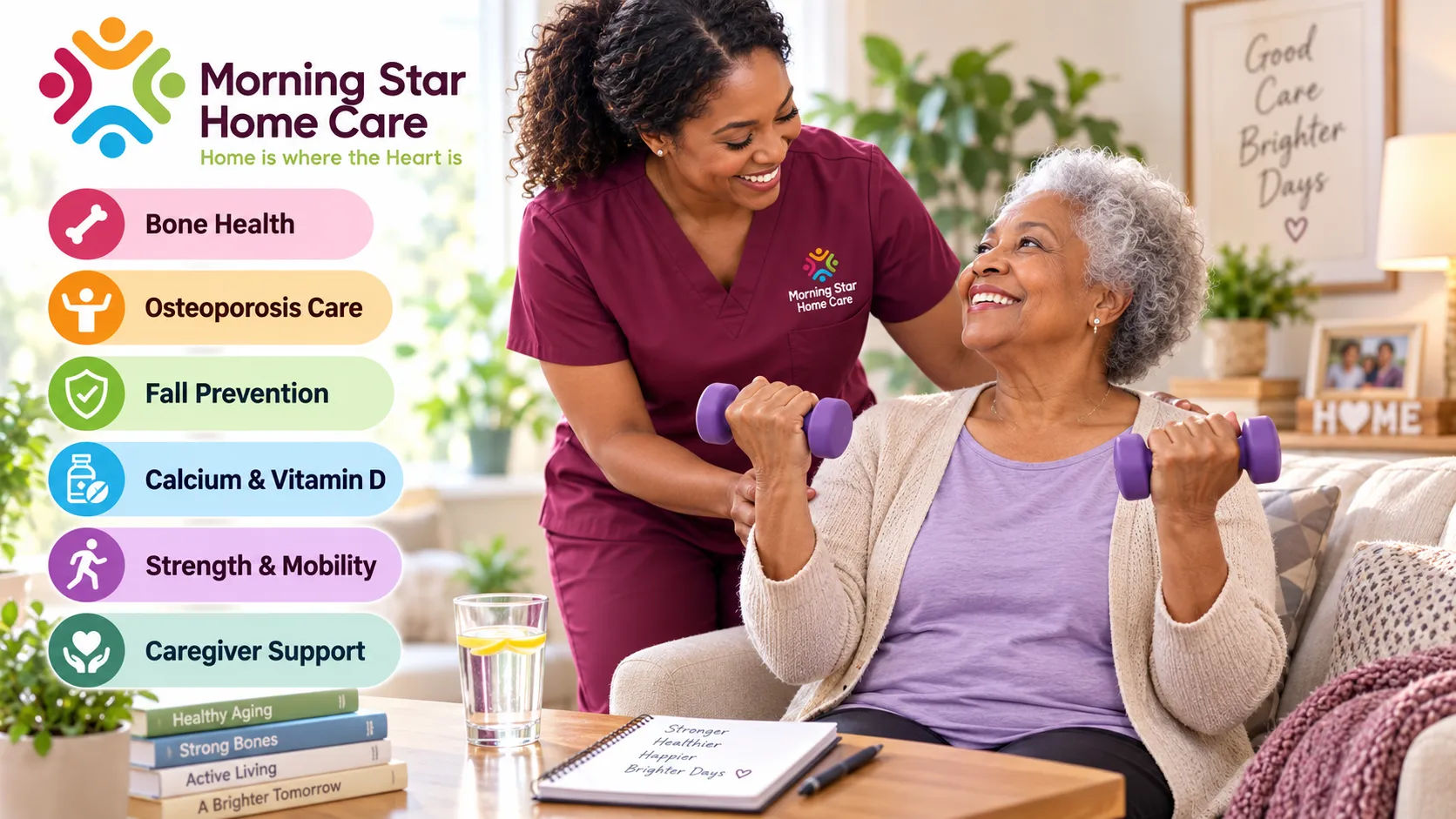
- Weight-bearing exercise, including walking, dancing, or light resistance training, helps maintain bone density and is one of the most consistently supported prevention strategies.
- Adequate calcium and vitamin D intake, through diet or supplementation as needed, supports the bone-building process.
- Avoiding smoking and limiting alcohol both meaningfully support bone health and reduce fracture risk.
- Fall prevention measures, like removing home hazards and addressing balance issues, reduce the risk that fragile bones will actually be tested by a fall.
Dee, Morning Star's founder: "Osteoporosis prevention and fall prevention really work hand in hand. Strong bones matter less if the risk of falling in the first place isn't also being addressed."
Combining bone-health-specific strategies with broader fall prevention gives elderly parents the most complete protection against fracture.
Understanding Hip Fracture Risk Specifically
Hip fractures deserve particular attention given how significantly they can affect an older adult's independence and long-term health, making their prevention especially important.
- Hip fractures often require surgery and extensive rehabilitation, representing one of the most serious potential consequences of osteoporosis.
- A significant share of hip fracture patients experience reduced independence afterward, underscoring how much prevention genuinely matters for maintaining quality of life.
- Hip protectors, padded garments worn to cushion a fall, may be recommended for particularly high-risk individuals.
Call the doctor now if: If a parent falls and experiences hip or severe back pain, difficulty bearing weight, or visible deformity, seek emergency medical evaluation promptly rather than waiting to see if it improves.
Understanding the outsized consequences of a hip fracture specifically helps underscore why the combination of bone health and fall prevention deserves genuine priority.
Discussing hip fracture risk specifically with a doctor, rather than treating osteoporosis as one general concern, can help identify whether additional precautions like hip protectors are worth considering for a particular parent.
Treatment: Even Later in Life, It Genuinely Helps
A common and understandable misconception is that osteoporosis treatment isn't worthwhile for very elderly patients, but recent research directly challenges this assumption.
- Osteoporosis treatment benefits people older than 80, according to 2025 research presented at the Endocrine Society's annual meeting, contradicting assumptions that it's too late to matter.
- Bisphosphonates and other bone-strengthening medications remain effective options for reducing fracture risk, even when started later in life.
- Treatment after a first fracture is particularly important, since experiencing one osteoporotic fracture significantly increases the risk of subsequent fractures.
- Treatment decisions should weigh individual factors, including overall health and life expectancy, in conversation with a doctor familiar with the full picture.
Dismissing osteoporosis treatment as not worthwhile for a very elderly parent overlooks genuine, research-supported benefit, and is worth revisiting directly with their doctor.
Exercise Types That Support Bone Density
Not all exercise offers the same bone health benefit, and understanding which types genuinely help guides more effective prevention efforts.
- Weight-bearing aerobic exercise, like walking, dancing, or stair climbing, forces bones to work against gravity, which stimulates bone maintenance.
- Resistance or strength training builds muscle that supports bone health and improves the balance that reduces fall risk.
- Balance-focused exercise, like tai chi, directly reduces fall risk even though it doesn't build bone density itself.
- Swimming and cycling, while excellent for cardiovascular health, offer less direct bone-density benefit since they're not weight-bearing.
A physical therapist can help design an exercise program that's both safe and genuinely effective for bone health, particularly important for anyone with existing osteoporosis or fall risk.
Starting gradually and building consistency over time tends to be more sustainable, and safer, than attempting a dramatic exercise overhaul all at once, especially for someone with existing osteoporosis.
Medications and Their Fracture-Risk Side Effects
Some commonly prescribed medications can affect bone health or increase fall risk, making a medication review a worthwhile part of any comprehensive osteoporosis prevention plan.
- Long-term corticosteroid use is a well-documented risk factor for bone loss, worth discussing with a doctor if a parent takes steroids for another condition.
- Certain medications increase fall risk through effects on balance, blood pressure, or alertness, compounding fracture risk even without directly affecting bone density.
- Reviewing the full medication list with a doctor or pharmacist can identify these risk factors and inform whether adjustments are appropriate.
This kind of medication review connects directly back to the broader medication management principles that matter for overall safety in older adults.
A Real Family Scenario
Ruth, at 83, had never been screened for osteoporosis, assuming at her age it wouldn't change much even if diagnosed. After a minor fall resulted in a wrist fracture, her doctor recommended a bone density scan that revealed significant osteoporosis, and starting treatment afterward, alongside a fall-prevention plan at home, meaningfully reduced her risk of a more serious fracture like a hip fracture going forward.
Ruth's situation illustrates both the silent nature of osteoporosis and the genuine value of treatment even when diagnosed later in life, challenging the assumption that it's simply too late to matter.
Her daughter also noted that once Ruth understood the research showing treatment genuinely worked at her age, her attitude shifted from resignation to genuine engagement with her own prevention plan.
How an In-Home Caregiver Supports Bone Health
A consistent in-home caregiver can meaningfully support osteoporosis prevention and management for elderly parents, including helping with weight-bearing exercise routines, supporting a calcium and vitamin D-rich diet, and, importantly, reducing fall risk through home safety awareness and steady physical support during daily activities. Caregivers can also help maintain medication routines for those on osteoporosis treatment.
"Making sure Mom actually did her walks and took her vitamin D consistently made a real difference. Those small daily habits add up over time in ways that are easy to let slip without support."
This kind of consistent daily support directly addresses both sides of fracture prevention, strengthening bones and reducing the fall risk that would put them to the test.
Caregivers can also help coordinate and prepare for bone density screenings and follow-up appointments, ensuring this important preventive step doesn't get overlooked amid other priorities.
A Final Thought
Osteoporosis in elderly parents is common, often silent, and genuinely manageable at any age, including for those diagnosed later in life. Proactive screening, evidence-based prevention strategies, and appropriate treatment together meaningfully reduce the serious risks that come with fragile bones.
Taking osteoporosis seriously, through screening and consistent prevention habits, is one of the most concrete ways families can help protect an elderly parent's long-term mobility and independence.
The evidence is clear that age alone is never a good reason to dismiss osteoporosis prevention or treatment, making this an area where proactive, informed advocacy genuinely pays off.
Talking to a Parent Who Dismisses Osteoporosis Concerns
Some older adults, especially those without visible symptoms, may resist screening or treatment, assuming osteoporosis either doesn't affect them or isn't worth addressing at their age.
- Share the silent nature of the disease directly, explaining that the absence of symptoms doesn't mean the absence of risk.
- Address the misconception that treatment is pointless at advanced age head-on, using the research showing genuine benefit even for adults over 80.
- Frame screening as a simple, low-effort step, a painless scan rather than an invasive or burdensome process.
- Connect it to something a parent already values, like maintaining independence or avoiding a disruptive injury, rather than presenting it as an abstract health statistic.
Approaching this conversation with genuine information rather than pressure tends to be more persuasive, particularly when a parent understands specifically why their assumptions about age and treatment may not hold up.
A Note for Connecticut Families
Bone density screening and osteoporosis treatment are widely available through primary care and endocrinology practices throughout the Bristol and Greater Hartford area, typically covered by Medicare for eligible patients.
Home care providers familiar with the region can support consistent exercise routines and home safety practices that reduce fall and fracture risk.
Physical therapy practices in the region often offer bone-health-focused exercise programs specifically designed for older adults managing or preventing osteoporosis.
References
- The Global Statistics — Osteoporosis Statistics in the U.S. 2025
- JAMA — Screening for Osteoporosis to Prevent Fractures: US Preventive Services Task Force Recommendation Statement
- Endocrine Society — Osteoporosis Treatment Benefits People Older Than 80
Written by
Morning Star Care Team
Morning Star Home Care — Caregiver-Founded and Locally Owned in Bristol, CT.